

6 months 3 weeks ago
After silence that which comes nearest to expressing the inexpressible is music.
▼
Source
source
"The Rest is Silence"


5 months 1 week ago
It is only by entering the transcendental, the supernatural, the authentically spiritual order that man rises above the social. Until then, whatever he may do, the social is transcendent in relation to him.
▼
Source
source
p. 123
7 months 3 weeks ago
If anyone can be considered the greatest writer who ever lived, it is Shakespeare.
6 months 3 weeks ago
Consider what you have in the smallest chosen library. A company of the wisest and wittiest men that could be picked out of all civil countries, in a thousand years, have set in best order the results of their learning and wisdom. The men themselves were hid and inaccessible, solitary, impatient of interruption, fenced by etiquette; but the thought which they did not uncover to their bosom friend is here written out in transparent words to us, the strangers of another age.
3 months 1 week ago
The more we struggle for life (as pleasure), the more we are actually killing what we love.
▼
Source
source
p. 32

4 months 3 weeks ago
He who is bent on doing evil can never want occasion.
▼
Source
source
Maxim 459
2 months 3 weeks ago
It is irreverent to the Gods to give you this demonstration, but for your sakes it shall be done.
▼
Source
source
As quoted in The Lives of the Sophists by Eunapius
6 months 3 weeks ago
Self-trust is the first secret of success.
▼
Source
source
Success
2 months 4 weeks ago
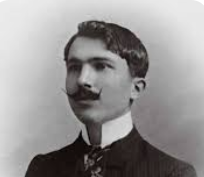
Never acknowledge the limitations of man. Smash all boundaries! Deny whatever your eyes see. Die every moment, but say: "Death does not exist."
7 months 1 day ago
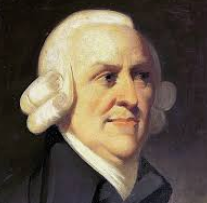
III. Every tax ought to be levied at the time, or in the manner, in which it is most likely to be convenient for the contributor to pay it.
▼
Source
source
Chapter II Part II, p. 893.
6 months 4 weeks ago
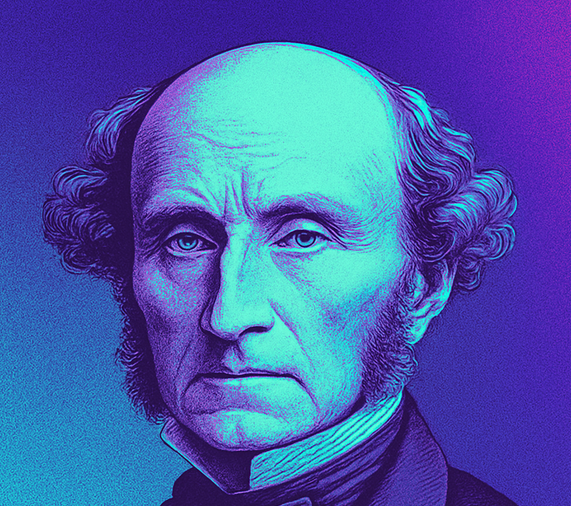
It might be plausibly maintained, that in almost every one of the leading controversies, past or present, in social philosophy, both sides were in the right in what they affirmed, though wrong in what they denied.
▼
Source
source
J. S. Mill, Dissertations and discussions: political, philosophical, and historical, Volume 2, H. Holt, 1864, p. 11.
6 months 3 weeks ago
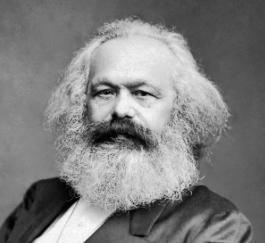
I pre-suppose, of course, a reader who is willing to learn something new and therefore to think for himself.
▼
Source
source
Author's prefaces to the First Edition.
2 months 3 weeks ago
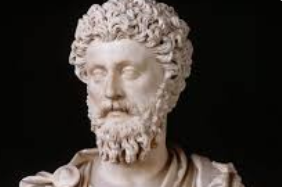
Why then dost thou choose to act in the same way? and why dost thou not leave these agitations which are foreign to nature, to those who cause them and those who are moved by them? And why art thou not altogether intent upon the right way of making use of things which happen to thee? for then thou wilt use them well, and they will be material for thee. Only attend to thyself, and resolve to be a good man in every act which thou doest; and remember...
▼
Source
source
VII, 58
4 months 3 weeks ago
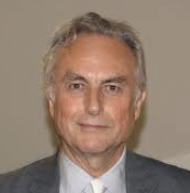
More generally it is completely unrealistic to claim, as Gould and many others do, that religion keeps itself away from science's turf, restricting itself to morals and values. A universe with a supernatural presence would be a fundamentally and qualitatively different kind of universe from one without. The difference is, inescapably, a scientific difference. Religions make existence claims, and this means scientific claims.
▼
Source
source
When Religion Steps on Science's Turf, Free Inquiry
7 months 6 days ago
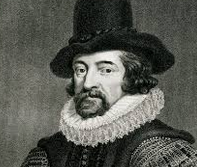
The Idols of Tribe have their foundation in human nature itself, and in the tribe or race of men. For it is a false assertion that the sense of man is the measure of things. On the contrary, all perceptions as well of the sense as of the mind are according to the measure of the individual and not according to the measure of the universe. And the human understanding is like a false mirror, which, receiving rays irregularly, distorts and discolors the nature of things by mingling its own nature with it.
▼
Source
source
Aphorism 41
5 months 1 week ago
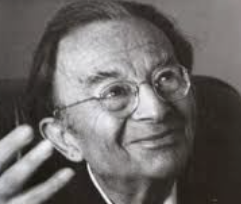
The quest for certainty blocks the search for meaning. Uncertainty is the very condition to impel man to unfold his powers.
▼
Source
source
Ch. 3
2 months 3 weeks ago
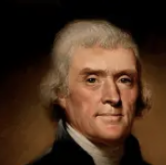
Here was buried Thomas Jefferson, author of the Declaration of American Independence, of the Statute of Virginia for Religious Freedom, and Father of the University of Virginia. Epitaph, upon his instructions to erect a "a plain die or cube ... surmounted by an Obelisk" with "the following inscription, and not a word more...because by these, as testimonials that I have lived, I wish most to be remembered." It omits that he had been President of the United States, a position of political power and prestige, and celebrates his involvement in the creation of the means of inspiration and instruction by which many human lives have been liberated from oppression and ignorance.
7 months 1 day ago
Every faculty in one man is the measure by which he judges of the like faculty in another. I judge of your sight by my sight, of your ear by my ear, of your reason by my reason, of your resentment by my resentment, of your love by my love. I neither have, nor can have, any other way of judging about them.
▼
Source
source
Section I, Chap. III.

5 months 2 weeks ago
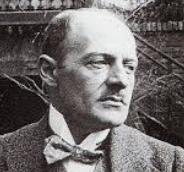
Even after his conversion, the true 'apostate' is not primarily committed to the positive contents of his new belief and to the realization of its aims. He is motivated by the struggle against the old belief and lives on for its negation. The apostate does not affirm his new convictions for their own sake; he is engaged in a continuous chain of acts of revenge against his own spiritual past. In reality he remains a captive of this past, and the new faith is merely a handy frame of reference for negating and rejecting the old. As a religious type, the apostate is therefore at the opposite pole from the 'resurrected,' whose life is transformed by a new faith which is full of intrinsic meaning and value.
▼
Source
source
L. Coser, trans. (1973), pp. 66-67
6 months 4 weeks ago
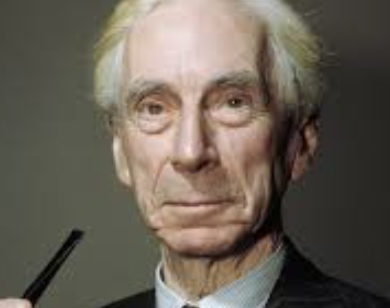
The law of causality, I believe, like much that passes muster among philosophers, is a relic of a bygone age, surviving, like the monarchy, only because it is erroneously supposed to do no harm.
▼
Source
source
Ch. 9: On the Notion of Cause
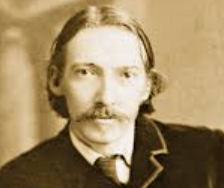
4 months 3 weeks ago
A good conscience is eight parts of courage.
▼
Source
source
Catriona, ch. XI (1893).
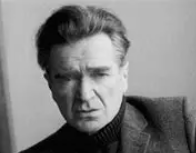
5 months 3 weeks ago
When I happen to be satisfied with everything, even God and myself, I immediately react like the man who, on a brilliant day, torments himself because the sun is bound to explode in a few billion years.
5 months 3 weeks ago
Paradise was unendurable, otherwise the first man would have adapted to it; this world is no less so, since here we regret paradise or anticipate another one. What to do? Where to go? Do nothing and go nowhere, easy enough.
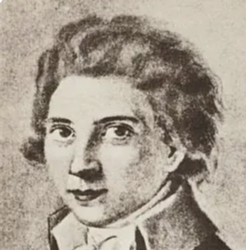
5 months 3 weeks ago
One has only as much morality as one has philosophy and poetry.
▼
Source
source
"Selected Ideas (1799-1800)", Dialogue on Poetry and Literary Aphorisms, Ernst Behler and Roman Struc, trans. (Pennsylvania University Press:1968) #62
7 months 1 day ago
There is no art which one government sooner learns of another than that of draining money from the pockets of the people.
▼
Source
source
Chapter II, Part II, Appendix to Articles I and II.
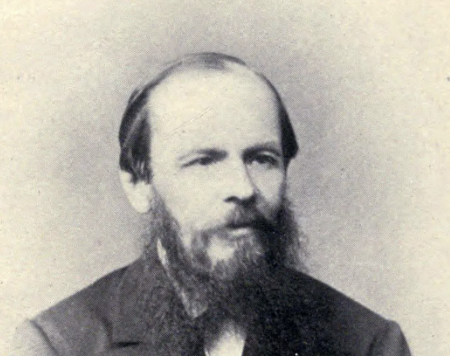
5 months 3 weeks ago
All became so jealous of the rights of their own personality that they did their very utmost to curtail and destroy them in others, and made that the chief thing in their lives. Slavery followed, even voluntary slavery; the weak eagerly submitted to the strong, on condition that the latter aided them to subdue the still weaker. Then there were saints who came to these people, weeping, and talked to them of their pride, of their loss of harmony and due proportion, of their loss of shame. They were laughed at or pelted with stones.
6 months 4 weeks ago
Formerly, it was held by philosophers and mathematicians alike that the proofs in Geometry depended on the figure; nowadays, this is known to be false. In the best books there are no figures at all. The reasoning proceeds by the strict rules of formal logic from a set of axioms laid down to begin with.
▼
Source
source
Ch. 5: Mathematics and the Metaphysicians
4 months 3 weeks ago
There is only one enduring happiness in life-to live for others.
▼
Source
source
Part 1, chapter 2

6 months 2 weeks ago
Education is an ornament for the prosperous, a refuge for the unfortunate.
▼
Source
source
Freeman (1948), p. 161

6 months 2 weeks ago
The principles of ethics come from our own nature as social, reasoning beings.
▼
Source
source
Chapter 6, A New Understanding Of Ethics, p. 149

7 months 1 week ago
Again and again our foe, religion, has given birth to deeds sinful and unholy.
▼
Source
source
Book I, lines 82-83 (tr. C. Bailey)
4 months 3 weeks ago
I sit on a man's back, choking him, and making him carry me, and yet assure myself and others that I am very sorry for him and wish to ease his lot by any means possible, except getting off his back.
▼
Source
source
Writings on Civil Disobedience and Nonviolence

6 months 1 week ago
Reason not with him, that will deny the principal truths!
5 months 3 weeks ago
Love works magic. It is the final purpose Of the world story, The Amen of the universe.
6 months 3 weeks ago
To believe in a God means to understand the question about the meaning of life. To believe in a God means to see that the facts of the world are not the end of the matter. To believe in God means to see that life has a meaning.
▼
Source
source
Journal entry (8 July 1916), p. 74e
5 months 1 week ago
Besides, it is written that the tree shall be known by its fruits. The Church has borne too many evil fruits for there not to have been some mistake at the beginning. Europe has been spiritually uprooted, cut off from that antiquity in which all the elements of our civilization have their origin; and she has gone about uprooting the other continents from the sixteenth century onwards. Missionary zeal has not Christianized Africa, Asia and Oceania, but has brought these territories under the cold, cruel and destructive domination of the white race, which has trodden down everything. It would be strange, indeed, that the word of Christ should have produced such results if it had been properly understood.
▼
Source
source
Section 9
6 months 3 weeks ago
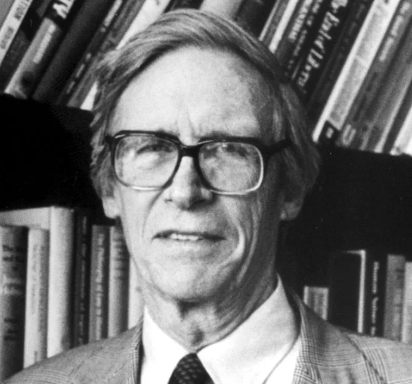
That persons have opposing interests and seek to advance their own conception of the good is not at all the same thing as their being moved by envy and jealousy.
▼
Source
source
Chapter IX, Section 81, p. 540
3 months 1 week ago
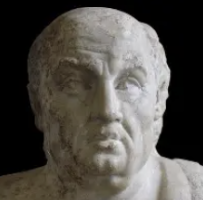
Our minds must have relaxation: rested, they will rise up better and keener. Just as we must not force fertile fields (for uninterrupted production will quickly exhaust them), so continual labor will break the power of our minds. They will recover their strength, however, after they have had a little freedom and relaxation.
4 months 3 weeks ago
War is never anything less than accelerated technological change.
▼
Source
source
(p. 102)

6 months 2 days ago
In cities men cannot be prevented from concerting together, and from awakening a mutual excitement which prompts sudden and passionate resolutions. Cities may be looked upon as large assemblies, of which all the inhabitants are members; their populace exercises a prodigious influence upon the magistrates, and frequently executes its own wishes without their intervention. Variant translation: In towns it is impossible to prevent men from assembling, getting excited together and forming sudden passionate resolves. Towns are like great meeting houses with all the inhabitants as members. In them the people wield immense influence over their magistrates and often carry their desires into execution without intermediaries.
▼
Source
source
Chapter XVII.
5 months 3 weeks ago
To think is to submit to the whims and commands of an uncertain health.

5 months 1 week ago
I spoke after Sasha, for an hour. I discussed the farce of a government undertaking to carry democracy abroad by suppressing the last vestiges of it at home. I took up the contention of Judge Mayer that only such ideas are permissible as are "within the law." Thus he had instructed the jurymen when he had asked them if they were prejudiced against those who propagate unpopular ideas. I pointed out that there had never been an ideal, however humane and peaceful, which in its time had been considered "within the law." I named Jesus, Socrates, Galileo, Giordano Bruno. "Were they 'within the law"?" I asked. "And the men who set America free from British rule, the Jeffersons and the Patrick Henrys? The William Lloyd Garrisons, the John Browns, the David Thoreaus and Wendell Phillipses-were they within the law?"
▼
Source
source
chapter 45
5 months 4 weeks ago
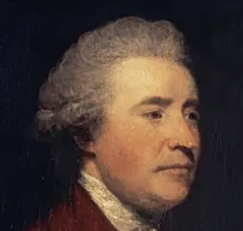
Whenever a separation is made between liberty and justice, neither, in my opinion, is safe.
▼
Source
source
Letter to M. de Menonville
3 months 1 week ago
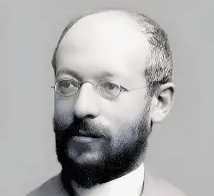
The individual who is subordinate to an objective law feels himself determined by it, while he, in turn, in no way determines the law, and has no possibility of reacting to it in a manner which could influence it-quite in contrast to even the most miserable slave, who, in some fashion at last, can still in this sense react to his master.
▼
Source
source
"Domination" (1908), in On Individuality and Social Forms (1971), pp. 113-114
CivilSimian.com created by AxiomaticPanic, CivilSimian, Kalokagathia