


7 months 4 days ago
I have ever loved to repose myself, whether sitting or lying, with my heels as high or higher than my head.
▼
Source
source
Book III, Ch. 13. Of Experience
5 months 2 weeks ago
Religion is to mysticism what popularization is to science. What the mystic finds waiting for him, then, is a humanity which has been prepared to listen to his message by other mystics invisible and present in the religion which is actually taught. Indeed his mysticism itself is imbued with this religion, for such was its starting point. His theology will generally conform to that of the theologians. His intelligence and his imagination will use the teachings of the theologians to express in words what he experiences, and in material images what he sees spiritually. And this he can do easily, since theology has tapped that very current whose source is the mystical. Thus his mysticism is served by religion, against the day when religion becomes enriched by his mysticism. This explains the primary mission which he feels to be entrusted to him, that of an intensifier of religious faith.
▼
Source
source
Chapter III : Dynamic Religion
4 months 4 weeks ago
The public health authorities never mention the main reason many Americans have for smoking heavily, which is that smoking is a fairly sure, fairly honorable form of suicide.
▼
Source
source
Preface (p. xi)
6 months 3 weeks ago
Totalitarianism in power invariably replaces all first-rate talents, regardless of their sympathies, with those crackpots and fools whose lack of intelligence and creativity is still the best guarantee of their loyalty.
▼
Source
source
Part 3, Chapter 10
2 months 3 weeks ago
For it very rarely otherwise happens, than that theories, that are grounded but upon few and obvious experiments, are subject to be contradicted by some such instances, as more free and diligent inquiries into what of nature is more abstruse, or even into the less obvious qualities of things, are wont to bring to light.
5 months 3 weeks ago
The evil of marriage, as is it practiced in the European countries, extends further than we have yet described. The method is for a thoughtless and romantic youth of each sex, to come together, to see each other, for a few times, and under circumstances full of delusion and then to vow eternal attachment. What is the consequence of this? In almost every instance they find themselves deceived. They are reduced to make the best of an irretrievable mistake. They are led to conceive it their wiser policy, to shut their eyes upon realities, happy, if by any perversion of intellect, they can persuade themselves that they were right in their first crude opinion of each other. Thus the institution of marriage is made a system of fraud; and men who carefully mislead their judgement in the daily affair of their life, must be expected to have a crippled judgement in every other concern.
4 months 3 weeks ago
There is absolutely no inevitability, so long as there is a willingness to contemplate what is happening.
▼
Source
source
[A chapter sub-heading attributed by McLuhan to Alfred North Whitehead]

6 months 2 weeks ago
He who does wrong is more unhappy than he who suffers wrong.

5 months 3 weeks ago
Even in childhood I watched the hours flow, independent of any reference, any action, any event, the disjunction of time from what was not itself, its autonomous existence, its special status, its empire, its tyranny. I remember quite clearly that afternoon when, for the first time, confronting the empty universe, I was no more than a passage of moments reluctant to go on playing their proper parts. Time was coming unstuck from being - at my expense.

5 months 2 weeks ago
A whole dimension of human activity and passivity has been de-eroticized. The environment from which the individual could obtain pleasure-which he could cathect as gratifying almost as an extended zone of the body-has been rigidly reduced. Consequently, the "universe" of libidinous cathexis is likewise reduced. The effect is a localization and contraction of libido, the reduction of erotic to sexual experience and satisfaction.
▼
Source
source
p. 73

2 months 3 weeks ago
The whole history of these books is so defective and doubtful that it seems vain to attempt minute enquiry into it: and such tricks have been played with their text, and with the texts of other books relating to them, that we have a right, from that cause, to entertain much doubt what parts of them are genuine. In the New Testament there is internal evidence that parts of it have proceeded from an extraordinary man; and that other parts are of the fabric of very inferior minds. It is as easy to separate those parts, as to pick out diamonds from dunghills
▼
Source
source
Letter to John Adams, on Christian scriptures


4 months 4 weeks ago
Today's terrorism is not the product of a traditional history of anarchism, nihilism, or fanaticism. It is instead the contemporary partner of globalization.
▼
Source
source
The Spirit of Terrorism (2003) "The Violence of the Global"
6 months 1 day ago
There is no moral precept that does not have something inconvenient about it.
▼
Source
source
As quoted in Dictionary of Foreign Quotations (1980) by Mary Collison, Robert L. Collison, p. 235
5 months 1 week ago
The struggle between the opponents and defenders of capitalism is a struggle between innovators who do not know what innovation to make and conservatives who do not know what to conserve.
▼
Source
source
p. 233
2 months 3 weeks ago
Gather together in your heart all terrors, recompose all details. Salvation is a circle; close it!
5 months 2 weeks ago
A philosophy has no private store of knowledge or methods for attaining truth, so it has no private access to good. As it accepts knowledge and principles from those competent in science and inquiry, it accepts the goods that are diffused in human experience. It has no Mosaic or Pauline authority of revelation entrusted to it. But it has the authority of intelligence, of criticism of these common and natural goods.
7 months 2 weeks ago
The institutions of the Ruler are rooted in his own character and conduct, and sufficient attestation of them is given by the masses of the people. He examines them by comparison with those of the three kings, and finds them without mistake. He sets them up before Heaven and Earth, and finds nothing in them contrary to their mode of operation. He presents himself with them before spiritual beings, and no doubts about them arise. He is prepared to wait for the rise of a sage a hundred ages after, and has no misgivings. His presenting himself with his institutions before spiritual beings, without any doubts arising about them, shows that he knows Heaven. His being prepared, without any misgivings, to wait for the rise of a sage a hundred ages after, shows that he knows men.

6 months 3 weeks ago
100 per cent of us die, and the percentage cannot be increased.
3 months 2 weeks ago
There is no idea so obscure that someone could not come to regard it as self-evident.
▼
Source
source
Chapter Seven, Pragmatism and Positivism, p. 156
5 months 1 week ago
We are really no longer ourselves a part of nature at the moment when we notice, when we recognize, that we are a part of nature.
▼
Source
source
Probleme der Moralphilosophie (Frankfurt: Suhrkamp, 1996), p. 154; as quoted in Andrew Bowie, Adorno and the Ends of Philosophy (Cambridge: Polity, 2013), p. 94
4 months 3 weeks ago
Science is meaningless because it gives no answer to our question, the only question important for us: 'what shall we do and how shall we live.
▼
Source
source
Quoted by Max Weber in his lecture "Science as a Vocation"; in Lynda Walsh (2013)

3 months 2 weeks ago
Consider, for example, the state of Science generally, in Europe, at this period. It is admitted, on all sides, that the Metaphysical and Moral Sciences are falling into decay, while the Physical are engrossing, every day, more respect and attention. In most of the European nations there is now no such thing as a Science of Mind; only more or less advancement in the general science, or the special sciences, of matter.
5 months 1 week ago
The Outsider cannot accept life as it is, who cannot consider his own existence or anyone else's necessary. He sees 'too deep and too much'. It is still a question of self-expression.
▼
Source
source
Chapter Four The Attempt to Gain Control
5 months 1 week ago
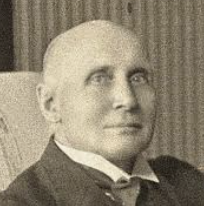
The pursuit of mathematics is a divine madness of the human spirit.
▼
Source
source
Ch. 2: "Mathematics as an Element in the History of Thought", p. 30
6 months 3 weeks ago
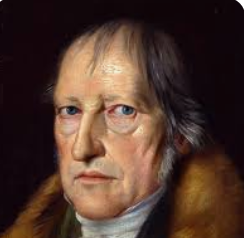
We assert then that nothing has been accomplished without interest on the part of the actors; and - if interest be called passion, inasmuch as the whole individuality, to the neglect of all other actual or possible interests and claims, is devoted to an object with every fibre of volition, concentrating all its desires and powers upon it - we may affirm absolutely that nothing great in the World has been accomplished without passion. Often abbreviated to: Nothing great in the World has been accomplished without passion. Variant translation: We may affirm absolutely that nothing great in the world has ever been accomplished without enthusiasm.
7 months 4 days ago
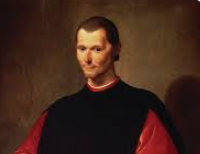
The demands of a free populace, too, are very seldom harmful to liberty, for they are due either to the populace being oppressed or to the suspicious that it is going to be oppressed... and, should these impressions be false, a remedy is provided in the public platform on which some man of standing can get up, appeal to the crowd, and show that it is mistaken. And though, as Tully remarks, the populace may be ignorant, it is capable of grasping the truth and readily yields when a man, worthy of confidence, lays the truth before it.
▼
Source
source
Book 1, Ch. 4 (as translated by LJ Walker and B Crick)
6 months 3 weeks ago
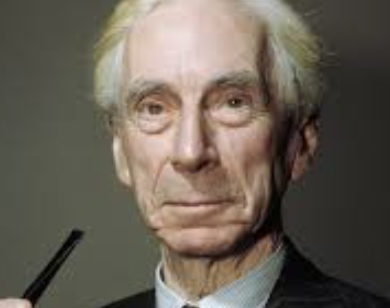
We thus have a kind of see-saw: first, pure persuasion leading to the conversion of a minority; then force exerted to secure that the rest of the community shall be exposed to the right propaganda; and finally a genuine belief on the part of the great majority, which makes the use of force again unnecessary.
▼
Source
source
Ch. 9: Power over opinion
6 months 2 weeks ago
Choose a wife who is of character, because that one is good who in the end is more respected.
▼
Source
source
(p. 60)
6 months 3 weeks ago
But he, with these burthens on him, planned, commenced, and completed, the History of India; and this in the course of about ten years, a shorter time than has been occupied (even by writers who had no other employment) in the production of almost any other historical work of equal bulk, and of anything approaching to the same amount of reading and research. And to this is to be added, that during the whole period, a considerable part of almost every day was employed in the instruction of his children: in the case of one of whom, myself, he exerted an amount of labour, care, and perseverance rarely, if ever, employed for a similar purpose, in endeavouring to give, according to his own conception, the highest order of intellectual education.
▼
Source
source
(p. 4)
7 months 2 weeks ago
I do not open up the truth to one who is not eager to get knowledge, nor help out any one who is not anxious to explain himself. When I have presented one corner of a subject to any one, and he cannot from it learn the other three, I do not repeat my lesson.
6 months 2 weeks ago
When some one reminded him that the people of Sinope had sentenced him to exile, he said, "And I sentenced them to stay at home."
▼
Source
source
Diogenes Laërtius, vi. 49

2 months 3 weeks ago
Never forget: We are alive within mysteries.
4 months 2 weeks ago
It will hardly be disputed, I suppose, that the department of literature in which the Eastern writers stand highest is poetry. And I certainly never met with any orientalist who ventured to maintain that the Arabic and Sanscrit poetry could be compared to that of the great European nations. But when we pass from works of imagination to works in which facts are recorded and general principles investigated, the superiority of the Europeans becomes absolutely immeasurable. It is, I believe, no exaggeration to say that all the historical information which has been collected from all the books written in the Sanscrit language is less valuable than what may be found in the most paltry abridgments used at preparatory schools in England. In every branch of physical or moral philosophy, the relative position of the two nations is nearly the same.
3 months 5 days ago
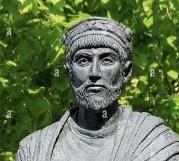
A very weighty argument is this - namely, that neither does the light which descends from thence, chiefly upon the world, mix itself with anything, nor admit of dirtiness or pollution, but remains entirely, and in all things that are, free from defilement, admixture, and suffering. Besides, we must pay attention to the other kinds of phenomena, both to the Intelligible, and yet more to the Sensible - whatever are connected with matter, or will manifest themselves in relation to our subject.
3 months 1 week ago
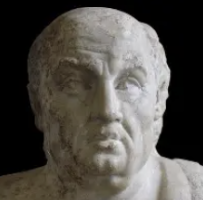
It is generally agreed that no activity can be successfully pursued by an individual who is preoccupied - not rhetoric or liberal studies - since the mind when distracted absorbs nothing deeply, but rejects everything which is, so to speak, crammed into it.
▼
Source
source
De Brevitate Vitae ("On the Shortness of Life", trans. C. D. N. Costa), Ch. 7
6 months 4 weeks ago
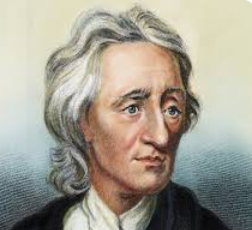
I doubt not, but from self-evident Propositions, by necessary Consequences, as incontestable as those in Mathematics, the measures of right and wrong might be made out.
▼
Source
source
Book IV, Ch. 3, sec. 18
3 months 1 week ago
"You will have less money." Yes, and less trouble. "Less influence." Yes, and less envy.

6 months 1 week ago
When going to the temple to adore Divinity neither say nor do any thing in the interim pertaining to the common affairs of life.
▼
Source
source
Symbol 1
7 months 2 weeks ago
Fortitude, the virtue which enables us to endure pain, and to banish fear, is of great use in producing tranquility. Philosophy instructs us to pay homage to the gods, not through hope or fear, but from veneration of their superior nature. It moreover enables us to conquer the fear of death, by teaching us that it is no proper object of terror; since, whilst we are, death is not, and when death arrives, we are not: so that it neither concerns the living nor the dead.

6 months 2 weeks ago
When scolded for masturbating in public, he said "I wish it were as easy to banish hunger by rubbing my belly."
▼
Source
source
Diogenes Laërtius, vi. 46, 69
6 months 2 weeks ago
Bear no improper envy, so that thy life may not become tasteless.
6 months 3 weeks ago
Manufacture was all the time sheltered by protective duties in the hoe market, by monopolies in the colonial market, and broad as much as possible by differential duties.
▼
Source
source
ibid, pp. 183
3 months 1 week ago
A genius doesn't adjust his treatment of a theme to a tyrant's taste.

5 months 3 weeks ago
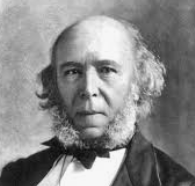
With a higher moral nature will come a restriction on the multiplication of the inferior.
▼
Source
source
The Principles of Biology, Vol. II (1867), Part VI: Laws of Multiplication, ch. 8: Human Population in the Future
CivilSimian.com created by AxiomaticPanic, CivilSimian, Kalokagathia