


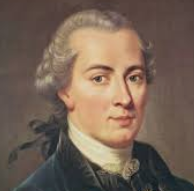
6 months 4 weeks ago
I do not, therefore, need any penetrating acuteness to see what I have to do in order that my volition be morally good. Inexperienced in the course of the world, incapable of being prepared for whatever might come to pass in it, I ask myself only: can you also will that your maxim become a universal law?
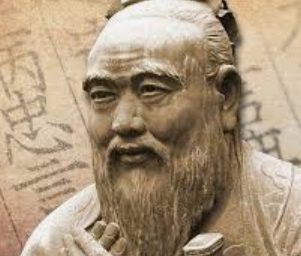
7 months 2 weeks ago
There is nothing more visible than what is secret, and nothing more manifest than what is minute. Therefore the superior man is watchful over himself, when he is alone.
4 months 3 weeks ago
Bless Madison Ave for restoring the magical art of the cavemen to suburbia.
▼
Source
source
(p. 130)

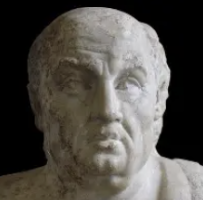
3 months 1 week ago
You can tell the character of every man when you see how he gives and receives praise.
▼
Source
source
Line 12.
4 months 1 week ago
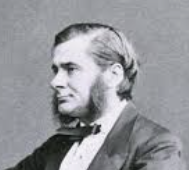
A great chapter of the history of the world is written in the chalk. Few passages in the history of man can be supported by such an overwhelming mass of direct and indirect evidence as that which testifies to the truth of the fragment of the history of the globe, which I hope to enable you to read, with your own eyes, tonight. Let me add, that few chapters of human history have a more profound significance for ourselves. I weigh my words well when I assert, that the man who should know the true history of the bit of chalk which every carpenter carries about in his breeches-pocket, though ignorant of all other history, is likely, if he will think his knowledge out to its ultimate results, to have a truer, and therefore a better, conception of this wonderful universe, and of man's relation to it, than the most learned student who is deep-read in the records of humanity and ignorant of those of Nature.
6 months 3 weeks ago
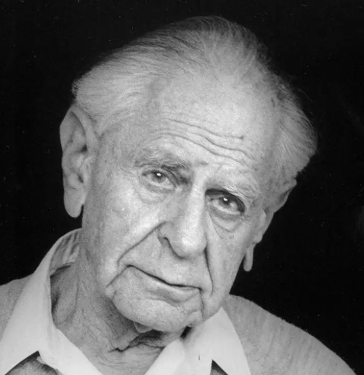
Science may be described as the art of systematic over-simplification - the art of discerning what we may with advantage omit.
▼
Source
source
The Open Universe : An Argument for Indeterminism (1992), p. 44
7 months 3 weeks ago
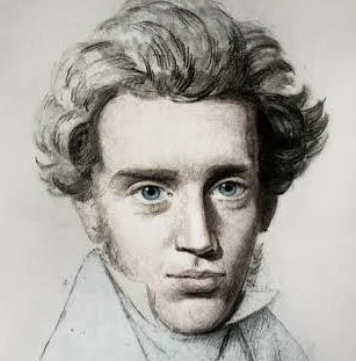
Now just as the historical gives occasion for the contemporary to become a disciple, but only it must be noted through receiving the condition from the God himself, since otherwise we speak Socratically, so the testimony of contemporaries gives occasion for each successor to become a disciple, but only it must be noted through receiving the condition from the God himself.
7 months 3 weeks ago
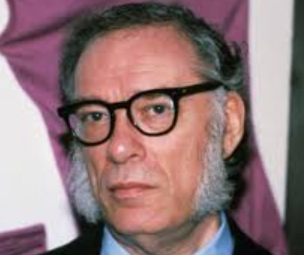
The fact that the general incidence of leukemia has doubled in the last two decades may be due, partly, to the increasing use of x-rays for numerous purposes. The incidence of leukemia in doctors, who are likely to be so exposed, is twice that of the general public. In radiologists the incidence is ten times greater.
2 months 3 weeks ago
I strive to discover how to signal my companions before I die, how to give them a hand, how to spell out for them in time one complete word at least, to tell them what I think this procession is, and toward what we go. And how necessary it is for all of us together to put our steps and hearts in harmony. To say in time a simple word to my companions, a password, like conspirators. Yes, the purpose of Earth is not life, it is not man. Earth has existed without these, and it will live on without them. They are but the ephemeral sparks of its violent whirling. Let us unite, let us hold each other tightly, let us merge our hearts, let us create - so long as the warmth of this earth endures, so long as no earthquakes, cataclysms, icebergs or comets come to destroy us - let us create for Earth a brain and a heart, let us give a human meaning to the superhuman struggle. This anguish is our second duty.
3 months 1 week ago
The men of the future will yet fight their way to many a liberty that we do not even miss.
▼
Source
source
Cambridge 1995, p. 114
2 months 3 weeks ago
Then what should we work for? Only this: proper understanding; unselfish action; truthful speech. A resolve to accept whatever happens as necessary and familiar, flowing like water from that same source and spring.
▼
Source
source
(Hays translation) IV, 33
4 months 1 week ago
One can never pay in gratitude; one can only pay "in kind" somewhere else in life.
▼
Source
source
North to the Orient (1935) Ch. 19
5 months 2 weeks ago
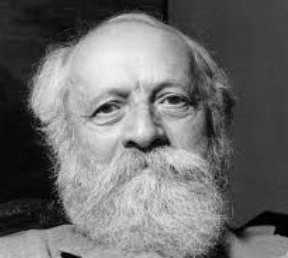
God ... demands everything, in order to give everything anew to him who loves Him, after that loving has truly given up all.
▼
Source
source
p. 45
5 months 1 week ago
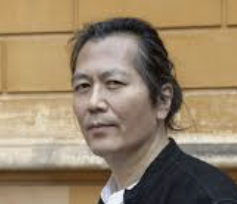
Architecture is a way for power to achieve eloquence through form.
2 months 3 weeks ago
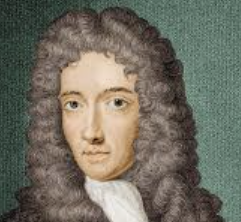
Not that I at all disallow the use of reasoning upon experiments, or the endeavouring to discern as early as we can the confederations, and differences, and tendencies of things: for such an absolute suspension of the exercise of reasoning were exceeding troublesome, if not impossible. And, as in that rule of arithmetic, which is commonly called regula falsi by proceeding upon a conjecturally-supposed number, as if it were that, which we inquire after, we are wont to come to the knowledge of the true number sought for; so in physiology it is sometimes conducive to the discovery of truth, to permit the understanding to make an hypothesis, in order to the explication of this or that difficulty, that by examining how far the phænomena are, or are not, capable of being solved by that hypothesis, the understanding may, even by its own errors, be instructed.
5 months 2 weeks ago
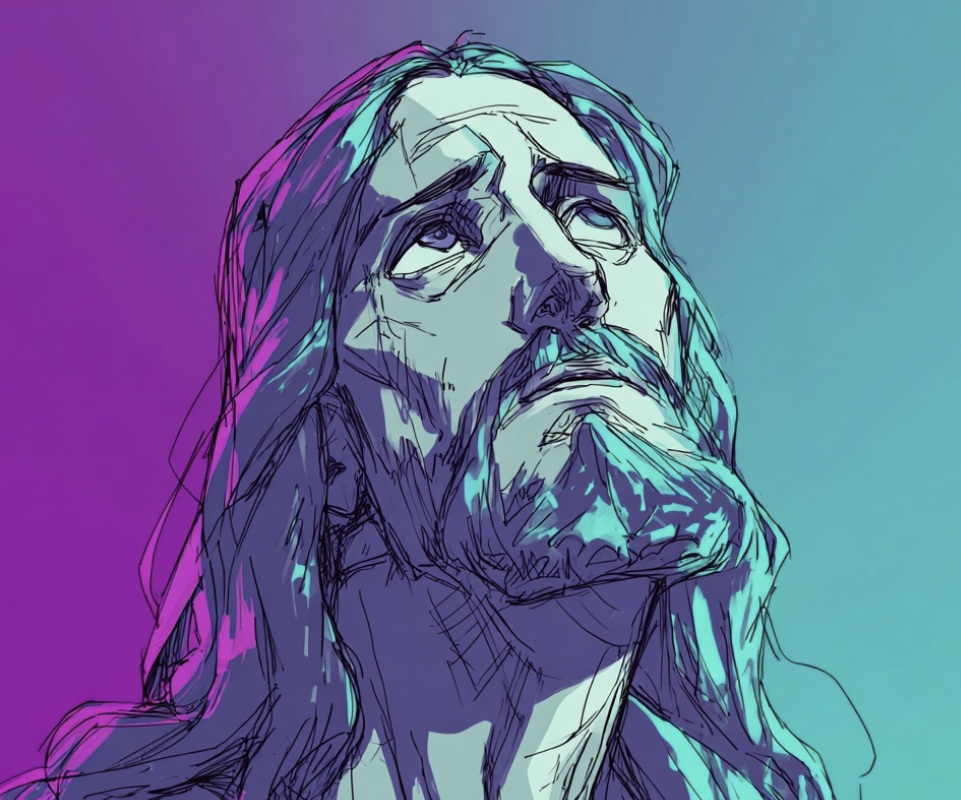
Be ye therefore ready also: for the Son of man cometh at an hour when ye think not.
▼
Source
source
12:40
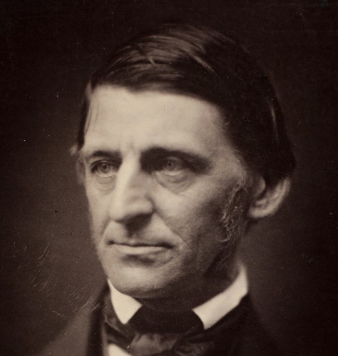
6 months 3 weeks ago
None believeth in the soul of man, but only in some man or person old and departed.
▼
Source
source
p. 25
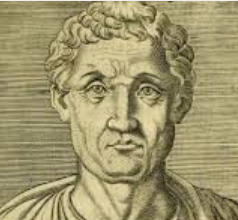
7 months 2 weeks ago
Thus, where'er the drift of hazardSeems most unrestrained to flow,Chance herself is reined and bitted,And the curb of law doth know.
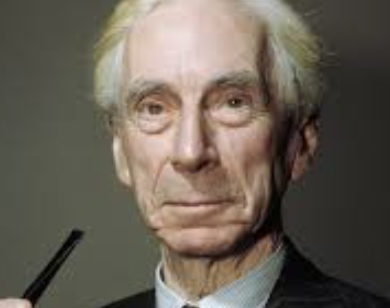
6 months 3 weeks ago
I am as firmly convinced that religions do harm as I am that they are untrue.
4 months 3 weeks ago
Language is a form of organized stutter.
▼
Source
source
Interview with John Lennon, December 1969, CBS Television
4 months 3 weeks ago
When we invent a new technology, we become cannibals. We eat ourselves alive since these technologies are merely extensions of ourselves. The new environment shaped by electric technology is a cannibalistic one that eats people. To survive one must study the habits of cannibals.
▼
Source
source
(p. 261)
2 months 3 weeks ago
Things have no hold on the soul. They have no access to it, cannot move or direct it. It is moved and directed by itself alone. It takes the things before it and interprets them as it sees fit.
▼
Source
source
(Hays translation) V, 19

4 months 4 weeks ago
I'm prepared to teach acceptance of religion, but, religion has to agree to the social contract. If we have to do it church by church, I'm ready.
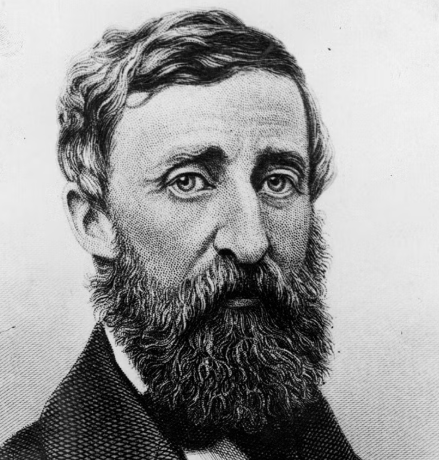
6 months 3 weeks ago
Howitt says of the man who found the great nugget which weighed twenty-eight pounds, at the Bendigo diggings in Australia: - "He soon began to drink; got a horse, and rode all about, generally at full gallop, and, when he met people, called out to inquire if they knew who he was, and then kindly informed them that he was 'the bloody wretch that had found the nugget.' At last he rode full speed against a tree, and nearly knocked his brains out." I think, however, there was no danger of that, for he had already knocked his brains out against the nugget.
▼
Source
source
p. 489
5 months 1 week ago
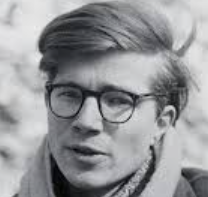
My theory was that we are all fundamentally 'multiple personalities', beginning with the baby and the child, and slowly developing into more complex selves. If, for some reason, we abruptly cease to develop -- through some trauma that undermines self-confidence -- all those potential personalities are stunted and repressed. And some accident or violent shock may give one of them the opportunity to 'take over'. This suggests, of course, that in some mysterious sense, our 'future' personalities are already there, in embryo, so to speak, and that they also develop as we mature. We move from personality to personality, as we might climb a ladder. The Beethovens and Leonardos got further up the ladder than most of us; yet even they failed to reach the top, as we can see if we study their lives.
▼
Source
source
pp. 228- 229
5 months 3 weeks ago
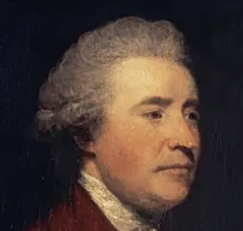
A great profusion of things, which are splendid or valuable in themselves, is magnificent. The starry heaven, though it occurs so very frequently to our view, never fails to excite an idea of grandeur. This cannot be owing to the stars themselves, separately considered. The number is certainly the cause. The apparent disorder augments the grandeur, for the appearance of care is highly contrary to our idea of magnificence. Besides, the stars lie in such apparent confusion, as makes it impossible on ordinary occasions to reckon them. This gives them the advantage of a sort of infinity.
▼
Source
source
Part II Section XIII
5 months ago
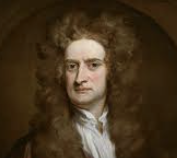
Truth is ever to be found in simplicity, and not in the multiplicity and confusion of things.
▼
Source
source
Cited in Rules for methodizing the Apocalypse, Rule 9, from a manuscript published in The Religion of Isaac Newton (1974) by Frank E. Manuel, p. 120
4 months 3 weeks ago
Once introduced discontinuity, once challenge any of the properties of visual space, and as they flow from each other, the whole conceptual framework collapses.
▼
Source
source
p. 43
6 months 3 weeks ago
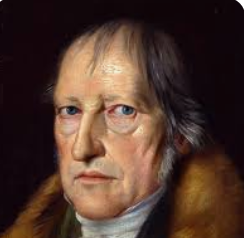
In immediate self-consciousness the simple ego is absolute object, which, however, is for us or in itself absolute mediation, and has as its essential moment substantial and solid independence. The dissolution of that simple unity is the result of the first experience; through this there is posited a pure self-consciousness, and a consciousness which is not purely for itself, but for another, i.e. as an existent consciousness, consciousness in the form and shape of thinghood. Both moments are essential, since, in the first instance, they are unlike and opposed, and their reflexion into unity has not yet come to light, they stand as two opposed forms or modes of consciousness. The one is independent whose essential nature is to be for itself, the other is dependent whose essence is life or existence for another. The former is the Master, or Lord, the latter is the Bondsman.
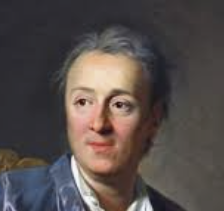
6 months 1 day ago
I believe in God, although I live very happily with atheists... It is very important not to mistake hemlock for parsley; but not at all so to believe or not in God.
▼
Source
source
As quoted in Against the Faith (1985) by Jim Herrick, p. 75
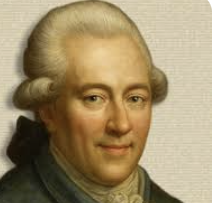
5 months 6 days ago
Every man has his moral backside which he refrains from showing unless he has to and keeps covered as long as possible with the trousers of decorum.
▼
Source
source
B 12 Variant translation: Everyone has a moral backside, which he does not show except in case of need and which he covers as long as possible with the breeches of respectability.
2 months 3 weeks ago
Men seek retreats for themselves, houses in the country, sea-shores, and mountains; and thou too art wont to desire such things very much. But this is altogether a mark of the most common sort of men, for it is in thy power whenever thou shalt choose to retire into thyself. For nowhere either with more quiet or more freedom from trouble does a man retire than into his own soul. Variant translation: Nowhere can man find a quieter or more untroubled retreat than in his own soul.
▼
Source
source
IV, 3.

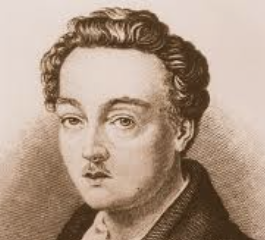
5 months 3 weeks ago
Revolution is like the daughters of Pelias: it cuts humanity to pieces in order to rejuvenate it.
▼
Source
source
Act II.
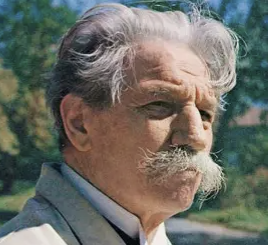
3 months 1 week ago
Don't let your hearts grow numb. Stay alert. It is your soul which matters.
3 months 1 week ago
Practice humility at first with man and only then before God. He who despises man, has also no respect for God.
6 months 3 weeks ago
What point of morals, of manners, of economy, of philosophy, of religion, of taste, of the conduct of life, has he not settled? What mystery has he not signified his knowledge of? What office, or function, or district of man's work, has he not remembered? What king has he not taught state, as Talma taught Napoleon? What maiden has not found him finer than her delicacy? What lover has he not outloved? What sage has he not outseen? What gentleman has he not instructed in the rudeness of his behavior?
▼
Source
source
Shakespeare; or, The Poet
4 months 3 weeks ago
At the approach of danger there are always two voices that speak with equal force in the heart of man: one very reasonably tells the man to consider the nature of the danger and the means of avoiding it; the other even more reasonable says that it is too painful and harassing to think of the danger, since it is not a man's power to provide for everything and escape from the general march of events; and that it is therefore better to turn aside from the painful subject till it has come, and to think of what is pleasant. In solitude a man generally yields to the first voice; in society to the second.
▼
Source
source
Bk. X, ch. 17
3 months 1 week ago
Defined from outside and quite empirically, complete civilization consists in realizing all possible progress in discovery and invention and in the arrangements of human society, and seeing that they work together for the spiritual perfecting of individuals, which is the real and final object of civilization. Reverence for life is in a position to complete this conception of civilization and to build its foundations on what lies at the core of our being. This it does by defining what is meant by the spiritual perfecting of man and making it consist in reaching the spirituality of an ever-deepening reverence for life.
▼
Source
source
quoted in Georg Feuerstein, Subhash Kak, and David Frawley. - In search of the cradle of civilization _ new light on ancient India-Quest Books
6 months 3 weeks ago
Political Economy regards the proletarian ... like a horse, he must receive enough to enable him to work. It does not consider him, during the time when he is not working, as a human being. It leaves this to criminal law, doctors, religion, statistical tables, politics, and the beadle. ... (1) What is the meaning, in the development of mankind, of this reduction of the greater part of mankind to abstract labor? (2) What mistakes are made by the piecemeal reformers, who either want to raise wages and thereby improve the situation of the working class, or - like Proudhon - see equality of wages as the goal of social revolution?.
▼
Source
source
First Manuscript - Wages of Labour, p. 6.
4 months 3 weeks ago
If you have a faith, it is statistically overwhelmingly likely that it is the same faith as your parents and grandparents had. No doubt soaring cathedrals, stirring music, moving stories and parables, help a bit. But by far the most important variable determining your religion is the accident of birth. The convictions that you so passionately believe would have been a completely different, and largely contradictory, set of convictions, if only you had happened to be born in a different place. Epidemiology, not evidence.

3 months 1 week ago
If the church had deadly sins, the state has capital crimes; if the one had heretics, the other has traitors; the one ecclesiastical penalties, the other criminal penalties; the one inquisitorial processes, the other fiscal; in short, there sins, here crimes, there inquisition and here - inquisition. Will the sanctity of the state not fall like the church's? The awe of its laws, the reverence for its highness, the humility of its 'subjects', will this remain? Will the 'saint's' face not be stripped of its adornment?
▼
Source
source
Cambridge 1995, p. 211, 212
5 months 3 weeks ago
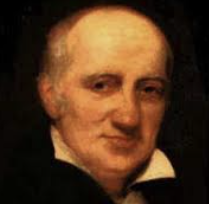
The political freedom of conscience and of the press, so far from being as it is commonly supposed an extension, is a new case of the limitation of rights and discretion. Conscience and the press ought to be unrestrained, not because men have a right to deviate from the exact line that duty prescribes, but because society, the aggregate of individuals, has no right to assume the prerogative of an infallible judge, and to undertake authoritatively to prescribe to its members in matters of pure speculation.
▼
Source
source
Vol. 1, bk 2 : Principles of Society , Ch. 5 : Of Rights

6 months 2 weeks ago
Let hopes and sorrows, fears and angers be, and think each day that dawns the last you'll see; For so the hour that greets you unforeseen, will bring with it enjoyment twice as keen.
▼
Source
source
Book I, epistle iv, line 12 (translated by John Conington)
2 months 3 weeks ago
Why dost thou not pray... to give thee the faculty of not fearing any of the things which thou fearest, or of not desiring any of the things which thou desirest, or not being pained at anything, rather than pray that any of these things should not happen or happen?
▼
Source
source
IX, 40
7 months 4 days ago
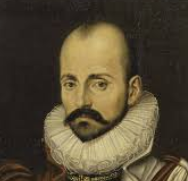
All that is under heaven, says the sage, runs one law and one fortune.
▼
Source
source
Ch. 12, tr. Cotton, rev. W. Carew Hazlitt, 1877
3 months 1 week ago
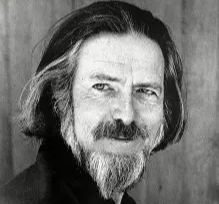
A person who thinks all the time has nothing to think about except thoughts. So he loses touch with reality, and lives in a world of illusion.
CivilSimian.com created by AxiomaticPanic, CivilSimian, Kalokagathia