


5 months 1 week ago
The average mind is slow in grasping a truth, but when the most thoroughly organized, centralized institution, maintained at an excessive national expense, has proven a complete social failure, the dullest must begin to question its right to exist. The time is past when we can be content with our social fabric merely because it is "ordained by divine right," or by the majesty of the law.
5 months 3 weeks ago
Some decent regulated pre-eminence, some preference (not exclusive appropriation) given to birth, is neither unnatural, nor unjust, nor impolitic.

5 months 1 week ago
We must wish either for that which actually exists or for that which cannot in any way exist - or, still better, for both. That which is and that which cannot be are both outside the realm of becoming.
▼
Source
source
p. 154
4 months 3 weeks ago
Familiarity breeds contempt.
4 months 3 weeks ago
Most of what we strive for in our modern life uses the apparatus of goal seeking that was originally set up to seek goals in the state of nature.

7 months 3 weeks ago
Man is the only creature who refuses to be what he is.

6 months 2 weeks ago
A utopia of judicial reticence: take away life, but prevent the patient from feeling it; deprive the prisoner of all rights, but do not inflict pain; impose penalties free of all pain. Recourse to psycho-pharmacology and to various physiological 'disconnectors', even if it is temporary, is a logical consequence of this 'non-corporal' penalty.
▼
Source
source
Chapter One, The Spectacle of the Scaffold
6 months 4 weeks ago
Those truly natural wants, which reason alone, without some other help, is not able to fence against, nor keep from disturbing us. The pains of sickness and hurts, hunger, thirst, and cold, want of sleep and rest or relaxation of the part weary'd with labour, are what all men feel and the best dispos'd minds cannot but be sensible of their uneasiness; and therefore ought, by fit applications, to seek their removal, though not with impatience, or over great haste, upon the first approaches of them, where delay does not threaten some irreparable harm. The pains that come from the necessities of nature, are monitors to us to beware of greater mischiefs, which they are the forerunner of; and therefore they must not be wholly neglected, and strain'd too far. But yet the more children can be inur'd to hardships of this kind, by a wise care to make them stronger in body and mind, the better it will be for them.
▼
Source
source
Sec. 107
6 months 2 weeks ago
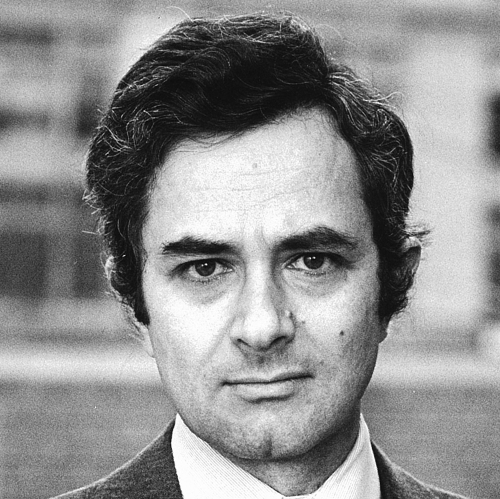
Eventually, I believe, current attempts to understand the mind by analogy with man-made computers that can perform superbly some of the same external tasks as conscious beings will be recognized as a gigantic waste of time.
▼
Source
source
p. 16.
2 months 3 weeks ago
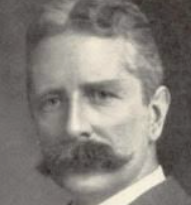
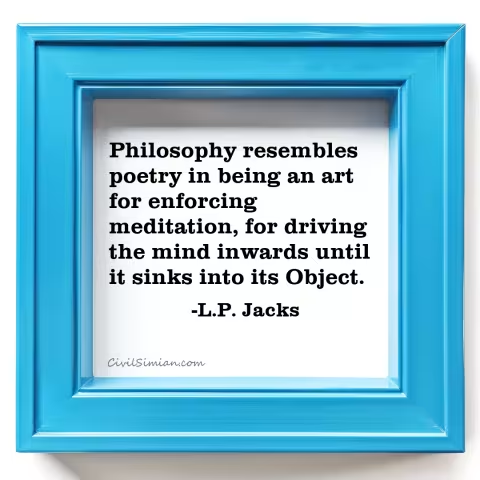
Philosophy resembles poetry in being an art for enforcing meditation, for driving the mind inwards until it sinks into its Object.

3 months 2 weeks ago
The second failing of liberalism comes directly out of the fact that it attempts to lower the horizons of politics. Liberal societies do not want to tell you how to live. They do not want to define "the good life" because that is the source of conflict, but as a result liberal societies tend not to satisfy these very deep human cravings for community, because... there's something wrong with the basic liberal premise that we all start... as self-interested individuals. We're not self-interested individuals.
▼
Source
source
15:22
2 months 3 weeks ago
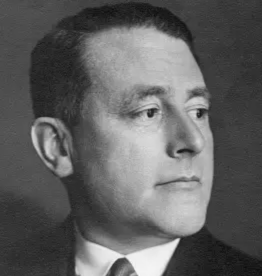
All significant concepts of the modern theory of the state are secularized theological concepts not only because of their historical development-in which they were transferred from theology to the theory of the state, whereby, for example, the omnipotent God became the omnipotent lawgiver-but also because of their systematic structure, the recognition of which is necessary for a sociological consideration of these concepts. The exception in jurisprudence is analogous to the miracle in theology.
6 months 3 weeks ago
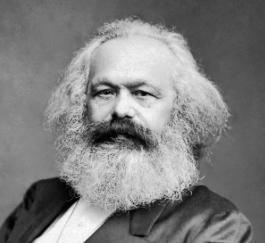
The Communists disdain to conceal their views and aims. They openly declare that their ends can be attained only by the forcible overthrow of all existing social conditions. Let the ruling classes tremble at a Communistic revolution. The proletarians have nothing to lose but their chains. They have a world to win. WORKING MEN OF ALL COUNTRIES, UNITE!
▼
Source
source
Section 4, paragraph 11 (last paragraph) Variant translation: Workers of the world, unite!

5 months 1 week ago
Society triumphs over many. They wish to regenerate the world with their institutions, with their moral philosophy, with their love. Then they sink to living from breakfast till dinner, from dinner till tea, with a little worsted work, and to looking forward to nothing but bed. When shall we see a life full of steady enthusiasm, walking straight to its aim, flying home, as that bird is now, against the wind - with the calmness and the confidence of one who knows the laws of God and can apply them?
3 months 1 week ago
Criticism actually says: You must free your I so completely from all limitations that it becomes a human I. I say: Free yourself as far as you can, and you have done your part; because it is not given to everyone to break through all limits, or, more eloquently: that is not a limit for everyone which is one to the others. Consequently, don't exhaust yourself on the limits of others; it's enough if you tear down your own. Who has ever been able to break down even one limit for all people? Aren't countless people today, as at all times, running around with all the "limitations of humanity"? One who overturns one of his limits may have shown others the way and the means; the overturning of their limits remains their affair.
▼
Source
source
Landstreicher 2017, p. 97
7 months 3 days ago
Now when God sends forth his holy Gospel, He deals with us in a twofold manner, the first outwardly, then inwardly. Outwardly he deals with us through the oral word of the Gospel and through material sings, that is, baptism adndthe sacrament of the altar. Inwardly He deals with us through the Holy spirit, faith, and other gifts. But whatever their measure of order the outward factors should and must procede. The inward experience follows and is effected by the outward. God has determined to give the inward to no one except through the outward.
▼
Source
source
Luthers Works, 40 p. 146 as quoted in Against the Idols: The Reformation of Worship from Erasmus to Calvinby Carlos M. N. Eire, p. 72
5 months 3 weeks ago
It is imperative that we should not pare down the meaning of a dream to fit some narrow doctrine. ... No language exists that cannot be misused. It is hard to realize how badly we are fooled by the abuse of ideas, it even seems as if the unconscious had a way of strangling the physician in the coils of his own theory. p 11; this was originally listed here in a somewhat misleading form combining it with another statement on the interpretations of dreams on p. 14: No language exists that cannot be misused ... Every Interpretation is hypothetical, for it is a mere attempt to read an unfamiliar text.

6 months 4 weeks ago
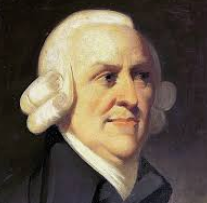
When the act of navigation was made, though England and Holland were not actually at war, the most violent animosity subsisted between the two nations. ... It is not impossible, therefore, that some of the regulations of this famous act may have proceeded from national animosity. They are as wise, however, as if they had all been dictated by the most deliberate wisdom. National animosity at that particular time aimed at the very same object which the most deliberate wisdom would have recommended, the diminution of the naval power of Holland, the only naval power which could endanger the security of England.
▼
Source
source
Chapter II
5 months 3 weeks ago
Economy is a distributive virtue, and consists not in saving but selection. Parsimony requires no providence, no sagacity, no powers of combination, no comparison, no judgment.
6 months 3 weeks ago
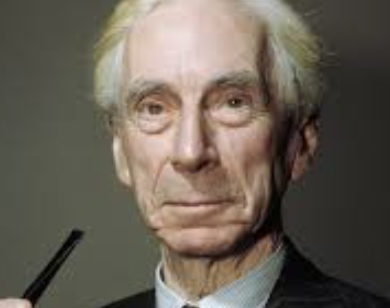
We are faced with the paradoxical fact that education has become one of the chief obstacles to intelligence and freedom of thought.
▼
Source
source
Ch. 12: Free Thought and Official Propaganda

6 months 1 day ago
I can cure the gout or stone in some, sooner than Divinity, Pride, or Avarice in others.
▼
Source
source
Section 9
7 months 3 weeks ago
The absurd ... is an experience to be lived through, a point of departure, the equivalent, in existence of Descartes' methodical doubt. Absurdism, like methodical doubt, has wiped the slate clean. It leaves us in a blind alley. But, like methodical doubt, it can, by returning upon itself, open up a new field of investigation, and in the process of reasoning then pursues the same course. I proclaim that I believe in nothing and that everything is absurd, but I cannot doubt the validity of my proclamation and I must at least believe in my protest. The first and only evidence that is supplied me, within the terms of the absurdist experience, is rebellion ... Rebellion is born of the spectacle of irrationality, confronted with an unjust and incomprehensible condition.
7 months 2 weeks ago
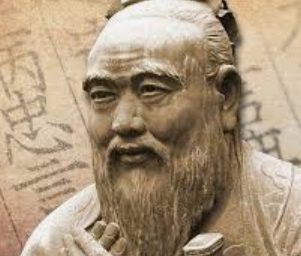
When you serve your mother and father it is okay to try to correct them once in a while. But if you see that they are not going to listen to you, keep your respect for them and don't distance yourself from them. Work without complaining.

3 months 3 weeks ago
All wars today tend to be netwars.
▼
Source
source
55
6 months 4 weeks ago
I doubt not, but from self-evident Propositions, by necessary Consequences, as incontestable as those in Mathematics, the measures of right and wrong might be made out.
▼
Source
source
Book IV, Ch. 3, sec. 18

5 months 1 week ago
The intellectual's spirit as an amateur can enter and transform the merely professional routine most of us go through into something much more lively and radical; instead of doing what one is supposed to do one can ask why one does it, who benefits from it, how can it reconnect with a personal project and original thoughts.
▼
Source
source
p. 83
6 months 3 weeks ago
The camera is as subjective as we are.
▼
Source
source
An Outline of Philosophy Ch.15 The Nature of our Knowledge of Physics, 1927

2 months 3 weeks ago
Long live the king,' cry the loving and the loyal, beside themselves with joy. 'Long live the king,' responds the republican hypocrite in dire terror. What does it matter? There is only one cry. And the king is crowned.
▼
Source
source
Chapter IX, p. 79

6 months 4 weeks ago
The Managers of that Trade themselves, and others, testify, that many of these African nations inhabit fertile countries, are industrious farmers, enjoy plenty, and lived quietly, averse to war, before the Europeans debauched them with liquors, and bribing them against one another; and that these inoffensive people are brought into slavery, by stealing them, tempting Kings to sell subjects, which they can have no right to do, and hiring one tribe to war against another, in order to catch prisoners. By such wicked and inhuman ways the English are said to enslave towards one hundred thousand yearly; of which thirty thousand are supposed to die by barbarous treatment in the first year; besides all that are slain in the unnatural wars excited to take them. So much innocent blood have the Managers and Supporters of this inhuman Trade to answer for to the common Lord of all!
6 months 2 weeks ago
This market way of life promotes addictions to stimulation and obsessions with comfort and convenience.
▼
Source
source
(p29)
5 months 2 weeks ago
This new philosophy, however, was far from giving the temporal an inherent position and function in the constitution of things. Change was acting on the side of man but only because of fixed laws which governed the changes that take place. There was hope in change just because the laws that govern it do not change.
6 months 3 weeks ago
I believe that the early success and reputation of Carlyle's French Revolution, were considerably accelerated by what I wrote about it in the Review. Immediately on its publication, and before the commonplace critics, all whose rules and modes of judgment it set at defiance, had time to preoccupy the public with their disapproval of it, I wrote and published a review of the book, hailing it as one of those productions of genius which are above all rules, and are a law to themselves.
▼
Source
source
(p. 217)

3 months 2 weeks ago
A poet without love were a physical and metaphysical impossibility.
▼
Source
source
Burns (1828).
3 months 4 days ago
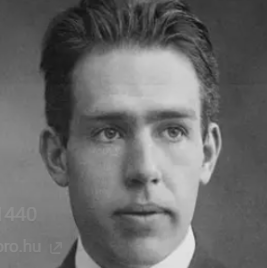
No, no, you are not thinking, you are just being logical.
▼
Source
source
In response to those who made purely formal or mathematical arguments, as quoted in What Little I Remember (1979) by Otto Robert Frisch, p. 95
4 months 3 weeks ago
They pass peaceful lives who ignore mine and thine.
▼
Source
source
Maxim 790
4 months 1 week ago
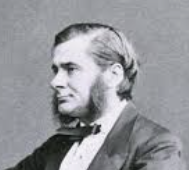
M. Comte's philosophy, in practice, might be compendiously described as Catholicism minus Christianity.
▼
Source
source
On the Physical Basis of Life

6 months 2 weeks ago
This book, admirable in so many respects, power in its break and style, is even more intimidating for me in that, having formely had the good fortune to study under Michel Foucault, I retain the consciousness of an admiring and grateful disciple. Now, the disciple's consciousness, when he starts, I would not say to dispute, but to engage in dialogue with the master or, better, to articulate the interminable and silent dialogue which made him into a disciple-this disciple's consciousness is an unhappy consciousness.
▼
Source
source
Cogito and The History of Madness (Routledge classics edition)



6 months 4 weeks ago
The greatest problem for the human race, to the solution of which Nature drives man, is the achievement of a universal civic society which administers law among men.
▼
Source
source
Fifth Thesis
6 months 2 weeks ago
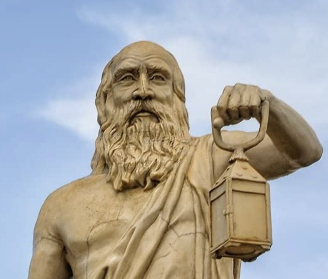
Perdiccas threatened to put him to death unless he came to him, "That's nothing wonderful," Diogenes said, "for a beetle or a tarantula would do the same."
▼
Source
source
Diogenes Laërtius, vi. 44

6 months 3 weeks ago
Our age is retrospective. It builds the sepulchres of the fathers. It writes biographies, histories, and criticism. The foregoing generation beheld God and nature face to face; we, through their eyes. Why should not we also enjoy an original relation to the universe. Why should not we have a poetry and philosophy of insight and not of tradition, and a religion by revelation to us, and not the history of theirs?
▼
Source
source
Introduction

5 months 3 weeks ago
A heart without music is like beauty without melancholy.
6 months 3 weeks ago
Each piece of money is a mere coin, or means of circulation, only so long as it actually circulates.
▼
Source
source
Vol. I, Ch. 3, Section 2(c), pg. 145.
6 months 3 weeks ago
Every really able man, in whatever direction he work,-a man of large affairs, an inventor, a statesman, an orator, a poet, a painter,-if you talk sincerely with him, considers his work, however much admired, as far short of what it should be.
▼
Source
source
Immortality
5 months 1 week ago
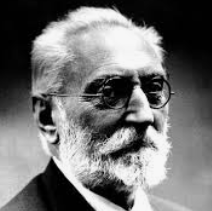
The real sin - perhaps it is a sin against the Holy Ghost for which there is no remission - is the sin of heresy, the sin of thinking for oneself. The saying has been heard before now, here in Spain, that to be a liberal - that is, a heretic - is worse than being an assassin, a thief, or an adulterer. The gravest sin is not to obey the Church, whose infallibility protects us from reason.
CivilSimian.com created by AxiomaticPanic, CivilSimian, Kalokagathia