


6 months 3 weeks ago
The more one presupposes that his own power will suffice him to realize what he desires the more practical is that desire. When I treat a man contemptuously, I can inspire him with no practical desire to appreciate my grounds of truth. When I treat any one as worthless, I can inspire him with no desire to do right.
▼
Source
source
Part III : Selection on Education from Kant's other Writings, Ch. I Pedagogical Fragments, # 15


6 months 4 weeks ago
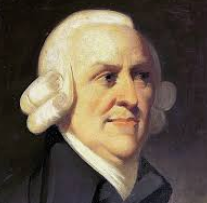
As soon as the land of any country has all become private property, the landlords, like all other men, love to reap where they never sowed, and demand a rent even for its natural produce.
▼
Source
source
Chapter VI, p. 60.
4 months 3 weeks ago
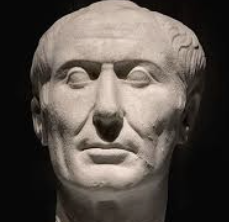
Confidence is the only bond of friendship.
▼
Source
source
Maxim 34
6 months 2 weeks ago
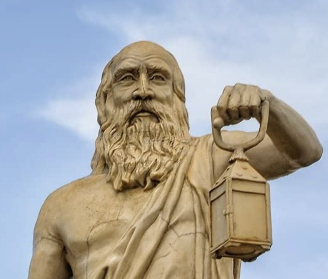
On reaching Athens he fell in with Antisthenes. Being repulsed by him, because he never welcomed pupils, by sheer persistence Diogenes wore him out. Once when he stretched out his staff against him, the pupil offered his head with the words, "Strike, for you will find no wood hard enough to keep me away from you, so long as I think you've something to say."
▼
Source
source
Diogenes Laërtius, vi. 21,
3 months 1 week ago
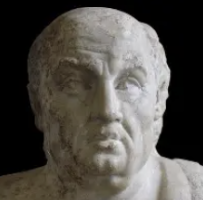
Anger, as we have said, is eager to punish; and that such a desire should exist in man's peaceful breast is least of all according to his nature; for human life is founded on benefits and harmony and is bound together into an alliance for the common help of all, not by terror, but by love towards one another.
2 months 3 weeks ago
If God holds all mankind guilty for the sin of Adam, if he has visited upon the innocent the punishment of the guilty, if he is to torture any single soul for ever, then it is wrong to worship him.
▼
Source
source
[Lectures and essays (1879), vol. 2, p. 224]

5 months 1 week ago
A man should be mourned at his birth, not at his death.
▼
Source
source
No. 40. (Usbek writing to Ibben)
5 months 1 week ago
And love, above all when it struggles against destiny, overwhelms us with the feeling of the vanity of this world of appearances and gives us a glimpse of another world, in which destiny is overcome and liberty is law.

2 months 3 weeks ago
To the existence of banks of discount for cash... there can be no objection, because there can be no danger of abuse, and they are a convenience both to merchants and individuals. I think they should even be encouraged, by allowing them a larger than legal interest on short discounts, and tapering thence, in proportion as the term of discount is lengthened, down to legal interest on those of a year or more. Even banks of deposit, where cash should be lodged, and a paper acknowledgment taken out as its representative, entitled to a return of the cash on demand, would be convenient for remittances, travelling persons, etc. But, liable as its cash would be to be pilfered and robbed, and its paper to be fraudulently re-issued, or issued without deposit, it would require skilful and strict regulation.
▼
Source
source
ME 13:431

5 months 2 weeks ago
The words of the world want to make sentences.
▼
Source
source
Ch. 5, sect. 4
4 months 2 weeks ago
Age may have one side, but assuredly Youth has the other. There is nothing more certain than that both are right, except perhaps that both are wrong. Let them agree to differ; for who knows but what agreeing to differ may not be a form of agreement rather than a form of difference?
▼
Source
source
Crabbed Age and Youth.

7 months 2 days ago
I do myself a greater injury in lying than I do him of whom I tell a lie.
▼
Source
source
Book II, Ch. 17

2 months 3 weeks ago
If one's organism is... the preeminent advantage, and the source of all others, education is the second. The best made brain would be a total loss without it...
4 months 2 weeks ago
Mankind was never so happily inspired as when it made a cathedral.
▼
Source
source
An Inland Voyage (1878).

5 months 2 weeks ago
To have grazed every form of failure, including success.
6 months 3 weeks ago
A mind does not receive truth as a chest receives jewels that are put into it, but as the stomach takes up food into the system. It is no longer food, but flesh, and is assimilated. The appetite and the power of digestion measure our right to knowledge. He has it who can use it. As soon as our accumulation overruns our invention or power to use, the evils of intellectual gluttony begin,- congestion of the brain, apoplexy, and strangulation.
▼
Source
source
"The Natural History of Intellect", p. 30


5 months 1 week ago
Station, power, wealth-how inadequate they have proved! How useless and insecure!
6 months 4 weeks ago
I have no great faith in political arithmetic, and I mean not to warrant the exactness of either of these computations.
▼
Source
source
Chapter V, p. 577.
5 months 3 weeks ago
I think that the principal and most basic spiritual need of the Russian People is the need for suffering, incessant and unslakeable suffering, everywhere and in everything. I think the Russian People have been infused with this need to suffer from time immemorial. A current of martyrdom runs through their entire history, and it flows not only from external misfortunes and disasters but springs from the very heart of the People themselves. There is always an element of suffering even in the happiness of the Russian People, and without it their happiness is incomplete.
▼
Source
source
A Writer's Diary, Vol. 1: 1873-1876 (1994), pp. 161-162
6 months 3 weeks ago
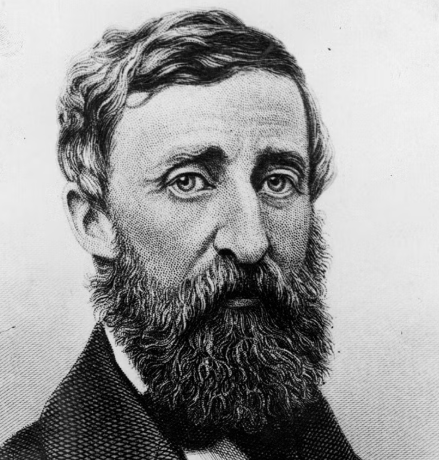
It would be worth the while to look closely into the eye which has been open and seeing at such hours, and in such solitudes, its dull, yellowish, greenish eye. Methinks my own soul must be a bright invisible green.


3 months 2 weeks ago
To fall into mere unreasoning deliquium of love and admiration, was not good; but such unreasoning, nay irrational supercilious no-love at all is perhaps still worse!-It is a thing forever changing, this of Hero-worship: different in each age, difficult to do well in any age. Indeed, the heart of the whole business of the age, one may say, is to do it well.

6 months ago
To ruminate upon evils, to make critical notes upon injuries, and be too acute in their apprehensions, is to add unto our own tortures, to feather the arrows of our enemies, to lash ourselves with the scorpions of our foes, and to resolve to sleep no more.
▼
Source
source
Part III, Section XII
6 months 2 weeks ago
If it recedes one day, leaving behind its works and signs on the shores of our civilization, the structuralist invasion might become a question or the historian of ideas, or perhaps even an object. But the historian would be deceived if he came to this pass: by the very act of considering the structuralist invasion as an object he would forget its meaning and would forget that what is at stake, first of all, is an adventure of vision, a conversion of the way of putting questions to any object posed before us, to historical objects-his own- in particular. And, unexpectedly among these, the literary objects.
▼
Source
source
Force and Signification
5 months 2 weeks ago
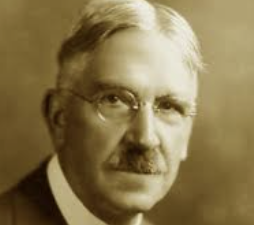
But the individual butterfly or earthquake remains just the unique existence which it is. We forget in explaining its occurrence that it is only the occurrence that is explained, not the thing itself.
5 months 2 weeks ago
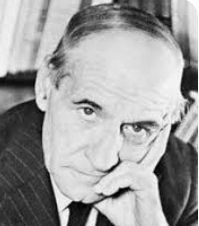
Every intellectual effort sets us apart from the commonplace, and leads us by hidden and difficult paths to secluded spots where we find ourselves amid unaccustomed thoughts.
▼
Source
source
p. 15
6 months 3 weeks ago
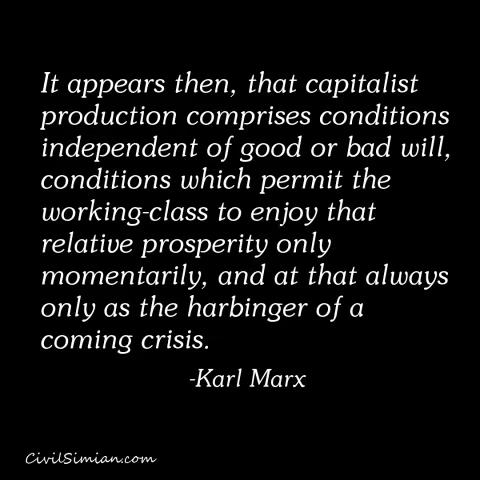
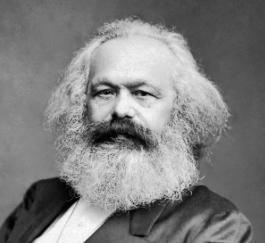
We have just seen that, apart from money-capital, circulating capital is only another name for commodity-capital. But to the extent that labour power circulates in the market,it is not capital, no form of commodity-capital. It is not capital at all; the labourer is not a capitalist, although he brings a commodity to market, namely his own skin.
▼
Source
source
Vol. II, Ch. X, p. 211.
2 months 3 weeks ago
I think myself that we have more machinery of government than is necessary, too many parasites living on the labor of the industrious.
▼
Source
source
Letter to William Ludlow
5 months 2 weeks ago
The more you live, the less useful it seems to have lived.
4 months 3 weeks ago
Poverty is the lack of many things, but avarice is the lack of all things.
▼
Source
source
Maxim 236
6 months 2 weeks ago
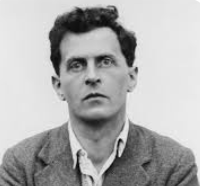
"I never believed in God before." - that I understand. But not: "I never really believed in Him before."
▼
Source
source
p. 53e
6 months 3 weeks ago
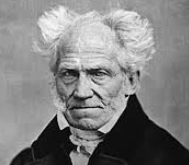
We forfeit three-fourths of ourselves in order to be like other people.
▼
Source
source
As attributed in Dictionary of Quotations from Ancient and Modern English and Foreign Sources (1899) by James Wood, p. 624
5 months 2 weeks ago
A person who wakes up after a night of unbroken sleep has the illusion of beginning something new. When one instead remains awake the whole night long, nothing new begins.
3 months 5 days ago
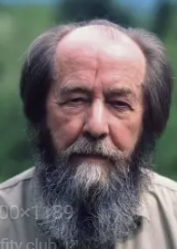
Woe to that nation whose literature is disturbed by the intervention of power. Because that is not just a violation against "freedom of print", it is the closing down of the heart of the nation, a slashing to pieces of its memory. The nation ceases to be mindful of itself, it is deprived of its spiritual unity, and despite a supposedly common language, compatriots suddenly cease to understand one another Woe to that nation whose literature is cut short by the intrusion of force. This is not merely interference with freedom of the press but the sealing up of a nation's heart, the excision of its memory.
▼
Source
source
Variant translation, as quoted in TIME

6 months 3 weeks ago
I have at last come to the end of the Faerie Queene: and though I say "at last", I almost wish he had lived to write six books more as he had hoped to do - so much have I enjoyed it.
▼
Source
source
On Edmund Spenser's long poem in a letter to Arthur Greeves (7 March 1916), published in The Collected Letters of C.S. Lewis
6 months 1 day ago
Seeing therefore they are both [heat and pain] immediately perceived at the same time, and the fire affects you only with one simple, or uncompounded idea, it follows that this same simple idea is both the intense heat immediately perceived, and the pain; and consequently, that the intense heat immediately perceived, is nothing distinct from a particular sort of pain.
▼
Source
source
Philonous to Hylas
6 months 2 weeks ago
With regard to the rather common general distinction between good and bad sex ..., bad sex is generally better than none at all. This should not be controversial: it seems to hold for other important matters, like food, music, literature, and society. In the end, one must choose from among the available alternatives, whether their availability depends on the environment or on one's own constitution. And the alternatives have to be fairly grim before it becomes rational to opt for nothing.
▼
Source
source
"Sexual Perversion" (1969), p. 52.
6 months 3 weeks ago
Malthus's population principle was quite as much a banner, and a point of union among us, as any opinion specially belonging to Bentham. This great doctrine, originally brought forward as an argument against the indefinite improvability of human affairs, we took up with ardent zeal in the contrary sense, as indicating the sole means of realizing that improvability by securing full employment at high wages to the whole labouring population through a voluntary restriction of the increase of their numbers.
▼
Source
source
(p. 105)
3 months 3 weeks ago
There is thus a certain plausibility to Nietzsche's doctrine, though it is dynamite. He maintains in effect that the gulf separating Plato from the average man is greater than the cleft between the average man and a chimpanzee.
▼
Source
source
p. 151
5 months 2 weeks ago
The assurance that we have no means of answering final questions is no valid excuse for callousness towards them. The more deeply should we feel, down to the roots of our being, their pressure and their sting. Whose hunger has ever been sated with the knowledge that he could not eat?
▼
Source
source
p. 15
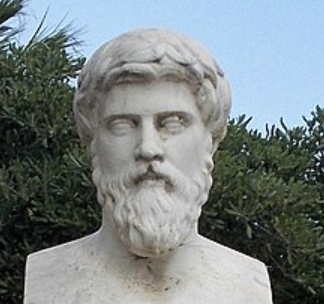
6 months 1 week ago
Agesilaus was very fond of his children; and it is reported that once toying with them he got astride upon a reed as upon a horse, and rode about the room; and being seen by one of his friends, he desired him not to speak of it till he had children of his own.
▼
Source
source
Of Agesilaus the Great
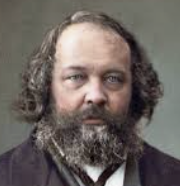
5 months 3 weeks ago
All exercise of authority perverts, and submission to authority humiliates.
▼
Source
source
As quoted in Michael Bakunin (1937), E.H. Carr, p. 453
2 months 3 weeks ago
Which of the two eternal roads shall I choose? Suddenly I know that my whole life hangs on this decision - the life of the entire Universe. Of the two, I choose the ascending path. Why? For no intelligible reason, without any certainty; I know how ineffectual the mind and all the small certainties of man can be in this moment of crisis. I choose the ascending path because my heart drives me toward it. "Upward! Upward! Upward!" my heart shouts, and I follow it trustingly.
5 months 2 weeks ago
Bach: a scale of tears upon which our desires for God ascend.

11 months ago
The source of totalitarianism is a dogmatic attachment to the official word: the lack of laughter, of ironic detachment. An excessive commitment to Good may in itself become the greatest Evil: real Evil is any kind of fanatical dogmatism, especially exerted in the name of supreme Good... Consider only Mozart's Don Giovanni at the end of the opera, when he is confronted with the following choice: if he confesses his sins, he can still achieve salvation; if he persists, he will be damned forever. From this viewpoint of the pleasure principle, the proper thing to do would be to renounce his past, but he does not, he persists in his Evil, although he knows that by persisting he will be damned forever. Paradoxically, with his final choice of Evil, he acquires the status of an ethical hero - that is, of someone who is guided by fundamental principles beyond the pleasure principle and not just by the search for pleasure or material gain.
CivilSimian.com created by AxiomaticPanic, CivilSimian, Kalokagathia