
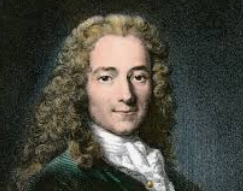
3 months 3 weeks ago
Business is the salt of life.
▼
Source
This is a proverb which can be found in Robert Codrington's "Youth's Behaviour, Second Part" (1672) and in Thomas Fuller's "Gnomologia" (1732)
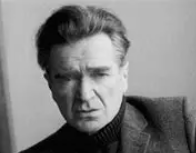
3 months 3 weeks ago
History proves nothing because it contains everything.
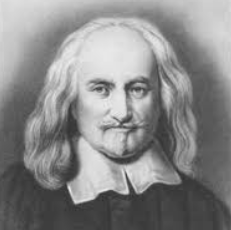
3 months 3 weeks ago
"For he that hath strength enough to protect all, wants not sufficiency to oppresse all."
▼
Source
De Cive "Of the right of him, whether Counsell, or one Man onely, who hath the supreme power in the City" (1642) Ch. 6

3 months 3 weeks ago
The man whom Nature has appointed to do great things is, first of all, furnished with that openness to Nature which renders him incapable of being insincere! To his large, open, deep-feeling heart Nature is a Fact: all hearsay is hearsay; the unspeakable greatness of this Mystery of Life, let him acknowledge it or not, nay even though he seem to forget it or deny it, is ever present to him,—fearful and wonderful, on this hand and on that.
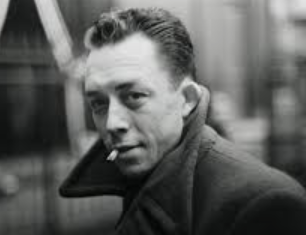
3 months 3 weeks ago
There are causes worth dying for, but none worth killing for.
▼
Source
Widely attributed to Camus on the internet, the earliest attribution of such a statement to him yet located is an unsourced citation in Quotations from the Wayside (1999) by Brenda Wong: "Many things are worth dying for, but none worth killing for." The e
3 months 3 weeks ago
The man who is fortunate in his choice of son-in-law gains a son; the man unfortunate in his choice loses his daughter also.
▼
Source
Freeman (1948), p. 169
3 months 3 weeks ago
Assume that the new elite were clearly and simply to proclaim its intentions which are to supplant the old elite; no one would come to its assistance, it would be defeated before having fought a battle. On the contrary, it appears to be asking nothing for itself, well knowing that without asking anything in advance it will obtain what it wants as a consequence of its victory.
▼
Source
p. 92.
3 months 3 weeks ago
My answer to the question "Why do we philosophize?" is as follows. We philosophize for the same reason that we move and speak and laugh and eat and love. In other words, we philosophize because man is a philosophical animal.… We may be as sceptical as we please. Our very scepticism is the confession of an implicit philosophy.
▼
Source
Chapter I
3 months 3 weeks ago
I do see one large and grievous kind of ignorance, separate from the rest, and as weighty as all the other parts put together. Thinking that one knows a thing when one does not know it. Through this, I believe, all the mistakes of the mind are caused in all of us.
▼
Source
229c
3 months 3 weeks ago
The skepticism which fails to contribute to the ruin of our health is merely an intellectual exercise.
3 months 3 weeks ago
The doctrine of Right and Wrong, is perpetually disputed, both by Pen and the Sword: Whereas the doctrine of Lines, and Figures, is not so; because men care not, in that subject what be truth, as a thing that crosses no mans ambition, profit, or lust. For I doubt not, but if it had been a thing contrary to any mans right of dominion, or to the interest of men that have dominion, That the three Angles of a Triangle, should be equall to two Angles of a Square; that doctrine should have been, if not disputed, yet by the burning of all books of Geometry, suppressed, as far as he whom it concerned was able.
▼
Source
The First Part, Chapter 11, p. 80-81
3 months 3 weeks ago
He who takes not counsel of the Unseen and Silent, from him will never come real visibility and speech.
▼
Source
Bk. III, ch. 11.
3 months 3 weeks ago
You can tell the man who rings true from the man who rings false, not by his deeds alone, but also by his desires.
3 months 3 weeks ago
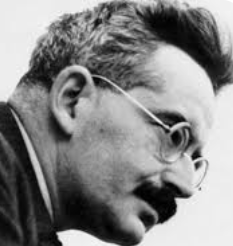
There is a secret agreement between past generations and the present one. Our coming was expected on earth. Like every generation that preceded us, we have been endowed with a weak Messianic power, a power to which the past has a claim. That claim cannot be settled cheaply.
▼
Source
II
3 months 3 weeks ago
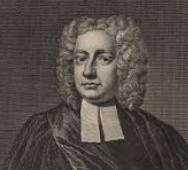
All the knowledge we have of nature depends upon facts; for without observations and experiments our natural philosophy would only be a science of terms and an unintelligible jargon. But then we must call in Geometry and Arithmetics, to our Assistance, unless we are willing to content ourselves with natural History and conjectural Philosophy. For, as many causes concur in the production of compound effects, we are liable to mistake the predominant cause, unless we can measure the quantity and the effect produced, compare them with, and distinguish them from, each other, to find out the adequate cause of each single effect, and what must be the result of their joint action.
▼
Source
p. v: Preface
3 months 3 weeks ago
There were many special laws affecting the several kings inscribed about the temples, but the most important was the following: They were not to take up arms against one another, and they were all to come to the rescue if any one in any of their cities attempted to overthrow the royal house; like their ancestors, they were to deliberate in common about war and other matters, giving the supremacy to the descendants of Atlas. And the king was not to have the power of life and death over any of his kinsmen unless he had the assent of the majority of the ten.
3 months 3 weeks ago
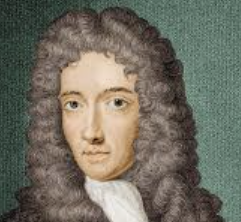
And truly... if men could be persuaded to mind more the advancement of natural philosophy than that of their own reputations, it were not, methinks, very uneasy to make them sensible, that one of the considerablest services, that they could do mankind, were to set themselves diligently and industriously to make experiments and collect observations, without being over-forward to establish principles and axioms, believing it uneasy to erect such theories, as are capable to explicate all the phænomena of nature, before they have been able to take notice of the tenth part of those phænomena, that are to be explicated.
3 months 3 weeks ago
If a man has not, by the time he is 30, yielded to the fascination of every form of extremism, I don't know if he is to be admired or scorned — a saint or a corpse.
3 months 3 weeks ago
Time, and Industry, produce everyday new knowledge.
▼
Source
The Second Part, Chapter 30, p. 176
3 months 3 weeks ago
Let the modern eye look earnestly on that old midnight hour in St. Edmundsbury Church, shining yet on us, ruddy-bright, through the depths of seven hundred years; and consider mournfully what our Hero-worship once was, and what it now is!
3 months 3 weeks ago
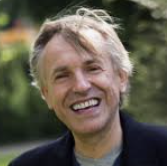
Here the question comes down to an analysis of risk-reward ratios - and our basic ethical values, themselves shaped by our evolutionary past. Lest extension of the new reproductive medicine seem too rashly experimental even to contemplate, it's worth recalling that each act of old-fashioned sexual reproduction is itself an untested genetic experiment, the outcome of random mutations and meiotic shuffling of the genetic deck, and with no happy ending to date. So just who are we to accuse of reckless gambling? As it stands, all of us are genetically predestined to grow old and die; and in the course of a lifetime, the great majority of humans will experience periods of intense psychological distress, for instance loneliness and heartache after an unhappy love affair. Our social primate biology ensures that most of us sometimes experience, to a greater or lesser degree, all manner of nasty states that were genetically adaptive in the ancestral environment e.g. jealousy, resentment, anger, and so forth. Hundreds of millions of people in the world today suffer bouts of depression; others live with chronic anxiety. One might say these phenotypes are part of what it means to be human. Worse, we pass a heritable predisposition to these horrible states on to our children.
▼
Source
"[https://www.reproductive-revolution.com/ The Reproductive Revolution: Selection Pressure in a Post-Darwinian World]", Talk delivered at the Touch Me Festival, Zagreb, Dec. 2008
3 months 3 weeks ago
Heidegger's philosophy is neither atheism nor theism, but a description of the world from which God is absent.
▼
Source
Chapter Nine, Heidegger, p. 187
3 months 3 weeks ago
Science, which is the logic of nature, demands proportion between the house and its foundation. Theology sometimes builds weighty structures on a doubtful base.
3 months 3 weeks ago
As you hope to prove your own great value to the state, and having proved it, to attain at once to absolute power, so do I indulge a hope that I shall be the supreme power over you, if I am able to prove my own great value to you.
▼
Source
Socrates speaking to Alcibiades
3 months 3 weeks ago
I cannot conceive, how a body, destitute of understanding and sense, truly so called, can moderate and determine its own motions; especially so as to make them conformable to laws that it has no knowledge of.
▼
Source
Sect.1.
3 months 3 weeks ago
To devastate by language, to blow up the word and with it the world.
3 months 3 weeks ago
Alas, our noble men of genius, Heaven's real messengers to us, they also rendered nearly futile by the wasteful time;—preappointed they everywhere, and assiduously trained by all their pedagogues and monitors, to "rise in Parliament," to compose orations, write books, or in short speak words, for the approval of reviewers; instead of doing real kingly work to be approved of by the gods!
3 months 3 weeks ago
[T]he existence of the mind-independent environment beyond one's world-simulation is a theoretical inference, not an empirical observation.
▼
Source
Postscript to [https://www.hedweb.com/lockwood.htm review] of Michael Lockwood's Mind, Brain and the Quantum, BLTC Research, Dec. 2016
3 months 3 weeks ago
If you looked at the political spectrum in Poland at that time, the Communist party promised the best solution. Its political programme was the most fitting for the issues which Poland faced. And I was completely dedicated. Communist ideas were just a continuation of the Enlightenment.
3 months 3 weeks ago
In the effort to regain a space of true leisure, to bring about a fundamentally correct attitude and "exercise" of leisure, the real difficulty of this so-often despaired-of project consists in the fact that the ultimate root of leisure lies outside the range of our responsible, voluntary action. The fullest harmony with the world, to be precise, cannot come about on the basis of a voluntary decision. Above all, one cannot simply "make" it happen for some ulterior purpose. There are certain things which one cannot do "in order to ..." do something else.
▼
Source
p. 58
3 months 3 weeks ago
The safest general characterization of the European philosophical tradition is that it consists of a series of footnotes to Plato.
▼
Source
Alfred North Whitehead, Process and Reality: An Essay in Cosmology (1929), Pt. II, ch. 1, sec. 1
3 months 3 weeks ago
A man does not kill himself, as is commonly supposed, in a fit of madness but rather in a fit of unendurable lucidity, in a paroxysm which may, if so desired, be identified with madness; for an excessive perspicacity, carried to the limit and of which one longs to be rid at all costs, exceeds the context of reason.
3 months 3 weeks ago
Probably some ninety-nine out of every hundred of our gifted souls, who have to seek a career for themselves, go this beaver road. Whereby the first half-result, national wealth namely, is plentifully realized; and only the second half, or wisdom to guide it, is dreadfully behindhand.
3 months 3 weeks ago
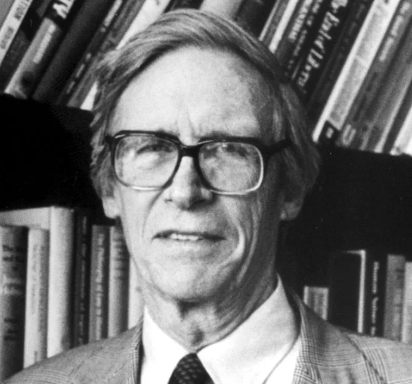
An individual who finds that he enjoys seeing others in positions of lesser liberty understands that he has no claim whatever to this enjoyment.
▼
Source
Chapter I, Section 6, pg. 31
3 months 3 weeks ago
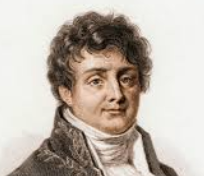
If we consider further the manifold relations of this mathematical theory to civil uses and the technical arts, we shall recognize completely the extent of its applications. It is evident that it includes an entire series of distinct phenomena, and that the study of it cannot be omitted without losing a notable part of the science of nature. The principles of the theory are derived, as are those of rational mechanics, from a very small number of primary facts, the causes of which are not considered by geometers, but which they admit as the results of common observations confirmed by all experiment.
▼
Source
Ch. 1, p. 6
3 months 3 weeks ago
Each time I fail to think about death, I have the impression of cheating, of deceiving someone in me.
3 months 3 weeks ago
But greatly his most important culture he had gathered — and this, too, by his own endeavors — from the better part of the district, the religious men; to whom, as to the most excellent, his own nature gradually attached and attracted him. He was religious with the consent of his whole faculties. Without religion he would have been nothing.
3 months 3 weeks ago
Let us now consider whether justice requires the toleration of the intolerant, and if so under what conditions. There are a variety of situations in which this question arises. Some political parties in democratic states hold doctrines that commit them to suppress the constitutional liberties whenever they have the power. Again, there are those who reject intellectual freedom but who nevertheless hold positions in the university. It may appear that toleration in these cases is inconsistent with the principles of justice, or at any rate not required by them.
▼
Source
p. 216
3 months 3 weeks ago
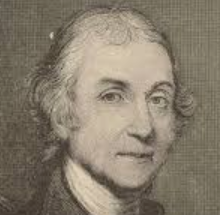
Man derives two capital advantages from the superiority of his intellectual powers. The first is, that, as an individual, he possesses a certain comprehension of mind, whereby he contemplates and enjoys the past and the future, as well as the present. This comprehension is enlarged with the experience of every day; and by this means the happiness of man, as he advances in intellect, is continually less dependent on temporary circumstances and sensations.The next advantage resulting from the same principle, and which is, in many respects, both the cause and effect of the former, is, that the human species itself is capable of a similar and unbounded improvement; whereby mankind in a later age are greatly superior to mankind in a former age, the individuals being taken at the same time of life.
▼
Source
Section I, "Of the First Principles of Government, and the different kinds of Liberty"
3 months 3 weeks ago
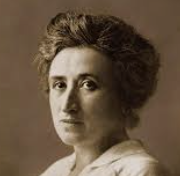
Every right of suffrage, like any political right in general, is not to be measured by some sort of abstract scheme of “justice,” or in terms of any other bourgeois-democratic phrases, but by the social and economic relationships for which it is designed. The right of suffrage worked out by the Soviet government is calculated for the transition period from the bourgeois-capitalist to the socialist form of society, that is, it is calculated for the period of the proletarian dictatorship. But, according to the interpretation of this dictatorship which Lenin and Trotsky represent, the right to vote is granted only to those who live by their own labor and is denied to everyone else.
▼
Source
Chapter Five, "The Question of Suffrage"
3 months 3 weeks ago
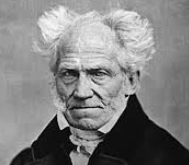
My body and my will are one.
▼
Source
Book 1
3 months 3 weeks ago
I think of so many people who are no more, and I pity them. Yet they are not so much to be pitied, for they have solved every problem, beginning with the problem of death.
3 months 3 weeks ago
They (the Nazis) would put it to our young people that our best writers were Nazis at heart, and so try to warp their minds. It is interesting, in this connextion, to read what Nazi critics have been saying lately about Shakespeare and Carlyle. They have not got a bad case over Carlyle - he had something of the Nazi about him: he despised individualism and liberty and worshipped the dictator-hero. However, Carlyle also said "Thought is stronger than artillery-parks", and this side of him the Nazis don't mention.
▼
Source
E. M. Forster, "Three Anti-Nazi Broadcasts", in Two Cheers For Democracy, Edward Arnold, 1951.
3 months 3 weeks ago
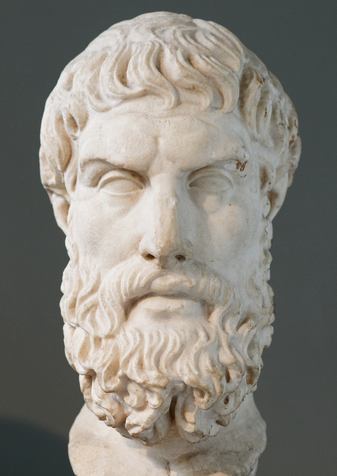
Chance seldom interferes with the wise man; his greatest and highest interests have been, are, and will be, directed by reason throughout his whole life.
3 months 3 weeks ago
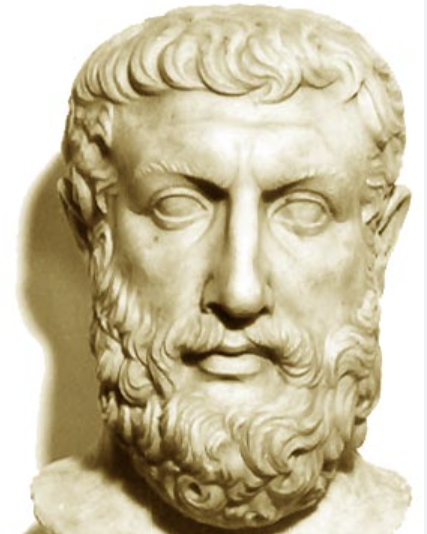
It was, for all I know, the first deductive theory of the world, the first deductive cosmology: One further step led to theoretical physics, and to the atomic theory.
▼
Source
Karl Popper, in The World of Parmenides : Essays on the Presocratic Enlightenment (1998)
3 months 3 weeks ago
Few men have had to struggle for so many years with circumstances more straitened and precarious than my father; few men have ventured to attack so many or such inveterate prejudices respecting the prevalent religion of his country, or have advanced bolder or more important opinions in opposition to the courtly politics of the powers that be; few have had to encounter more able opponents in his literary career, or have been exposed to such incessant and vindictive obloquy, from men of every description, in return for his unremitting exertions in the cause of truth; yet none have more uniformly proceeded with a single eye, regardless of consequences, to act as his conviction impelled him, and his conscience dictated. His conduct brought with it its own reward, reputation, and respect, from the most eminent of his contemporaries, the affectionate attachment of most valuable friends, and a cheerfulness of disposition arising in part from conscious rectitude which no misfortunes could long repress. But to me it seems, that conscious rectitude alone would hardly of itself have been able to support him under some of the afflictions he was doomed to bear. He had a farther resource, to him never failing and invaluable, a firm persuasion of the benevolence of the Almighty towards all his creatures, and the conviction that every part of his own life, like every part of the whole system, was preordained for the best upon the whole of existence. Had he entertained the gloomy notions of Calvinism, in which he was brought up, this cheering source of contentment and resignation would probably have failed him, and irritation and despondency would have gained an unhappy ascendancy. But by him the deity was not regarded as an avenging tyrant, punishing, for the sake of punishing his weak and imperfect creatures, but as a wise and kind parent, inflicting those corrections only that are necessary to bring our dispositions to the proper temper, and to fit us for the highest state of happiness of which our natures are ultimately capable.
▼
Source
His son, Joseph Priestley, in the Preface (1 May 1805) to Memoirs of the Rev. Dr. Joseph Priestly (1809), p. 41.
3 months 3 weeks ago
We laugh, but inept is our laughter; We should weep and weep sore, Who are shattered like glass, and thereafter Re-moulded no more!
▼
Source
As quoted in Three Great Abbasid Poets: Abu Nuwas, Al-Mutanabbi & Al-Ma'arri, Lives & Poems (2015) by Paul Smith
3 months 3 weeks ago
The auspices for philosophy are bad if, when proceeding ostensibly on the investigation of truth, we start saying farewell to all uprightness, honesty and sincerity, and are intent only on passing ourselves off for what we are not. We then assume, like those three sophists [Fichte, Schelling and Hegel], first a false pathos, then an affected and lofty earnestness, then an air of infinite superiority, in order to impose where we despair of ever being able to convince.
▼
Source
E. Payne, trans. (1974) Vol. 1, p. 22
3 months 3 weeks ago
Imaginary pains are by far the most real we suffer, since we feel a constant need for them and invent them because there is no way of doing without them.
3 months 3 weeks ago
The initial thesis of my enterprise - on the basis of which this entanglement of periodizations is organized by extracting the sense of each - is the following: the science of being qua being has existed since the Greeks - such is the sense and status of mathematics. However, it is only today that we have the means to know this. It follows from this thesis that philosophy is not centred on ontology - which exists as a separate and exact discipline- rather it circulates between this ontology (this, mathematics), the modern theories of he subject and its own history. The contemporary complex of the conditions of philosophy includes everything referred to in my first three statements: the history of ‘Western’ thought, post-Cantorian mathematics, psychoanalysis, contemporary art and politics. Philosophy does not coincide with any of these conditions; nor does it map out the totality to which they belong. What philosophy must do is propose a conceptual framework in which the contemporary compossibilty of these conditions can be grasped. Philosophy can only do this - and this is what frees it from any foundational ambition, in which it would lose itself- by designating amongst its own conditions, as a singular discursive situation, ontology itself in the form of pure mathematics. This is precisely what delivers philosophy and ordains it to the care of truths.
CivilSimian.com created by AxiomaticPanic, CivilSimian, Kalokagathia