
3 months 3 weeks ago
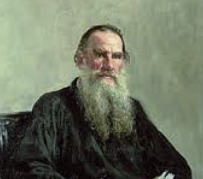
No longer able to believe in the Church religion, whose falsehood they had detected, and incapable of accepting true Christian teaching, which denounced their whole manner of life, these rich and powerful people, stranded without any religious conception of life, involuntarily returned to that pagan view of things which places life's meaning in personal enjoyment. And then among the upper classes what is called the "Renaissance of science and art" took place, which was really not only a denial of every religion, but also an assertion that religion was unnecessary.
3 months 3 weeks ago
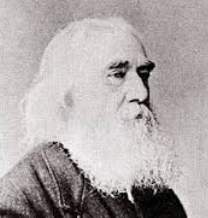
A man is none the less a slave because he is allowed to choose a new master once in a term of years. Neither are a people any the less slaves because permitted periodically to choose new masters. What makes them slaves is the fact that they now are, and are always hereafter to be, in the hands of men whose power over them is, and always is to be, absolute and irresponsible. The right of absolute and irresponsible dominion is the right of property, and the right of property is the right of absolute, irresponsible dominion. The two are identical; the one necessarily implying the other. Neither can exist without the other. If, therefore, Congress have that absolute and irresponsible lawmaking power, which the Constitution — according to their interpretation of it — gives them, it can only be because they own us as property. If they own us as property, they are our masters, and their will is our law. If they do not own us as property, they are not our masters, and their will, as such, is of no authority over us. But these men who claim and exercise this absolute and irresponsible dominion over us, dare not be consistent, and claim either to be our masters, or to own us as property. They say they are only our servants, agents, attorneys, and representatives. But this declaration involves an absurdity, a contradiction. No man can be my servant, agent, attorney, or representative, and be, at the same time, uncontrollable by me, and irresponsible to me for his acts. It is of no importance that I appointed him, and put all power in his hands. If I made him uncontrollable by me, and irresponsible to me, he is no longer my servant, agent, attorney, or representative. If I gave him absolute, irresponsible power over my property, I gave him the property. If I gave him absolute, irresponsible power over myself, I made him my master, and gave myself to him as a slave. And it is of no importance whether I called him master or servant, agent or owner. The only question is, what power did I put into his hands? Was it an absolute and irresponsible one? or a limited and responsible one?
▼
Source
p. 24; the first sentence here is widely paraphrased as: A man is no less a slave because he is allowed to choose a new master once in a term of years.
3 months 3 weeks ago
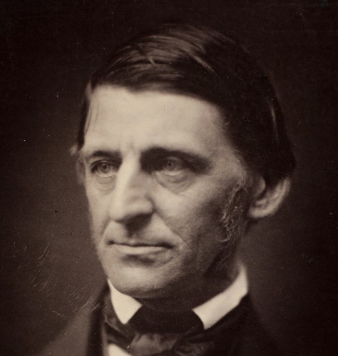
Great geniuses have the shortest biographies.
▼
Source
Plato; or, The Philosopher
3 months 3 weeks ago
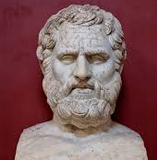
Choose the course which you adopt with deliberation; but when you have adopted it, then persevere in it with firmness.
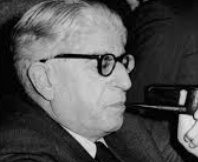
3 months 3 weeks ago
In ourselves alone the absolute light keeps shining, a sigillum falsi et sui, mortis et vitae aeternae [false signal and signal of eternal life and death itself], and the fantastic move to it begins: to the external interpretation of the daydream, the cosmic manipulation of a concept that is utopian in principle. Finding this concept, finding the right for whose sake it behoves us to live, to be organized, to have time—this is where we are headed, why we are clearing the metaphysically constitutive trails afresh, calling for what is not, building into the blue that lines all edges of the world; this is why we build ourselves into the blue and search for truth and reality where mere factuality vanishes.
▼
Source
p. 43
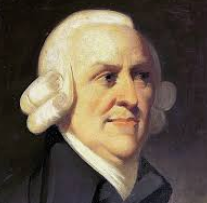
3 months 3 weeks ago
He was a great thinker,—and that was much; but he also made men recognize him as a great thinker, because he was a great master of style,—which was more.
▼
Source
Woodrow Wilson, 'An Old Master', The New Princeton Review, Vol. VI. 1888. July—September—November (1888), pp. 217-218
3 months 3 weeks ago
The oppression of a majority by a minority, and the demoralization inevitably resulting from it, is a phenomenon that has always occupied me and has done so most particularly of late.
▼
Source
I
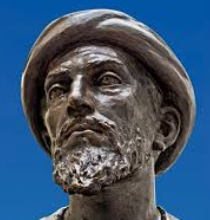
3 months 3 weeks ago
When a man reflects on these things, studies all these created beings, from the angels and spheres down to human beings and so on, and realizes the divine wisdom manifested in them all, his love for God will increase, his soul will thirst, his very flesh will yearn to love God. He will be filled with fear and trembling, as he becomes conscious of his lowly condition, poverty, and insignificance, and compares himself with any of the great and holy bodies; still more when he compares himself with any one of the pure forms that are incorporeal and have never had association with any corporeal substance. He will then realize that he is a vessel full of shame, dishonor, and reproach, empty and deficient.
▼
Source
Book 1 (Sefer HaMadda), 4.12
3 months 3 weeks ago
You can never do a kindness too soon, for you never know how soon it will be too late.
▼
Source
Culture
3 months 3 weeks ago
It could be that the total scenario for human beings is an insoluble mystery until we die, followed by nothing at all.
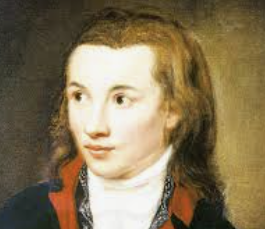
3 months 3 weeks ago
Most observers of the French Revolution, especially the clever and noble ones, have explained it as a life-threatening and contagious illness. They have remained standing with the symptoms and have interpreted these in manifold and contrary ways. Some have regarded it as a merely local ill. The most ingenious opponents have pressed for castration. They well noticed that this alleged illness is nothing other than the crisis of beginning puberty.
▼
Source
Fragment No. 105

3 months 3 weeks ago
I was Euphorbus at the siege of Troy.
▼
Source
As reported by Heraclides Ponticus (c. 360 BC), and Diogenes Laërtius (Lives and Opinions of Eminent Philosophers, "Pythagoras", Sect. 4), and quoted in Cosmic Optimism: A Study of the Interpretation of Evolution (1949) by Frederick William Conner | Misqu
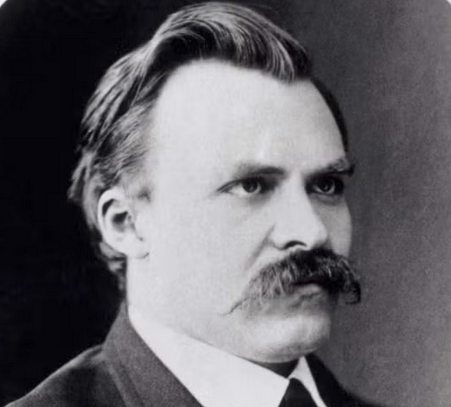
3 months 3 weeks ago
The desert grows: woe to him in whom deserts hide ...
3 months 3 weeks ago
If a poor person envies a rich person, he is no better than the rich person.
▼
Source
p. 89
3 months 3 weeks ago
To give a full explanation of the mystic passages of the Bible is contrary to the law and to reason; besides, my knowledge of them is based on reasoning, not on divine inspiration [and is therefore not infallible]. ...It is... possible that my view is wrong, and that I misunderstand passages referred to. ...Those, however, for whom this treatise has been composed, will, on reflecting on it and thoroughly examining each chapter, obtain a clear insight into all that has been clear and intelligible to me. This is the utmost that can be done in treating this subject so to be useful to all without fully explaining it.
▼
Source
Introduction
3 months 3 weeks ago
The key to the period appeared to be that the mind had become aware of itself. Men grew reflective and intellectual. There was a new consciousness. The former generations acted under the belief that a shining social prosperity was the beatitude of man, and sacrificed uniformly the citizen to the State. The modern mind believed that the nation existed for the individual, for the guardianship and education of every man. This idea, roughly written in revolutions and national movements, in the mind of the philosopher had far more precision; the individual is the world. This perception is a sword such as was never drawn before. It divides and detaches bone and marrow, soul and body, yea, almost the man from himself. It is the age of severance, of dissociation, of freedom, of analysis, of detachment. Every man for himself. The public speaker disclaims speaking for any other; he answers only for himself. The social sentiments are weak; the sentiment of patriotism is weak; veneration is low; the natural affections feebler than they were. People grow philosophical about native land and parents and. relations. There is an universal resistance to ties rand ligaments once supposed essential to civil society. The new race is stiff, heady and rebellious; they are fanatics in freedom; they hate tolls, taxes, turnpikes, banks, hierarchies, governors, yea, almost laws. They have a neck of unspeakable tenderness; it winces at a hair. They rebel against theological as against political dogmas; against mediation, or saints, or any nobility in the unseen. The age tends to solitude. The association of the time is accidental and momentary and hypocritical, the detachment intrinsic and progressive. The association is for power, merely, — for means; the end being the enlargement and independency of the individual.
▼
Source
p. 529, col. 1
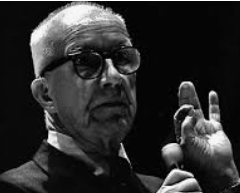
3 months 3 weeks ago
SPACESHIP EARTH: Earth is an automated Spaceship speeding rotatively at 66,000 miles per hour around the sun, which in turn, is on its own course at 6.0 kilometers per second within the Galactic Nebula. The awareness of Earth's mobile patterning within the cosmos gives the perspective needed to deal with the overall evolutionary event-patterning aboard our spherical space-vehicle Earth, rather than the minute details. The automated events transpiring aboard Earth lend powerful advantages to those who comprehend the automation and attempt to work with it in the most long-term, humanly advantageous ways rather than ignorantly attempting to control or oppose it. Both Earth's and humanity's automation are biological. p. 102
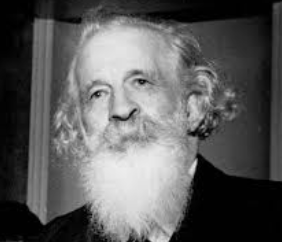
3 months 3 weeks ago
Ideas are refined and multiplied in the commerce of minds. In their splendor, images effect a very simple communion of souls.
▼
Source
Introduction, sect. 4
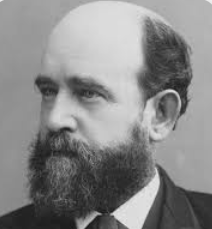
3 months 3 weeks ago
I ask no one who may read this book to accept my views. I ask him to think for himself. Whoever, laying aside prejudice and self-interest, will honestly and carefully make up his own mind as to the causes and the cure of the social evils that are so apparent, does, in that, the most important thing in his power toward their removal. This primary obligation devolves upon us individually, as citizens and as men. Whatever else we may be able to do, this must come first. For "if the blind lead the blind, they both shall fall into the ditch." Social reform is not to be secured by noise and shouting; by complaints and denunciation; by the formation of parties, or the making of revolutions; but by the awakening of thought and the progress of ideas. Until there be correct thought, there cannot be right action; and when there is correct thought, right action will follow. Power is always in the hands of the masses of men. What oppresses the masses is their own ignorance, their own short-sighted selfishness.
▼
Source
Ch. 21 : Conclusion
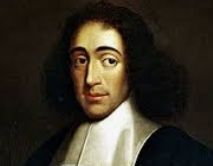
3 months 3 weeks ago
I pass, at length, to the third and perfectly absolute dominion, which we call democracy.
▼
Source
Ch. 11, Of Democracy
3 months 3 weeks ago
Plants are Children of the Earth; we are Children of the Æther. Our Lungs are properly our Root; we live, when we breathe; we begin our life with breathing.
3 months 3 weeks ago
Govern your tongue before all other things, following the gods.
▼
Source
Symbol 7
3 months 3 weeks ago
"Grant me, ye gods, but one certainty," runs Parmenides' prayer, "and if it be but a log's breadth on which to lie. on which to ride upon the sea of uncertainty. Take away everything that comes-to-be, everything lush, colorful, blossoming, illusory, everything that charms and is alive. Take all these for yourselves and grant me but the one and only, poor empty certainty.”
▼
Source
p. 81
3 months 3 weeks ago
It has been said that a careful reading of Anna Karenina, if it teaches you nothing else, will teach you how to make strawberry jam.
▼
Source
Julian Mitchell, Radio Times (30 October 1976)
3 months 3 weeks ago
Galen, in the third section of his book, "The Use of the Limbs," says correctly that it would be in vain to expect to see living beings formed of the blood of menstruous women and the semen virile, who will not die, will never feel pain, or will move perpetually, or shine like the sun. This dictum of Galen is part of the following more general proposition:—Whatever is formed of matter receives the most perfect form possible in that species of matter; in each individual case the defects are in accordance with that individual matter.
▼
Source
Compare Gottfried Leibniz argument for the "best of all possible worlds" in his Essays on the Goodness of God, the Freedom of Man and the Origin of Evil | Ch.12
3 months 3 weeks ago
And every man, in love or pride, Of his fate is ever wide.
▼
Source
Nemesis
3 months 3 weeks ago
There are progressive degrees of synergy, called synergy-of-synergies, which are complexes of behavior aggregates holistically unpredicted by the separate behaviors of any of their subcomplex components. Any subcomplex aggregate is only a component aggregation of an even greater event aggregation whose comprehensive behaviors are never predicted by the component aggregates alone. There is a synergetic progression in Universe—a hierarchy of total complex behaviors entirely unpredicted by their successive subcomplexes' behaviors. It is manifest that Universe is the maximum synergy-of-synergies, being utterly unpredicted by any of its parts.
▼
Source
[http://www.rwgrayprojects.com/synergetics/s01/p5000.html 150.01]
3 months 3 weeks ago
People do not argue with the teaching of George; they simply do not know it. And it is impossible to do otherwise with his teaching, for he who becomes acquainted with it cannot but agree.
▼
Source
Leo Tolstoy, “A Great Iniquity,” letter to The London Times (1905)
3 months 3 weeks ago
It is not proper either to have a blunt sword or to use freedom of speech ineffectually. Neither is the sun to be taken from the world, nor freedom of speech from erudition.
▼
Source
As quoted in the translation of Thomas Taylor (1818)
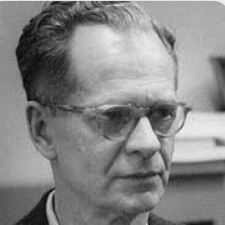
3 months 3 weeks ago
The real question is not whether machines think but whether men do. The mystery which surrounds a thinking machine already surrounds a thinking man.
▼
Source
Contingencies of Reinforcement: A Theoretical Analysis (1969)
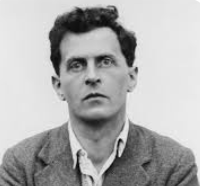
3 months 3 weeks ago
Logic takes care of itself; all we have to do is to look and see how it does it.
▼
Source
Journal entry (13 October 1914), also in Tractatus Logico-Philosophicus (§ 5.47)
3 months 3 weeks ago
Another fundamental principle taught by the Law of Moses is this: Wrong cannot be ascribed to God in any way whatever; all evils and afflictions as well as all kinds of happiness of man, whether they concern one individual or a community, are distributed according to justice; they are the result of strict judgement that admits no wrong whatever.
▼
Source
Ch.17
3 months 3 weeks ago
Music is the poor man's Parnassus.
▼
Source
Poetry and Imagination
3 months 3 weeks ago
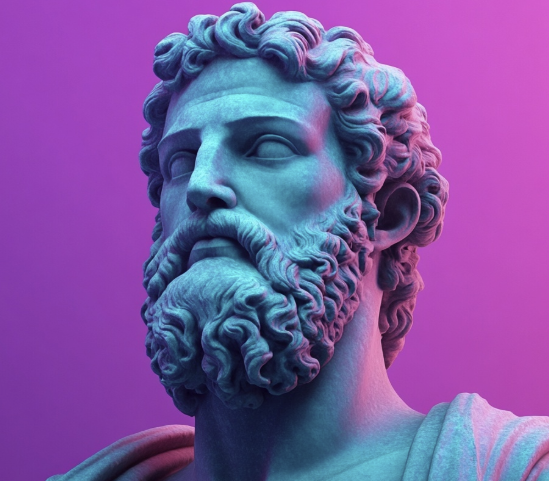
Whether it is to be Utopia or Oblivion will be a touch-and-go relay race right up to the final moment. . . . Humanity is in 'final exam' as to whether or not it qualifies for continuance in [the] Universe[.]
3 months 3 weeks ago
Yet God hath not only granted these faculties, by which we may bear every event without being depressed or broken by it, but like a good prince and a true father, hath placed their exercise above restraint, compulsion, or hindrance, and wholly within our own control.
▼
Source
Book I, ch. 6, § 40.
3 months 3 weeks ago
Repentance deserveth Pardon.
3 months 3 weeks ago
The world and life are one. (5.621)
▼
Source
Original German: Die Welt und das Leben sind Eins.
3 months 3 weeks ago
You will find that there is no other difference of opinion as regards any portions of the Universe, except that the philosophers believe in the Eternity of the Universe and we believe in the Creation. Note this.
▼
Source
Ch.25
3 months 3 weeks ago
I see that sensible men and conscientious men all over the world were of one religion.
▼
Source
The Preacher
3 months 3 weeks ago
I have been a deliberate half-century-fused inciter of a cool-headed, natural, gestation-rate-paced revolution, armed with physically demonstrable livingry levers with which altogether to elevate all humanity to realization of an inherently sustainable, satisfactory-to-all, ever higher standard of living. Critical threshold-crossing of the inevitable revolution is already underway.
3 months 3 weeks ago
The dyad gets its name from passing through or asunder; for the dyad is the first to have separated itself from the monad, whence also it is called "daring." For when the monad manifests unification, the dyad steals in and manifests separation.
▼
Source
On the Dyad
3 months 3 weeks ago
Be bold to look towards God and say, "Use me henceforward for whatever you want; I am of one mind with you; I am yours; I refuse nothing that seems good to you; lead me where you will; wrap me in what clothes you will."
▼
Source
Book II, ch. 16, § 42
3 months 3 weeks ago
Pythagoras did not possess a proof of the theorem which bears his name... he was temperamentally uninterested in proofs of this nature, as may be gleaned from... his numerological deductions. ...the Pythagorean theorem was known to Thales. ...the hypotenuse theorem is a direct consequence of the principle of similitude, and... Thales was fully conversant with the theory of similar triangles. On the other hand, there is no doubt that Pythagoras fully appreciated the metaphysical implications. ...this relation ...was to Pythagoras and the Pythagoreans a basic law of nature, and... a brilliant confirmation of their number philosophy.
▼
Source
Tobias Dantzig, The Bequest of the Greeks (1955)
3 months 3 weeks ago
Religious minds, which are distrustful of philosophic dogmas, fall into the error - inculcated by philosophy - of supposing that Providence is limited in its action; that is does not extend to the social world or the social relations of mankind, and that God has not determined upon any plan of social organization for the regulation of those relations. If they had a PROFOUND FAITH IN THE UNIVERSALITY OF PROVIDENCE, they would be convinced that all human needs must have been foreseen and provided for, and especially that the most urgent of them all could not have been overlooked - namely, the need of a social order for the regulation of our industrial and social relations.
▼
Source
The Theory of Social Organization. Harmonian Man: Selected Writings of Charles Fourier, p. 5.
3 months 3 weeks ago
Philosophy unravels the knots in our thinking; hence its results must be simple, but its activity is as complicated as the knots that it unravels.
▼
Source
Ch. 9 : Philosophy, p. 183
3 months 3 weeks ago
Philosophy in the strong, classical sense shares with religion the object, truth, the Absolute in and of itself, and is therefore properly a stripping away, a removal of everything that is relative and accidental, in order to get to the essential. This concerns first and foremost ourselves, according to the precept of the Delphic Apollo: ‘Know thyself’. It is the ‘sculpting of one's own statue’ that Plotinus speaks of, removing the marble that covers it and prevents it from coming to light.
3 months 3 weeks ago
No congress, nor mob, nor guillotine, nor fire, nor all together, can avail, to cut out, burn, or destroy the offense of superiority in persons. The superiority in him is inferiority in me.
▼
Source
p. 65
3 months 3 weeks ago
Reflecting on my experience, I find myself agreeing with the eminent Cambridge philosopher, Dr. C. D. Broad, “that we should do well to consider much more seriously than we have hitherto been inclined to do the type of theory which Bergson put forward in connection with memory and sense perception. The suggestion is that the function of the brain and nervous system and sense organs is in the main eliminative and not productive. Each person is at each moment capable of remembering all that has ever happened to him and of perceiving everything that is happening everywhere in the universe. The function of the brain and nervous system is to protect us from being overwhelmed and confused by this mass of largely useless and irrelevant knowledge, by shutting out most of what we should otherwise perceive or remember at any moment, and leaving only that very small and special selection which is likely to be practically useful.”
▼
Source
Aldous Huxley The Doors of Perception (1954)
3 months 3 weeks ago
The mind celebrates a little triumph whenever it can formulate a truth, however unwelcome to the flesh, or discover an actual force, however unfavourable to given interests.
▼
Source
Ch. IV.: Music
3 months 3 weeks ago
Methinks I am like a man, who having struck on many shoals, and having narrowly escap'd shipwreck in passing a small frith, has yet the temerity to put out to sea in the same leaky weather-beaten vessel, and even carries his ambition so far as to think of compassing the globe under these disadvantageous circumstances.
▼
Source
Part 4, Section 7
CivilSimian.com created by AxiomaticPanic, CivilSimian, Kalokagathia