
3 months 3 weeks ago
Greet your son Aristocleides from me. I pray he may not turn out like you, since you, too, were once an irreproachable young man.
▼
Source
to Gordias, Epp. Apoll. 46
3 months 3 weeks ago
What the circumstances are, which, in modern Europe, have contributed to disturb this order of nature, and, in particular, to encourage the industry of towns, at the expense of that of the country, Mr. Smith has investigated with great ingenuity; and in such a manner, as to throw much new light on the history of that state of society which prevails in this quarter of the globe. His observations on this subject tend to show, that these circumstances were, in their first origin, the natural and the unavoidable result of the peculiar situation of mankind during a certain period; and that they took their rise, not from any general scheme of policy, but from the private interests and prejudices of particular orders of men.
▼
Source
Dugald Stewart, Account of the Life and Writings of Adam Smith, LL.D., quoted in The Works of Dugald Stewart, Vol. VII (1829), p. 57
3 months 3 weeks ago
The whole world knows that virtue consists in the subjugation of one's passions, or in self-renunciation. It is not just the Christian world, against whom Nietzsche howls, that knows this, but it is an eternal supreme law towards which all humanity has developed, including Brahmanism, Buddhism, Confucianism, and the ancient Persian religion. And suddenly a man appears who declares that he is convinced that self-renunciation, meekness, submissiveness and love are all vices that destroy humanity (he has in mind Christianity, ignoring all the other religions).One can understand why such a declaration baffled people at first. But after giving it a little thought and failing to find any proof of the strange propositions, any rational person ought to throw the books aside and wonder if there is any kind of rubbish that would not find a publisher today. But this has not happened with Nietzsche´s books. The majority of pseudo-enlightened people seriously look into the theory of the Übermensch, and acknowledge its author to be a great philosopher, a descendant of Descartes, Leibniz and Kant. And all this has come about because the majority of pseudo-enlightened men of today object to any reminder of virtue, or to its chief premise: self-renunciation and love—virtues that restrain and condemn the animal side of their life. They gladly welcome a doctrine, however incoherently and disjointedly expressed, of egotism and cruelty, sanctioning the idea of personal happiness and superiority over the lives of others, by which they live.
▼
Source
Chapter 11
3 months 3 weeks ago
Silence is a fence around wisdom.
▼
Source
Chapter 2, Section 5, p. 33

3 months 3 weeks ago
We may well call it black diamonds. Every basket is power and civilization. For coal is a portable climate. It carries the heat of the tropics to Labrador and the polar circle; and it is the means of transporting itself withersoever it is wanted. Watt and Stephenson whispered in the ear of mankind their secret, that a half-ounce of coal will draw two tons a mile, and coal carries coal, by rail and by boat, to make Canada as warm as Calcutta, and with its comfort brings its industrial power.
▼
Source
Wealth
3 months 3 weeks ago
… our countless addictions, distractions, dissipations of passion that might have served as the core of self.
▼
Source
p. 7
3 months 3 weeks ago
By far the most valuable things, which we know or can imagine, are certain states of consciousness, which may roughly be described as the pleasures of human intercourse and the enjoyment of beautiful objects. No one, probably, who has asked himself the question, has ever doubted that personal affection and the appreciation of what is beautiful in Art or Nature, are good in themselves; nor, if we consider strictly what things are worth having purely for their own sakes, does it appear probable that any one will think that anything else has nearly so much value as the things which are included under these two heads.
▼
Source
Principia Ethica (1903; revised edition, Cambridge University Press, 1993).
3 months 3 weeks ago
Nothing is more indispensable to true religiosity than a mediator that links us with divinity.
▼
Source
Fragment No. 74

3 months 3 weeks ago
A questioner asks: If human nature is evil, then where do ritual and rightness come from? I reply: ritual and rightness are always created by the conscious activity of the sages.
▼
Source
Sources of Chinese Tradition (1999), vol. 1, p. 180
3 months 3 weeks ago
The artist — as the one who compels motion through art media toward art — cannot be simultaneously the absorptive instrument of art's own activity.
▼
Source
page 41
3 months 3 weeks ago
Division of labor is a justification for sloth.
▼
Source
p. 79
3 months 3 weeks ago
There is no difference whether a person stand at the centre of the earth or at the highest point of the ninth sphere... he is no further away from God in the one case, or nearer to Him in the other; those only approach Him who obtain a knowledge of Him; while those who remain ignorant of Him recede from Him. ...I shall further elucidate... what constitutes the difference in our perception of God.
3 months 3 weeks ago
There is always a best way of doing everything, if it be to boil an egg. Manners are the happy ways of doing things; each once a stroke of genius or of love, — now repeated and hardened into usage. They form at last a rich varnish, with which the routine of life is washed, and its details adorned.
▼
Source
Behavior
3 months 3 weeks ago
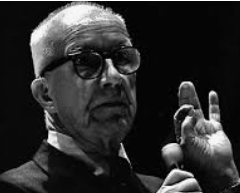
I have to ask... are you familiar with the word “synergy”?
3 months 3 weeks ago
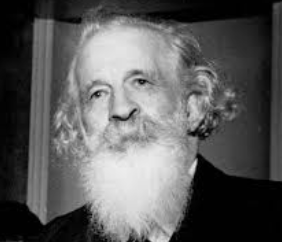
A man is a man to the extent that he is a superman. A man should be defined by the sum of those tendencies which impel him to surpass the human condition.
▼
Source
Introduction
3 months 3 weeks ago
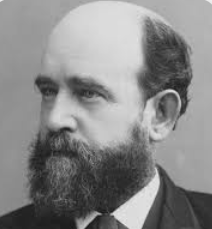
But in life, as we are cognizant of it, mental development can go but a little way. The mind hardly begins to awake ere the bodily powers decline — it but becomes dimly conscious of the vast fields before it, but begins to learn and use its strength, to recognize relations and extend its sympathies, when, with the death of the body, it passes away. Unless there is something more, there seems here a break, a failure. Whether it be a Humboldt or a Herschel, a Moses who looks from Pisgah, a Joshua who leads the host, or one of those sweet and patient souls who in narrow circles live radiant lives, there seems, if mind and character here developed can go no further, a purposelessness inconsistent with what we can see of the linked sequence of the universe.
3 months 3 weeks ago
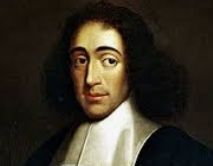
Speaking generally, he holds dominion, to whom are entrusted by common consent affairs of state — such as the laying down, interpretation, and abrogation of laws, the fortification of cities, deciding on war and peace, &c. But if this charge belong to a council, composed of the general multitude, then the dominion is called a democracy; if the council be composed of certain chosen persons, then it is an aristocracy ; and, if, lastly, the care of affairs of state, and, consequently, the dominion rest with one man, then it has the name of monarchy.
▼
Source
Ch. 2, Of Natural Right
3 months 3 weeks ago
Life is a disease of the spirit; a working incited by Passion. Rest is peculiar to the spirit.

3 months 3 weeks ago
A blow from your friend is better than a kiss from your enemy.
▼
Source
As quoted in Geary's Guide to the World's Great Aphorists (2007) by James Geary, p. 118
3 months 3 weeks ago
Where could we find an instance of cultural pathology which philosophy restored to health? If philosophy ever manifested itself as helpful, redeeming, or prophylactic, it was in a healthy culture. The sick, it made even sicker.
▼
Source
p. 27
3 months 3 weeks ago
I knew practically the whole of Lermontov by heart, and such writers as Chernyshevsky, Lev Tolstoi and Uspensky had, somehow, become part of my life.
▼
Source
Nadezhda Krupskaya [https://web.archive.org/web/20080321232230/http://www.rcgfrfi.easynet.co.uk/ww/lenin/bio-bks.htm "Reminiscences of Lenin by His Relatives"] (1956)
3 months 3 weeks ago
Men frequently think that the evils in the world are more numerous than the good things; many sayings and songs of the nations dwell on this idea. ...Not only common people make this mistake, but even many who think they are wise.
▼
Source
Ch.12
3 months 3 weeks ago
In the vaunted works of Art The master stroke is Nature's part.
▼
Source
Art
3 months 3 weeks ago
The youth of humanity all around our planet are intuitively revolting from all sovereignties and political ideologies. The youth of Earth are moving intuitively toward an utterly classless, raceless, omnicooperative, omniworld humanity. Children freed of the ignorantly founded educational traditions and exposed only to their spontaneously summoned, computer-stored and -distributed outflow of reliable-opinion-purged, experimentally verified data, shall indeed lead society to its happy egress from all misinformedly conceived, fearfully and legally imposed, and physically enforced customs of yesterday. They can lead all humanity into omnisuccessful survival as well as entrance into an utterly new era of human experience in an as-yet and ever-will-be fundamentally mysterious Universe.
3 months 3 weeks ago
All large political questions are at bottom economic questions.
▼
Source
General Introduction
3 months 3 weeks ago
Neither will the horse be adjudged to be generous, that is sumptuously adorned, but the horse whose nature is illustrious; nor is the man worthy who possesses great wealth, but he whose soul is generous.
▼
Source
"Pythagorean Ethical Sentences From Stobæus" (1904)
3 months 3 weeks ago
Second Theory.—Whilst one part of the Universe owes its existence to Providence and is under control of a ruler and governor, another part is abandoned and left to chance. This is the view of Aristotle about Providence... He holds that God controls the spheres and what they contain; therefore the individual beings in the spheres remain permanently in the same form. ...From the existence of the spheres other beings derive existence, which are constant in their species but not in their individuals.
▼
Source
Ch.17
3 months 3 weeks ago
Consider what you have in the smallest chosen library. A company of the wisest and wittiest men that could be picked out of all civil countries, in a thousand years, have set in best order the results of their learning and wisdom. The men themselves were hid and inaccessible, solitary, impatient of interruption, fenced by etiquette; but the thought which they did not uncover to their bosom friend is here written out in transparent words to us, the strangers of another age.
▼
Source
Books
3 months 3 weeks ago
Neither the great political and financial power structures of the world, nor the specialization-blinded professionals, nor the population in general realize... that it is now highly feasible to take care of everybody on Earth at a higher standard of living than any have ever known. It no longer has to be you or me. Selfishness is unnecessary and henceforth unrationalizable as mandated by survival.
3 months 3 weeks ago
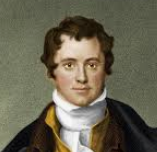
The strength of the feeling may be gleaned, too, from the sentences with which the Rev. Dr. Dibdin, who... began the lecture introductory to the Session of 1808."...If it had pleased Providence to deprive the world of all further benefit from his original talents and intense application, there has certainly been sufficient already effected by him to entitle him to be classed among the brightest scientific luminaries of his country. ...These may justly be placed among the most brilliant and valuable discoveries which have ever been made in chemistry, for a great chasm in the chemical system has been filled up; a blaze of light has been diffused over that part which before was utterly dark; and new views have been opened, so numerous and interesting, that the more any man who is versed in chemistry reflects on them, the more he finds to admire and heighten his expectation of future important results.Mr. Davy's name, in consequence of these discoveries, will be always recorded in the annals of science amongst those of the most illustrious philosophers of his time. His country... will be proud of him, and it is no small honour to the that these great discoveries have been made within its walls—in that laboratory, and by those instruments... placed at the disposal and for the use of its most excellent professor of chemistry."
3 months 3 weeks ago
Wisdom thoroughly learned, will never be forgotten. Science is got by diligence; but Discretion and Wisdom cometh of GOD.
3 months 3 weeks ago
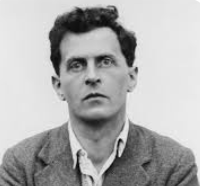
It is quite impossible for a proposition to state that it itself is true. (4.442)
▼
Source
Original German: Ein Satz kann unmöglich von sich selbst aussagen, dass er wahr ist.
3 months 3 weeks ago
This is the way how we have to understand the accounts of trials; we must not think that God desires to examine us and to try us in order to know what He did not know before. Far is this from Him; He is far above that which ignorant and foolish people imagine concerning Him, in the evil of their thoughts. Note this.
▼
Source
Ch.24
3 months 3 weeks ago
We cannot overstate our debt to the Past, but the moment has the supreme claim. The Past is for us; but the sole terms on which it can become ours are its subordination to the Present. Only an inventor knows how to borrow, and every man is or should be an inventor. We must not tamper with the organic motion of the soul.
▼
Source
Quotation and Originality
3 months 3 weeks ago
I set about fifty-five years ago (1927) to see what a penniless, unknown human individual with a dependent wife and newborn child might be able to do effectively on behalf of all humanity...
3 months 3 weeks ago
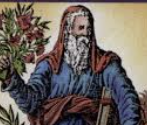
This also is a beautiful circumstance, that they referred every thing to Pythagoras, and called it by his name, and that they did not ascribe to themselves the glory of their own inventions, except very rarely.
3 months 3 weeks ago
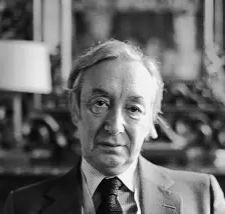
Friends were anxious to learn if I had had a near-death experience, and if so, what effect it had had on my longstanding public atheism. Had I had an epiphany? Was I going to follow in the footsteps of Ayer (who recovered his aplomb and insisted a few days later "what I should have said is that my experiences have weakened, not my belief that there is no life after death, but my inflexible attitude towards that belief"), or was my atheism still intact and unchanged? Yes, I did have an epiphany. I saw with greater clarity than ever before in my life that when I say "Thank goodness!" this is not merely a euphemism for "Thank God!" (We atheists don't believe that there is any God to thank.) I really do mean thank goodness! There is a lot of goodness in this world, and more goodness every day, and this fantastic human-made fabric of excellence is genuinely responsible for the fact that I am alive today. It is a worthy recipient of the gratitude I feel today, and I want to celebrate that fact here and now.
▼
Source
Daniel Dennett, in [http://edge.org/conversation/thank-goodness "THANK GOODNESS!" (2 November 2006)].
3 months 3 weeks ago
Show that you know this only—how you may never either fail to get what you desire or fall into what you avoid.
▼
Source
Book II, ch. 1, § 37
3 months 3 weeks ago
Pythagoras repeats our archaic doctrine when stating that the Ego (Nous) is eternal with Deity; that the soul only passed through various stages to arrive at divine excellence; while thumos returned to the earth, and even the phren, the lower Manas, was eliminated.
▼
Source
H.P. Blavatsky in The Key to Theosophy p. 91, (1889)
3 months 3 weeks ago
Hitherto men have speculated vaguely on the unity of universes; it is now about to be demonstrated by reasoning from the passional world to material, guided by the analogy which exists between the two.
▼
Source
L'attraction passioneé, Harmonian Man: Selected Writings of Charles Fourier, p. 54
3 months 3 weeks ago
We must plow through the whole of language.
▼
Source
Ch. 7 : Remarks on Frazer's Golden Bough, p. 131
3 months 3 weeks ago
For me, Meister Eckhart is truly Meister, magister, as his contemporaries called him. He is the Christian who most deeply understood the Gospel message and, at the same time, the medieval philosopher who was able to gather the best of the classical heritage. His works are all equally important, both those in the vernacular, intended for the people, and those in Latin, created for the university environment. From a more philosophical-theoretical point of view, however, it can be said that the ‘'Commentary on the Gospel of John’' is the most dense and relevant work, while for a more immediate access to his thought and experience, it is certainly the works in the vernacular, the ‘'Sermons’' or the so-called ‘'Treatises’' that are most useful. They are also the most fascinating, profound and at the same time simple works, accessible to all, as only a great teacher of life – ‘Lebemeister’, and not just ‘Lesemeister’, or professor, as Heidegger noted about him – can be.
3 months 3 weeks ago
Shallow men believe in luck.
▼
Source
Worship
3 months 3 weeks ago
There is no important problem in any branch of philosophy which is not treated by Kant, and he never treated a problem without saying something illuminating and original about it. He was certainly wrong on many points of detail, and he may well be wrong in his fundamental principles; but, when all criticisms have been made, it seems to me that Kant’s failures are more important than most men’s successes.
▼
Source
From Five Types of Ethical Theory (1930)
3 months 3 weeks ago
In proportion as a man's interests become humane and his efforts rational, he appropriates and expands a common life, which reappears in all individuals who reach the same impersonal level of ideas.
▼
Source
Ch. VIII: Ideal Society
3 months 3 weeks ago
There is nothing in any object, consider'd in itself, which can afford us a reason for drawing a conclusion beyond it; [...] even after the observation of the frequent or constant conjunction of objects, we have no reason to draw any inference concerning any object beyond those of which we have had experience.
▼
Source
Part 3, Section 12
3 months 3 weeks ago
Men are disturbed, not by things, but by the principles and notions which they form concerning things.
3 months 3 weeks ago
Such things taught he, though advising above all things to speak the truth, for this alone deifies men. For as he had learned from the Magi, who call God Oremasdes, God's body is light, and his soul is truth. He taught much else, which he claimed to have learned from Aristoclea at Delphi.
▼
Source
Porphyry of Tyre, as translated by Kenneth Sylvan Guthrie in The Pythagorean Sourcebook and Library: An Anthology of Ancient Writings which Relate to Pythagoras and Pythagorean Philosophy (1919); also quoted in The Golden Chain: An Anthology of Pythagorea
3 months 3 weeks ago
To obey a rule, to make a report, to give an order, to play a game of chess, are customs (uses, institutions)
▼
Source
§ 199
3 months 3 weeks ago
Shihonage is the foundation of Aikido. All you ever need to master is shihonage.
▼
Source
Shihonage (or Shiho-nage the "Four Corner Throw") is a technique of maintaining control over an opponent in Aikido, as quoted in Aikido Shugyo (1991) by Gōzō Shioda, p. 61
CivilSimian.com created by AxiomaticPanic, CivilSimian, Kalokagathia