
3 months 3 weeks ago
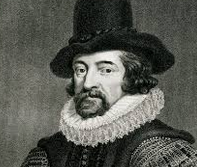
But men must know that in this theater of man's life it is reserved only for God and angels to be lookers on.
▼
Source
Book II, xx, 8
3 months 3 weeks ago
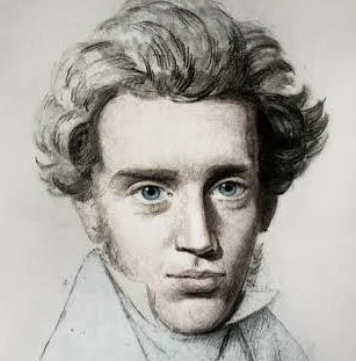
Accept the invitation so that the inviter may save you from what is so hard and dangerous to be saved from, so that, saved, you may be with him who is the Savior of all, of innocence also. For even if it were possible that utterly pure innocence was to be found somewhere, why should it not also need a Savior who could keep it safe from evil! –The invitation stands at the crossroad, there where the way of sin turns more deeply into sin. Come here, all you who are lost and gone astray, whatever your error and sin, be it to human eyes more excusable and yet perhaps more terrible, or be it to human eyes more terrible and yet perhaps more excusable, be it disclosed here on earth or be it hidden and yet known in heaven-and even if you found forgiveness on earth but no peace within, or found no forgiveness because you did not seek it, or because you sought it in vain: oh, turn around and come here, here is rest! The invitation stands at the crossroad, there where the way of sin turns off for the last time and disappears from view in-perdition. Oh, turn around, turn around, come here; do not shrink from the difficulty of retreat, no matter how hard it is; do not be afraid of the laborious pace of conversion, however toilsomely it leads to salvation, whereas sin leads onward with winged speed, with mounting haste-or leads downward so easily, so indescribably easily, indeed, as easily as when the horse, completely relieved of pulling, cannot, not even with all its strength, stop the wagon, which runs it into the abyss. Do not despair over every relapse, which the God of patience has the patience to forgive and under which a sinner certainly should have the patience to humble himself. No, fear nothing and do not despair; he who says “Come here” is with you on the way; from him there is help and forgiveness on the way of conversion that leads to him, and with him is rest.
▼
Source
p. 18-19
3 months 3 weeks ago
I first heard of the 23 Enigma from William S. Burroughs, author of Naked Lunch, Nova Express, etc. According to Burroughs, he had known a certain Captain Clark, around 1960 in Tangier, who once bragged that he had been sailing 23 years without an accident. That very day, Clark’s ship had an accident that killed him and everybody else aboard. Furthermore, while Burroughs was thinking about this crude example of the irony of the gods that evening, a bulletin on the radio announced the crash of an airliner in Florida, USA. The pilot was another Captain Clark and the flight was Flight 23.
▼
Source
"The 23 Phenomenon" in Fortean Times 23 (1977), also quoted in [http://blogs.forteana.org/node/119 "The hidden roots of the 23 Enigma" by Theo Paijmans at the Charles Forte Institute (13 May 2010)]
3 months 3 weeks ago
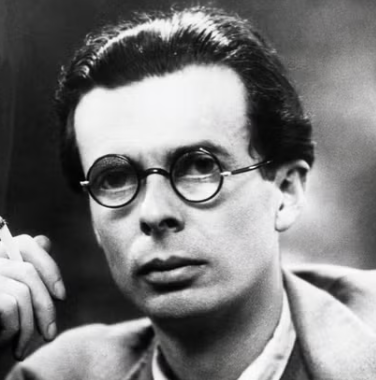
The modern world is still suffering from the native incapacity of the Jews to be political. The art of making and preserving a City, which we call be the Greek name, “Politics,” was never an indigenous growth among the Hebrews. The City of the Greeks and the other civilized nations of antiquity was hateful to them. Their ideas were essentially anti-political. The politics of Judaea, when there were any, were borrowed from the Egyptians and Babylonians and, later, from the Greeks. These borrowings were regarded with violent disapproval by the champions of Hebrew orthodoxy, who objected to organized civilization on two grounds. Some, like Amos, hated it just because it was civilization and not nomadic barbarism. It was in the desert that God had made his covenant with the Chosen Race, and in the desert there was nothing else to think about but God. So, Back to the Desert! was their war-cry. Others, the Ebionites, objected to civilization because it was hierarchical, because it made for social inequality. They gave prophetically indignant utterance to the envious hatred of the poor in cash and in spirit against the rich and talented and cultured. A pious and universal mediocrity was their ideal.
▼
Source
“One and Many,” pp. 17–18
3 months 3 weeks ago
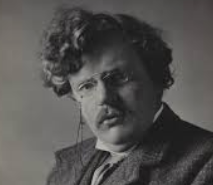
It is only great men who take up a great space by not being there.
▼
Source
Lecture at the University of Notre Dame (13 October 1930), as quoted in notes taken by Professor Richard Baker, of the University of Dayton, and published in The Chesterton Review (Winter/Spring 1977)
3 months 3 weeks ago
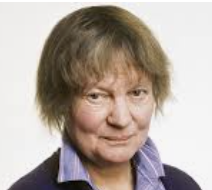
Art is the final cunning of the human soul which would rather do anything than face the gods.
▼
Source
"Art and Eros: A Dialogue about Art", Acastos: Two Platonic Dialogues (1986).
3 months 3 weeks ago
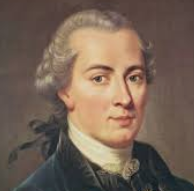
A mind of slow apprehension is therefore not necessarily a weak mind. The one who is alert with abstractions is not always profound, he is more often very superficial.
▼
Source
Kant, Immanuel (1996), page 99
3 months 3 weeks ago
...it is the peculiar and perpetual error of the human understanding to be more moved and excited by affirmatives than by negatives...
▼
Source
Aphorism 46
3 months 3 weeks ago
The life-giving Spirit is the very one who slays you; the first thing the life-giving Spirit says is that you must enter into death, that you must die to – it is this way in order that you many not take Christianity in vain. A life-giving Spirit – that is the invitation; who would not willingly take hold of it! But die first – that is the halt!
3 months 3 weeks ago
"Is," "is." "is" — the idiocy of the word haunts me. If it were abolished, human thought might begin to make sense. I don't know what anything "is"; I only know how it seems to me at this moment.
▼
Source
The Historical Illuminatus as spoken by Sigismundo Celine
3 months 3 weeks ago
One unscrupulous distortion of the truth tends to beget other and opposite distortions.
▼
Source
Ch. 14, p. 316 [2012 reprint]
3 months 3 weeks ago
Many clever men like you have trusted to civilization. Many clever Babylonians, many clever Egyptians, many clever men at the end of Rome. Can you tell me, in a world that is flagrant with the failures of civilisation, what there is particularly immortal about yours?
▼
Source
Book I, Chapter II: "The Man in Green"
3 months 3 weeks ago
Have patience awhile; slanders are not long-lived. Truth is the child of time; erelong she shall appear to vindicate thee.
▼
Source
This quote has been misattributed to Kant [https://books.google.com/books?id=4nHUAAAAMAAJ&dq=%22truth%20is%20the%20child%20of%20time%22&pg=PA512 since the late 19th century], but it is actually from [https://quod.lib.umich.edu/e/eebo/A45113.0001.001/1:9.9
3 months 3 weeks ago
Books must follow sciences, and not sciences books.
▼
Source
Proposition touching Amendment of Laws
3 months 3 weeks ago
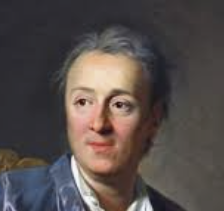
What is this world? A complex whole, subject to endless revolutions. All these revolutions show a continual tendency to destruction; a swift succession of beings who follow one another, press forward, and vanish; a fleeting symmetry; the order of a moment. I reproached you just now with estimating the perfection of things by your own capacity; and I might accuse you here of measuring its duration by the length of your own days. You judge of the continuous existence of the world, as an ephemeral insect might judge of yours. The world is eternal for you, as you are eternal to the being that lives but for one instant. Yet the insect is the more reasonable of the two. For what a prodigious succession of ephemeral generations attests your eternity! What an immeasurable tradition! Yet shall we all pass away, without the possibility of assigning either the real extension that we filled in space, or the precise time that we shall have endured. Time, matter, space — all, it may be, are no more than a point.
▼
Source
Dying words of Nicholas Saunderson as portrayed in Lettre sur les aveugles [Letter on the Blind] (1749) | Variant translation: | What is this world of ours? A complex entity subject to sudden changes which all indicate a tendency to destruction; a swift s
3 months 3 weeks ago
She ends her letter, characteristically, by picturing me and her other critics as indifferent to the suffering of women. But many feminists, including several who wrote or spoke to me about my review, regret her single-minded concentration on lurid sex. They think that though it has predictably attracted much publicity, it tends to stereotype women as victims, and takes attention from still urgent questions of economic, political, and professional equality.
▼
Source
[http://www.nybooks.com/articles/2310 "Pornography: An Exchange"], response to Catharine MacKinnon, New York Review of Books 41(5), (3 March 1994)
3 months 3 weeks ago
"Is it agreeable?" somebody asked.
3 months 3 weeks ago
Anomalies do matter very much, and do a great deal of harm; abstract illogicalities do matter a great deal, and do a great deal of harm. And this for a reason that any one at all acquainted with human nature can see for himself. All injustice begins in the mind. And anomalies accustom the mind to the idea of unreason and untruth. Suppose I had by some prehistoric law the power of forcing every man in Battersea to nod his head three times before he got out of bed. The practical politicians might say that this power was a harmless anomaly; that it was not a grievance. It could do my subjects no harm; it could do me no good. The people of Battersea, they would say, might safely submit to it. But the people of Battersea could not safely submit to it, for all that. If I had nodded their heads for them for fifty years I could cut off their heads for them at the end of it with immeasurably greater ease. For there would have permanently sunk into every man's mind the notion that it was a natural thing for me to have a fantastic and irrational power. They would have grown accustomed to insanity.
▼
Source
"The Vote and the House"
3 months 3 weeks ago
Scepticism is the first step towards truth.
▼
Source
Variant: A thing is not proved just because no one has ever questioned it. What has never been gone into impartially has never been properly gone into. Hence skepticism is the first step toward truth. It must be applied generally, because it is the touchs

3 months 3 weeks ago
There has been an inversion in the hierarchy of the two principles of antiquity, “Take care of yourself” and “Know yourself.” In Greco-Roman culture, knowledge of oneself appeared as the consequence of the care of the self. In the modern world, knowledge of oneself constitutes the fundamental principle.
▼
Source
“Technologies of the Self,” Ethics, Subjectivity and Truth (1994), p. 228
3 months 3 weeks ago
The mass of mankind, Burke implies, reason hardly at all, in the higher sense, nor ever can: deprived of folk-wisdom and folk-law, which are prejudice and prescription, they can do no more than cheer the demagogue, enrich the charlatan, and submit to the despot.
3 months 3 weeks ago
Propaganda in favor of action that is consonant with enlightened self-interest appeals to reason by means of logical arguments based upon the best available evidence fully and honestly set forth. Propaganda in favor of action dictated by the impulses that are below self-interest offers false, garbled or incomplete evidence, avoids logical argument and seeks to influence its victims by the mere repetition of catchwords, by the furious denunciation of foreign or domestic scapegoats, and by cunningly associating the lower passions with the highest ideals, so that atrocities come to be perpetrated in the name of God and the most cynical kind of Realpolitik is treated as a matter of religious principle and patriotic duty.
▼
Source
Chapter 4 (p. 33)
3 months 3 weeks ago
A man making the confession of any creed worth ten minutes' intelligent talk, is always a man who gains something and gives up something. So long as he does both he can create: for he is making an outline and a shape.
▼
Source
Ch I: The Victorian Compromise and Its Enemies (p. 20)
3 months 3 weeks ago
Morals are in all countries the result of legislation and government; they are not African or Asian or European: they are good or bad.
3 months 3 weeks ago
Instead of insanity eliminating the crime according to the original meaning of article 64,every crime and even every offense now carries within it, as a legitimate suspicion, but also as a right that may be claimed, the hypothesis of insanity, in any case of anomaly. And the sentence that condemns or acquits is not simply a judgement of guily, a legal decision that lays down punishment; it bears within it an assessment of normality and a technical prescription for a possible normalization Today the judge- magistrate or juror0 certainly does more than 'judge'
▼
Source
pp. 20-21

3 months 3 weeks ago
His personal prestige, his qualities, his competence assure him a preponderant role however; since 1927 he has been above all the unchallenged specialist on peasant question. But the power he exercises is no more dictatorial than, for example, Roosevelt's was. New China's Constitution renders impossible the concentration of authority in one man's hands; the country is governed by a team whose members have been united through a long common struggle and by a close friendship.
▼
Source
On Mao Zedong, in
3 months 3 weeks ago
On the morning of November 22nd, a Friday, it became clear the gap between living and dying was closing. Realizing that Aldous [Huxley] might not survive the day, Laura [Huxley's wife] sent a telegram to his son, Matthew, urging him to come at once. At ten in the morning, an almost inaudible Aldous asked for paper and scribbled "If I go" and then some directions about his will. It was his first admission that he might die ...Around noon he asked for a pad of paper and scribbledLSD-try itintermuscular100mmIn a letter circulated to Aldous's friends, Laura Huxley described what followed: 'You know very well the uneasiness in the medical mind about this drug. But no 'authority', not even an army of authorities, could have stopped me then. I went into Aldous's room with the vial of LSD and prepared a syringe. The doctor asked me if I wanted him to give the shot- maybe because he saw that my hands were trembling. His asking me that made me conscious of my hands, and I said, 'No, I must do this.'An hour later she gave Huxley a second 100mm. Then she began to talk, bending close to his ear, whispering, 'light and free you let go, darling; forward and up. You are going forward and up; you are going toward the light. Willingly and consciously you are going, willingly and consciously, and you are doing this beautifully — you are going toward the light — you are going toward a greater love ... You are going toward Maria's [Huxley's first wife, who had died many years earlier] love with my love. You are going toward a greater love than you have ever known. You are going toward the best, the greatest love, and it is easy, it is so easy, and you are doing it so beautifully.'All struggle ceased. The breathing became slower and slower and slower until, 'like a piece of music just finishing so gently in sempre piu piano, dolcamente,' at twenty past five in the afternoon, Aldous Huxley died.
▼
Source
Laura Huxley in This Timeless Moment (1971) as quoted by Jay Stevens in Storming Heaven: LSD and the American Dream (1987)
3 months 3 weeks ago
White founts falling in the courts of the sun, And the Soldan of Byzantium is smiling as they run.
▼
Source
Lepanto
3 months 3 weeks ago
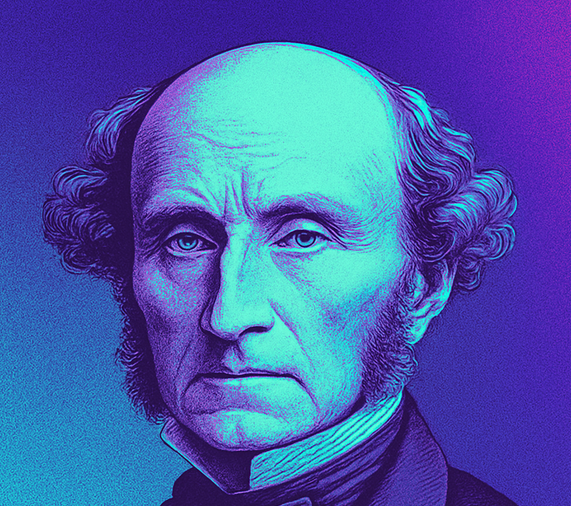
Aim at something great; aim at things which are difficult; and there is no great thing which is not difficult. Do not pare down your undertaking to what you can hope to see successful in the next few years, or in the years of your own life. Fear not the reproach of Quixotism and impracticability, or to be pointed at as the knight-errants of an idea. After you have well weighed what you undertake, if you see your way clearly, and are convinced that you are right, go forward, even though you...do it at the risk of being torn to pieces by the very men through whose changed hearts your purpose will one day be accomplished. Fight on with all your strength against whatever odds, and with however small a band of supporters. If you are right, the time will come when that small band will swell into a multitude: you will at least lay the foundations of something memorable, and you may...—though you ought not to need or expect so great a reward—be spared to see that work completed which, when you began it, you only hoped it might be given to you to help forward a few stages on its way.
▼
Source
John Stuart Mill, William Lloyd Garrison, in The Collected Works of John Stuart Mill, Toronto, 1988, vol. 28, p. 202
3 months 3 weeks ago
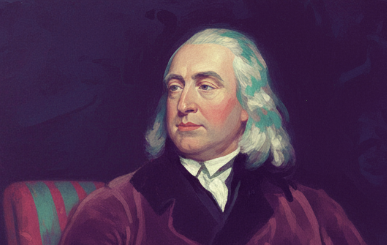
Of corruption, the principal and direct use is, to engage the representatives of the people to betray their trust, and sell themselves and the people to the universal corrupter—the monarch, in his capacity of corrupter-general.
▼
Source
Constitutional Code (written between 1820 and 1832), quoted in The Works of Jeremy Bentham, Vol. XVII (1841), p. 76
3 months 3 weeks ago
The judges of normality are present everywhere. We are in the society of the teacher-judge, the doctor-judge, the educator-judge, the social worker-judge; it is on them that the universal reign of the normative is based; and each individual, wherever he may find himself, subjects to it his body, his gestures, his behavior, his aptitudes, his achievements.
3 months 3 weeks ago
Were we really more advanced than the alchemists of Carmona? We had brought to light certain facts that they were not aware of, we had organised them into the right order; but had we advanced even a step nearer to the mysterious heart of the universe?
3 months 3 weeks ago
We are talking about an artist; and for the enjoyment of the artist the mask must be to some extent moulded on the face. What he makes outside him must correspond to something inside him; he can only make his effects out of some of the materials of his soul.
3 months 3 weeks ago
All honour to those who can abnegate for themselves the personal enjoyment of life, when by such renunciation they contribute worthily to increase the amount of happiness in the world; but he who does it, or professes to do it, for any other purpose, is no more deserving of admiration than the ascetic mounted on his pillar. He may be an inspiriting proof of what men can do, but assuredly not an example of what they should.
▼
Source
Ch. 2
3 months 3 weeks ago
The parrhesia comes from "below,"... and is directed... "above." ...[A]n ancient Greek would not say ...a teacher or father who criticizes a child uses parrhesia.
3 months 3 weeks ago
Change your life today. Don't gamble on the future, act now, without delay.
▼
Source
As quoted in The Book of Positive Quotations (2007) by John Cook, p. 548
3 months 3 weeks ago
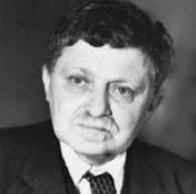
Life in a world centred on function is liable to dispair because in reality the world is empty, it rings hollow; and if it resist this temptation it is only to the extent that there comes into plat from within it and in its favour certain hidden forces which are beyond its power to conceive or to recognise.
3 months 3 weeks ago
He was often, and much beyond reason, provoked by my failures in cases where success could not have been expected; but in the main his method was right, and it succeeded. I do not believe that any scientific teaching ever was more thorough, or better fitted for training the faculties, than the mode in which logic and political economy were taught to me by my father. Striving, even in an exaggerated degree, to call forth the activity of my faculties, by making me find out everything for myself, he gave his explanations not before, but after, I had felt the full force of the difficulties; and not only gave me an accurate knowledge of these two great subjects, as far as they were then understood, but made me a thinker on both.
▼
Source
([https://archive.org/details/autobiography01mill/page/28/mode/1up pp. 28–29])
3 months 3 weeks ago
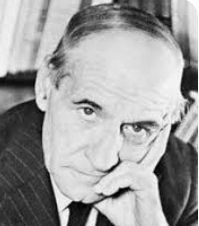
The metaphor is perhaps one of man's most fruitful potentialities. Its efficacy verges on magic, and it seems a tool for creation which God forgot inside one of His creatures when He made him. All our other faculties keep us within the realm of the real, of what is already there. The most we can do is to combine things or to break them up. The metaphor alone furnishes an escape; between the real things, it lets emerge imaginary reefs, a crop of floating islands. A strange thing, indeed, the existence in man of this mental activity which substitutes one thing for another — from an urge not so much to get at the first as to get rid of the second.
▼
Source
"Taboo and Metaphor"
3 months 3 weeks ago
In making these various critical points, I am not proposing that Foucault should lose his place in the social and political theory hall of fame. He undoubtedly deserves his berth (as well as deserving what all the other inductees have won as a right: the right to be constructively criticised). I am not even suggesting that Foucault's writings on power are totally tainted by the problems I have highlighted. Certainly, many of his pronouncements about surveillance, for instance, along with the examples offered above look overblown now. The fact that the panopticon was never actually built should have alerted more readers (including me) to this at the time his main power pieces were being published, as should have the fact that the ‘eye of power’ arrangements of hospitals, schools, factories, and so forth (see esp. Foucault 1980: 146–65) were more a matter of architectural fashion, among other things, than they were an attempt to enhance the surveillance of subjects. But making claims that now look overblown is not much of a charge; it was the 1970s after all. I think that in this context I should dismiss that charge as trivial and concentrate instead on the fact that the second and third volumes of the History of Sexuality project (both published posthumously: Foucault 1986a, 1986b) – books in which the problem of ‘theorising’ stressed above is totally absent – were inspirational to Peter Brown in producing some of the most exciting and convincing work on power produced in the last thirty years (see esp. Brown 1988). This is both Foucault on power and Foucault at his very best: ‘the author of descriptive genealogies – “grey, meticulous and patiently documentary”’ (Saunders, quoting Foucault, 1997: 105–6)
▼
Source
Gary Wickham, "Foucault and the Promise of Power without Dogma", in Routledge International Handbook of Contemporary Social and Political Theory (2011) edited by Gerard Delanty and Stephen P. Turner

3 months 3 weeks ago
I am confident in the belief that there truly is such a thing as living again, and that the living spring from the dead, and that the souls of the dead are in existence, and that the good souls have a better portion than the evil.

3 months 3 weeks ago
Nativity is the enemy of prophecy—nativity and roots, which do not allow you to become a prophet in your own land, unless you disassociate from the familiarity of family.
▼
Source
On creating independence. [http://worldpolicy.org/2017/10/17/puerto-rico-i-took-liberties/] (World Policy Institute, October 17, 2017)
3 months 3 weeks ago
The influence of Charles Austin over me differed from that of the persons I have hitherto mentioned, in being not the influence of a man over a boy, but that of an elder contemporary. It was through him that I first felt myself, not a pupil under teachers, but a man among men. He was the first person of intellect whom I met on a ground of equality, though as yet much his inferior on that common ground. He was a man who never failed to impress greatly those with whom he came in contact, even when their opinions were the very reverse of his. The impression he gave was that of boundless strength, together with talents which, combined with such apparent force of will and character, seemed capable of dominating the world. Those who knew him, whether friendly to him or not, always anticipated that he would play a conspicuous part in public life. It is seldom that men produce so great an immediate effect by speech, unless they, in some degree, lay themselves out for it; and he did this in no ordinary degree. He loved to strike, and even to startle. He knew that decision is the greatest element of effect, and he uttered his opinions with all the decision he could throw into them, never so well pleased as when he astonished any one by their audacity.
▼
Source
([https://archive.org/details/autobiography01mill/page/77/mode/1up pp. 77-78])
3 months 3 weeks ago
Human life, by its very nature, has to be dedicated to something, an enterprise glorious or humble, a destiny illustrious or trivial. We are faced with a condition, strange but inexorable, involved in our very existence.
▼
Source
Chapter XIV: Who Rules The World?
3 months 3 weeks ago
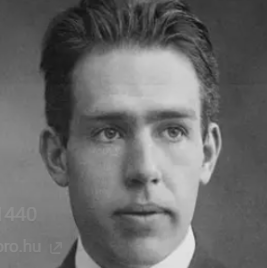
We must be clear that when it comes to atoms, language can be used only as in poetry. The poet, too, is not nearly so concerned with describing facts as with creating images and establishing mental connections.
▼
Source
In his first meeting with Werner Heisenberg in early summer 1920, in response to questions on the nature of language, as reported in Discussions about Language (1933); quoted in Defense Implications of International Indeterminacy (1972) by Robert J. Prang
3 months 3 weeks ago
What is that the inherence of which, will render the body alive? The soul. ...Then whatever the soul possesses, to that she comes bearing life? ...And is there an opposite to life? Death. Then the soul, as she has been acknowledged, will never receive the opposite of what she brings. ...And what do we call the principle which does not admit of death? The immortal. And does the soul admit of death? No. Then the soul is immortal? Yes.

3 months 3 weeks ago
God didn't die, he was transformed into money.
▼
Source
As quoted in [https://libcom.org/article/god-didnt-die-he-was-transformed-money-interview-giorgio-agamben-peppe-sava "God didn't die, he was transformed into money" - An interview with Giorgio Agamben - Peppe Savà], libcom.org.
3 months 3 weeks ago
It is not to be supposed that she was, or that any one, at the age at which I first saw her, could be, all that she afterwards became. Least of all could this be true of her, with whom self-improvement, progress in the highest and in all senses, was a law of her nature; a necessity equally from the ardour with which she sought it, and from the spontaneous tendency of faculties which could not receive an impression or an experience without making it the source or the occasion of an accession of wisdom. Up to the time when I first saw her, her rich and powerful nature had chiefly unfolded itself according to the received type of feminine genius. To her outer circle she was a beauty and a wit, with an air of natural distinction, felt by all who approached her: to the inner, a woman of deep and strong feeling, of penetrating and intuitive intelligence, and of an eminently meditative and poetic nature.
▼
Source
([https://archive.org/details/autobiography01mill/page/185/mode/1up p. 185])
3 months 3 weeks ago
I have always thought that clarity is a form of courtesy that the philosopher owes; moreover, this discipline of ours considers it more truly a matter of honor today than ever before to be open to all minds … This is different from the individual sciences which increasingly [interpose] between the treasure of their discoveries and the curiosity of the profane the tremendous dragon of their closed terminology.
▼
Source
p. 19
3 months 3 weeks ago
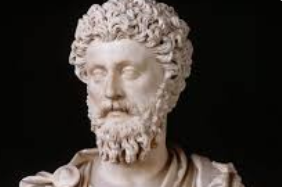
...undefiled by pleasures, invulnerable to any pain, untouched by arrogance, unaffected by meanness, an athlete in the greatest of all contests—the struggle not to be overwhelmed by anything that happens. (Hays translation)
▼
Source
III, 4
CivilSimian.com created by AxiomaticPanic, CivilSimian, Kalokagathia