
3 months 3 weeks ago
Philosophy has to grant that revelation is possible. But to grant that revelation is possible means to grant that philosophy is perhaps something infinitely unimportant. To grant that revelation is possible means to grant that the philosophic life is not necessarily, not evidently, the right life. Philosophy, the life devoted to the quest for evident knowledge available to man as man, would itself rest on an unevident, arbitrary, or blind decision. This would merely confirm the thesis of faith, that there is no possibility of consistency, of a consistent and thoroughly sincere life, without belief in revelation. The mere fact that philosophy and revelation cannot refute each other would constitute the refutation of philosophy by revelation.
▼
Source
p. 75
3 months 3 weeks ago
Is the ordinary person incompetent? No judgment is more decisive for one's political philosophy. It was perhaps the single most important difference in judgment between Plato and Aristotle.
▼
Source
Robert A. Dahl, After the Revolution? (1970; 1990), p. 26

3 months 3 weeks ago
I trust a good deal to common fame, as we all must. If a man has good corn, or wood, or boards, or pigs, to sell, or can make better chairs or knives, crucibles or church organs, than anybody else, you will find a broad hard-beaten road to his house, though it be in the woods.
▼
Source
February 1855

3 months 3 weeks ago
The notion of a prison industrial complex insists on understandings of the punishment process that take into account economic and political structures and ideologies, rather than focusing myopically on the individual criminal conduct and efforts to "curb crime."
▼
Source
Chapter Five

3 months 3 weeks ago
Is it conceivable to adhere to a religion founded by someone else?
3 months 3 weeks ago
The natural effort of every individual to better his own condition, when suffered to exert itself with freedom and security is so powerful a principle that it is alone, and without any assistance, not only capable of carrying on the society to wealth and prosperity, but of surmounting a hundred impertinent obstructions with which the folly of human laws too often incumbers its operations; though the effect of these obstructions is always more or less either to encroach upon its freedom, or to diminish its security.
▼
Source
Chapter V, paragraph 82.
3 months 3 weeks ago
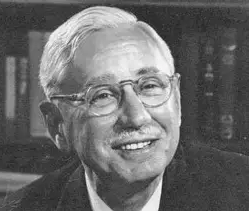
Allow me, Gentlemen, to pose this question in a more serious manner. Do I need to tell you that it is not a question at first of the natural, physiological, ethnographic difference that exists between individuals, but of the social difference, that is produced by the economic organization of society? Give to all the children, from their birth, the same means of maintenance, education, and instruction; give then to all the men thus raised the same social milieu, the same means of earning their living by their own labor, and you will see then that many of these differences, that we believe to be natural differences, will disappear because they are nothing but the effect of an unequal division of the conditions of intellectual and physical development — of the conditions of life.
3 months 3 weeks ago
Nothing should more deeply shame the modern student than the recency and inadequacy of his acquaintance with India. Here is a vast peninsula of nearly two million square miles; two-thirds as large as the United States, and twenty times the size of its master, Great Britain; 320,000,000 souls, more than in all North and South America combined, or one-fifth of the population of the earth; an impressive continuity of development and civilization from Mohenjo-daro, 2900 B.C. or earlier, to Gandhi, Raman and Tagore; faiths compassing every stage from barbarous idolatry to the most subtle and spiritual pantheism; philosophers playing a thousand variations on one monistic theme from the Upanishads eight centuries before Christ to Shankara eight centuries after him; scientists developing astronomy three thousand years ago, and winning Nobel prizes in our own time; a democratic constitution of untraceable antiquity in the villages, and wise and beneficent rulers like Ashoka and Akbar in the capitals; minstrels singing great epics almost as old as Homer, and poets holding world audiences today; artists raising gigantic temples for Hindu gods from Tibet to Ceylon and from Cambodia to Java, or carving perfect palaces by the score for Mogul kings and queens — this is the India that patient scholarship is now opening up, like a new intellectual continent, to that Western mind which only yesterday thought civilization an exclusively European thing.
▼
Source
Ch. XIV : The Foundations of India § I : Scene of the Drama

3 months 3 weeks ago
A hymn is the praise of God with song; a song is the exultation of the mind dwelling on eternal things, bursting forth in the voice.
▼
Source
[http://dhspriory.org/thomas/english/PsalmsAquinas/ThoPs0.htm Commentary on the Psalms] (c. 1273), Introduction

3 months 3 weeks ago
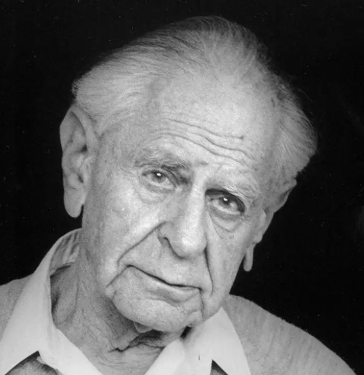
The Pythagoreans made kindness to beasts a training in humanity and pity.
▼
Source
3, 20, 7
3 months 3 weeks ago
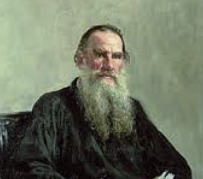
When we enter a new situation in life and are confronted by a new person, we bring with us the prejudices of the past and our previous experiences of people. These prejudices we project upon the new person. Indeed, getting to know a person is largely a matter of withdrawing projections; of dispelling the smoke screen of what we imagine he is like and replacing it with the reality of what he is actually like.
▼
Source
Anthony Storr as quoted in The Observer (12 July 1970)
3 months 3 weeks ago
If there may be doubts for men and for a childless woman as to the way to, fulfil the will of God, for a mother that path is firmly and clearly defined, and if she fulfils it humbly with a simple heart she stands on the highest point of perfection a human being can attain, and becomes for all a model of that complete performance of God's will which all desire. Only a mother can before her death tranquilly say to Him who sent her into this world, and Whom she has served by bearing and bringing up children whom she has loved more than herself - only she having served Him in the way appointed to her can say with tranquillity, Now lettest Thou Thy servant depart in peace. And that is the highest perfection to which, as to the highest good, men aspire.
3 months 3 weeks ago
We cannot exert our understanding without from time to time understanding something of importance; and this act of understanding may be accompanied by the awareness of our understanding, by the understanding of understanding, by noesis noesos, and this is so high, so pure, so noble an experience that Aristotle could ascribe it to his God.
▼
Source
“What is liberal education,” p. 8
3 months 3 weeks ago
What would we really know the meaning of? The meal in the firkin; the milk in the pan; the ballad in the street; the news of the boat; the glance of the eye; the form and the gait of the body; — show me the ultimate reason of these matters; show me the sublime presence of the highest spiritual cause lurking, as always it does lurk, in these suburbs and extremities of nature; let me see every trifle bristling with the polarity that ranges it instantly on an eternal law; and the shop, the plough, and the ledger, referred to the like cause by which light undulates and poets sing; — and the world lies no longer a dull miscellany and lumber-room, but has form and order; there is no trifle; there is no puzzle; but one design unites and animates the farthest pinnacle and the lowest trench.
▼
Source
par. 40
3 months 3 weeks ago
When the protests began, of course, around the murder of George Floyd and Breonna Taylor and Ahmaud Arbery and Tony McDade and many others who have lost their lives to racist state violence and vigilante violence — when these protests erupted, I remembered something that I’ve said many times to encourage activists, who often feel that the work that they do is not leading to tangible results. I often ask them to consider the very long trajectory of Black struggles. And what has been most important is the forging of legacies, the new arenas of struggle that can be handed down to younger generations.
3 months 3 weeks ago
Every tax, however, is to the person who pays it a badge, not of slavery but of liberty. It denotes that he is a subject to government, indeed, but that, as he has some property, he cannot himself be the property of a master.
▼
Source
Chapter II, Part II, p. 927.
3 months 3 weeks ago
Some communities will be abandoned, others will struggle along, others will split, others will flourish, gain members, and be duplicated elsewhere. Each community must win and hold the voluntary adherence of its members. No pattern is imposed on everyone, and the result will be one pattern if and only if everyone voluntarily chooses to live in accordance with that pattern of community.
▼
Source
Ch. 10 : A Framework for Utopia; Design Devices and Filter Devices, p. 316
3 months 3 weeks ago
And this is the only explanation of the dreadful intensity with which men of modern times strive to stupefy themselves, with spirits, tobacco, opium, cards, reading newspapers, traveling, and all kinds of spectacles and amusements. These pursuits are followed up as an important, serious business. And indeed they are a serious business. If there were no external means of dulling their sensibilities, half of mankind would shoot themselves without delay, for to live in opposition to one's reason is the most intolerable condition. And that is the condition of all men of the present day. All men of the modern world exist in a state of continual and flagrant antagonism between their conscience and their way of life. This antagonism is apparent in economic as well as political life. But most striking of all is the contradiction between the Christian law of the brotherhood of men existing in the conscience and the necessity under which all men are placed by compulsory military service of being prepared for hatred and murder—of being at the same time a Christian and a gladiator.
▼
Source
Chapter V, Contradiction Between our Life and our Christian Conscience
3 months 3 weeks ago
To be a Communist is to be a partisan and artisan of Marxism-Leninist philosophy: of dialectical materialism.
▼
Source
"Philosophy as a Revolutionary Weapon"
3 months 3 weeks ago
Announced by all the trumpets of the sky Arrives the snow, and, driving o'er the fields, Seems nowhere to alight: the whited air Hides hills and woods, the river and the heaven, And veils the farm-house at the garden's end.
▼
Source
The Snow-Storm
3 months 3 weeks ago
Bourgeois sport wants to differentiate itself strictly from play. Its bestial seriousness consists in the fact that instead of remaining faithful to the dream of freedom by getting away from purposiveness, the treatment of play as a duty puts it among useful purposes and thereby wipes out the trace of freedom in it. This is particularly valid for contemporary mass music. It is only play as a repetition of prescribed models, and the playful release from responsibility which is thereby achieved does not reduce at all the time devoted to duty except by transferring the responsibility to the models, the following of which one makes into a duty for himself.
▼
Source
p. 296

3 months 3 weeks ago
Truth, 'tis suppos'd, may bear all Lights: and one of those principal Lights or natural Mediums, by which Things are to be view'd, in order to a thorow Recognition, is Ridicule it-self, or that Manner of Proof by which we discern whatever is liable to just Raillery in any Subject.
▼
Source
Vol. 1, p. 38; "Sensus Communis".
3 months 3 weeks ago
War as the most extreme political means discloses the possibility which underlies every political idea, namely, the distinction of friend and enemy.
3 months 3 weeks ago
Give all to love; Obey thy heart; Friends, kindred, days, Estate, good fame, Plans, credit, and the muse; Nothing refuse.
▼
Source
Give All to Love, st. 1
3 months 3 weeks ago
Philosophy ... must not bargain away anything of the emphatic concept of truth.
▼
Source
p. 7
3 months 3 weeks ago
The predicate of a sentence may tell you what kind of a thing something is, or how big it is, or where it is, or what is happening to it, and so on. We may say, for instance, of St Thomas Aquinas that he was a human being, and that he was fat, clever, and holier than Abelard; that he lived in Paris in the thirteenth century, that he sat when lecturing, wore the Dominican habit, wrote eight million words, and was eventuarlly poisoned by Charles of Anjou. The predicats we use in saying these things belong, Aristotle would say, in different categories: they belong in the categories of, respectively, substance, quantity, quality, relation, place, time, posture, vesture, action, and passion.
▼
Source
[https://www.google.com/books?id=B4xQTK_vUa4C&pg=PA2 Aquinas on Being] (2002), pp. 2–3
3 months 3 weeks ago
In a community, the constitution of which provides for a legislator and a law, it is the concern of the legislator and of the laws given by him to ascertain the mediation through calculable and attainable rules and to prevent the terror of the direct and automatic enactment of values. That is a very complicated problem, indeed. One may understand why law-givers all along world history, from Lycurgus to Solon and Napoleon have been turned into mythical figures. In the highly industrialized nations of our times, with their provisions for the organization of the lives of the masses, the mediation would give rise to a new problem. Under the circumstances, there is no room for the law-giver, and so there is no substitute for him. At best, there is only a makeshift which sooner or later is turned into a scapegoat, due to the unthankful role it was given to play.A jurist who interferes, and wants to become the direct executor of values should know what he is doing. He must recall the origins and the structure of values and dare not treat lightly the problem of the tyranny of values and of the unmediated enactment of values. He must attain a clear understanding of the modern philosophy of values before he decides to become valuator, revaluator, upgrader of values. As a value-carrier and value-sensitive person, he must do that before he goes on to proclaim the positings of a subjective, as well as objective, rank-order of values in the form of pronouncements with the force of law.
3 months 3 weeks ago
Economic theory as derived from Adam Smith assumes first that homo economicus acts with perfect optimality on complete information, and second that when many of the species homo economicus do that, their actions add up to the best possible outcome for everybody. Neither of these assumptions stands up long against the evidence.
▼
Source
Donella Meadows, Thinking in Systems: A Primer, Chelsea Green Publishing, 2008, page 107 (ISBN 9781603580557).
3 months 3 weeks ago
Three years ago he was an honest, self-denying youth, ready to devote himself to every good cause; now he was a corrupt and refined egotist, given over to personal enjoyment. ... And all this terrible transformation took place in him only because he ceased to have faith in himself, and began to believe in others.
▼
Source
Ch. 13
3 months 3 weeks ago
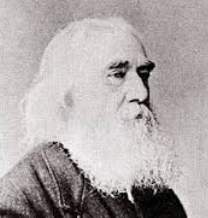
If there be no such principle as justice, there can be no such acts as crimes; and all the professions of governments, so called, that they exist, either in whole or in part, for the punishment or prevention of crimes, are professions that they exist for the punishment or prevention of what never existed, nor ever can exist.
▼
Source
Section V, p. 13
3 months 3 weeks ago
The hearing ear is always found close to the speaking tongue.
▼
Source
Race
3 months 3 weeks ago
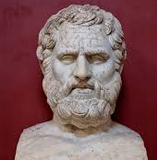
When he was asked by an impious man what piety was, he made no reply; and when his questioner demanded the reason of his silence, he said, "I am silent because you are putting questions about things with which you have no concern."
3 months 3 weeks ago
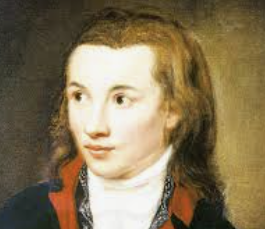
Only the most perfect human being can design the most perfect philosophy.
▼
Source
Fichte Studies § 651
3 months 3 weeks ago
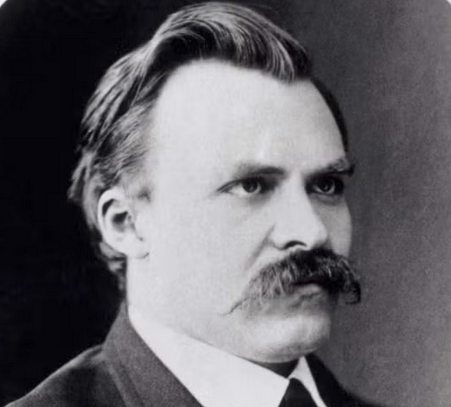
You have committed one of the greatest stupidities — for yourself and for me! Your association with an anti-Semitic chief expresses a foreignness to my whole way of life which fills me again and again with ire or melancholy. ... It is a matter of honor with me to be absolutely clean and unequivocal in relation to anti-Semitism, namely, opposed to it, as I am in my writings. I have recently been persecuted with letters and Anti-Semitic Correspondence Sheets. My disgust with this party (which would like the benefit of my name only too well!) is as pronounced as possible, but the relation to Förster, as well as the aftereffects of my former publisher, the anti-Semitic Schmeitzner, always brings the adherents of this disagreeable party back to the idea that I must belong to them after all. ... It arouses mistrust against my character, as if publicly I condemned something which I have favored secretly — and that I am unable to do anything against it, that the name of Zarathustra is used in every Anti-Semitic Correspondence Sheet, has almost made me sick several times.
▼
Source
Objecting to his sister Elisabeth, about her marriage to the anti-semite Bernhard Förster, in a [http://www.geocities.com/thenietzschechannel/nlett1887.htm Christmas letter (1887)] in Friedrich Nietzsche's Collected Letters, Vol. V, #479
3 months 3 weeks ago
What is now happening to the people of the East as of the West is like what happens to every individual when he passes from childhood to adolescence and from youth to manhood. He loses what had hitherto guided his life and lives without direction, not having found a new standard suitable to his age, and so he invents all sorts of occupations, cares, distractions, and stupefactions to divert his attention from the misery and senselessness of his life. Such a condition may last a long time.
▼
Source
VI
3 months 3 weeks ago
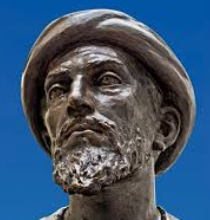
A sensible man should not demand of me, or hope that when we mention a subject, we shall make a complete exposition of it.
3 months 3 weeks ago
Our chief want in life is somebody who shall make us do what we can.
▼
Source
Considerations by the Way
3 months 3 weeks ago
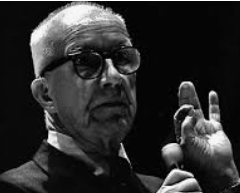
Nature never "fails." Nature complies with its own laws. Nature is the law. When Man lacks understanding of Nature's laws and a Man-contrived structure buckles unexpectedly, it does not fail. It only demonstrates that Man did not understand Nature's laws and behaviors. Nothing failed. Man's knowledge or estimating was inadequate.
▼
Source
In "How Little I Know", in Saturday Review (12 Nov 1966), 152. Excerpted in Buckminster Fuller and Answar Dil, Humans in Universe (1983), 31.
3 months 3 weeks ago
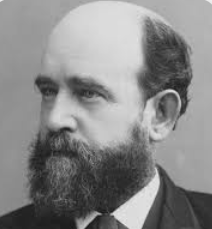
It is true that wealth has been greatly increased, and that the average of comfort, leisure, and refinement has been raised; but these gains are not general. In them the lowest class do not share. I do not mean that the condition of the lowest class has nowhere nor in anything been improved; but that there is nowhere any improvement which can be credited to increased productive power. I mean that the tendency of what we call material progress is in nowise to improve the condition of the lowest class in the essentials of healthy, happy human life. Nay, more, that it is still further to depress the condition of the lowest class. The new forces, elevating in their nature though they be, do not act upon the social fabric from underneath, as was for a long time hoped and believed, but strike it at a point intermediate between top and bottom. It is as though an immense wedge were being forced, not underneath society, but through society. Those who are above the point of separation are elevated, but those who are below are crushed down.
▼
Source
Introductory : The Problem
3 months 3 weeks ago
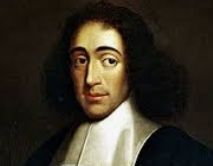
My opinion concerning God differs widely from that which is ordinarily defended by modern Christians. For I hold that God is of all things the cause immanent, as the phrase is, not transient. I say that all things are in God and move in God, thus agreeing with Paul, and, perhaps, with all the ancient philosophers, though the phraseology may be different ; I will even venture to affirm that I agree with all the ancient Hebrews, in so far as one may judge from their traditions, though these are in many ways corrupted. The supposition of some, that I endeavour to prove in the Tractatus Theologico-Politicus the unity of God and Nature (meaning by the latter a certain mass or corporeal matter), is wholly erroneous. As regards miracles, I am of opinion that the revelation of God can only be established by the wisdom of the doctrine, not by miracles, or in other words by ignorance.
▼
Source
[http://oll.libertyfund.org/?option=com_staticxt&staticfile=show.php%3Ftitle=1711&chapter=144137&layout=html&Itemid=27 Letter 21 (73) to Henry Oldenburg , November (1675)]
3 months 3 weeks ago
Not wise does it seem to attempt comprehending and understanding a Human World without full perfected Humanity. No talent must sleep; and if all are not alike active, all must be alert, and not oppressed and enervated. As we see a future Painter in the boy who fills every wall with sketches and variedly adds colour to figure; so we see a future Philosopher in him who restlessly traces and questions all natural things, pays heed to all, brings together whatever is remarkable, and rejoices when he has become master and possessor of a new phenomenon, of a new power and piece of knowledge.

3 months 3 weeks ago
As soon as laws are necessary for men, they are no longer fit for freedom.
▼
Source
As quoted in Short Sayings of Great Men: With Historical and Explanatory Notes (1882) by Samuel Arthur Bent, p. 454
3 months 3 weeks ago
Morality is: the mediocre are worth more than the exceptions ... I abhore Christianity with a deadly hatred.
▼
Source
Sec. 685 (Notebook W II 5. Spring 1888, KGW VIII, 3.95-7, KSA 13.303-5)
3 months 3 weeks ago
The slow progress towards juster international relations may be traced to the distinguished jurist of the Netherlands, Grotius; to the great German, Immanuel Kant, who lifted the subject of “Eternal Peace’ high above controversy; to Count Tolstoy of Russia, who so trenchantly set it forth in our own day, and so on throughout the nations.
▼
Source
Jane Addams, [https://speakingwhilefemale.co/war-addams1/ "This Totally Unnecessary Conflict"] (May 1, 1915)
3 months 3 weeks ago
It was necessary that the very noble form of man, which is the image and likeness of God... should be joined to the substance of dust and darkness, the source of all defect and loss. For these reasons the Creator gave to the form of man power, rule, and dominion over the substance;—the form can subdue the substance, refuse the fulfillment of its desires, and reduce them, as far as possible, to a just and proper measure.
▼
Source
Ch.8
3 months 3 weeks ago
Born for success he seemed, With grace to win, with heart to hold, With shining gifts that took all eyes.
▼
Source
In Memoriam E. B. E.
3 months 3 weeks ago
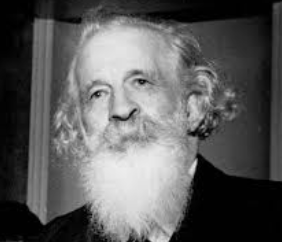
Ideas are invented only as correctives to the past. Through repeated rectifications of this kind one may hope to disengage an idea that is valid.
▼
Source
A Retrospective Glance at the Lifework of a Master of Books
3 months 3 weeks ago
My primary object is to defend and advance a principle in which I see the only possible relief from much that enthralls and degrades and distorts, turning light to darkness and good to evil, rather than to gage a philosopher or weigh a philosophy. Yet the examination I propose must lead to a decisive judgment upon both.
▼
Source
Introduction : The Reason for the Examination
3 months 3 weeks ago
Wilhelm Meister's Apprenticeship may be called throughout prosaic and modern. The Romantic sinks to ruin, the Poesy of Nature, the Wonderful. The Book treats merely of common worldly things: Nature and Mysticism are altogether forgotten. It is a poetised civic and household History; the Marvellous is expressly treated therein as imagination and enthusiasm. Artistic Atheism is the spirit of the Book. ... It is properly a Candide, directed against Poetry: the Book is highly unpoetical in respect of spirit, poetical as the dress and body of it are.
▼
Source
Ralph Waldo Emerson in "Goethe; or, the Writer" writes of this passage, and quotes a slightly different translation: The ardent and holy Novalis characterized the book as "thoroughly modern and prosaic; the romantic is completely levelled in it; so is the
CivilSimian.com created by AxiomaticPanic, CivilSimian, Kalokagathia