
3 months 3 weeks ago
Making money is not without its value, but nothing is baser than to make it by wrong-doing.
3 months 3 weeks ago
Our image of happiness is indissolubly bound up with the image of the past.
▼
Source
II
3 months 3 weeks ago
The wisdom which knows what are and are not dangers is opposed to the ignorance of them
▼
Source
360d, Benjamin Jowett, trans. | Sometimes misattributed as "Courage is knowing what to fear and what not to fear", this paraphrase is actually from Werner Jaeger's book Paideia: the Ideal of Greek Culture, Volume II, [https://books.google.com/books?id=pAU
3 months 3 weeks ago
Pride in one’s work carries with it a determination to accept the demands imposed by that work: in the case of philosophy to follow the argument where it leads, in the case of history to discover what actually happened, in the case of literature to explore to its depths a particular theme. In consequence, this sort of pride demands freedom: it has to be laid low in any authoritarian State. The historian, in such a system, has to conform to official interpretations of the past, the philosopher to dogmas, the writer to stereotypes of human action, the craftsman to “production-schedules.” More subtly, attempts are made to lay pride low in a consumer’s society: the film-director, the novelist, the craftsman are called upon to produce “what will sell” at whatever cost to their pride in workmanship.
▼
Source
p. 290.
3 months 3 weeks ago
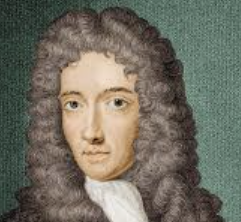
I remember, that being once at Leyden, I was brought to the top of a tower, where, in a darkened room (such as is now used in many places to bring in the species of external object) a convex glass, applied to the only hole, by which light was permitted to enter, did project upon a large white sheet of paper, held at a just distance from it, a lively representation of divers of the chief buildings in the town; all which, upon the admission of more light into the room, by opening the window, did immediately disappear, And methinks... that in divers of the philosophical theories, that have been formerly applauded, something not unlike this may be easily observed. for though, whilst they are looked on with such a weak and determinate degree of light, they may appear very artificial and well-proportioned fabrics, yet they appear so but in that twilight, as it were, which is requisite to their conspicuousness. For if but a full light of new experiments and observations be freely let in upon them, the beauty of those (delightful, but fantastical) structures does immediately vanish.
3 months 3 weeks ago
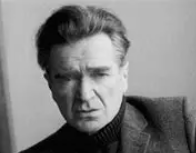
Pursued by our origins...we all are.
3 months 3 weeks ago
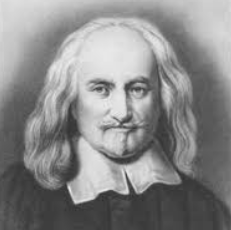
The office of the sovereign, be it a monarch or an assembly, consisteth in the end for which he was trusted with the sovereign power, namely the procuration of the safety of the people, to which he is obliged by the law of nature, and to render an account thereof to God, the Author of that law, and to none but Him. But by safety here is not meant a bare preservation, but also all other contentments of life, which every man by lawful industry, without danger or hurt to the Commonwealth, shall acquire to himself. And this is intended should be done, not by care applied to individuals, further than their protection from injuries when they shall complain; but by a general providence, contained in public instruction, both of doctrine and example; and in the making and executing of good laws to which individual persons may apply their own cases.
▼
Source
The Second Part, Chapter 30: Of the Office of the Sovereign Representative

3 months 3 weeks ago
The manner of men's Hero-worship, verily it is the innermost fact of their existence, and determines all the rest,—at public hustings, in private drawing-rooms, in church, in market, and wherever else. Have true reverence, and what indeed is inseparable therefrom, reverence the right man, all is well; have sham-reverence, and what also follows, greet with it the wrong man, then all is ill, and there is nothing.
3 months 3 weeks ago
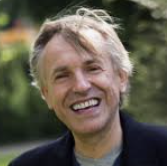
My own view of the risks and uncertainties is that there is a critical distinction between trying to abolish suffering exclusively via social reform and abolishing suffering directly via biotechnology. As we know, utopian social experiments typically go wrong, sometimes hideously wrong, and end up causing a lot of suffering instead. The abolitionist project of eradicating the biological substrates of suffering sounds like just another utopian scheme, whether it's touted as a grandiose species-project or simply as a byproduct of the Reproductive Revolution explored here. Although the abolition of psychological pain is arguably no more utopian in principle than pain-free surgery, it could presumably go wrong in unanticipated ways too. Perhaps we'll unwittingly create a fool's paradise. But if and when we ever abolish the molecular underpinning of unpleasant experience, and it becomes physiologically impossible for any sentient being to suffer, we thereby change the very meaning of what it is for anything to "go wrong". Unwelcome surprises where no one gets hurt are very different from unwelcome surprises where they do. For what it's worth, I think the abolition of involuntary suffering is the precondition of any civilised posthuman society; and therefore a risk worth taking.
▼
Source
"[https://www.reproductive-revolution.com/ The Reproductive Revolution: Selection Pressure in a Post-Darwinian World]", Talk delivered at the Touch Me Festival, Zagreb, Dec. 2008
3 months 3 weeks ago
Power as the pursuit of more power inevitably founders in the void that lies beyond itself.
▼
Source
Chapter Eight, Nietzsche, p. 181
3 months 3 weeks ago
My love, Alcibiades, which I hardly like to confess, would long ago have passed away, as I flatter myself, if I saw you loving your good things, or thinking that you ought to pass life in the enjoyment of them.
▼
Source
Socrates speaking to Alcibiades
3 months 3 weeks ago
Christ found the religions of the world oppressed almost to suffocation by the load of formulas piled upon them by the priesthood. He removed the load, and rendered respiration free. He cared little for forms and ceremonies, which had ceased to be the raiment of man's spiritual life. To that life he looked, and it he sought to restore.
3 months 3 weeks ago
Among Latin writers, the acceptations of the word nature are so many, that I remember, one author reckons up no less than fourteen or fifteen. Hence we see how easy 'tis for the generality of men, without excepting those who write of natural things, to impose upon others and themselves, in the use of a word so apt to be mis-employ'd. ..the very great ambiguity of this term, and the promiscuous use made of it, without sufficiently attending to its different significations, render many of the expressions wherein 'tis employ'd either unintelligible, improper, or false.
▼
Source
Sect. 1
3 months 3 weeks ago
Tragic paradox of freedom: the mediocre men who alone make its exercise possible cannot guarantee its duration.
3 months 3 weeks ago
Between our Black West Indies and our White Ireland, between these two extremes of lazy refusal to work, and of famishing inability to find any work, what a world have we made of it, with our fierce Mammon-worships, and our benevolent philanderings, and idle godless nonsenses of one kind and another! Supply-and-demand, Leave-it-alone, Voluntary Principle, Time will mend it:—till British industrial existence seems fast becoming one huge poison-swamp of reeking pestilence physical and moral; a hideous living Golgotha of souls and bodies buried alive; such a Curtius' gulf, communicating with the Nether Deeps, as the Sun never saw till now. These scenes, which the Morning Chronicle is bringing home to all minds of men,—thanks to it for a service such as Newspapers have seldom done,—ought to excite unspeakable reflections in every mind. Thirty thousand outcast Needlewomen working themselves swiftly to death; three million Paupers rotting in forced idleness, helping said Needlewomen to die: these are but items in the sad ledger of despair.
3 months 3 weeks ago
... our descendants may recognize that we are the sociopathic emotional primitives in the grip of an affective psychosis. Jealousy, envy, resentment, ridicule, hate, anger, disgust, spite, contempt, schadenfreude and a whole gamut of nameless but mean-spirited states we undergo each day are a toxic legacy of our Darwinian past. More commonly, perhaps, our genetic make-up ensures we simply feel indifference to the plight of all but a handful of significant others in our lives. Right now, for instance, one knows dimly at some level that there is frightful and preventable suffering in the world. Yet most of us feel no overpowering moral urgency to do anything about it.
▼
Source
"[https://www.hedweb.com/ecstasy/index.html Utopian Pharmacology: Mental Health in the Third Millennium MDMA and Beyond]", BLTC Research, last updated 2020
3 months 3 weeks ago
In fact, we almost lost our lives because of his honesty. In 1939, we were running away from Posnan as the Germans were invading - the town was almost on the German border. We took the last train east, but we were stopped at a station which was being bombed by the Germans. We should have run away from the station because that was the object of the bombing, but he wanted to find a ticket inspector to pay for our tickets.
▼
Source
From an interview, as cited in [https://www.theguardian.com/books/2003/apr/05/society "Passion and pessimism"], The Guardian (5 April 2003)
3 months 3 weeks ago
It is no idle question to wonder whether Plato, if he had stayed free of the Socratic spell, might not have found an even higher type of the philosophical man, now lost to us forever.
▼
Source
Friedrich Nietzsche, Human, All Too Human: A Book for Free Spirits (1878)
3 months 3 weeks ago
Within the world of total work, the "festival" is either "a break from work" (and thus only there for the sake of work), or it is a more intensive celebration of the principles of work itself (as in the "Labor Days," and thus belongs, again, to the working world). There will naturally be "games" — like the Roman circences — but who would dignify the amusements for the masses with the name of "festival"?
▼
Source
p. 53
3 months 3 weeks ago
Facing a landscape annihilated by the light, to remain serene supposes a temper I do not have. The sun is my purveyor of black thoughts; and summer the season when I have always reconsidered my relations with this world and with myself, to the greatest prejudice of both.
3 months 3 weeks ago
Let us honor all honest human power of contrivance in its degree. The beaver intellect, so long as it steadfastly refuses to be vulpine, and answers the tempter pointing out short routes to it with an honest "No, no," is truly respectable to me; and many a highflying speaker and singer whom I have known, has appeared to me much less of a developed man than certain of my mill-owning, agricultural, commercial, mechanical, or otherwise industrial friends, who have held their peace all their days and gone on in the silent state. If a man can keep his intellect silent, and make it even into honest beaverism, several very manful moralities, in danger of wreck on other courses, may comport well with that, and give it a genuine and partly human character; and I will tell him, in these days he may do far worse with himself and his intellect than change it into beaverism, and make honest money with it.
3 months 3 weeks ago
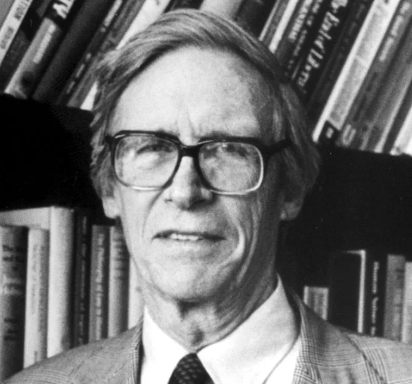
Indeed, it is tempting to suppose that it is self evident that things should be so arranged so as to lead to the most good.
▼
Source
Chapter I, Section 5, pg. 25
3 months 3 weeks ago
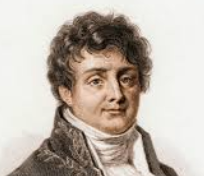
Primary causes are unknown to us; but are subject to simple and constant laws, which may be discovered by observation, the study of them being the object of natural philosophy. Heat, like gravity, penetrates every substance of the universe, its rays occupy all parts of space. The object of our work is to set forth the mathematical laws which this element obeys. The theory of heat will hereafter form one of the most important branches of general physics.
▼
Source
Ch. 1, p. 1
3 months 3 weeks ago
When people come to me saying they want to kill themselves, I tell them, "What's your rush? You can kill yourself any time you like. So calm down. Suicide is a positive act." And they do calm down.
3 months 3 weeks ago
My father's education was altogether of the worst and most limited. I believe he was never more than three months at any school. What he learned there showed what he might have learned. A solid knowledge of arithmetic, a fine antique handwriting — these, with other limited practical etceteras, were all the things he ever heard mentioned as excellent. He had no room to strive for more.
3 months 3 weeks ago
The suppression of liberty is always likely to be irrational.
▼
Source
Chapter IV, Section 33, p. 210
3 months 3 weeks ago
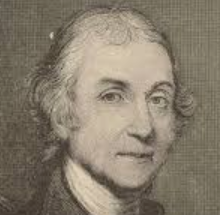
Were it possible to trace the succession of ideas in the mind of Sir Isaac Newton, during the time that he made his greatest discoveries, I make no doubt but our amazement at the extent of his genius would a little subside. But if, when a man publishes discoveries, he, either through design, or through habit, omit the intermediate steps by which he himself arrived at them; it is no wonder that his speculations confound others... Where we see him most in the character of an experimental philosopher, as in his optical inquiries... we may easily conceive that many persons, of equal patience and industry... might have done what he did. And were it possible to see in what manner he was first led to those speculations, the very steps by which he pursued them, the time that he spent in making experiments, and all the unsuccessful and insignificant ones that he made in the course of them; as our pleasure of one kind would be increased, our admiration would probably decrease. Indeed he himself used candidly to acknowledge, that if he had done more than other men, it was owing rather to a habit of patient thinking, than to any thing else. ...The interests of science have suffered by the excessive admiration and wonder, with which several first rate philosophers are considered; and... an opinion of the greater equality of mankind, in point of genius, and powers of understanding, would be of real service in the present age.
▼
Source
Vol. 2, pp. 167-169.
3 months 3 weeks ago
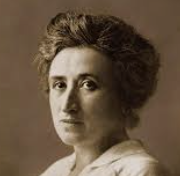
One is immediately struck with the obstinacy and rigid consistency with which Lenin and his comrades stuck to this slogan, a slogan which is in sharp contradiction to their otherwise outspoken centralism in politics as well as to the attitude they have assumed towards other democratic principles. Wile they showed a quite cool contempt for the Constituent Assembly, universal suffrage, freedom of press and assemblage, in short for the whole apparatus of basic democratic liberties of the people which, taken all together, constituted the "right of self-determination" inside Russia, they treated the right of self-determination of peoples as a jewel of democratic policy for the sake of which all practical considerations of real criticism had to be stilled.
▼
Source
Chapter Three, "Nationalities Question"
3 months 3 weeks ago
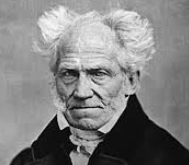
Talent hits a target no one else can hit; genius hits a target no one else can see.
▼
Source
Das Talent gleicht dem Schützen, der ein Ziel trifft, welches die Uebrigen nicht erreichen können; das Genie dem, der eines trifft, bis zu welchem sie nicht ein Mal zu sehn vermögen... | Vol. II, Ch. III, para. 31 (On Genius), 1844 | As cited in The Littl
3 months 3 weeks ago
Though we may prefer ourselves to the universe, we nonetheless loathe ourselves much more than we suspect. If the wise man is so rare a phenomenon, it is because he seems unshaken by the aversion which, like all beings, he must feel for himself.
3 months 3 weeks ago
This is the condition of England, according to Carlyle. An idle landowning aristocracy which "have not yet learned even to sit still and do no mischief", a working aristocracy submerged in Mammonism, who, when they ought to be collectively the leaders of labour, "captains of industry", are just a gang of industrial buccaneers and pirates. A Parliament elected by bribery, a philosophy of simply looking on, of doing nothing, of laissez-faire, a worn-out, crumbling religion, a total disappearance of all general human interests, a universal despair of truth and humanity, and in consequence a universal isolation of men in their own "brute individuality", a chaotic, savage confusion of all aspects of life, a war of all against all, a general death of the spirit, a dearth of "soul", that is, of truly human consciousness: a disproportionately strong working class, in intolerable oppression and wretchedness, in furious discontent and rebellion against the old social order, and hence a threatening, irresistibly advancing democracy — everywhere chaos, disorder, anarchy, dissolution of the old ties of society, everywhere intellectual insipidity, frivolity, and debility. — That is the condition of England. Thus far, if we discount a few expressions that have derived from Carlyle's particular standpoint, we must allow the truth of all he says. He, alone of the "respectable" class, has kept his eyes open at least towards the facts, he has at least correctly apprehended the immediate present, and that is indeed a very great deal for an "educated" Englishman.
▼
Source
Friedrich Engels, [https://www.marxists.org/archive/marx/works/1844/df-jahrbucher/carlyle.htm review of Past and Present], Deutsch-Französische Jahrbücher (1844)
3 months 3 weeks ago
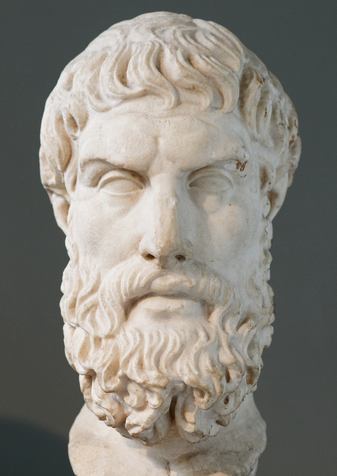
The wealth required by nature is limited and is easy to procure; but the wealth required by vain ideals extends to infinity.
3 months 3 weeks ago
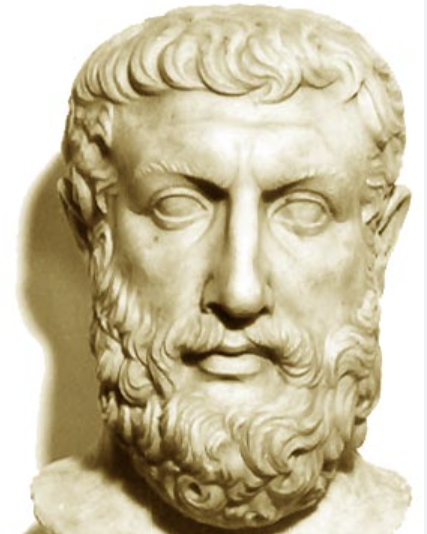
Parmenides made it clear for the first time that the Immortal Principle, the One, Truth, God, is separate from appearance and from opinion, and the importance of this separation and its effect upon subsequent history cannot be overstated. It's here that the classic mind, for the first time, took leave of its romantic origins and said, "The Good and the True are not necessarily the same," and goes its separate way. Anaxagoras and Parmenides had a listener named Socrates who carried their ideas into full fruition.
▼
Source
Robert M. Pirsig, in Zen and the Art of Motorcycle Maintenance (1974), Ch. 29
3 months 3 weeks ago
Yours is one of the few lives precious to mankind, and for the continuance of which every thinking man is solicitous. Bigots may be an exception. What an effort, my dear sir, of bigotry in politics and religion have we gone through! The barbarians really flattered themselves they should be able to bring back the times of Vandalism, when ignorance put everything into the hands of power and priestcraft. All advances in science were proscribed as innovations. They pretended to praise and encourage education, but it was to be the education of our ancestors. We were to look backwards, not forwards, for improvement … This was the real ground of all the attacks on you. Those who live by mystery and charlntanerie, fearing you would render them useless by simplifying the Christian philosophy — the most sublime and benevolent, but most perverted system that ever shone on man — endeavored to crush your well-earned and well-deserved fame. But it was the Lilliputians upon Gulliver. Our countrymen have recovered from the alarm into which art & industry had thrown them; science & honesty are replaced on their high ground; and you, my dear Sir, as their great apostle, are on it's pinnacle.
▼
Source
Thomas Jefferson, in a [http://eText.Lib.Virginia.edu/etcbin/toccer-new2?id=JefLett.sgm&images=images/modeng&data=/texts/english/modeng/parsed&tag=public&part=136&division=div1 letter to Priestly (21 March 1801)]; published in The Life of Thomas Jefferson
3 months 3 weeks ago
Whenever I reflect, my reflecting upon what I suffer only rouses me to blame him that begot me. And I gave peace to my children, for they are in the bliss of non-existence which surpasses all the pleasures of this world. Had they come to life, they would have endured a misery casting them to destruction in trackless wildernesses.
▼
Source
As quoted in Studies in Islamic Poetry (1921) by Reynold A. Nicholson
3 months 3 weeks ago
To be a philosopher, that is to say, a lover of wisdom (for wisdom is nothing but truth), it is not enough for a man to love truth, in so far as it is compatible with his own interest, with the will of his superiors, with the dogmas of the church, or with the prejudices and tastes of his contemporaries; so long as he rests content with this position, he is only a philautos, not a philosophos [a lover of self, not a lover of wisdom]. For this title of honor is well and wisely conceived precisely by its stating that one should love the truth earnestly and with one’s whole heart, and thus unconditionally and unreservedly, above all else, and, if need be, in defiance of all else. Now the reason for this is the one previously stated that the intellect has become free, and in this state it does not even know or understand any other interest than that of truth.
▼
Source
E. Payne, trans. (1974) Vol. 1, pp. 21–22
3 months 3 weeks ago
We dread the future only when we are not sure we can kill ourselves when we want to.
3 months 3 weeks ago
"A few words will be expected here as to Mr. Carlyle's manner as a lecturer. In so far as his mere manner is concerned, I can scarcely bestow on him a word of commendation. There is something in his manner which, if I may use a rather quaint term, must seem very uncouth to London audiences of the most respectable class, accustomed as they are to the polished deportment[A] which is usually exhibited in Willis's or the Hanover Rooms. When he enters the room, and proceeds to the sort of rostrum whence he delivers his lectures, he is, according to the usual practice in such cases, generally received with applause; but he very rarely takes any more notice of the mark of approbation thus bestowed upon him, than if he were altogether unconscious of it. And the same seeming want of respect for his audience, or, at any rate, the same disregard for what I believe he considers the troublesome forms of politeness, is visible at the commencement of his lecture. Having ascended his desk, he gives a hearty rub to his hands, and plunges at once into his subject. He reads very closely, which, indeed, must be expected, considering the nature of the topics which he undertakes to discuss. He is not prodigal of gesture with his arms or body; but there is something in his eye and countenance which indicates great earnestness of purpose, and the most intense interest in his subject. You can almost fancy, in some of his more enthusiastic and energetic moments, that you see his inmost soul in his face. At times, indeed very often, he so unnaturally distorts his features, as to give to his countenance a very unpleasant expression. On such occasions, you would imagine that he was suddenly seized with some violent paroxysms of pain. He is one of the most ungraceful speakers I have ever heard address a public assemblage of persons. In addition to the awkwardness of his general manner, he 'makes mouths,' which would of themselves be sufficient to mar the agreeableness of his delivery. And his manner of speaking, and the ungracefulness of his gesticulation, are greatly aggravated by his strong Scotch accent. Even to the generality of Scotchmen his pronunciation is harsh in no ordinary degree. Need I say, then, what it must be to an English ear?
▼
Source
With White, Andrew Dickson. [https://ia600302.us.archive.org/33/items/cu31924029541640/cu31924029541640.pdf On the Choice of Books: The Inaugural Address of Thomas Carlyle, Lord Rector of the University of Edinburgh, Reprinted From the Times, With Additio
3 months 3 weeks ago
A true friend will partake of the wants and sorrows of his friend, as if they were his own; if he be in want, he will relieve him; if he be in prison, he will visit him; if he be sick, he will come to him; nay-situations may occur, in which he would not scruple to die for him. It cannot then be doubted, that friendship is one of the most useful means of procuring a secure, tranquil, and happy life.
3 months 3 weeks ago
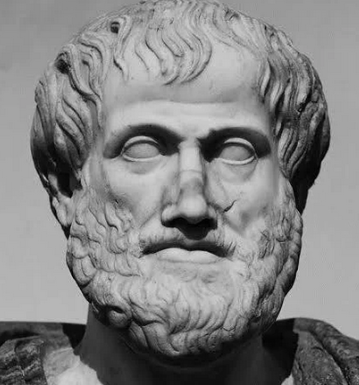
All things as subsist from nature appear to contain in themselves a principle of motion and permanency; some according to place, others according to increase and diminuation; and others according to change in quality.
▼
Source
Book II, Ch. I, p. 88.
3 months 3 weeks ago
In nations composed of both cultured and uncultured elements, the uncultured will govern because it is their habit to attack and resolve doubts with their fists in cases where the cultured have failed in the art of governing. The uncultured masses are lazy and timid in the realm of intelligence, and they want to be governed well. But if the government hurts them, they shake it off and govern themselves.
3 months 3 weeks ago
Art attests to what is inhuman in man.
▼
Source
Original French: L'art atteste ce qu'il y a d'inhumain dans l'humain. | From Le siècle. Paris: Éditions du Seuil, 2005. .
3 months 3 weeks ago
How very paltry and limited the normal human intellect is, and how little lucidity there is in the human consciousness, may be judged from the fact that, despite the ephemeral brevity of human life, the uncertainty of our existence and the countless enigmas which press upon us from all sides, everyone does not continually and ceaselessly philosophize, but that only the rarest of exceptions do.
▼
Source
Vol. 2, Ch. 3, § 39
3 months 3 weeks ago
My mission is to suffer for all those who suffer without knowing it. I must pay for them, expiate their unconsciousness, their luck to be ignorant of how unhappy they are.
3 months 3 weeks ago
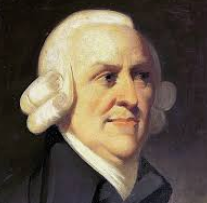
We are delighted to find a person who values us as we value ourselves, and distinguishes us from the rest of mankind, with an attention not unlike that with which we distinguish ourselves.
▼
Source
Section III, Chap. I.
3 months 3 weeks ago
A standing army, for instance, is incompatible with freedom; because subordination and rigour are the very sinews of military discipline; and despotism is necessary to give vigour to enterprise that one will directs. A spirit inspired by romantic notions of honour, a kind of morality founded on the fashion of the age, can only be felt by a few officers, whilst the main body must be moved by command, like the waves of the sea; for the strong wind of authority pushes the crowd of subalterns forward, they scarcely know or care why, with headlong fury.
▼
Source
Ch. 1
3 months 3 weeks ago
Out-of-date theories are not in principle unscientific because they have been discarded. That choice, however, makes it difficult to see scientific development as a process of accretion.

3 months 3 weeks ago
What I liked was Thatcherism's Bolshevik aspect, which was to shake up the whole of Britain quite fundamentally, and if you read what I wrote in those years I think you might agree that in taking the view that I did then — that this was necessary and desirable — I never subscribed to the main delusion of the Thatcherites, which was that you could change everything and everything would remain the same. If what you wanted was a very anarchic, globalised, polyglot, mixed-up society in which most of the structures which had somehow been renewed from the Edwardian period to the Sixties were destroyed, then Thatcherism was what would do the job.
▼
Source
Quoted in Will Self, "John Gray: Forget everything you know," The Independent (2002-09-03)
3 months 3 weeks ago
For it is owing to their wonder that men both now begin and at first began to philosophize; they wondered originally at the obvious difficulties, then advanced little by little and stated difficulties about the greater matters, e.g. about the phenomena of the moon and those of the sun and of the stars, and about the genesis of the universe. And a man who is puzzled and wonders thinks himself ignorant (whence even the lover of myth is in a sense a lover of Wisdom, for the myth is composed of wonders); therefore since they philosophized order to escape from ignorance, evidently they were pursuing science in order to know, and not for any utilitarian end.
▼
Source
Variant: [And] one who experiences a difficulty and who feels wonder thinks that he does not understand..., so that, if it is to escape ignorance that they have practised philosophy, then it is clearly for the sake of knowing, and not for any practical pu
3 months 3 weeks ago
The hero of my tale, whom I love with all the power of my soul, whom I have tried to portray in all his beauty, who has been, is, and will be beautiful, is Truth.
▼
Source
Sevastopol in May (1855), Ch. 16
CivilSimian.com created by AxiomaticPanic, CivilSimian, Kalokagathia