
5 months ago
In the spiritual realm nothing is indifferent: what is not useful is harmful.
▼
Source
VII
5 months ago
He who thinks he can have flesh and bones without being subject to any external influence, or any accidents of matter, unconsciously wishes to reconcile two opposites, viz., to be at the same time subject and not subject to change. If man were never subject to change there could be no generation; there would be one single being, but no individuals forming a species.
▼
Source
Compare Galileo, "...for my part I consider the earth very noble and admirable precisely because of the diverse alterations, changes, generations, etc. that occur in it incessantly. If, not being subject to any changes... I should deem it a useless lump i
5 months ago
Leave this hypocritical prating about the masses. Masses are rude, lame, unmade, pernicious in their demands and influence, and need not to be flattered, but to be schooled. I wish not to concede anything to them, but to tame, drill, divide, and break them up, and draw individuals out of them.
▼
Source
Considerations by the Way
5 months ago
Critical proximity occurs where there is angular transition from "falling back in" at 180-degree to 90-degree orbiting—which is precession. (Gravity may be described as "falling back in" at 180 degrees.) The quantity of energy that ceased to "fall in" is the system's entropy. Critical proximity is when it starts either "falling in" or going into orbit, which is the point where either entropy or antientropy begins. An aggregate of "falling ins" is a body. What we call an object or an entity is always an aggregate of interattracted entities; it is never a solid. And the critical proximity transition from being an aggregate entity to being a plurality of separate entities is precession, which is a "peeling off" into orbit rather than falling back in to the original entity aggregate. This explains entropy intimately.
▼
Source
[http://www.rwgrayprojects.com/synergetics/s01/p3000.html 130.01]
5 months ago
All large political questions are at bottom economic questions.
▼
Source
General Introduction
5 months ago
Of all the things that are beyond my power, I value nothing more highly than to be allowed the honor of entering into bonds of friendship with people who sincerely love truth. For, of things beyond our power, I believe there is nothing in the world which we can love with tranquility except such men.
▼
Source
Spinoza, Correspondence, 146, Letter xix
5 months ago
The rude, discursive Thinker is the Scholastic (Schoolman Logician). The true Scholastic is a mystical Subtlist; out of logical Atoms he builds his Universe; he annihilates all living Nature, to put an Artifice of Thoughts (Gedankenkunststuck, literally Conjuror's-trick of Thoughts) in its room. His aim is an infinite Automaton. Opposite to him is the rude, intuitive Poet: this is a mystical Macrologist: he hates rules and fixed form; a wild, violent life reigns instead of it in Nature; all is animate, no law; wilfulness and wonder everywhere. He is merely dynamical. Thus does the Philosophic Spirit arise at first, in altogether separate masses. In the second stage of culture these masses begin to come in contact, multifariously enough; and, as in the union of infinite Extremes, the Finite, the Limited arises, so here also arise "Eclectic Philosophers" without number; the time of misunderstanding begins. The most limited is, in this stage, the most important, the purest Philosopher of the second stage. This class occupies itself wholly with the actual, present world, in the strictest sense. The Philosophers of the first class look down with contempt on those of the second; say, they are a little of everything, and so nothing; hold their views as the results of weakness, as Inconsequentism. On the contrary, the second class, in their turn, pity the first; lay the blame on their visionary enthusiasm, which they say is absurd, even to insanity.

5 months ago
Truth is so great a perfection, that if God would render himself visible to men, he would choose light for his body and truth for his soul.
▼
Source
As quoted in A Dictionary of Thoughts: Being a Cyclopedia of Laconic Quotations from the Best Authors of the World, both Ancient and Modern (1908) by Tyron Edwards, p. 592
5 months ago
The homogenizing of European man ... requires a justification: it lies in serving a higher sovereign species that stands upon the former which can raise itself to its task only by doing this. Not merely a master race whose sole task is to rule, but a race with its own sphere of life, with an excess of strength ... strong enough to have no need of the tyranny of the virtue-imperative.
▼
Source
Sec. 898 (Notebook W II 1. Fall 1887, KGW VIII, 2.88-90, KSA 12.424-6)
5 months ago
The real pioneers in ideas, in art and in literature have remained aliens to their time, misunderstood and repudiated. And if, as in the case of Zola, Ibsen and Tolstoy, they compelled their time to accept them, it was due to their extraordinary genius and even more so to the awakening and seeking of a small minority for new truths, to whom these men were the inspiration and intellectual support.
▼
Source
Emma Goldman [https://theanarchistlibrary.org/library/emma-goldman-intellectual-proletarians "Intellectual Proletarians"] (1914)
5 months ago
Fifth Theory.—This is our theory, or that of our Law. ...The theory of man's perfectly free will is one of the fundamental principles of the Law of our teacher Moses, and of those who follow the Law. According to this principle man does what is in his power to do, by his nature, his choice, and his will; and his action is not due to any faculty created for the purpose. All species of irrational animals likewise move by their own free will. This is the Will of God; that is to say, it is due to the eternal divine will that all living beings should move freely, and that man should have the power to act according to his will or choice within the limits of his capacity.
▼
Source
Ch.17
5 months ago
For the prevision is allied Unto the thing so signified; Or say, the foresight that awaits Is the same Genius that creates.
▼
Source
Fate
5 months ago
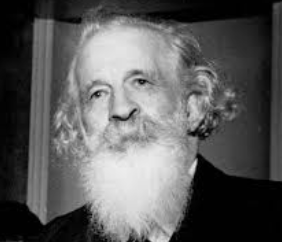
I am convinced that human continuance depends entirely upon: the intuitive wisdom of each and every individual . . . the individual's integrity of speaking and acting only on the individual's own within-self-intuited and reasoned initiative . . . the individual's never joining action with others as motivated only by crowd-engendered-emotionalism, or a sense of the crowd's power to overwhelm, or in fear of holding to the course indicated by one's own intellectual convictions.
5 months ago
Even a minor event in the life of a child is an event of that child’s world and thus a world event.
▼
Source
The Phoenix, a Linguistic Phenomenon, ch. 1
5 months ago
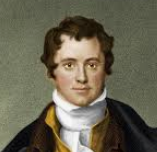
Behind me was the magnificent power-house... furnishing not only the electrical energy which transformed the soda into sodium, but diffusing this energy for a multitude of other purposes over an entire district—a noble temple to the genius and prescience of Faraday. Surely one might here say, if you desire to see the monuments of these men, look around!
5 months ago
Holding fast to these things, you will know the worlds of gods and mortals which permeates and governs everything. And you will know, as is right, nature similar in all respects, so that you will neither entertain unreasonable hopes nor be neglectful of anything.
▼
Source
As quoted in Divine Harmony: The Life and Teachings of Pythagoras by John Strohmeier and Peter Westbrook. (1999)
5 months ago
All I need is a sheet of paper and something to write with, and then I can turn the world upside down.
▼
Source
Commonly attributed to Nietzsche, but is most likely from Cornelia Funke’s Inkheart trilogy.
5 months ago
It is not unreasonable to assume that the works of God, their existence and preceding non-existence, are the result of His wisdom, but we are unable to understand many of the ways of His Wisdom in His works. On this principle the whole Law of Moses is based; it begins with this principle: "And God saw all that He had made, and behold, it was very good" (Gen. i. 31); and it ends with this principle: "The Rock, perfect is His work" (Deut. xxxii. 4). Note it.
▼
Source
Ch.25
5 months ago
Hitch your wagon to a star.
▼
Source
Civilization
5 months ago
Corporations are neither physical nor metaphysical phenomena. They are socioeconomic ploys — legally enacted game-playing — agreed upon only between overwhelmingly powerful socioeconomic individuals and by them imposed upon human society and its all unwitting members.
5 months ago
They also gave it the title of "opinion," because truth and falsity lie in opinion. And they called it "movement," "generation," "change," "division," "length," "multiplication," "addition," "kinship," "relativity," "the ratio in proportionality." For the relation of two numbers is of every conceivable form.
▼
Source
On the Dyad
5 months ago
Hear gladly!
5 months ago
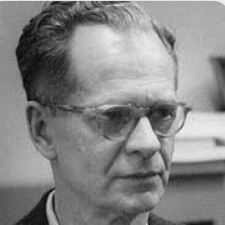
When you start thinking about art and creativity, rationality is not big enough to contain it all. Otherwise you end up at a B.F. Skinner hypothesis where it is all purely to do with stimulus and response. B. F. Skinner actually put forward — and this is a measure of scientific desperation over consciousness — the idea that consciousness was a weird vibrational by-product of the vocal cords. That we did not actually think. We thought we thought because of this weird vibration caused by the vocal cords. This shows the lengths that hard science will go to to banish the ghost from the machine.
▼
Source
Alan Moore, in [http://www.harrybravado.com/articles/alan-moore-interview/ "Alan Moore Interview" by Matthew De Abaitua (1998)], later published in Alan Moore: Conversations (2011) edited by Eric L. Berlatsky
5 months ago
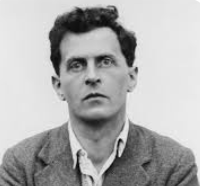
The whole sense of the book might be summed up the following words: what can be said at all can be said clearly, and what we cannot talk about we must pass over in silence.
▼
Source
Original German: Man könnte den ganzen Sinn des Buches etwa in die Worte fassen: Was sich überhaupt sagen lässt, lässt sich klar sagen; und wovon man nicht reden kann, darüber muss man schweigen. | Introduction
5 months ago
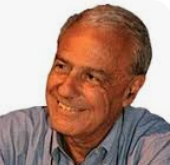
It must be understood that the silence referred to by the adjective ‘mystical’ is not external, esoteric silence, intended to conceal secret truths from the ‘uninitiated’, but rather inner silence, which consists in silencing one’s thoughts, however profound they may be, and therefore in detachment, especially from all our supposed knowledge. Detachment is the work of intelligence, which incessantly recognizes the finiteness of its own contents and, at the same time, of the will, which incessantly recognizes in those same contents the presence of egoism, of that amor sui that is truly the root of all evil.
5 months ago
The heroic cannot be the common, nor can the common be heroic.
▼
Source
Quotation and Originality
5 months ago
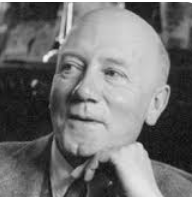
Broad was a wonderfully idiosyncratic lecturer. He always appeared with a carefully prepared script, and he read every sentence twice, except for the jokes, which he read three times. Although he spoke drearily, his content was compelling, jargon-free and spiked with witty references to Charles Dickens, Conan Doyle, Oscar Wilde and other literary figures.
▼
Source
Graham Farmelo: (2009). [https://books.google.com/books?id=qsodmIGD0fMC&pg=PA39The strangest man: the hidden life of Paul Dirac, quantum genius.] Faber & Faber. (p. 39)
5 months ago
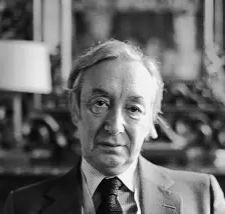
To make our position clearer, we may formulate it in another way. Let us call a proposition which records an actual or possible observation an experiential proposition. Then we may say that it is the mark of a genuine factual proposition, not that it should be equivalent to an experiential proposition, or any finite number of experiential propositions, but simply that some experiential propositions can be deduced from it in conjunction with certain other premises without being deducible from those other premises alone.
▼
Source
p. 20.
5 months ago
In theory there is nothing to hinder our following what we are taught; but in life there are many things to draw us aside.
▼
Source
Book I, ch. 26, § 3.
5 months ago
They thought they found in numbers, more than in fire, earth, or water, many resemblances to things which are and become; thus such and such an attribute of numbers is justice, another is soul and mind, another is opportunity, and so on; and again they saw in numbers the attributes and ratios of the musical scales. Since, then, all other things seemed in their whole nature to be assimilated to numbers, while numbers seemed to be the first things in the whole of nature, they supposed the elements of numbers to be the elements of all things, and the whole heaven to be a musical scale and a number.
▼
Source
Aristotle (c. 330 BC) as quoted by Sir Thomas Little Heath, A History of Greek Mathematics, [https://books.google.com/books?id=h4JsAAAAMAAJ Vol. 1], pp.67-68, citing Metaph. A. 5, 985 b 27-986 a 2..
5 months ago
The familial union presents as well a mixture of inconvenient ages and characters that inhibit conversation. Morality engenders a frigid atmosphere, as in all places where it reigns.
▼
Source
Oeuvres completetes de Charles Fourier
5 months ago
The difficulty in philosophy is to say no more than we know.
▼
Source
p. 45

5 months ago
The Way of the Warrior has been misunderstood. It is not a means to kill and destroy others. Those who seek to compete and better one another are making a terrible mistake. To smash, injure, or destroy is the worst thing a human being can do. The real Way of a Warrior is to prevent such slaughter — it is the Art of Peace, the power of love.
▼
Source
Speaking of a vision of the "Great Spirit of Peace" in 1942, during World War II, as quoted in Adjusting Though Reflex : Romancing Zen (2010) by Rodger Hyodo, p. 76
5 months ago
When Confucius and the Indian Scriptures were made known, no claim to monopoly of ethical wisdom could be thought of... It is only within this century [the 1800 's] that England and America discovered that their nursery tales were old German and Scandinavian stories; and now it appears that they came from India, and are therefore the property of all the nations.
▼
Source
Quoted in S. Londhe, A Tribute to Hinduism (2008)
5 months ago
The management of a system has to deal with the generation of the plans for the system, i.e., consideration of all of the things we have discussed, the overall goals, the environment, the utilization of resources and the components. The management sets the component goals, allocates the resources, and controls the system performance.
▼
Source
p. 44
5 months ago
The highest form of vanity is love of fame.
5 months ago
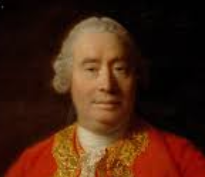
Heaven and Hell suppose two distinct species of men, the good and the bad; but the greatest part of mankind float betwixt vice and virtue. -- Were one to go round the world with an intention of giving a good supper to the righteous, and a sound drubbing to the wicked, he would frequently be embarrassed in his choice, and would find that the merits and the demerits of most men and women scarcely amount to the value of either.
▼
Source
Essay on the Immortality of the Soul
5 months ago
Don't you know that a good and excellent person does nothing for the sake of appearances, but only for the sake of having acted right?
▼
Source
Book III, ch. 24, § 50.
5 months ago
It is impossible to decide whether a particular detail of the Pythagorean universe was the work of the master, or filled in by a pupil—a remark which equally applies to Leonardo or Michelangelo. But there can be no doubt that the basic features were conceived by a single mind; that Pythagoras of Samos was both the founder of a new religious philosophy, and the founder of Science, as the word is understood today.
▼
Source
Arthur Koestler, The Sleepwalkers: A History of Man's Changing Vision of the Universe (1959, 1963)
5 months ago
Don't say: “They must have something in common, or they would not be called ‘games’" but look and see whether there is anything common to all. For if you look at them, you won't see something that is common to all, but similarities, affinities, and a whole series of them at that. To repeat: don't think, but look!
▼
Source
§ 66
5 months ago
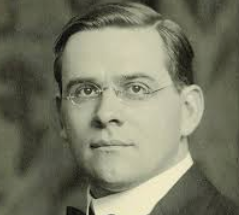
The 'physical' does not mean any particular kind of reality, but a particular kind of denoting reality, namely a system of concepts in the natural sciences which is necessary for the cognition of reality. 'The physical' should not be interpreted wrongly as an attribute of one part of reality, but not of the other ; it is rather a word denoting a kind of conceptual construction, as, e.g., the markers 'geographical' or 'mathematical', which denote not any distinct properties of real things, but always merely a manner of presenting them by means of ideas.
▼
Source
p. 27 i. ; as cited in: Adam Schaff (1962). Introduction to semantics, p. 83
5 months ago
Cure the drunkard, heal the insane, mollify the homicide, civilize the Pawnee, but what lessons can be devised for the debaucher of sentiment?
▼
Source
p. 236
5 months ago
I was an Editor-in-Chief of Philosophy of Science during its early years. Now, over a half century later, I have to admit that I was not very clear what the journal was about, except that it tried to reflect on the meaning of science and its relation to other human activities. At this time I am even less sure of its purposes.
▼
Source
C. West Churchman "Guest editorial: what is philosophy of science" In: Philosophy of Science Vol. 61, No. 1 (Mar., 1994), p. 132-141
5 months ago
Because the peculiarity of man is that his machinery for reaction on external things has involved an imaginative transcript of these things, which is preserved and suspended in his fancy; and the interest and beauty of this inward landscape, rather than any fortunes that may await his body in the outer world, constitute his proper happiness. By their mind, its scope, quality, and temper, we estimate men, for by the mind only do we exist as men, and are more than so many storage-batteries for material energy. Let us therefore be frankly human. Let us be content to live in the mind.
▼
Source
p. 64
5 months ago
I cannot forbear adding to these reasonings an observation, which may, perhaps, be found of some importance. In every system of morality, which I have hitherto met with, I have always remarked, that the author proceeds for some time in the ordinary way of reasoning, and establishes the being of a God, or makes observations concerning human affairs; when of a sudden I am surprized to find, that instead of the usual copulations of propositions, is, and is not, I meet with no proposition that is not connected with an ought, or an ought not. This change is imperceptible; but is, however, of the last consequence. For as this ought, or ought not, expresses some new relation or affirmation, it is necessary that it should be observed and explained; and at the same time that a reason should be given, for what seems altogether inconceivable, how this new relation can be a deduction from others, which are entirely different from it. But as authors do not commonly use this precaution, I shall presume to recommend it to the readers; and am persuaded, that this small attention would subvert all the vulgar systems of morality, and let us see, that the distinction of vice and virtue is not founded merely on the relations of objects, nor is perceived by reason.
▼
Source
Part 1, Section 1
5 months ago
I have not composed these Words of Epictetus as one might be said to "compose" books of this kind, nor have I of my own act published them to the world; indeed, I acknowledge that I have not "composed" them at all. But whatever I heard him say I used to write down, word for word, as best I could, endeavouring to preserve it as a memorial, for my own future use, of his way of thinking and the frankness of his speech. They are, accordingly, as you might expect, such remarks as one man might make off-hand to another, not such as he would compose for men to read in after time.
▼
Source
Arrian, [https://en.wikisource.org/wiki/Epictetus,_the_Discourses_as_reported_by_Arrian,_the_Manual,_and_Fragments/Book_1#cite_ref-1 Prefatory letter to Lucius Gellius on The Discourses (Oldfather translation)]
5 months ago
What however seems to be agreed in by all his biographers, is that he professed to have already in different ages appeared in the likeness of man: first as Aethalides, the son of Mercury; and, when his father expressed himself ready to invest him with any gift short of immortality, he prayed that, as the human soul is destined successively to dwell in various forms, he might have the privilege in each to remember his former state of being, which was granted him. From Aethalides he became Euphorbus, who slew Patroclus at the siege of Troy. He then appeared as Hermotimus, then Pyrrhus, a fisherman of Delos, and finally Pythagoras. He said that a period of time was interposed between each transmigration, during which he visited the seat of departed souls; and he professed to relate a part of the wonders he had seen. He is said to have eaten sparingly and in secret, and in all respects to have given himself out for a being not subject to the ordinary laws of nature. Pythagoras therefore pretended to miraculous endowments. Happening to be on the sea-shore when certain fishermen drew to land an enormous multitude of fishes, he desired them to allow him to dispose of the capture, which they consented to, provided he would name the precise number they had caught. He did so, and required that they should throw their prize into the sea again, at the same time paying them the value of the fish.
5 months ago
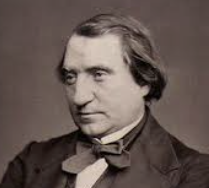
A famous student of history has bequeathed to us a definition of nationality which is worth attention: I refer to Ernest Renan, of whom George Meredith once said to me, while the great French critic was still living, that there was more in his head than in any other head in Europe. Renan tells us that "Man is enslaved neither by his race, nor by his language, nor by his religion, nor by the course of rivers, nor by the direction of mountain ranges. A great aggregation of men, sane of mind and warm of heart, creates a moral consciousness which is called a nation."
▼
Source
Lord Haldane, Higher Nationality: A Study in Law and Ethics: An Address Delivered Before the American Bar Association at Montreal on 1st September 1913 (1913), p. 35
5 months ago
370. But more correctly: The fact that I use the word "hand" and all the other words in my sentence without a second thought, indeed that I should stand before the abyss if I wanted so much as to try doubting their meanings — shows that absence of doubt belongs to the essence of the language-game, that the question "How do I know..." drags out the language-game, or else does away with it.
5 months ago
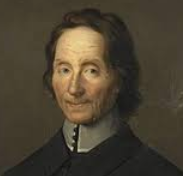
I am not my own light unto myself.
▼
Source
Dialogues on Metaphysics (1688) Dialogue III | Variant translation: I am not a light unto myself.
CivilSimian.com created by AxiomaticPanic, CivilSimian, Kalokagathia