

6 months 1 week ago
The ethical life... is maintained in being by a common culture, which also upholds the togetherness of society... Unlike the modern youth culture, a common culture sanctifies the adult state, to which it offers rites of passage.
▼
Source
"Idle Hands" (p. 127)
6 months 1 week ago
A writer who says that there are no truths, or that all truth is 'merely relative,' is asking you not to believe him. So don't.
▼
Source
"The Nature of Philosophy" (p. 6)
6 months 1 week ago
This "knowing what to do"... is a matter of having the right purpose, the purpose appropriate to the situation in hand... The one who "knows what to do" is the one on whom you can rely to make the best shot at success, whenever success is possible.
▼
Source
"Knowledge and Feeling" (p. 35)
6 months 1 week ago
Liberty is not the same thing as equality, and that those who call themselves liberals are far more interested in equalizing than in liberating their fellows.
▼
Source
The Limits of Liberty, The American Spectator
6 months 1 week ago
Of course, there are those - Sandel, Walzer and Dworkin, for example - who propose "communitarian" ways of thinking, as a further move in the direction which a sophisticated liberalism requires. But none of them is prepared to accept the real price of community: which is sanctity, intolerance, exclusion, and a sense that life's meaning depends upon obedience, and also on vigilance against the enemy.
▼
Source
'In Defence of the Nation', The Philosopher on Dover Beach (1990), p. 310
6 months 1 week ago
National loyalty involves a love of home and a preparedness to defend it; nationalism is a belligerent ideology, which uses national symbols in order to conscript the people to war.
6 months 1 week ago
The strange superstition has arisen in the Western world that we can start all over again, remaking human nature, human society, and the possibilities of happiness; as though the knowledge and experience of our ancestors were now entirely irrelevant.
▼
Source
Gentle Regrets: Thoughts from a Life
6 months 1 week ago
Conservatism is itself a modernism, and in this lies the secret of its success.
▼
Source
"Eliot and Conservatism" (p. 194)
6 months 1 week ago
Kant's position is extremely subtle - so subtle, indeed, that no commentator seems to agree with any other as to what it is.
▼
Source
Some More -isms (p. 25)
6 months 1 week ago
A free society is a community of free beings, bound by the laws of sympathy and by the obligations of family love. It is not a society of people released from all moral constraint-for that is precisely the opposite of a society. Without moral constraint there can be no cooperation, no family commitment, no long-term prospects, no hope of economic, let alone social, order.
▼
Source
"The Limits of Liberty," The American Spectator
6 months 1 week ago
An international socialism is the stated ideal of most socialists; an international liberalism is the unstated tendency of the liberal. To neither system is it thinkable that men live, not by universal aspirations but by local attachments; not by a "solidarity" that stretches across the globe from end to end, but by obligations that are understood in terms which separate men from most of their fellows-in terms such as national history, religion, language, and the customs that provide the basis of legitimacy.
▼
Source
How to be a Non-Liberal, Anti-Socialist Conservative, Intercollegiate Review: A Journal of Scholarship and Opinion
6 months 1 week ago
Never in the history of the world have there been so many migrants. And almost all of them are migrating from regions where nationality is weak or non-existent to the established nation states of the West. They are not migrating because they have discovered some previously dormant feeling of love or loyalty towards the nations in whose territory they seek a home. On the contrary, few of them identify their loyalties in national terms and almost none of them in terms of the nation where they settle. They are migrating in search of citizenship which is the principal gift of national jurisdictions, and the origin of the peace, law, stability and prosperity that still prevail in the West.

6 months 1 week ago
The end of government is to make the governed and the governors happy. That government then is thebest, which in practice produces the greatest happiness to the greatest number; including those who govern, and those who obey.
▼
Source
Essay Fourth, The Principles of the Former Essays Applied to Government
6 months 1 week ago
Where are these rational practices to be taught and acquired? Not within the four walls of a bare building, in which formality predominates... But in the nursery, play-ground, fields, gardens, workshops, manufactures, museums and class-rooms. ...The facts collected from all these sources will be concentrated, explained, discussed, made obvious to all, and shown in their direct application to practice in all the business of life.
▼
Source
3rd Part
6 months 1 week ago
Is it not the interest of the human race, that every one should be so taught and placed, that he would find his highest enjoyment to arise from the continued practice of doing all in his power to promote the well-being, and happiness, of every man, woman, and child, without regard to their class, sect, party, country or colour?
▼
Source
Paper Dedicated to the Governments of Great Britain, Austria, Russia, France, Prussia and the United States of America (1841) 17th of "20 Questions to the Human Race"
6 months 1 week ago
There is but one mode by which man can possess in perpetuity all the happiness which his nature is capable of enjoying, - that is by the union and co-operation of all for the benefit of each. Union and co-operation in war obviously increase the power of the individual a thousand fold. Is there the shadow of a reason why they should not produce equal effects in peace; why the principle of co-operation should not give to men the same superior powers, and advantages, (and much greater) in the creation, preservation, distribution and enjoyment of wealth?
6 months 1 week ago
As there are a very great variety of religious sects in the world (and which are probably adapted to different constitutions under different circumstances, seeing there are many good and conscientious characters in each), it is particularly recommended, as a means of uniting the inhabitants of the village into one family, that while each faithfully adheres to the principles which he most approves, at the same time all shall think charitably of their neighbours respecting their religious opinions, and not presumptuously suppose that theirs alone are right.
▼
Source
"Rules and Regulations for the Inhabitants of New Lanark"
6 months 1 week ago
Train any population rationally, and they will be rational. Furnish honest and useful employments to those so trained, and such employments they will greatly prefer to dishonest or injurious occupations. It is beyond all calculation the interest of every government to provide that training and that employment; and to provide both is easily practicable.
6 months 1 week ago
The advantage of pure, and the disadvantage of impure air are experienced each time we breathe, and all who understand the causes of disease know that an impure atmosphere is most unfavourable to the enjoyment of health, and an efficient cause to shorten human existence within the natural life of man. It is therefore most desirable that decisive measures should be devised and generally adopted to ensure to all a pure atmosphere, in which to live during their lives.
▼
Source
3rd Part
6 months 1 week ago
It is therefore, the interest of all, that every one, from birth, should be well educated, physically and mentally, that society may be improved in its character, - that everyone should be beneficially employed, physically and mentally, that the greatest amount of wealth may be created, and knowledge attained, - that everyone should be placed in the midst of those external circumstances that will produce the greatest number of pleasurable sensations, through the longest life, that man may be made truly intelligent, moral and happy, and be thus prepared to enter upon the coming Millennium.
▼
Source
A Development of the Principles & Plans on which to establish self-supporting Home Colonies
6 months 1 week ago
In advanced age, and in cases of disability from accident, natural infirmity or any other cause, the individual shall be supported by the colony, and receive every comfort which kindness can administer.
6 months 1 week ago
My friends, I tell you that hitherto you have been prevented from even knowing what happiness really is, solely in consequence of the errors - gross errors - that have been combined with the fundamental notions of every religion that has hitherto been taught to men. And, in consequence, they have made man the most inconsistent, and the most miserable being in existence. By the errors of these systems he has been made a weak, imbecile animal; a furious bigot and fanatic or a miserable hypocrite; and should these qualities be carried, not only into the projected villages, but into Paradise itself, a Paradise would no longer be found!
▼
Source
Statement (21 August 1817), as quoted by Jim Herrick, in "Bradlaugh and Secularism: 'The Province of the Real'"
6 months 1 week ago
All the measures now proposed are only a compromise with the errors of the present systems; but as these errors now almost universally exist, and must be overcome solely by the force of reason; and as reason, to effect the most beneficial purposes, makes her advance by slow degrees, and progressively substantiates one truth of high import after another, it will be evident, to minds of comprehensive and accurate thought, that by these and similar compromises alone can success be rationally expected in practice. For such compromises bring truth and error before the public; and whenever they are fairly exhibited together, truth must ultimately prevail.
6 months 1 week ago
Women will be no longer made the slaves of, or dependent upon men ... They will be equal in education, rights, privileges and personal liberty.
▼
Source
Sixth Part
6 months 1 week ago
My life was not useless; I gave important truths to the world, and it was only for want of understanding that they were disregarded. I have been ahead of my time.
▼
Source
Deathbed statement (November 1858), in response to a church minister who asked if he regretted wasting his life on fruitless projects; as quoted in Harold Hill : A People's History
6 months 1 week ago
To train and educate the rising generation will at all times be the first object of society, to which every other will be subordinate.
6 months 1 week ago
I was forced, through seeing the error of their foundation, to abandon all belief in every religion which had been taught to man. But my religious feelings were immediately replaced by the spirit of universal charity - not for a sect, or a party, or for a country or a colour - but for the human race, and with a real and ardent desire to do good.
▼
Source
Life of Robert Owen (1857) his autobiography, as quoted by Jim Herrick, in "Bradlaugh and Secularism: 'The Province of the Real'"
6 months 1 week ago
What ideas individuals may attach to the term "Millennium" I know not; but I know that society may be formed so as to exist without crime, without poverty, with health greatly improved, with little, if any misery, and with intelligence and happiness increased a hundredfold; and no obstacle whatsoever intervenes at this moment except ignorance to prevent such a state of society from becoming universal.
6 months 1 week ago
Happily for poor traduced and degraded human nature, the principle for which we now content will speedily divest it of all the ridiculous and absurd mystery with which it has been hitherto enveloped by the ignorance of preceding times: and all the ''complicated'' and ''counteracting'' motives for good conduct, which have been multiplied almost to infinity, will be reduced to ''one single principle of action'', which, by its evident operation and sufficiency, shall render this intricate system ''unnecessary'', and ultimately supersede it in all parts of the earth. That principle is THE HAPPINESS OF SELF CLEARLY UNDERSTOOD AND UNIFORMLY PRACTICED; WHICH CAN ONLY BE ATTAINED BY CONDUCT THAT MUST PROMOTE THE HAPPINESS OF THE COMMUNITY.
▼
Source
Essay First, The Formation of Human Character.
6 months 1 week ago
The advanced members of the medical profession know that the health of society is not to be obtained or maintained by medicines; - that it is far better, far more easy and far wiser, to adopt substantive measures to prevent disease of body or mind, than to allow substantive measure to remain continually to generate causes to produce physical and mental disorders.
▼
Source
3rd Part
6 months 1 week ago
The working classes may be injuriously degraded and oppressed in three ways: 1st - When they are neglected in infancy 2nd - When they are overworked by their employer, and are thus rendered incompetent from ignorance to make a good use of high wages when they can procure them. 3rd - When they are paid low wages for their labour.
▼
Source
Two Memorials on Behalf of the Working Classes
6 months 1 week ago
The Institution has been devised to afford the means of receiving your children at an early age, almost as soon as they can walk. By this means many of you, mothers and families, will be able to earn a better maintenance or support for your children; you will have less care and anxiety about them, while the children will be prevented from acquiring any bad habits. and gradually prepared to learn the best.
6 months 1 week ago
The errors of the times of superstition and bigotry still hold some sway, and compel those who wish to preserve a regard to their respectability in society to an over strained demeanor; and this demeanor sometimes degenerates into hypocrisy, and is often the cause of great inconsistency. It is destructive of every open, honest, generous, and manly feeling. It disgusts many, and drives them to the opposite extreme. It is sometimes the cause of insanity. It is founded in ignorance. While erroneous customs prevail in any country, it would evince an ignorance of human nature in any individual to offend against them, until he has convinced the community of their error.
▼
Source
Essay Third
6 months 1 week ago
To preserve permanent good health, the state of mind must be taken into consideration.
▼
Source
3rd Part
6 months 1 week ago
Eight hours daily labour is enough for any human being, and under proper arrangements sufficient to afford an ample supply of food, raiment and shelter, or the necessaries and comforts of life, and for the remainder of his time, every person is entitled to education, recreation and sleep.
▼
Source
"Foundation Axioms" of Society for Promoting National Regeneration
6 months 1 week ago
They would receive the same care and attention as those who belong to the establishment. Nor will there be any distinction made between the children of those parents who are deemed the worst, and of those who may be esteemed the best members of society: indeed I would prefer to receive the offspring of the worst, if they shall be sent at an early age; because they really require more of our care and pity and by well-training these, society will be more essentially benefited than if the like attention were paid to those whose parents are educating them in comparatively good habits. On educating children of the poor, and of neighboring communities.
6 months 1 week ago
The will of man has no power whatever over his opinions; he must, and ever did, and ever will, believe what has been, is, or may be impressed on his mind by his predecessors, and the circumstances which surround him.
6 months 1 week ago
It is the interest of the individual and of all society, that he should be made, at the earliest period, to understand his own construction, the proper use of its parts, and how to keep them at all times in a state of health; and especially that he should be taught to observe the varied effects of different kinds of food, and different quantities, upon his own constitution. He should be taught the general and individual laws of health, thus early, that he may know how to prevent the approach of disease. And the knowledge of the particular diet best suited to his constitution, is one of the most essential laws of health.
▼
Source
3rd Part
6 months 1 week ago
The lowest stage of humanity is experienced when the individual must labour for a small pittance of wages from others.
▼
Source
Paper Dedicated to the Governments of Great Britain, Austria, Russia, France, Prussia and the United States of America
6 months 1 week ago
Believe me, my friends, you are yet very deficient with regard to the best modes of training your children, or of arranging your domestic concerns.
6 months 1 week ago
Man is the creature of circumstances.
▼
Source
"The Philanthropist"
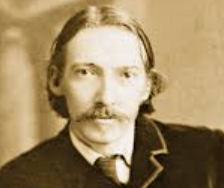
6 months 1 week ago
To know what you prefer, instead of humbly saying Amen to what the world tells you you ought to prefer, is to have kept your soul alive.
▼
Source
An Inland Voyage (1878), Ch. III, "The Royal Sport Nautique".
6 months 1 week ago
The time would fail me if I were to recite all the big names in history whose exploits are perfectly irrational and even shocking to the business mind. The incongruity is speaking; and I imagine it must engender among the mediocrities a very peculiar attitude, towards the nobler and showier sides of national life.
▼
Source
Crabbed Age and Youth.
6 months 1 week ago
In many ways an artistic nature unfits a man for practical existence.
▼
Source
A Lodging for the Night.
6 months 1 week ago
Our business in this world is not to succeed, but to continue to fail, in good spirits.
▼
Source
Complete Works, vol. 26, Reflections and Remarks on Human Life, section 4.
6 months 1 week ago
There is certainly some chill and arid knowledge to be found upon the summits of formal and laborious science; but it is all round about you, and for the trouble of looking, that you will acquire the warm and palpitating facts of life.
▼
Source
An Apology for Idlers.
6 months 1 week ago
It is the worst of all quaint and of all cheap ways of life that they bring us at last to the pinch of some humiliation.
▼
Source
Episodes in the Story of a Mine.
6 months 1 week ago
You could read Kant by yourself, if you wanted; but you must share a joke with someone else.
▼
Source
Virginibus Puerisque, Ch. 1. Cornhill Magazine,
6 months 1 week ago
I confess I have no great notion of the use of books, except to amuse a railway journey; although, I believe, there are some very exact treatises on astronomy, the use of the globes, agriculture, and the art of making paper flowers. Upon the less apparent provinces of life I fear you will find nothing truthful.
▼
Source
The Rajah's Diamond, Story of the Young Man in Holy Orders.
6 months 1 week ago
To be what we are, and to become what we are capable of becoming, is the only end of life.
▼
Source
Familiar Studies of Men and Books (1882).
CivilSimian.com created by AxiomaticPanic, CivilSimian, Kalokagathia