

5 months ago
Aesop's Fly, sitting on the axle of the chariot, has been much laughed at for exclaiming: What a dust I do raise!
5 months ago
Civil government does by its nature include much that is mechanical, and must be treated accordingly. We term it indeed, in ordinary language, the Machine of Society, and talk of it as the grand working wheel from which all private machines must derive, or to which they must adapt, their movements.
5 months ago
Love is ever the beginning of Knowledge as fire is of light.
▼
Source
Essays, Death of Goethe.
5 months ago
Wonder, indeed, is, on all hands, dying out: it is the sign of uncultivation to wonder.
5 months ago
Instruction, that mysterious communing of Wisdom with Ignorance, is no longer an indefinable tentative process, requiring a study of individual aptitudes, and a perpetual variation of means and methods, to attain the same end; but a secure, universal, straightforward business, to be conducted in the gross, by proper mechanism.
5 months ago
He who first shortened the labor of copyists by device of movable types was disbanding hired armies, and cashiering most kings and senates, and creating a whole new democratic world: he had invented the art of printing.
▼
Source
Bk. I, ch. 5.
5 months ago
Clever men are good, but they are not the best.
▼
Source
Goethe.
5 months ago
Man is not the creature and product of Mechanism; but, in a far truer sense, its creator and producer: it is the noble People that makes the noble Government; rather than conversely.
5 months ago
Again, and again, we say, the great, the creative and enduring is ever a secret to itself; only the small, the barren and transient is otherwise.
▼
Source
Characteristics.
5 months ago
Whoso belongs only to his own age, and reverences only its gilt Popinjays or smoot-smeared Mumbojumbos, must needs die with it.
5 months ago
The Philosopher of this age is not a Socrates, a Plato, a Hooker, or Taylor, who inculcates on men the necessity and infinite worth of moral goodness, the great truth that our happiness depends on the mind which is within us, and not on the circumstances which are without us; but a Smith, a De Lolme, a Bentham, who chiefly inculcates the reverse of this,-that our happiness depends entirely on external circumstances; nay, that the strength and dignity of the mind within us is itself the creature and consequence of these. Were the laws, the government, in good order, all were well with us; the rest would care for itself! Dissentients from this opinion, expressed or implied, are now rarely to be met with; widely and angrily as men differ in its application, the principle is admitted by all.
5 months ago
A mystic bond of brotherhood makes all men one.
▼
Source
Essays, Goethe's Works.
5 months ago
Our "Theories of Taste," as they are called, wherein the deep, infinite, unspeakable Love of Wisdom and Beauty, which dwells in all men, is "explained," made mechanically visible, from "Association" and the like, ...
5 months ago
Has any man, or any society of men, a truth to speak, a piece of spiritual work to do; they can nowise proceed at once and with the mere natural organs, but must first call a public meeting, appoint committees, issue prospectuses, eat a public dinner; in a word, construct or borrow machinery, wherewith to speak it and do it. Without machinery, they were hopeless, helpless.
5 months ago
Man is a tool-using animal...Without tools he is nothing, with tools he is all.
▼
Source
Bk. I, ch. 5.
5 months ago
We are firm believers in the maxim that for all right judgment of any man or thing it is useful, nay, essential, to see his good qualities before pronouncing on his bad.
▼
Source
Goethe.
5 months ago
Undue cultivation of the inward or Dynamical province leads to idle, visionary, impracticable courses, and, especially in rude eras, to Superstition and Fanaticism, with their long train of baleful and well-known evils. Undue cultivation of the outward, again, though less immediately prejudicial, and even for the time productive of many palpable benefits, must, in the long-run, by destroying Moral Force, which is the parent of all other Force, prove not less certainly, and perhaps still more hopelessly, pernicious. This, we take it, is the grand characteristic of our age. By our skill in Mechanism, it has come to pass, that in the management of external things we excel all other ages; while in whatever respects the pure moral nature, in true dignity of soul and character, we are perhaps inferior to most civilised ages.
5 months ago
A loving heart is the beginning of all knowledge.
▼
Source
Article on Biography.
5 months ago
The stupendous Fourth Estate, whose wide world-embracing influences what eye can take in?
5 months ago
It is no longer the moral, religious, spiritual condition of the people that is our concern, but their physical, practical, economical condition, as regulated by public laws.
5 months ago
Everywhere the human soul stands between a hemisphere of light and another of darkness on the confines of two everlasting hostile empires, - Necessity and Free Will.
▼
Source
Essays, Goethe's Works.
5 months ago
Religion in most countries, more or less in every country, is no longer what it was, and should be,-a thousand-voiced psalm from the heart of Man to his invisible Father, the fountain of all Goodness, Beauty, Truth, and revealed in every revelation of these; but for the most part, a wise prudential feeling grounded on mere calculation; a matter, as all others now are, of Expediency and Utility; whereby some smaller quantum of earthly enjoyment may be exchanged for a far larger quantum of celestial enjoyment. Thus Religion too is Profit, a working for wages; not Reverence, but vulgar Hope or Fear.
5 months ago
These things, which we state lightly enough here, are yet of deep import, and indicate a mighty change in our whole manner of existence. For the same habit regulates not our modes of action alone, but our modes of thought and feeling. Men are grown mechanical in head and in heart, as well as in hand. They have lost faith in individual endeavour, and in natural force, of any kind. Not for internal perfection, but for external combinations and arrangements, for institutions, constitutions, for Mechanism of one sort or other, do they hope and struggle. Their whole efforts, attachments, opinions, turn on mechanism, and are of a mechanical character.
5 months ago
Be not the slave of Words.
▼
Source
Bk. I, ch. 8.
5 months ago
A poet without love were a physical and metaphysical impossibility.
▼
Source
Burns (1828).
5 months ago
The infinite, absolute character of Virtue has passed into a finite, conditional one; it is no longer a worship of the Beautiful and Good; but a calculation of the Profitable.
5 months ago
It is now almost my sole rule of life to clear myself of cants and formulas, as of poisonous Nessus shirts.
▼
Source
Letter to His Wife (1835).
5 months ago
The three great elements of modern civilization, gunpowder, printing, and the Protestant religion.
▼
Source
The State of German Literature (1827).
5 months ago
For love is ever the beginning of Knowledge, as fire is of light.
▼
Source
Carlyle, Essays, Death of Goethe. Quote reported in Hoyt's New Cyclopedia Of Practical Quotations (1922), p. 419-23.
5 months ago
The Public is an old woman. Let her maunder and mumble.
▼
Source
Journal (1835).
5 months ago
Literary men are...a perpetual priesthood.
▼
Source
The State of German Literature.
5 months ago
What is all Knowledge too but recorded Experience, and a product of History; of which, therefore, Reasoning and Belief, no less than Action and Passion, are essential materials?
▼
Source
Carlyle, Essays, On History. Quote reported in Hoyt's New Cyclopedia Of Practical Quotations (1922), p. 419-23.
5 months ago
He that works and does some Poem, not he that merely says one, is worthy of the name of Poet.
▼
Source
Introduction to Cromwell's Letters and Speeches (1845).
5 months ago
I came hither solely with the design to simplify my way of life and to secure the independence through which I could be enabled to remain true to myself.
▼
Source
Letter to Goethe, (1828).
5 months ago
A well-written Life is almost as rare as a well-spent one.
▼
Source
Richter (1827).
5 months ago
"Genius" (which means transcendent capacity of taking trouble, first of all).
▼
Source
Life of Fredrick the Great, Bk. IV, ch. 3 (1858-1865). Sometimes misreported as "Genius is an infinite capacity for taking pains";
5 months ago
I am fast becoming a patriot of the most decided stamp. Scornfully as I used to speak and think of Scotland in my hours of bitterness and irritation, I never fail to stand up manfully in defence of it thro' thick and thin, whenever a renegade Scot takes upon him to abuse it.
▼
Source
Letter to Thomas Murray (24 August 1824), quoted in Fred Kaplan, Thomas Carlyle: A Biography (1983), p. 100
5 months ago
The great law of culture is: Let each become all that he was created capable of being.
▼
Source
Richter.
5 months ago
Happy the people whose annals are blank in history books!
▼
Source
Life of Frederick the Great, Bk. XVI, ch. 1.
5 months ago
The weakest living creature, by concentrating his powers on a single object, can accomplish something. The strongest, by dispensing his over many, may fail to accomplish anything. The drop, by continually falling, bores its passage through the hardest rock. The hasty torrent rushes over it with hideous uproar, and leaves no trace behind.
▼
Source
The life of Friedrich Schiller: Comprehending an examination of his works (1825).
5 months ago
Originality is a thing we constantly clamour for, and constantly quarrel with; as if, observes our author himself, any originality but our own could be expected to content us! In fact all strange thing are apt, without fault of theirs, to estrange us at first view, and unhappily scarcely anything is perfectly plain, but what is also perfectly common.
▼
Source
Richter.
5 months ago
No nation ever had so bad a neighbour as Germany has had in France for the last 400 years; bad in all manner of ways; insolent, rapacious, insatiable, unappeasable, continually aggressive. ... Germany, after 400 years of ill-usage, and generally ill-fortune, from that neighbour, has had at last the great happiness to see its enemy fairly down in this manner; and Germany, I do clearly believe, would be a foolish nation not to think of raising up some secure boundary-fence between herself and such a neighbour now that she has the chance.
▼
Source
Letter to The Times on the Franco-Prussian War and Germany's annexation of Alsace-Lorraine (18 November 1870), p. 8
5 months ago
Speech is human, silence is divine, yet also brutish and dead: therefore we must learn both arts.
▼
Source
Notebooks (1830).
5 months ago
He who would write heroic poems should make his whole life a heroic poem.
▼
Source
Life of Schiller.
5 months ago
A word spoken in season, at the right moment, is the mother of ages.
▼
Source
Reported in Josiah Hotchkiss Gilbert, Dictionary of Burning Words of Brilliant Writers (1895), p. 561.
5 months ago
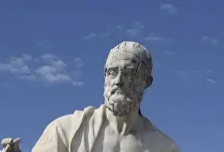
We can get some idea of a whole from a part, but never knowledge or exact opinion. Special histories therefore contribute very little to the knowledge of the whole and conviction of its truth. It is only indeed by study of the interconnexion of all the particulars, their resemblances and differences, that we are enabled at least to make a general survey, and thus derive both benefit and pleasure from history.
5 months ago
In all human affairs, and especially in those that relate to war, ...leave always some room to fortune, and to accidents which cannot be foreseen.
▼
Source
The General History, Book II, Ch. 4 (trans. by Hampton)
5 months ago
All things are subject to decay and change.
▼
Source
The General History of Polybius as translated by James Hampton' (1762), Vol. II, pp. 177-178
5 months ago
It is a course which perhaps would not have been necessary had it been possible to form a state composed of wise men, but as every multitude is fickle, full of lawless desires, unreasoned passion, and violent anger, the multitude must be held in by invisible terrors and suchlike pageantry. For this reason I think, not that the ancients acted rashly and at haphazard in introducing among the people notions concerning the gods and beliefs in the terrors of hell, but that the moderns are most rash and foolish in banishing such beliefs.
5 months ago
The only method of learning to bear with dignity the vicissitudes of fortune is to recall the catastrophes of others.
▼
Source
Polybius. The Histories of Polybius, trans. Evelyn S. Shuckburgh. London, New York: Macmillan and Co., 1889. Book I, Chapter 1
CivilSimian.com created by AxiomaticPanic, CivilSimian, Kalokagathia