
5 months ago
What if the equality between us human being, in which we completely resemble one another, were that none of us really thinks about his being loved? Preface P. 166
5 months ago
It was capitalism that allowed the body itself to go from being understood as a dynamic organism to being a working or broken machine. And it was not just the fact that new machines were increasingly part of daily life, making it seem natural to use machines as metaphors for the sciences of the age. It was also that the mode of production itself favored a reduction of people to living machines, since they were seen as working or broken in relation to their productive potential.
▼
Source
p. 30
5 months ago
For in spite of language, in spite of intelligence and intuition and sympathy, one can never really communicate anything to anybody.
▼
Source
"Sermons in Cats"
5 months ago
A sober man may become a drunkard through being a coward. A brave man may become a coward through being a drunkard.
▼
Source
Ch. 8 "The Time of Transition"
5 months ago
The novel, the novel proper that is, is about people's treatment of each other, and so it is about human values.
▼
Source
Ch. 10, p. 138
5 months ago
If you punish a child for being naughty, and reward him for being good, he will do right merely for the sake of the reward; and when he goes out into the world and finds that goodness is not always rewarded, nor wickedness always punished, he will grow into a man who only thinks about how he may get on in the world, and does right or wrong according as he finds either of advantage to himself.
5 months ago
There is another ground of hope that must not be omitted. Let men but think over their infinite expenditure of understanding, time, and means on matters and pursuits of far less use and value; whereof, if but a small part were directed to sound and solid studies, there is no difficulty that might not be overcome.
▼
Source
Aphorism 111
5 months ago
Christ calls it (O give heed!), He calls it “hypocrisy.” And not only that, but He says (now shudder!), He says that this guilt of hypocrisy is as great, precisely as great a crime as that of killing the prophets. ... This then is the judgment, Christ's judgment upon "Christendom." Shudder; for if you do not, you are implicated in it.
▼
Source
p. 122
5 months ago
Rousseau and his disciples were resolved to force men to be free; in most of the world, they triumphed; men are set free from family, church, town, class, guild; yet they wear, instead, the chains of the state, and they expire of ennui or stifling lonelines.
5 months ago
The spark within is akin to the Divine Ground. By identifying ourselves with the first we can come to unitive knowledge of the second. These empirical facts of the spiritual life have been variously rationalized in terms of the theologies of the various religions. The Hindus categorically affirm that Thou art That — that the indwelling Atman is the same as Brahman. For orthodox Christianity there is not an identity between the spark and God. Union of the human spirit with God takes place — union so complete that the word deification is applied to it; but it is not the union of identical substances. According to Christian theology, the saint is “deified,” not because Atman is Brahman, but because God has assimilated the purified human spirit in to the divine substance by an act of grace. Islamic theology seems to make a similar distinction. The Sufi, Mansur, was executed for giving to the words “union” and “deification” the literal meaning which they bear in the Hindu tradition. For our present purposes, however, the significant fact is that these words are actually used by Christians and Mohammedans to describe the empirical facts of metaphysical realization by means of direct, super-rational intuition.
5 months ago
Atheism is indeed the most daring of all dogmas ... for it is the assertion of a universal negative
▼
Source
"Charles II", p. 59
5 months ago
From childish fear springs the desire to externalise the ego. Metaphysicians do this in thought: Kant, who, in real life, never went more than ten miles from his native city of Königsberg, maintained that the whole of space existed only in his imagination. This grandiose philosophy was merely the obverse of his practical timidity.
▼
Source
Bertrand Russell, Protecting the Ego (18 October 1934)
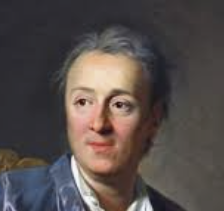
5 months ago
Justice is the first virtue of those who command, and stops the complaints of those who obey.
▼
Source
As quoted in The Golden Treasury of Thought : A Gathering of Quotations from the Best Ancient and Modern Authors (1873) by Theodore Taylor, p. 227
5 months ago
To see a man as beautiful – means to make him really beautiful. There is no cunning, no deceit; this happens every time, everyone knows that.
▼
Source
Book 2 part 3, ch. 10
5 months ago
We live together, we act on, and react to, one another; but always and in all circumstances we are by ourselves. The martyrs go hand in hand into the arena; they are crucified alone. Embraced, the lovers desperately try to fuse their insulated ecstacies into a single self-transcendence; in vain. By its very nature every embodied spirit is doomed to suffer and enjoy in solitude.
▼
Source
Page 159
5 months ago
Prince, Prince-Elective on the modern plan, Fulfilling such a lot of People’s Wills, You take the Chiltern Hundreds while you can— A storm is coming on the Chiltern Hills.
▼
Source
A Ballade of the First Rain, envoi
5 months ago
In order to shake a hypothesis, it is sometimes not necessary to do anything more than push it as far as it will go.
▼
Source
No. 50

5 months ago
Meaning created links so numerous, so rich and involved that only esoteric knowledge could possibly have the necessary key. Objects became so weighed down with attributes, connections and associations that they lost their own original face. Meaning was no longer read in an immediate perception, and accordingly objects ceased to speak directly: between the knowledge that animated the figures of objects and the forms they were transformed into, a divide began to appear, opening the way for a symbolism more often associated with the world of dreams.
▼
Source
Part One: 1. Stultifera Navis

5 months ago
For the first time in my life, I took part in a real battle between men. The dead did not come to life again, the vanquished fled in disorder; every thrust of my lance helped save Carmona. That day, I would have died with a smile on my lips, certain of having contributed to a triumphant future for my city.
▼
Source
p. 73
5 months ago
In any race between human numbers and natural resources, time is against us.
▼
Source
Chapter 12 (p. 113)
5 months ago
The thing that really is trying to tyrannize through government is Science. The thing that really does use the secular arm is Science. And the creed that really is levying tithes and capturing schools, the creed that really is enforced by fine and imprisonment, the creed that really is proclaimed not in sermons but in statutes, and spread not by pilgrims but by policemen – that creed is the great but disputed system of thought which began with Evolution and has ended in Eugenics. Materialism is really our established Church; for the Government will really help it to persecute its heretics.
▼
Source
Ch. VII: "The Established Church of Doubt" (pp. 76-77). [https://books.google.com/books?id=m2xaAAAAMAAJ&pg=PA76&dq=%22the+thing+that+really+is+trying+to+tyrannise+through+government+is+science%22&hl=en&sa=X&ved=0ahUKEwj9uKmM_6jMAhUHgj4KHZr3DW0Q6AEILzAD#v=
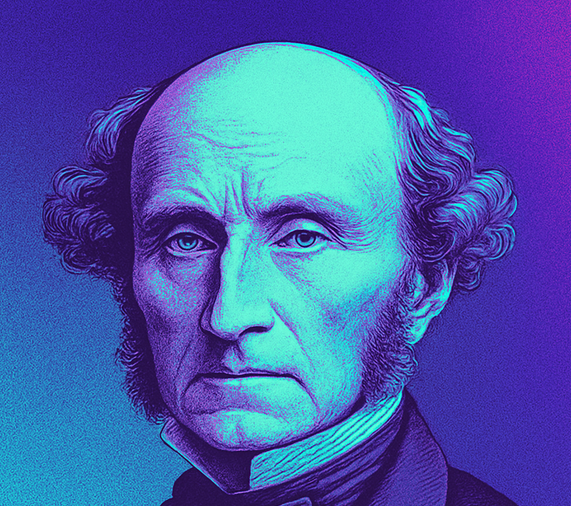
5 months ago
The remedies for all our diseases will be discovered long after we are dead; and the world will be made a fit place to live in, after the death of most of those by whose exertions it will have been made so. It is to be hoped that those who live in those days will look back with sympathy to their known and unknown benefactors.
▼
Source
Diary, April 15, 1854, in The Collected Works of John Stuart Mill, Toronto, 1988, vol. 27, p. 668
5 months ago
Gaiety — a quality of ordinary men. Genius always presupposes some disorder in the machine.
▼
Source
“Diseases"
5 months ago
The condemned man found himself transformed into a hero by the sheer extend of his widely advertised crimes, and sometimes the affirmation of his belated repentance. Against the law, against the rich, the powerful, the magistrates, the constabulary or the watch, against taxes and their collectors, he appeared to have waged a struggle with which one all too easily identified. The proclamation of these crimes blew up to epic proportions the tiny struggle that passed unperceived in everyday life. If the condemned man was shown to be repentant, accepting the verdict, asking both God and man for forgiveness for his crimes, it was as if he had come through some process of purification: he died, in his own way, like a saint.
▼
Source
Chapter One: The Spectacle of the scaffold, pp. 67
5 months ago
It is old age, rather than death, that is to be contrasted with life. Old age is life's parody, whereas death transforms life into a destiny: in a way it preserves it by giving it the absolute dimension. Death does away with time.
▼
Source
Conclusion, p. 539
5 months ago
Moral issues are always terribly complex for someone without principles.
▼
Source
A popular internet misattribution, also attributed (without source) to Chesterton in several books.
5 months ago
No one can be a great thinker who does not recognise, that as a thinker it is his first duty to follow his intellect to whatever conclusions it may lead...Not that it is solely, or chiefly, to form great thinkers, that freedom of thinking is required. On the contrary, it is as much and even more indispensable to enable average human beings to attain the mental stature which they are capable of.
▼
Source
Ch. II: Of the Liberty of Thought and Discussion
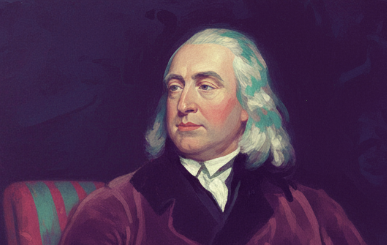
5 months ago
In looking over the catalogue of human actions (says a partizan of this principle) in order to determine which of them are to be marked with the seal of disapprobation, you need but to take counsel of your own feelings: whatever you find in yourself a propensity to condemn, is wrong for that very reason. For the same reason it is also meet for punishment: in what proportion it is adverse to utility, or whether it be adverse to utility at all, is a matter that makes no difference. In that same proportion also is it meet for punishment: if you hate much, punish much: if you hate little, punish little: punish as you hate. If you hate not at all, punish not at all: the fine feelings of the soul are not to be overborne and tyrannized by the harsh and rugged dictates of political utility.
▼
Source
Ch. 2: Of Principles Adverse to That of Utility
5 months ago
Recalling all the erroneous things that doctors have been able to say about sex or madness does us a fat lot of good. I think that what is currently politically important is to determine the regime of verediction established at a given moment ... on the basis of which you can now recognize, for example, that doctors in the nineteenth century said so many stupid things about sex. ... It is not so much the history of the true or the history of the false as the history of verediction which has a political significance.
▼
Source
Lecture 2, January 17, 1979, p. 36

5 months ago
There is a virtue, Simmias, which is named courage. Is not that a special attribute of the philosopher? ...Again, there is temperance. Is not the calm, and control, and disdain of the passions which even the many call temperance, a quality belonging only to those who despise the body and live in philosophy?

5 months ago
If you look for an identity you find inequality. If you look for similarities you separate one truth from another.
▼
Source
Giannina Braschi, United States of Banana, 2011
5 months ago
People are not aware how entirely, in former ages, the law of superior strength was the rule of life; how publicly and openly it was avowed, I do not say cynically or shamelessly — for these words imply a feeling that there was something in it to be ashamed of, and no such notion could find a place in the faculties of any person in those ages, except a philosopher or a saint.
▼
Source
Ch. 1
5 months ago
In... "The Education of Children"... Plutarch gives an anecdote of Theocritus, a sophist, as an example of athuroglossos... he is... "a giant in impudence"... strong not because of his reason, or his rhetorical ability... or his ability to pronounce the truth, but only because he is arrogant. ...His fourth trait is... "putting his confidence in bluster." He is confident in thorubos... the noise made by a strong voice, by a scream, a clamor, or uproar. ...The final characteristic ...his confidence in ..."ignorant outspokenness..." ... it lacks mathesis ...—learning or wisdom.
▼
Source
Ref: Plutarch, "The Education of Children", ' (1927) Vol. 1, Tr. Frank Cole Babbit, [https://archive.org/details/plutarchs-moralia-vol.-1-loeb-197/page/n35/mode/1up p. 4,] The Loeb Classical Library, Harvard University Press.
5 months ago
This was the method which I adopted: I first assumed some principle which I judged to be the strongest, and then I affirmed as true whatever seemed to agree with this, whether relating to the cause or to anything else; and that which disagreed I regarded as untrue. ...I want to show you the nature of that cause which has occupied my thoughts, and I shall have to go back to those familiar words which are in the mouth of everyone, and first of all assume that there is an absolute beauty and goodness and greatness, and the like; grant me this, and I hope to be able to show you the nature of the cause, and to prove the immortality of the soul.
5 months ago
It’s the end of the world. I was excited by the whole situation. Well, if everybody is going to die, die hard, shit, but what do I know? Is this an atomic bomb--the end of the world--the end of the millennium? No more fear of being fired--for typos or tardiness--digressions or recessions--and what a way of being fired--bursting into flames--without two weeks notice--and without six months of unemployment--and without sick leave, vacation, or comp time--without a word of what was to come--on a glorious morning--when nature ran indifferent to the course of man--there came a point when that sunny sky turned into a hellhole of a night—with papers, computers, windows, bricks, bodies falling, and people running and screaming. (On September 11th terrorist attacks.)
5 months ago
He regarded it with the feelings due not to a mere mental delusion, but to a great moral evil. He looked upon it as the greatest enemy of morality: first, by setting up factitious excellencies,—belief in creeds, devotional feelings, and ceremonies, not connected with the good of human kind,—and causing these to be accepted as substitutes for genuine virtues: but above all, by radically vitiating the standard of morals; making it consist in doing the will of a being, on whom it lavishes indeed all the phrases of adulation, but whom in sober truth it depicts as eminently hateful.
▼
Source
([https://archive.org/details/autobiography01mill/page/40/mode/1up p. 40])
5 months ago
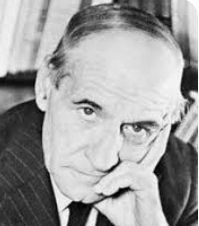
I know well that many of my readers do not think as I do. This also is most natural and confirms the theorem. For although my opinion turn out erroneous, there will always remain the fact that many of those dissentient readers have never given five minutes' thought to this complex matter. How are they going to think as I do? But by believing that they have a right to an opinion on the matter without previous effort to work one out for themselves, they prove patently that they belong to that absurd type of human being which I have called the "rebel mass." It is precisely what I mean by having one's soul obliterated, hermetically closed. Here it would be the special case of intellectual hermetism.
▼
Source
Chap. VIII: The Masses Intervene In Everything, And Why Their Intervention Is Solely By Violence
5 months ago
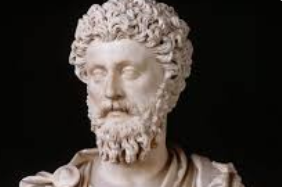
Though thou be destined to live three thousand years and as many myriads besides, yet remember that no man loseth other life than that which he liveth, nor liveth other than that which he loseth.
▼
Source
II, 14
5 months ago
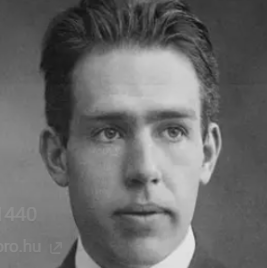
Never express yourself more clearly than you are able to think.
▼
Source
As quoted in Values of the Wise : Humanity's Highest Aspirations (2004) by Jason Merchey, p. 63
5 months ago
Ηe knew nothing except just the fact of his ignorance.
▼
Source
Alternate translation: I know nothing except the fact of my ignorance. | II.32. Original Greek: εἰδέναι μὲν μηδὲν πλὴν αὐτὸ τοῦτο [εἰδέναι].
5 months ago
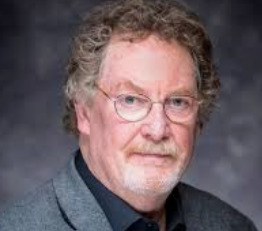
On the side of physics, there were a few key figures in Oxford who realized, in all probability unlike the majority of their colleagues in the physics department, that physics without interpretation is only part of the story, and that theories like quantum mechanics need careful foundational reflection.
▼
Source
Physics and Philosophy in Oxford: a prosperous example of interdisciplinarity, in
5 months ago
For I now saw, or thought I saw, what I had always before received with incredulity—that the habit of analysis has a tendency to wear away the feelings: as indeed it has, when no other mental habit is cultivated, and the analysing spirit remains without its natural complements and correctives.
▼
Source
([https://archive.org/details/autobiography01mill/page/137/mode/1up p. 137])
5 months ago
Scientific truth is characterized by its exactness and the certainty of its predictions. But these admirable qualities are contrived by science at the cost of remaining on a plane of secondary problems. leaving intact the ultimate and decisive questions. … Yet science is but a small part of the human mind and organism. Where it stops, man does not stop.
▼
Source
p. 13
5 months ago
The world is nothing but change. Our life is only perception.
▼
Source
IV, 4 (Hays translation)
5 months ago
He says that the sun is stone, and the moon earth.
▼
Source
Meletus' accusation against Socrates. Plato’s Apology. [https://classics.mit.edu/Plato/apology.html]

5 months ago
Heroism is the brilliant triumph of the soul over the flesh — that is to say, over fear: fear of poverty, of suffering, of calumny, of sickness, of isolation, and of death. There is no serious piety without heroism. Heroism is the dazzling and glorious concentration of courage.
▼
Source
1 October 1849
5 months ago
The practical reformer has continually to demand that changes be made in things which are supported by powerful and widely-spread feelings, or to question the apparent necessity and indefeasibleness of established facts; and it is often an indispensable part of his argument to show, how these powerful feelings had their origin, and how those facts came to seem necessary and indefeasible. There is therefore a natural hostility between him and a philosophy which discourages the explanation of feelings and moral facts by circumstances and association, and prefers to treat them as ultimate elements of human nature; a philosophy which is addicted to holding up favorite doctrines as intuitive truths, and deems intuition to be the voice of Nature and of God, speaking with an authority higher than that of our reason. In particular, I have long felt that the prevailing tendency to regard all the marked distinctions of human character as innate, and in the main indelible, and to ignore the irresistible proofs that by far the greater part of those differences, whether between individuals, races, or sexes, are such as not only might but naturally would be produced by differences in circumstances, is one of the chief hindrances to the rational treatment of great social questions, and one of the greatest stumbling blocks to human improvement.
▼
Source
([https://archive.org/details/autobiography01mill/page/273/mode/1up pp. 273-274])
5 months ago
Mark how fleeting and paltry is the estate of man - yesterday in embryo, tomorrow a mummy or ashes. So for the hairsbreadth of time assigned to thee, live rationally, and part with life cheerfully, as drops the ripe olive, extolling the season that bore it and the tree that matured it.
▼
Source
IV, 48

5 months ago
Everyday we act in ways that reflect our ethical judgements.
▼
Source
Chapter 3, From Evolution To Ethics?, p. 69

5 months ago
Never exaggerate, but express your feelings with moderation.
▼
Source
Maxim 13, p. 256
CivilSimian.com created by AxiomaticPanic, CivilSimian, Kalokagathia