
4 months ago
Comparative religion and philosophy show that the Thinker can regard itself as mortal, as immortal, as both mortal and immortal (the reincarnation model) or even as non-existent (Buddhism). It can think itself into living in a Christian universe, a Marxist universe, a scientific-relativistic universe, or a Nazi universe—among many possibilities. As psychiatrists and psychologists have often observed (much to the chagrin of their medical colleagues), the Thinker can think itself sick, and can even think itself well again. The Prover is a much simpler mechanism. It operates on one law only: Whatever the Thinker thinks, the Prover proves. To cite a notorious example which unleashed incredible horrors earlier in this century, if the Thinker thinks that all Jews are rich, the Prover will prove it. It will find evidence that the poorest Jew in the most run-down ghetto has hidden money somewhere.
▼
Source
Ch. 1 : The Thinker & The Prover, p. 25
4 months ago
The unitive knowledge of the Divine Ground has, as its necessary condition, self-abnegation and charity. Only by means of self-abnegation and charity can we clear away the evil, folly and ignorance which constitute the thing we call our personality and prevent us from becoming aware of the spark of divinity illuminating the inner man.
4 months ago
There is a great man who makes every man feel small. But the real great man is the man who makes every man feel great.
▼
Source
Ch 1: "The Dickens Period"
4 months ago
[T]here used to be in the old days three intellectual arguments for the existence of God, all of which were disposed of by Immanuel Kant in the Critique of Pure Reason; but no sooner had he disposed of those arguments than he invented a new one, a moral argument, and that quite convinced him. He was like many people: in intellectual matters he was skeptical, but in moral matters he believed implicitly in the maxims that he had imbibed at his mother's knee. That illustrates what the psychoanalysts so much emphasize — the immensely stronger hold upon us that our very early associations have than those of later times.
▼
Source
Bertrand Russell, Why I Am Not a Christian (1927)
4 months ago
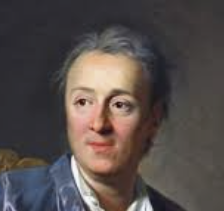
I have often seen an actor laugh off the stage, but I don’t remember ever having seen one weep.
▼
Source
"Paradox on Acting" (1830), as quoted in Selected Writings (1966) edited by Lester G. Crocker
4 months ago
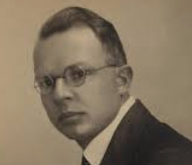
According to this view, the sentences of metaphysics are pseudo-sentences which on logical analysis are proved to be either empty phrases or phrases which violate the rules of syntax. Of the so-called philosophical problems, the only questions which have any meaning are those of the logic of science. To share this view is to substitute logical syntax for philosophy.
▼
Source
p. 8
4 months ago
How significant is the enormous heightening, under mescalin, of the perception of color! ... Man's highly developed color sense is a biological luxury—inestimably precious to him as an intellectual and spiritual being, but unnecessary to his survival as an animal. ... Mescalin raises all colors to a higher power and makes the percipient aware of innumerable fine shades of difference, to which, at ordinary times, he is completely blind. It would seem that, for Mind at Large, the so-called secondary characters of things are primary.
▼
Source
describing his experiment with mescaline, pp. 26-27
4 months ago
For there are two types of great humorist: those who love to see a man absurd and those who hate to see him absurd. Of the first kind are Rabelais and Dickens; of the second kind are Swift and Bernard Shaw.
▼
Source
"The Philosopher"
4 months ago
There are three principal means of acquiring knowledge available to us: observation of nature, reflection, and experimentation. Observation collects facts; reflection combines them; experimentation verifies the result of that combination. Our observation of nature must be diligent, our reflection profound, and our experiments exact. We rarely see these three means combined; and for this reason, creative geniuses are not common.
▼
Source
No. 15

4 months ago
From the knowledge of that fatal necessity that reduces man to dust we pass to a contemptuous contemplation of the nothingness that is life itself. The fear before the absolute limit of death becomes interiorised in a continual process of ironisation. Fear was disarmed in advance, made derisory by being tamed and rendered banal, and constantly paraded in the spectacle of life. Suddenly, it was there to be discerned in the mannerisms, failings and vices of normal people. Death as the destruction of all things no longer had meaning when life was revealed to be a fatuous sequence of empty words, the hollow jingle of a jester's cap and bells. The death's head showed itself to be a vessel already empty, for madness was the being-already-there of death. Death's conquered presence, sketched out in these everyday signs, showed not only that its reign had already begun, but also that its prize was a meagre one. Death unmasked the mask of life, and nothing more: to show the skull beneath the skin it had no need to remove beauty or truth, but merely to remove the plaster or the tawdry clothes. The carnival mask and the cadaver share the same fixed smile. But the laugh of madness is an anticipation of the rictus grin of death, and the fool, that harbinger of the macabre, draws death's sting.
▼
Source
Part One: 1. Stultifera Navis
4 months ago
Global environmentalists have said and written enough to leave no doubt that their goal is to destroy the prosperous economies of the world's richest nations.
4 months ago
Who is going to educate the human race in the principles and practice of conservation?
▼
Source
Chapter 12 (p. 112)
4 months ago
Before the Roman came to Rye or out to Severn strode, The rolling English drunkard made the rolling English road.
▼
Source
Ch. XXI: "The Road to Roundabout" ("The Rolling English Road", l. 1)
4 months ago
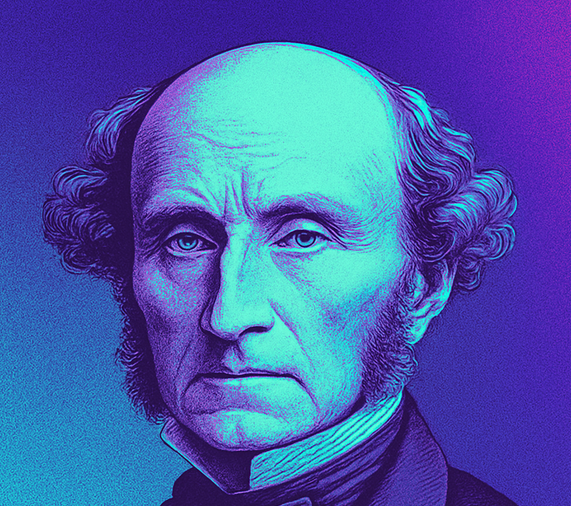
Whatever we may think or affect to think of the present age, we cannot get out of it; we must suffer with its sufferings, and enjoy with its enjoyments; we must share in its lot, and, to be either useful or at ease, we must even partake its character.
▼
Source
"The Spirit of the Age, I", Examiner (9 January 1831), p. 20 [http://oll.libertyfund.org/title/256/50650 Full text online]
4 months ago
The first promise exchanged by two beings of flesh was at the foot of a rock that was crumbling into dust; they took as witness for their constancy a sky that is not the same for a single instant; everything changed in them and around them, and they believed their hearts free of vicissitudes. O children! always children!
4 months ago
Not only must people know, they must see with their own eyes. Because they must be made to be afraid; but also because they must be the witnesses, the guarantors, of the punishment, and because they must to a certain extent take part in it.
▼
Source
Chapter One, pp.58

4 months ago
The Sahara was a spectacle as alive as the sea. The tints of the dunes changed according to the time of day and the angle of the light: golden as apricots from far off, when we drove close to them they turned to freshly made butter; behind us they grew pink; from sand to rock, the materials of which the desert was made varied as much as its tints.
▼
Source
[https://archive.org/details/ethanfrome0000whar_j0u7/page/206/mode/2up Force of Circumstance] (1965), p. 206.
4 months ago
A fairly clear line separated advertisement from art. ... The first effect of the triumph of the capitalist (if we allow him to triumph) will be that that line of demarcation will entirely disappear. There will be no art that might not just as well be advertisement.
▼
Source
p. 6
4 months ago
He who knows only his own side of the case, knows little of that. His reasons may be good, and no one may have been able to refute them. But if he is equally unable to refute the reasons on the opposite side; if he does not so much as know what they are, he has no ground for preferring either opinion.
▼
Source
Ch. II: Of the Liberty of Thought and Discussion
4 months ago
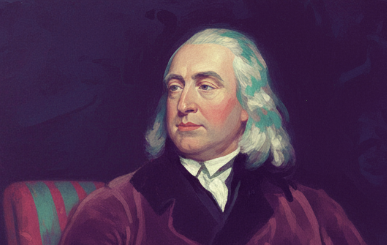
The day has been, I grieve to say in many places it is not yet past, in which the greater part of the species, under the denomination of slaves, have been treated by the law exactly upon the same footing as, in England for example, the inferior races of animals are still. The day may come when the rest of the animal creation may acquire those rights which never could have been withholden from them but by the hand of tyranny. The French have already discovered that the blackness of the skin is no reason why a human being should be abandoned without redress to the caprice of a tormentor. It may one day come to be recognized that the number of legs, the villosity of the skin, or the termination of the os sacrum are reasons equally insufficient for abandoning a sensitive being to the same fate. What else is it that should trace the insuperable line? Is it the faculty of reason, or perhaps the faculty of discourse? But a full-grown horse or dog is beyond comparison a more rational, as well as a more conversable animal, than an infant of a day or a week or even a month, old. But suppose they were otherwise, what would it avail? The question is not Can they reason?, nor Can they talk?, but Can they suffer?
▼
Source
Ch. 17: Of the Limits of the Penal Branch of Jurisprudence
4 months ago
The question here is the same as the question I addressed with regard to madness, disease, delinquency and sexuality. In all of these cases, it was not a question of showing how these objects were for a long time hidden before being finally discovered, nor of showing how all these objects are only wicked illusions or ideological products to be dispelled in the light of reason finally having reached its zenith. It was a matter of showing by what conjunctions a whole set of practices—from the moment they become coordinated with a regime of truth—was able to make what does not exist (madness, disease, delinquency, sexuality, etcetera), nonetheless become something.
▼
Source
Lecture 1, January 10, 1979, p. 19
4 months ago
From primitive times to our own, intercourse has always been considered a "service" for which the male thanks the woman by giving her presents or assuring her maintenance; but to serve is to give oneself a master; there is no reciprocity in this relation.
▼
Source
Bk. 2, Pt.. 4, Ch. 3: Sexual Initiation. P. 418 (1974 Vintage edition)
4 months ago
It has been much debated whether bullies are always cowards; I am content to remark that the admirers of bullies are always, by the very nature of things, trying to be cowards. If they do not always succeed, it is because they have unconscious virtues restraining that obscene worship.
▼
Source
Ch. V: "The Scottish Stories"
4 months ago
In early times, the great majority of the male sex were slaves, as well as the whole of the female. And many ages elapsed, some of them ages of high cultivation, before any thinker was bold enough to question the rightfulness, and the absolute social necessity, either of the one slavery or of the other.
▼
Source
Ch. 1
4 months ago
It is a sign of wisdom to be able to use parrhesia without falling into the garrulousness of athuroglossos... One of the problems... how to distinguish that which must be said from that which should be kept silent.

4 months ago
The inexperienced in wisdom and virtue, ever occupied with feasting and such, are carried downward, and there, as is fitting, they wander their whole life long, neither ever looking upward to the truth above them nor rising toward it, nor tasting pure and lasting pleasures. Like cattle, always looking downward with their heads bent toward the ground and the banquet tables, they feed, fatten, and fornicate. In order to increase their possessions they kick and butt with horns and hoofs of steel and kill each other, insatiable as they are.
▼
Source
Plato, Republic IX: 586a-b
4 months ago
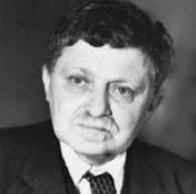
No two beings, and no two situations, are really commensurable with each other. To become aware of this fact is to undergo a sort of crisis. But it is with this crisis in our moral awareness as a starting-point, that there becomes possible that cry from us towards the creative principle, and that demand by it on us, which each must answer in his own way.
▼
Source
p. 25
4 months ago
My father's rejection of all that is called religious belief, was not, as many might suppose, primarily a matter of logic and evidence: the grounds of it were moral, still more than intellectual. He found it impossible to believe that a world so full of evil was the work of an Author combining infinite power with perfect goodness and righteousness.
▼
Source
([https://archive.org/details/autobiography01mill/page/39/mode/1up pp. 39–40])
4 months ago
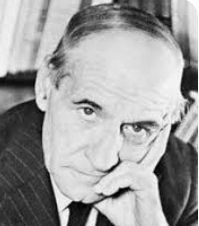
As one advances in life, one realises more and more that the majority of men — and of women — are incapable of any other effort than that strictly imposed on them as a reaction to external compulsion. And for that reason, the few individuals we have come across who are capable of a spontaneous and joyous effort stand out isolated, monumentalised, so to speak, in our experience. These are the select men, the nobles, the only ones who are active and not merely reactive, for whom life is a perpetual striving, an incessant course of training. Training = askesis. These are the ascetics.
▼
Source
Chap. VII: Noble Life And Common Life, Or Effort And Inertia
4 months ago
And this, Cebes, is the reason why the true lovers of knowledge are temperate and brave; and not for the reason that the world gives. For not in that way does the soul of a philosopher reason. ...Never fear, Simmias and Cebes, that a soul which has been thus nurtured and has had these pursuits, will at her departure from the body be scattered and blown away by the winds and be nowhere and nothing.

4 months ago
You cannot measure IQ through poetry.
4 months ago
I had always heard it maintained by my father, and was myself convinced, that the object of education should be to form the strongest possible associations of the salutary class; associations of pleasure with all things beneficial to the great whole, and of pain with all things hurtful to it.
▼
Source
([https://archive.org/details/autobiography01mill/page/136/mode/1up p. 136])
4 months ago
Tell me to what you pay attention and I will tell you who you are.
▼
Source
p. 94.
4 months ago
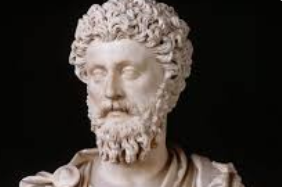
Self-control and resistance to distractions. Optimism in adversity—especially illness.
▼
Source
I, 15(Hays translation)
4 months ago
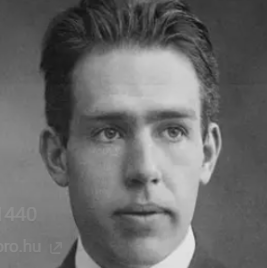
Every valuable human being must be a radical and a rebel, for what he must aim at is to make things better than they are.
▼
Source
As quoted in The World of the Atom (1966) by Henry Abraham Boorse and Lloyd Motz, p. 741
4 months ago
[In what way would you have us bury you?] In any way that you like; only you must get hold of me, and take care that I do not walk away from you. ...I cannot make Crito believe that I am the same Socrates who have been talking and conducting the argument; he fancies that I am the other Socrates whom he will soon see, a dead body... And though I have spoken many words in the endeavor to show that when I have drunk the poison I shall leave you and go to the joys of the blessed—these words of mine, with which I comforted you and myself, have had, I perceive, no effect upon Crito. ...you should be my surety to him that I shall not remain, but go away and depart; and then he will suffer less at my death, and not be grieved when he sees my body being burned or buried.
4 months ago
For Fascism...the State and the individual are one, or better, perhaps, "State" and "individual" are terms that are inseparable in a necessary synthesis.
▼
Source
Origins and Doctrine of Fascism, trans. A. James Gregor, Transaction Publishers (2011), p. 25
4 months ago
Experience has taught me that those who give their time to the absorbing claims of what is called society, not having leisure to keep up a large acquaintance with the organs of opinion, remain much more ignorant of the general state either of the public mind, or of the active and instructed part of it, than a recluse who reads the newspapers need be.
▼
Source
([https://archive.org/details/autobiography01mill/page/262/mode/1up p. 262])
4 months ago
The span we live is small—small as the corner of the earth in which we live it. Small as even the greatest renown, passed from mouth to mouth by short-lived stick figures, ignorant alike of themselves and those long dead.
▼
Source
III, 10 (Hays translation)

4 months ago
Herbert Spencer is little read now. Philosophers do not regard him as a major thinker. Social Darwinism has long been in disrepute.
▼
Source
Chapter 3, From Evolution To Ethics?, p. 61
4 months ago
When the debate is lost, slander becomes the tool of the loser.
▼
Source
Does not appear attributed to Socrates in any known ancient writings. Earliest source found on google books is [https://books.google.com/books?id=6pKfDwAAQBAJ&newbks=1&newbks_redir=0&lpg=PA123&dq=%22When%20the%20debate%20is%20lost%2C%20slander%20becomes%2

4 months ago
There still remains the question whether he who discovers a new world in the depths of the invisible would not do wisely to plant on it a flag known to himself alone, and, like Achilles, "devour his heart in secret;" whether the greatest problems which have ever been guessed on earth had not better have remained buried in the brain which had found the key to them, and whether the deepest thinkers — those whose hand has been boldest in drawing aside the veil, and their eye keenest in fathoming the mysteries beyond it — had not better, like the prophetess of Ilion, have kept for heaven, and heaven only, secrets and mysteries which human tongue cannot truly express, nor human intelligence conceive.
▼
Source
Review of L'Art Chrétien by Alexis-François Rio in the Bibliothèque Universelle de Genève. (1842)
4 months ago
Ideas are not everything in a teacher, vital though they may be. Mill's merit was the extension of them in spirit and letter to social and political issues and marked events... Boundless patience went with a social hope for mankind that could never be shaken. All the grand sources of human suffering, he was convinced, are conquerable more or less by human effort.
▼
Source
p. 56
4 months ago
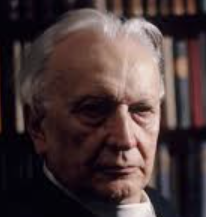
Today war seems to have undergone a change of meaning, insofar as it is not a war of religion but a war of interests, not a war of conflicting cultures or civilizations but a war of national areas, not a war of human beings but a technical struggle of machines one against another and all against the non–combatant population.
4 months ago
Because most of what we say and do is not essential. If you can eliminate it, you'll have more time, and more tranquillity. Ask yourself at every moment, “Is this necessary?” But we need to eliminate unnecessary assumptions as well. To eliminate the unnecessary actions that follow.
▼
Source
IV, 24(Hays translation)

4 months ago
It is love alone that gives value to all things.
▼
Source
"V: Loving complaints and petitions; Martha's complaint," in The Collected Works of St. Teresa of Avila Vol. 1, p. 379.
4 months ago
Action limits us; whereas in the state of contemplation we are endlessly expansive. Will localizes us; thought universalizes us. My soul wavers between half a dozen antagonistic general conceptions, because it is responsive to all the great instincts of human nature, and its aspiration is to the absolute, which is only to be reached through a succession of contraries. It has taken me a great deal of time to understand myself, and I frequently find myself beginning over again the study of the oft-solved problem, so difficult is it for us to maintain any fixed point within us. I love everything, and detest one thing only — the hopeless imprisonment of my being within a single arbitrary form, even were it chosen by myself. Liberty for the inner man is then the strongest of my passions — perhaps my only passion. Is such a passion lawful? It has been my habit to think so, but intermittently, by fits and starts. I am not perfectly sure of it.
▼
Source
8 March 1868
4 months ago
Things have no hold on the soul. They have no access to it, cannot move or direct it. It is moved and directed by itself alone. It takes the things before it and interprets them as it sees fit.
▼
Source
V, 19 (Hays translation)

4 months ago
So here hath been dawningAnother blue Day:Think wilt thou let itSlip useless away.
▼
Source
[http://rpo.library.utoronto.ca/poem/416.html Today] (1840).
4 months ago
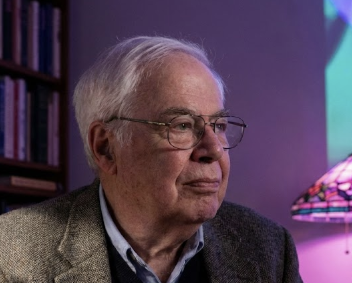
I think of the course of human history as a long, swelling, increasingly polyphonic poem - a poem that leads up to nothing save itself. When the species is extinct, "human nature's total message" will not be a set of propositions, but a set of vocabularies - the more, and the more various, the better.
▼
Source
Response to Hartshorne in 'Rorty and Pragmatism, The Philosopher Responds to his Critics', p. 33
CivilSimian.com created by AxiomaticPanic, CivilSimian, Kalokagathia