
5 months ago
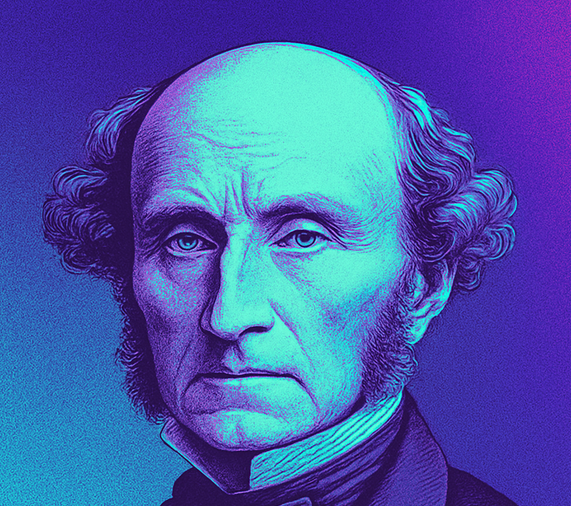
Like Coleridge, he might plead as a set-off that he had been to many persons, through his conversation, a source not only of much instruction but of great elevation of character. On me his influence was most salutary. It was moral in the best sense. He took a sincere and kind interest in me, far beyond what could have been expected towards a mere youth from a man of his age, standing, and what seemed austerity of character. There was in his conversation and demeanour a tone of high-mindedness which did not show itself so much, if the quality existed as much, in any of the other persons with whom at that time I associated. My intercourse with him was the more beneficial, owing to his being of a different mental type from all other intellectual men whom I frequented...
▼
Source
([https://archive.org/details/autobiography01mill/page/75/mode/1up pp. 75-76])
5 months ago
That Marxism should triumph in Russia, where there is no industry, would be the greatest contradiction that Marxism could undergo. But there is no such contradiction, for there is no such triumph. Russia is Marxist more or less as the Germans of the Holy Roman Empire were Romans.
▼
Source
Chapter XIV: Who Rules The World?
5 months ago
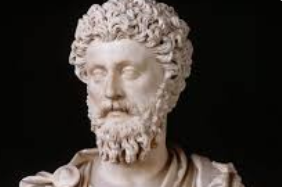
If you do the job in a principled way, with diligence, energy and patience, if you keep yourself free of distractions, and keep the spirit inside you undamaged, as if you might have to give it back at any moment— If you can embrace this without fear or expectation—can find fulfillment in what you're doing now, as Nature intended, and in superhuman truthfulness (every word, every utterance)—then your life will be happy. —
▼
Source
III, 12 (Hays translation)

5 months ago
Exercise till the mind feels delight in reposing from the fatigue.
▼
Source
First appearance on google books is C. Edwards Lester's 1845 English translation of Ansaldo Ceba's book Il Cittadino di Repubblica, translated as The Citizen of a Republic, which on [https://books.google.com/books?id=82rDFVelj_oC&pg=PA92#v=onepage&q&f=fal

5 months ago
I can find no words for what I feel. My consciousness is withdrawn into itself; I hear my heart beating, and my life passing. It seems to me that I have become a statue on the banks of the river of time, that I am the spectator of some mystery, and shall issue from it old, or no longer capable of age.
5 months ago
It was the period of my mental progress which I have now reached that I formed the friendship which has been the honour and chief blessing of my existence, as well as the source of a great part of all that I have attempted to do, or hope to effect hereafter, for human improvement. My first introduction to the lady who, after a friendship of twenty years, consented to become my wife, was in 1830, when I was in my twenty-fifth and she in her twenty-third year.
▼
Source
([https://archive.org/details/autobiography01mill/page/184/mode/1up p. 184])
5 months ago
Every living creature is happy when he fulfills his destiny, that is, when he realizes himself, when he is being that which in truth he is. For this reason, Schlegel, inverting the relationship between pleasure and destiny, said, “We have a genius for what we like.” Genius, man’s superlative gift for doing something, always carries a look of supreme pleasure.
▼
Source
pp. 16-17
5 months ago
Remember this— that there is a proper dignity and proportion to be observed in the performance of every act of life.
▼
Source
IV, 32

5 months ago
Let us consider first the view that it is always wrong to take an innocent human life. We may call this the “sanctity of life” view. People who take this view oppose abortion and euthanasia. They do not usually, however, oppose the killing of nonhuman animals—so perhaps it would be more accurate to describe this view as the “sanctity of human life” view. The belief that human life, and only human life, is sacrosanct is a form of speciesism.
▼
Source
Ch. 1: All Animals Are Equal

5 months ago
He who cares nothing for the good things of the world has dominion over them all.
▼
Source
The Way of Perfection, p. 41
5 months ago
Life is short and we have never too much time for gladdening the hearts of those who are traveling the dark journey with us. Oh, be swift to love, make haste to be kind!
▼
Source
December 16, 1868. | As translated in Amiel's Journal: The Journal Intime of Henri-Frédéric Amiel (1885), by Mrs. Humphry Ward. [https://www.google.com/books/edition/Amiel_s_Journal_The_Journal_Intime_of_He/Qv7CDwAAQBAJ?hl=en Description] and [https://www
5 months ago
He was a friend of my parents, and I didn't know him through that because my parents died when I was quite tiny; but nevertheless it made me know he existed, and so I read his books. And, well, they were the sort of books that would appeal to me. They were empiricist and liberal and humane. And I liked him very much.
▼
Source
Bertrand Russell, in an [http://www.russellsocietylibrary.com/SUSSKIND.PDF interview] with David Susskind (10 June 1962).
5 months ago
Reason is like an open secret that can become known to anyone at any time; it is the quiet space into which everyone can enter through his own thought.
▼
Source
As quoted in Philosophy for a Time of Crisis : An Interpretation, with Key Writings by Fifteen Great Modern Thinkers (1959) by Adrienne Koch, Ch. 18, "Karl Jaspers : A New Humanism"
5 months ago
Prize that which is best in the universe; and this is that which useth everything and ordereth everything.
▼
Source
V, 21
5 months ago
One common strategy on which we should all be able to agree is to take steps to reduce the risk of human extinction when those steps are also highly effective in benefiting existing sentient beings. For example, eliminating or decreasing the consumption of animal products will benefit animals, reduce greenhouse gas emissions, and lessen the chances of a pandemic resulting from a virus evolving among the animals crowded into today’s factory farms, which are an ideal breeding ground for viruses. That therefore looks like a high-priority strategy.
▼
Source
Chapter 15: Preventing Human Extinction (p. 177)
5 months ago
What indeed tended so greatly to the knowledge of himself, as his appearing in the humiliation of the flesh,—a degradation all the lower indeed if the flesh were only illusory? For it was all the more shameful if he, who brought on himself the Creator’s curse by hanging on a tree, only pretended the assumption of a bodily substance.
▼
Source
Book I, Chapter XI.—The Evidence for God External to Him; But the External Creation Which Yields This Evidence is Really Not Extraneous, for All Things are God’s. Marcion’s God, Having Nothing to Show for Himself, No God at All. Marcion’s Scheme Absurdly

5 months ago
It seems to me, upon the whole matter, that to save or redeem a nation under such circumstances from perdition, nothing less is necessary than some great, some extraordinary conjuncture of ill fortune, or of good, which may purge, yet so as by fire. Distress from abroad, bankruptcy at home, and other circumstances of like nature and tendency, may beget universal confusion. Out of confusion order may arise: but it may be the order of a wicked tyranny, instead of the order of a just monarchy. Either may happen: and such an alternative, at the disposition of fortune, is sufficient to make a stoic tremble! We may be saved indeed by means of a very different kind; but these means will not offer themselves, this way of salvation will not be opened to us, without the concurrence, and the influence of a PATRIOT KING, the most uncommon of all phænomena in the physical or moral world. Nothing can so surely and so effectually restore the virtue and public spirit, essential to the preservation of liberty, and national prosperity, as the reign of such a prince.
▼
Source
pp. 72-73
5 months ago
No matter what anyone says or does, my task is to be good. (Hays translation)
▼
Source
VII, 15
5 months ago
My principal motive is the belief that we can still make admirable sense of our lives even if we cease to have … "an ambition of transcendence."
▼
Source
Introduction to Objectivity, Relativism, and Truth: Philosophical Papers, Volume I (1991).
5 months ago
Else, if it be the later Abraham whom you follow as your father—that is, the digamist (Abraham)—receive him withal in his circumcision. If you reject his circumcision, it follows that you will refuse his digamy too.
▼
Source
Chapter 6
5 months ago
The critic who attempted to carry on 's ideas, who developed them in his own way and added his own distinct and remarkable contribution, was Hippolyte Taine. As an influence on all literary output since their time, the effect of the ideas of these two men is still extraordinary ...
▼
Source
, [https://books.google.com/books?id=T3sLAAAAMAAJ&focus=searchwithinvolume&q=hip- 1st part of quote] [https://books.google.com/books?id=T3sLAAAAMAAJ&focus=searchwithinvolume&q=polyte last part of quote]
5 months ago
To live each day as though one's last, never flustered, never apathetic, never attitudinizing – here is perfection of character.
▼
Source
VII, 69

5 months ago
Clever men are good, but they are not the best.
▼
Source
Goethe.
5 months ago
There are several sorts of religions, not only in different parts of the island, but even in every town; some worshipping the sun, others the moon or one of the planets. Some worship such men as have been eminent in former times for virtue or glory, not only as ordinary deities, but as the supreme god. Yet the greater and wiser sort of them worship none of these, but adore one eternal, invisible, infinite, and incomprehensible Deity; as a Being that is far above all our apprehensions, that is spread over the whole universe, not by His bulk, but by His power and virtue; Him they call the Father of All, and acknowledge that the beginnings, the increase, the progress, the vicissitudes, and the end of all things come only from Him; nor do they offer divine honours to any but to Him alone. And, indeed, though they differ concerning other things, yet all agree in this: that they think there is one Supreme Being that made and governs the world, whom they call, in the language of their country, Mithras. They differ in this: that one thinks the god whom he worships is this Supreme Being, and another thinks that his idol is that god; but they all agree in one principle, that whoever is this Supreme Being, He is also that great essence to whose glory and majesty all honours are ascribed by the consent of all nations.
▼
Source
Ch. 9 : Of the Religions of the Utopians
5 months ago
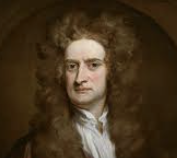
The best and safest method of philosophizing seems to be, first to enquire diligently into the properties of things, and to establish these properties by experiment, and then to proceed more slowly to hypothesis for the explanation of them. For hypotheses should be employed only in explaining the properties of things, but not assumed in determining them, unless so far as they may furnish experiments.
▼
Source
Letter to Ignatius Pardies (1672) Philosophical Transactions of the Royal Society (Feb. 1671/2) as quoted by William L. Harper, Isaac Newton's Scientific Method: Turning Data Into Evidence about Gravity and Cosmology (2011)
5 months ago
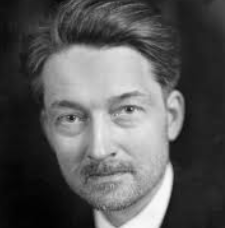
The first step to be taken by everyone who wishes to act morally is to decide not to act according to the general customs and doings of his fellow-men.
▼
Source
p. 137.
5 months ago
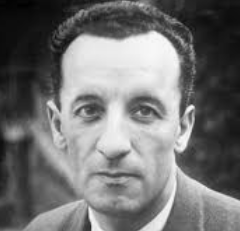
Even those who have desired to work out a completely positive philosophy have been philosophers only to the extent that, at the same time, they have refused the right to install themselves in absolute knowledge. They taught not this knowledge, but its becoming in us, not the absolute but, at most, our absolute relation to it, as Kierkegaard said. What makes a philosopher is the movement which leads back without ceasing from knowledge to ignorance, from ignorance to knowledge, and a kind of rest in this movement.
▼
Source
p. 5
5 months ago
No longer let thy breathing only act in concert with the air which surrounds thee, but let thy intelligence also now be in harmony with the intelligence which embraces all things. For the intelligent power is no less diffused in all parts and pervades all things for him who is willing to draw it to him than the aërial power for him who is able to respire it.
▼
Source
VIII, 54
5 months ago
Shall we say, for example, that Science and Art are indebted principally to the founders of Schools and Universities? Did not Science originate rather, and gain advancement, in the obscure closets of the Roger Bacons, Keplers, Newtons; in the workshops of the Fausts and the Watts; wherever, and in what guise soever Nature, from the first times downwards, had sent a gifted spirit upon the earth? Again, were Homer and Shakspeare members of any beneficed guild, or made Poets by means of it? Were Painting and Sculpture created by forethought, brought into the world by institutions for that end? No; Science and Art have, from first to last, been the free gift of Nature; an unsolicited, unexpected gift; often even a fatal one.
5 months ago
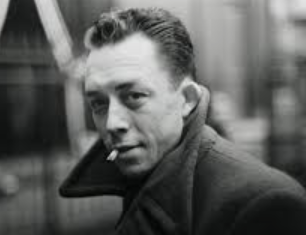
A living man can be enslaved and reduced to the historic condition of an object. But if he dies in refusing to be enslaved, he reaffirms the existence of another kind of human nature which refuses to be classified as an object.
▼
Source
quoted in Existentialism Versus Marxism : Conflicting Views on Humanism (1966, New York, Dell Pub. Co., p.234, available on [https://archive.org/details/existentialismve0000unse archive.org]), an essay edited by George Edward Novack; this essay includes a
5 months ago
Assay nothing without science, but confine your selves to those bounds, which Nature hath prescribed you.
▼
Source
p. 70 (last sentence of the book)
5 months ago
Useful Things, though Mechanical, are justly preferable to useless Speculations in Geometry, as we learn from Pappus.
5 months ago
This it is that gives a majesty so pure and touching to the historic figure of Christ; self-abandonment to God, uttermost surrender, without reserve or stipulation, to the guidance of the Holy Spirit from the Soul of souls; pause in no darkness, hesitation in no perplexity, recoil in no extremity of anguish; but a gentle unfaltering hold of the invisible Hand, of the Only Holy and All Good; — these are the features that have made Jesus of Nazareth the dearest and most sacred image to the heart of so many ages.
▼
Source
Vol. II, pp. 14–15.
5 months ago
Use these rules then, and trouble thyself about nothing else.
▼
Source
X, 2
5 months ago
I would like to go mad on one condition, namely, that I would become a happy madman, lively and always in a good mood, without any troubles and obsessions, laughing senselessly from morning to night.
5 months ago
Alas! the fearful Unbelief is unbelief in yourself.
▼
Source
Bk. II, ch. 7.
5 months ago
What must be remembered in any case is that secret complicity that joins the logical and the everyday to the tragic.
▼
Source
"Hope and the Absurd in the work of Franz Kafka"
5 months ago
The real cause I consider to be the one which was formerly most kept out of sight. The growth of the power of Athens, and the alarm which this inspired the Lacedaemon, made war inevitable.
▼
Source
Book I, 1.23-[6]. (See:[https://en.wikipedia.org/wiki/Thucydides%20Trap Thucydides Trap])
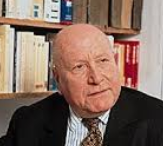
5 months ago
Today in America—the child of European imperialism—a new revolution is rising. It is the revolution of our time... and offers the only possible escape for mankind today.
▼
Source
Without Marx or Jesus; the new American Revolution has begun (1971) quoted in The Aquarian Conspiracy, by Marilyn Ferguson, Chapter 5 (1980)
5 months ago
Remember that what pulls the strings is the force hidden within; there lies the power to persuade, there the life,—there, if one must speak out, the real man.
▼
Source
X, 38
5 months ago
All philosophers should end their days at Pythia's feet. There is only one philosophy, that of unique moments.
5 months ago
All greatness is unconscious, or it is little and naught.
5 months ago
To work and create "for nothing," to sculpture in clay, to know one's creation has no future, to see one's work destroyed in a day while being aware that fundamentally this has no more importance than building for centuries — this is the difficult wisdom that absurd thought sanctions. Performing these two tasks simultaneously, negating on the one hand and magnifying on the other, it the way open to the absurd creator. He must give the void its colors.
5 months ago
Words had to change their ordinary meaning and to take that which was now given them. Reckless audacity came to be considered the courage of a loyal ally; prudent hesitation, specious cowardice; moderation was held to be a cloak for unmanliness; ability to see all sides of a question, inaptness to act on any. Frantic violence became the attribute of manliness; cautious plotting, a justifiable means of self-defence. The advocate of extreme measures was always trustworthy; his opponent a man to be suspected. To succeed in a plot was to have a shrewd head, to divine a plot a still shrewder; but to try to provide against having to do either was to break up your party and to be afraid of your adversaries.
▼
Source
Book III, 3.82-[4]
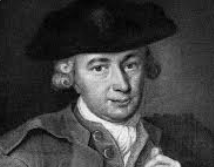
5 months ago
Not only the entire ability to think rests on language... but language is also the crux of the misunderstanding of reason with itself.
▼
Source
Sämtliche Werken, ed. Josef Nadler (1949-1957), vol. III, p. 286.
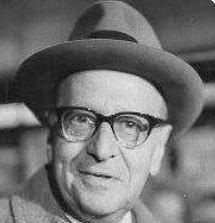
5 months ago
In the subjectivist view, when ‘reason’ is used to connote a thing or idea rather than an act, it refers exclusively to the relation of such an object or concept to a purpose, not to the object or concept itself. It means that the thing or the idea is good for something else. There is no reasonable aim as such, and to discuss the superiority of one aim over another in terms of reason becomes meaningless. From the subjective approach, such a discussion is possible only if both aims serve a third and higher one, that is, if they are means, not ends.
▼
Source
p. 6.
5 months ago
[...] As for others whose lives are not so ordered, he reminds himself constantly of the characters they exhibit daily and nightly at home and abroad, and of the sort of society they frequent; and the approval of such men, who do not even stand well in their own eyes has no value for him.
▼
Source
III. 4, trans. Maxwell Staniforth
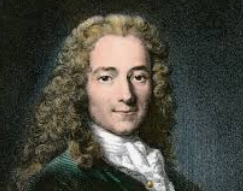
5 months ago
I cannot guess what may be the fate of Quakerism in America; but I perceive it loses ground daily in England. In all countries, where the established religion is of a mild and tolerating nature, it will at length swallow up all the rest.
5 months ago
Heroes abound at the dawn of civilizations, during pre-Homeric and Gothic epochs, when people, not having yet experienced spiritual torture, satisfy their thirst for renunciation through a derivative: heroism.
5 months ago
I feel that these old Northmen wore looking into Nature with open eye and soul: most earnest, honest; childlike, and yet manlike; with a great-hearted simplicity and depth and freshness, in a true, loving, admiring, unfearing way.
CivilSimian.com created by AxiomaticPanic, CivilSimian, Kalokagathia