
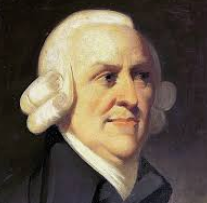
4 months ago
But though empires, like all the other works of men, have all hitherto proved mortal, yet every empire aims at immortality.
▼
Source
Chapter II, Part II, p. 896.
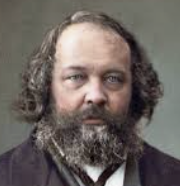
4 months ago
Everything about him was colossal, and he was full of exuberance and strength.
▼
Source
Richard Wagner, as quoted in the Introduction to God and the State (1979 Dover edition)
4 months ago
There will not be one kind of community existing and one kind of life led in utopia. Utopia will consist of utopias, of many different and divergent communities in which people lead different kinds of lives under different institutions. Some kinds of communities will be more attractive to most than others; communities will wax and wane. People will leave some for others or spend their whole lives in one. Utopia is a framework for utopias, a place where people are at liberty to join together voluntarily to pursue and attempt to realize their own vision of the good life in the ideal community but where no one can impose his own utopian vision upon others.
▼
Source
Ch. 10 : A Framework for Utopia; The Framework, p. 311
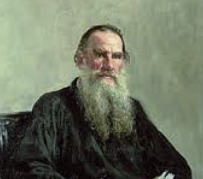
4 months ago
What! all of us, Christians, not only profess to love one another, but do actually live one common life; we whose social existence beats with one common pulse—we aid one another, learn from one another, draw ever closer to one another to our mutual happiness, and find in this closeness the whole meaning of life!—and to-morrow some crazy ruler will say some stupidity, and another will answer in the same spirit, and then I must go expose myself to being murdered, and murder men—who have done me no harm—and more than that, whom I love. And this is not a remote contingency, but the very thing we are all preparing for, which is not only probable, but an inevitable certainty.
▼
Source
Chapter V, Contradiction Between our Life and our Christian Conscience
4 months ago
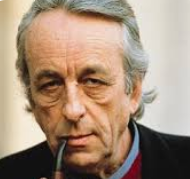
The sciences we are familiar with have been installed in a number of great 'continents'. Before Marx, two such continents had been opened up to scientific knowledge: the continent of Mathematics and the continent of Physics. The first by the Greeks (Thales), the second by Galileo. Marx opened up a third continent to scientific knowledge: the continent of History.
▼
Source
p. 4

4 months ago
Nor knowest thou what argument Thy life to thy neighbor's creed has lent: All are needed by each one, Nothing is fair or good alone.
▼
Source
Each and All, st. 1
4 months ago
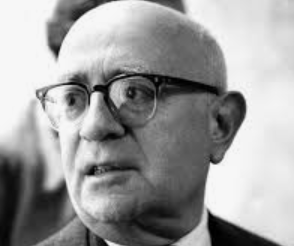
Even the most insensitive hit song enthusiast cannot always escape the feeling that the child with a sweet tooth comes to know in the candy store.
▼
Source
p. 290

4 months ago
Gravity is of the very Essence of Imposture. It does not only make us mistake other Things, but is apt perpetually almost to mistake it-self.
▼
Source
Vol. 1, p. 11; "A Letter Concerning Enthusiasm".
4 months ago
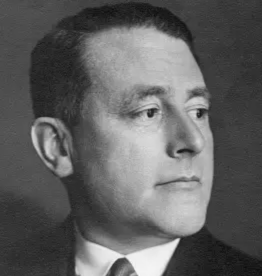
The inevitable lack of objectivity in political decisions, which is only the reflex to suppress the politically inherent friend-enemy antithesis, manifests itself in the regrettable forms and aspects of the scramble for office and the politics of patronage. The demand for depoliticalization which arises in this context means only the rejection of party politics, etc. The equation politics = party politics is possible whenever antagonisms among domestic political parties succeed in weakening the all-embracing political unit, the state.
4 months ago
Even today — in blithe disregard of his actual philosophy — Smith is generally regarded as a conservative economist, whereas in fact, he was more avowedly hostile to the motives of businessmen than most New Deal economists.
▼
Source
Robert Heilbroner, The Worldly Philosophers 7th ed. (1999), Chapter III. The Wonderful World of Adam Smith
4 months ago
Correctly understood, the phrase “tyranny of values” may supply the key to the understanding that all thinking about values only foments and intensifies the old and endless struggle between convictions and interests. Not much is gained by what the modern philosophy of values acknowledges as the “fundamental relationship,” according to which, occasionally the lower value may be preferred to the higher value, because that is the prerequisite of the higher value. All that points only to the confusion that affects the whole argumentation about values, which continually gives rise to new relations and points of view, thereby the position is always maintained from which the opponent is reproached that he does not heed the manifest values; or, in other words, he is disqualified as value-blind. The polemical utilization of the word “blind” is adequate to the logic of values as long as it is concerned with the systems of reference that it will build up out of viewpoints, standpoints, and vantage-points.
4 months ago
While discussing what it is that makes the “pleasures of wealth and greatness ... strike the imagination as something grand and beautiful,” [Adam Smith] remarks that “in the languor of disease and the weariness of old age” we cease to be so impressed, for we then take note of the fact that the acquisition of wealth and greatness leaves their possessors “always as much, and sometimes more exposed than before, to anxiety, to fear, and to sorrow, to diseases, to danger, and to death” (The Theory of Moral Sentiments IV, chapter I). But to allow our attention to dwell on this is, on Smith’s view, misguided.To do so is to embrace a “splenetic philosophy,” the effect of “sickness or low spirits” upon an imagination “which in pain and sorrow seems to be confined,” so that we are no longer “charmed with the beauty of that accommodation which reigns in the palaces and economy of the great.” The imagination of those “in better health or in better humor” fosters what may, Smith concedes, be no more than seductive illusions about the pleasures of wealth and greatness, but they are economically beneficial illusions. “It is this deception which rouses and keeps in continual motion the industry of mankind.” So even someone as perceptive as Smith, when he does pause to recognize the perspectives of ill health and old age, finds reason at once to put them on one side. And in so doing Smith speaks for moral philosophy in general.
▼
Source
Alasdair MacIntyre, Dependent Rational Animals (1999), p. 2
4 months ago
I know that most men — not only those considered clever, but even those who are very clever and capable of understanding most difficult scientific, mathematical, or philosophic, problems — can seldom discern even the simplest and most obvious truth if it be such as obliges them to admit the falsity of conclusions they have formed, perhaps with much difficulty — conclusions of which they are proud, which they have taught to others, and on which they have built their lives.
▼
Source
Opening to Ch 14. Translation from: What Is Art and Essays on Art (Oxford University Press, 1930, trans. Aylmer Maude) | Variant: I know that most men, including those at ease with problems of the greatest complexity, can seldom accept even the simplest a
4 months ago
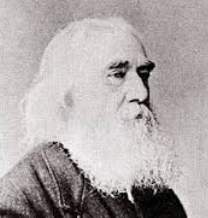
If there be such a principle as justice, or natural law, it is the principle, or law, that tells us what rights were given to every human being at his birth; what rights are, therefore, inherent in him as a human being, necessarily remain with him during life; and, however capable of being trampled upon, are incapable of being blotted out, extinguished, annihilated, or separated or eliminated from his nature as a human being, or deprived of their inherent authority or obligation.On the other hand, if there be no such principle as justice, or natural law, then every human being came into the world utterly destitute of rights; and coming into the world destitute of rights, he must necessarily forever remain so. For if no one brings any rights with him into the world, clearly no one can ever have any rights of his own, or give any to another. And the consequence would be that mankind could never have any rights; and for them to talk of any such things as their rights, would be to talk of things that never had, never will have, and never can have any existence.
▼
Source
Section IV, p. 12–13
4 months ago
The thing done avails, and not what is said about it. An original sentence, a step forward, is worth more than all the censures.
▼
Source
First Visit to England
4 months ago
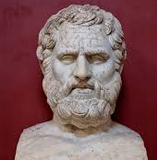
Most men are wicked.
4 months ago
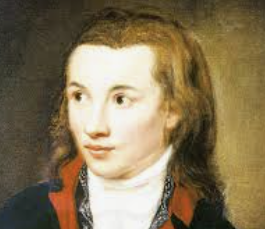
To get to know a truth properly, one must polemicize it.
▼
Source
Quoted in The Viking Book of Aphorisms by Wystan Hugh Auden (1962) p. 323
4 months ago
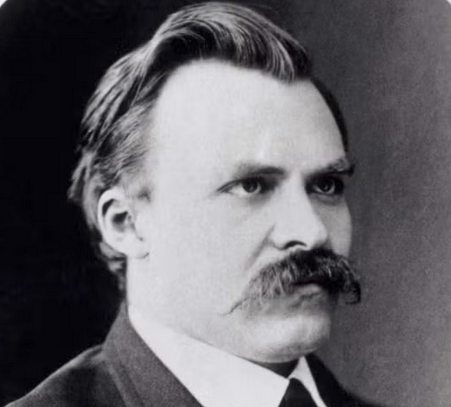
So far no one had had enough courage and intelligence to reveal me to my dear Germans. My problems are new, my psychological horizon frighteningly comprehensive, my language bold and clear; there may well be no books written in German which are richer in ideas and more independent than mine.
▼
Source
Letter to Carl Fuchs (14 December 1887)
4 months ago
As soon as men live entirely in accord with the law of love natural to their hearts and now revealed to them, which excludes all resistance by violence, and therefore hold aloof from all participation in violence — as soon as this happens, not only will hundreds be unable to enslave millions, but not even millions will be able to enslave a single individual.
▼
Source
V
4 months ago
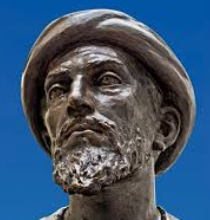
One must be careful with regard to the form of the letters, so that a yud will not resemble a vav, nor a vav a yud; a kaf should not resemble a beit, nor a beit a kaf; a dalet should not resemble a resh, nor a resh a dalet.
▼
Source
[http://www.sefaria.org/Mishneh_Torah%2C_Tefillin%2C_Mezuzah_and_the_Torah_Scroll.1.19 Sefer Ahavah, "Tefillin, Mezuzah and the Torah Scroll" 1:19]
4 months ago
People seem not to see that their opinion of the world is also a confession of character.
▼
Source
Worship
4 months ago
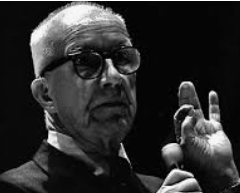
on first priority in design consideration is the full realization of individual potential in order to reach the second derivative — full realization for all individuals
▼
Source
No More Secondhand God (1963)
4 months ago
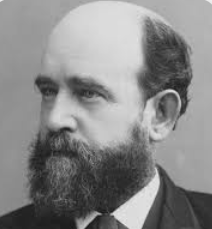
At the beginning of this marvelous era it was natural to expect, and it was expected, that labor-saving inventions would lighten the toil and improve the condition of the laborer; that the enormous increase in the power of producing wealth would make real poverty a thing of the past. … It is true that disappointment has followed disappointment, and that discovery upon discovery, and invention after invention, have neither lessened the toil of those who most need respite, nor brought plenty to the poor. But there have been so many things to which it seemed this failure could be laid, that up to our time the new faith has hardly weakened. We have better appreciated the difficulties to be overcome; but not the less trusted that the tendency of the times was to overcome them. Now, however, we are coming into collision with facts which there can be no mistaking. From all parts of the civilized world come complaints of industrial depression; of labor condemned to involuntary idleness; of capital massed and wasting; of pecuniary distress among businessmen; of want and suffering and anxiety among the working classes. All the dull, deadening pain, all the keen, maddening anguish, that to great masses of men are involved in the words "hard times," afflict the world to-day. This state of things, common to communities differing so widely in situation, in political institutions, in fiscal and financial systems, in density of population and in social organization, can hardly be accounted for by local causes.
▼
Source
Introductory : The Problem
4 months ago
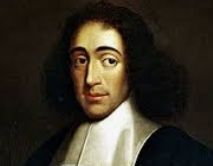
If I had as clear an idea of ghosts, as I have of a triangle or a circle, I should not in the least hesitate to affirm that they had been created by God; but as the idea I possess of them is just like the ideas, which my imagination forms of harpies, gryphons, hydras, &c., I cannot consider them as anything but dreams, which differ from God as totally as that which is not differs from that which is.
▼
Source
Letter to Hugo Boxel (October 1674) The Chief Works of Benedict de Spinoza (1891) Tr. R. H. M. Elwes, Vol. 2, Letter 58 (54).
4 months ago
I shall in no time forget that moment. We felt as if we had had in our souls a clear passing glimpse into this wondrous World.

4 months ago
Rest satisfied with doing well, and leave others to talk of you as they please.
▼
Source
As quoted in The World's Laconics: Or, The Best Thoughts of the Best Authors (1853) by Everard Berkeley | Variant: Rest satisfied with doing well, and leave others to talk of you as they will.
4 months ago
The stronger becomes master of the weaker, in so far as the latter cannot assert its degree of independence — here there is no mercy, no forbearance, even less a respect for "laws."
▼
Source
Sec. 630 (Notebook W I 4. June - July 1885, KGW VII, 3.283, KSA 11.559)
4 months ago
If you want to be happy, be.
▼
Source
Attributed in Wisdom for the Soul : Five Millennia of Prescriptions for Spiritual Healing (2006) by Larry Chang, p. 352; this statement appears in late 20th century inspirational books, but with no known citation to original material by Tolstoy. | This is
4 months ago
Man's shortcomings and sins are all due to the substance of the body and not to its form; while all his merits are exclusively due to his form.
▼
Source
Ch.8
4 months ago
England's genius filled all measure Of heart and soul, of strength and pleasure, Gave to the mind its emperor, And life was larger than before: Nor sequent centuries could hit Orbit and sum of Shakespeare's wit. The men who lived with him became Poets, for the air was fame.
▼
Source
Solution, ll. 35-42
4 months ago
It seems to demonstrate that periods of industrial activity in technical syntheses of principles, data, free energy and energy as "matter," find highest employment by the fear-amassed credits of warfare. Therefore the assumption approaches fact that war promotes the major technical advances of civilization... What has not been clear is that the potential of this emergency-born technology has always accrued to human's prewar individual initiatives taken in a humble but irrepressible progression of assumptions, measurements, deductions, and codifications of pure science.
▼
Source
Earth, Inc. (1973) In this passage, Fuller begins to explain why technological progress seems to make great gains in war time and states his view that this is a reflection of advances mainly made in peacetime — wars simply force nations to take notice of
4 months ago
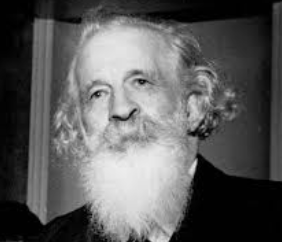
There is no original truth, only original error.
▼
Source
A Retrospective Glance at the Lifework of a Master of Books
4 months ago
Free trade consists simply in letting people buy and sell as they want to buy and sell. It is protection that requires force, for it consists in preventing people from doing what they want to do. Protective tariffs are as much applications of force as are blockading squadrons, and their object is the same—to prevent trade. The difference between the two is that blockading squadrons are a means whereby nations seek to prevent their enemies from trading; protective tariffs are a means whereby nations attempt to prevent their own people from trading. What protection teaches us, is to do to ourselves in time of peace what enemies seek to do to us in time of war.
▼
Source
Ch. 6
4 months ago
The true Poet is all-knowing; he is an actual world in miniature.
4 months ago
Above all things reverence thy Self.
▼
Source
Variant translations: | Respect yourself above all. | As quoted in [http://www.sacredscience.com/pythagoras.htm Divine Harmony: The Life and Teachings of Pythagoras] by John Strohmeier and Peter Westbrook. (1999) | Above all things reverence thy self. Abo
4 months ago
You know these things as thoughts, but your thoughts are not your experiences, they are an echo and after-effect of your experiences: as when your room trembles when a carriage goes past. I however am sitting in the carriage, and often I am the carriage itself.
▼
Source
Attributed across social media to TSZ. Is actually quoted in TSZ, Penguin Classics, Reg Hollingdale translation, in the introduction pg 12. Attributed to 'posthumously produced notes' [Nachlass?] Hollingdale continues.' In a man who thinks like this, the
4 months ago
Tolstoy, who among European writers of the nineteenth century probably had the widest access to all sectors of his society, was able to stock War and Peace with an enormous cast of characters and range of situations.
▼
Source
Ruth Wisse The Modern Jewish Canon (2000)
4 months ago
This shows the kindness of God to His creatures, even to us weak beings. His righteousness and justice as regards all animals are well known; for in the transient world there is among the various kinds of animals no individual being distinguished from the rest of the same species... all physical, psychical, and vital forces and organs that are possessed by one individual are found also in the other individuals. If any one is somehow different it is by accident, in consequence of some exception, and not by a natural property; it is also a rare occurrence.
▼
Source
Ch.12
4 months ago
Write it on your heart that every day is the best day in the year.
▼
Source
Works and Days
4 months ago
You never change things by fighting the existing reality. To change something, build a new model that makes the existing model obsolete.
▼
Source
As quoted in Beyond Civilization: Humanity's Next Great Adventure (1999), by Daniel Quinn, p. 137
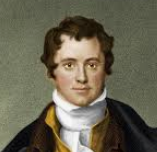
4 months ago
That the forms of natural bodies may depend upon different arrangements of the same particles of matter has been a favourite hypothesis advanced in the earliest era of physical research, and often supported by the reasonings of the ablest philosophers. This sublime chemical speculation sanctioned by the authority of Hooke, Newton, and Boscovich, must not be confounded with the ideas advanced by the alchemists concerning the convertibility of the elements into each other. The possible transmutation of metals has generally been reasoned upon not as a philosophical research, but as an empirical process. Those who have asserted the actual production of the precious metals from other elements, or their decomposition, or who have defended the chimera of the philosopher's stone, have been either impostors, or men deluded by impostors. In this age of rational inquiry it will be useless to decry the practices of the adepts, or to caution the public against confounding the hypothetical views respecting the elements founded upon distinct analogies, with the dreams of alchemical visionaries, most of whom, as an author of the last century justly observed, professed an art without principles, the beginning of which was deceit, the progress delusion, and the end poverty.
▼
Source
Elements of Chemical Philosophy, pt. 1, vol. 1 (London: J. Johnson and Co, 1812) pt. 7, sec. 1, pp. 488-489
4 months ago
A fool is known by his Speech; and a wise man by Silence.
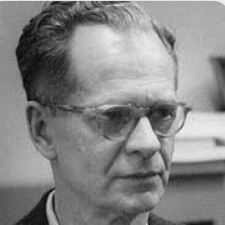
4 months ago
I did not direct my life. I didn't design it. I never made decisions. Things always came up and made them for me. That's what life is.
▼
Source
As quoted in "Unpacking the Skinner Box : Revisiting B. F. Skinner through a Postformal Lens" by Dana Salter in The Praeger Handbook of Education and Psychology Vol. 4 (2008) edited by Joe L. Kincheloe and Raymond A. Horn, Ch. 99, p. 872
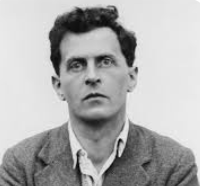
4 months ago
There are two godheads: the world and my independent I. I am either happy or unhappy, that is all. It can be said: good or evil do not exist. A man who is happy must have no fear. Not even in the face of death. Only a man who lives not in time but in the present is happy.
▼
Source
Journal entry (8 July 1916), p. 74e
4 months ago
I find it expressed in various passages of Scripture that the fact that God knows things while in a state of possibility, when their existence belongs to the future, does not change the nature of the possible in any way; that nature remains unchanged; and the knowledge of the realisation of one of several possibilities does not yet effect that realisation. This is likewise one of the fundamental principles of the Law of Moses concerning which there is no doubt nor any dispute.
▼
Source
Ch.20
4 months ago
Shall I tell you the secret of the true scholar? It is this: Every man I meet is my master at some point, and in that, I learn of him.
▼
Source
Greatness
4 months ago
You have to decide whether you want to make money or make sense, because the two are mutually exclusive.
▼
Source
Pg. 226
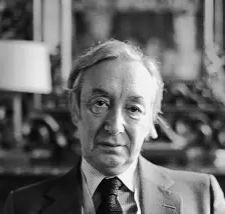
4 months ago
I see philosophy as a fairly abstract activity, as concerned mainly with the analysis of criticism and concepts, and of course most usefully of scientific concepts.
▼
Source
As quoted in Profile of Sir Alfred Ayer (June 1971) by Euro-Television, quoted in A.J. Ayer: A Life (1999), p. 2.
4 months ago
Practice yourself, for heaven's sake, in little things; and thence proceed to greater.
▼
Source
Book I, ch. 18, § 18.
4 months ago
In this theater of man's life it is reserved only for God and angels to be lookers on.
▼
Source
Francis Bacon, in The Advancement of Learning (1605) Book II, xx, 8.
CivilSimian.com created by AxiomaticPanic, CivilSimian, Kalokagathia