
4 months ago
Our tools are extensions of our purposes, and so we find it natural to make metaphorical attributions of intentionality to them; but I take it no philosophical ice is cut by such examples.
4 months ago
Trust him little who praises all, him less who censures all, and him least of all who is indifferent about all.
▼
Source
No. 491
4 months ago
The absolute ruler may be a Nero, but he is sometimes Titus or Marcus Aurelius; the people is often Nero, and never Marcus Aurelius.
▼
Source
Antoine de Rivarol, as quoted in Erik von Kuehnelt-Leddihn (1952), Liberty or Equality: The Challenge of Our Time, The Caxton Printers LTD, p. 150
4 months ago
To determine the true rulers of any society, all you must do is ask yourself this question: Who is it that I am not permitted to criticize?
▼
Source
Kevin Strom, [http://www.amfirstbooks.com/IntroPages/ToolBarTopics/Articles/Featured_Authors/strom,_kevin/kevin_strom_works/Kevin_Strom_1991-1994/Kevin_A._Strom_19930814-ADV_All_America_Must_Know_the_Terror_That_Is_Upon_Us.html "All America Must Know the

4 months ago
The pessimist has to invent new reasons to exist every day: he is a victim of the "meaning" of life.
4 months ago
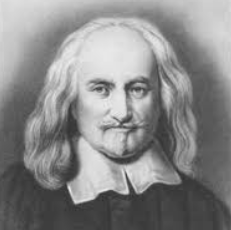
The first cause of Absurd conclusions I ascribe to the want of Method; in that they begin not their Ratiocination from Definitions; that is, from settled significations of their words: as if they could cast account, without knowing the value of the numerall words, one, two, and three.
▼
Source
The First Part, Chapter 5, p. 20 (See also: Algorithms)

4 months ago
One life; a little gleam of Time between two Eternities; no second chance to us for evermore!
4 months ago
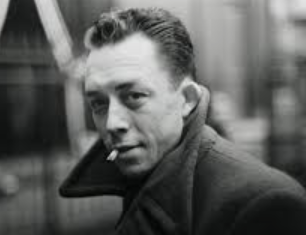
Although a few commentators have noted the influence of Simone Weil on the thought of Albert Camus, their relationship has never been fully explored ... I shall examine several aspects of that influence in ... Weil's critique of Marxism which Camus adopted in L'Homme Révolté... the conception of the rebel as an artisan which Camus also used in L'Homme Révolté, and ... Weil's mysticism, to which Camus was reluctantly though definitely drawn. ... I shall consider more fully the different conceptions of freedom and justice which appear in their writings and argue that their contributions to political thought here lay with their appreciation of the impulse in modern man to seek and impose absolute values. In this context, we shall see that Camus and Simone Weil provide different routes to individual authenticity and integrity in an absurd world.
▼
Source
Fred Rosen, in "Marxism, Mysticism, and Liberty : The Influence of Simone Weil on Albert Camus", in Political Theory Vol. 7, No. 3 (August 1979), p. 301
4 months ago
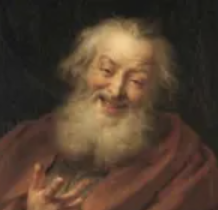
In fact we do not know anything infallibly, but only that which changes according to the condition of our body and of the [influences] that reach and impinge upon it.
4 months ago
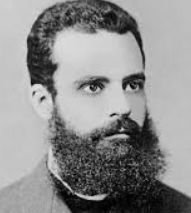
Usually, so far as improvement in the people's economic conditions is concerned, humanitarians simply play the role of the busybody.
▼
Source
p. 301.
4 months ago
No refining of one's taste in matters of art or literature, no sharpening of one's powers of insight in matters of science or psychology, can ever take the place of one's sensitiveness to the life of the earth. This is the beginning and the end of a person's true education.
▼
Source
p. 175
4 months ago
No multitude is able to acquire any art whatsoever. Then if there is a kingly art, neither the collective body of the wealthy nor the whole people could ever acquire this science of statesmanship.
▼
Source
300e
4 months ago
The Creation was the first act of sabotage.
4 months ago
As first a man cannot lay down the right of resisting them, that assault him by force, to take away his life; because he cannot be understood to ayme thereby, at any Good to himself.
▼
Source
The First Part, Chapter 14, p. 66
4 months ago
Every toiling Manchester, its smoke and soot all burnt, ought it not, among so many world-wide conquests, to have a hundred acres or so of free greenfield, with trees on it, conquered, for its little children to disport in; for its all-conquering workers to take a breath of twilight air in? You would say so! A willing Legislature could say so with effect. A willing Legislature could say very many things! And to whatsoever 'vested interest,' or such like, stood up, gainsaying merely, "I shall lose profits,"—the willing Legislature would answer, "Yes, but my sons and daughters will gain health, and life, and a soul."—
4 months ago
An evil and foolish and intemperate and irreligious life should not be called a bad life, but rather, dying long drawn out.
4 months ago
The nourishing fruit of the historically understood contains time as a precious but tasteless seed.
▼
Source
XVII
4 months ago
It is as fatal as it is cowardly to blink facts because they are not to our taste.
▼
Source
Science and Man.
4 months ago
Neither family, nor privilege, nor wealth, nor anything but Love can light that beacon which a man must steer by when he sets out to live the better life.
▼
Source
178c, M. Joyce, trans, Collected Dialogues of Plato (1961), p. 533
4 months ago
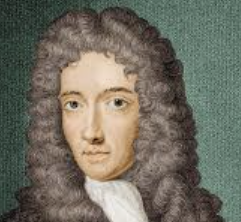
Those distinct substances, which concretes generally either afford, or are made up of, may, without very much inconvenience, be called the elements or principles of them.
▼
Source
Proposition IV
4 months ago
Never to have occasion to take a position, to make up one's mind, or to define oneself — there is no wish I make more often.
4 months ago
And if a man consider the original of this great Ecclesiastical Dominion, he will easily perceive, that the Papacy, is no other than the Ghost of the deceased Romane Empire, sitting crowned upon the grave thereof: For so did the Papacy start up on a Sudden out of the Ruines of that Heathen Power.
▼
Source
The Fourth Part, Chapter 47, p. 386(See also: Arnold J. Toynbee, A Study of History, Volume I)
4 months ago
[F]or this also we will honour the poor Manchester Insurrection, and augur well of it. A deep unspoken sense lies in these strong men,— inconsiderable, almost stupid, as all they can articulate of it is. Amid all violent stupidity of speech, a right noble instinct of what is doable and what is not doable never forsakes them: the strong inarticulate men and workers, whom Fact patronises; of whom, in all difficulty and work whatsoever, there is good augury!
4 months ago
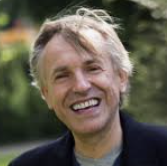
A global transition to a cruelty-free vegan diet won't just help non-human animals. The transition will also help malnourished humans who could benefit from the grain currently fed to factory-farmed animals. For factory-farming is not just cruel; it's energy-inefficient. Let's take just one example. Over the past few decades, millions of Ethiopians have died of "food shortages" while Ethiopia grew grain to sell to the West to feed cattle. Western meat-eating habits prop up the price of grain so that poor people in the developing world can't afford to buy it. In consequence, they starve by the millions.In my work, I explore futuristic, hi-tech solutions to the problem of suffering. But anybody who seriously wants to reduce human and non-human suffering alike should adopt a cruelty-free vegan lifestyle today.
▼
Source
"[https://www.hedweb.com/animals/interview.html A World Without Suffering?]", Instituto Humanitas Unisinos, Jan. 2011
4 months ago
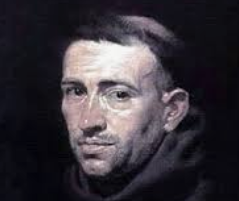
It is on account of theology alone that any assertion whatsoever should be called catholic or heretical. For only an assertion which is consonant with theology is truly catholic, and only one which is known to be opposed to theology is known to be heretical. For if some assertion were found to be opposed to decrees of the highest pontiffs, or also of general councils or also to laws of the emperors, nevertheless, if it were not in conflict with theology, even if it could be considered false, erroneous or unjust, it should not be counted as a heresy.
▼
Source
[http://www.britac.ac.uk/pubs/dialogus/t1d1.html Vol. I, Book 1, Ch. 2], as translated by John Kilcullen and John Scott (2003).
4 months ago
In his Fragments of Science Tyndall makes the following sad confession: "If you ask me whether science has solved, or is likely in our day to solve the problem of this universe, I must shake my head in doubt." If moved by an afterthought, he corrects himself later, and assures his audience that experimental evidence has helped him to discover, in the opprobrium-covered matter, the "promise and potency of every quality of life," he only jokes. It would be as difficult for Professor Tyndall to offer any ultimate and irrefutable proofs of what he asserts, as it was for Job to insert a hook into the nose of the leviathan.
▼
Source
H.P. Blavatsky, Isis Unveiled, Part One, Before the Veil, (1877)
4 months ago
Atheism is a disease of the soul, before it becomes an error of the understanding.
▼
Source
Misattributed to Plato in Laws by [http://www.conservapedia.com/Atheism_Quotes Conservapedia]. Actual source: William Fleming, as quoted in [http://www.bartleby.com/349/authors/74.html Prose Quotations from Socrates to Macaulay by Samuel Austin Alli
4 months ago
The words "element" and "principle" are used by him as equivalent terms, and signify those primitive and simple bodies of which compounds may be said to be composed, and into which these compounds are ultimately resolvable.
4 months ago
That history just unfolds, independently of a specified direction, of a goal, no one is willing to admit.
4 months ago
A man of Intellect, of real and not sham Intellect, is by the nature of him likewise inevitably a man of nobleness, a man of courage, rectitude, pious strength; who, even because he is and has been loyal to the Laws of this Universe, is initiated into discernment of the same; to this hour a Missioned of Heaven; whom if men follow, it will be well with them; whom if men do not follow, it will not be well. Human Intellect, if you consider it well, is the exact summary of Human Worth; and the essence of all worth-ships and worships is reverence for that same.
4 months ago
True hedonic engineering, as distinct from mindless hedonism or reckless personal experimentation, can be profoundly good for our character. Character-building technologies can benefit utilitarians and non-utilitarians alike. Potentially, we can use a convergence of biotech, nanorobotics and information technology to gain control over our emotions and become better (post-)human beings, to cultivate the virtues, strength of character, decency, to become kinder, friendlier, more compassionate: to become the type of (post)human beings that we might aspire to be, but aren't, and biologically couldn't be, with the neural machinery of unenriched minds. Given our Darwinian biology, too many forms of admirable behaviour simply aren't rewarding enough for us to practise them consistently: our second-order desires to live better lives as better people are often feeble echoes of our baser passions.
▼
Source
"[https://www.superhappiness.com/ Utopian Neuroscience]", BLTC Research, 2019
4 months ago
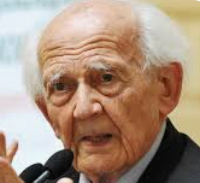
Until now, neither the distinction between “worthy, since durable” and “vain, since transient,” nor the unbridgeable abyss separating the two, has disappeared for a moment from reflections on human happiness. Nonentity, the demeaning and humiliating insignificance of the individual bodily presence in the world by comparison with the unperturbed eternity of the world itself, has haunted philosophers (and non-philosophers, during their brief spells of falling into and staying in a philosophical mood) for more than two millennia. In the Middle Ages it was raised to the rank of the highest purpose and supreme concern of mortals, and deployed to promote spiritual values over the pleasures of the flesh—as well as to explain (and, hopefully argue away) the pain and misery of the brief earthly existence as a necessary and therefore welcome prelude to the endless bliss of the afterlife. It returned with the advent of the modern era in a new garb: that of the futility of individual interests and concerns, shown to be abominably short-lived, fleeting and vagrant when juxtaposed with the interests of “the social whole”—the nation, the state, the cause.
▼
Source
p. 31.
4 months ago
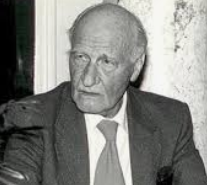
How does the philosophical question differ from the non-philosophical question? To philosophize means, we said, to direct one's view toward the totality of the world. So is that a philosophical question (and that alone) which has for its explicit and formal theme the sum-total of all existing things? No! What is peculiar and distinctive about a philosophical question is that it cannot be posed, considered, or answered (so far at least as an answer is possible) without "God and the world" also coming into consideration, that is, the whole of what exists.
▼
Source
p. 95
4 months ago
I dream of a language whose words, like fists, would fracture jaws.
4 months ago
Get, by six hundred and fifty-eight votes, or by no vote at all, by the silent intimation of your own eyesight and understanding given you direct out of Heaven, and more sacred to you than anything earthly, and than all things earthly,—a correct image of the fact in question, as God and Nature have made it: that is the one thing needful; with that it shall be well with you in whatsoever you have to do with said fact. Get, by the sublimest constitutional methods, belauded by all the world, an incorrect image of the fact: so shall it be other than well with you; so shall you have laud from able editors and vociferous masses of mistaken human creatures; and from the Nature's Fact, continuing quite silently the same as it was, contradiction, and that only. What else?
4 months ago
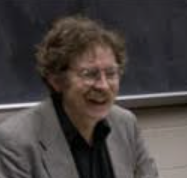
To say that all philosophy is writing is, minimally, to say that it is never the transparent expression of thought.
▼
Source
Chapter 3, Deconstruction and Criticism, p. 46
4 months ago
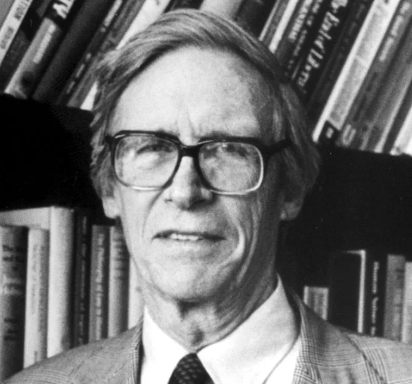
We may reject the contention that the ordering of institutions is always defective because the distribution of natural talents and the contingencies of social circumstance are unjust, and this injustice must inevitably carry over to human arrangements. Occasionally this reflection is offered as an excuse for ignoring injustice, as if the refusal to acquiesce in injustice is on a par with being unable to accept death. The natural distribution is neither just nor unjust; nor is it unjust that persons are born into society at some particular position. These are simply natural facts. What is just and unjust is the way that institutions deal with these facts. Aristocratic and caste societies are unjust because they make these contingencies the ascriptive basis for belonging to more or less enclosed and privileged social classes. The basic structure of these societies incorporates the arbitrariness found in nature. But there is no necessity for men to resign themselves to these contingencies. The social system is not an unchangeable order beyond human control but a pattern of human action. In justice as fairness men agree to avail themselves of the accidents of nature and social circumstance only when doing so is for the common benefit. The two principles are a fair way of meeting the arbitrariness of fortune; and while no doubt imperfect in other ways, the institutions which satisfy these principles are just.
▼
Source
Chapter II, Section 14, pg. 87-88
4 months ago
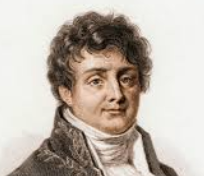
We... now consider the second cause of terrestrial heat, which... resides in the planetary spaces. ...Ascertain what would be the thermometrical state of the terrestrial mass, if it received only the heat of the sun. To facilitate... first leave the atmosphere out of the account. ...If the earth and all the bodies of the solar system, were placed in space deprived of all heat ...The polar regions would be subject to intense cold and the decrease of temperature from... equator to... poles would be incomparably more rapid and extended.In this hypothesis of the absolute cold of space, all the effects of heat... at the surface of the earth, should be attributed to... the sun. The least variance in... its distance... from the earth, would occasion... considerable changes in temperature. The interruption of day and night would produce effects sudden... Bodies, would be exposed... at commencement of night, to a cold of infinite intensity. Animals and vegetables could not resist... the sudden and powerful change... produced at the rising of the sun.
4 months ago
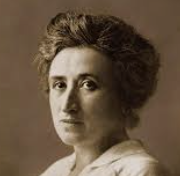
The modern proletarian class doesn't carry out its struggle according to a plan set out in some book or theory; the modern workers' struggle is a part of history, a part of social progress, and in the middle of history, in the middle of progress, in the middle of the fight, we learn how we must fight... That's exactly what is laudable about it, that's exactly why this colossal piece of culture, within the modern workers' movement, is epoch-defining: that the great masses of the working people first forge from their own consciousness, from their own belief, and even from their own understanding the weapons of their own liberation.
▼
Source
"The Politics of Mass Strikes and Unions"; Collected Works 2
4 months ago
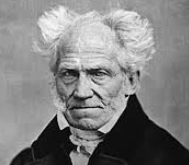
We forfeit three-fourths of ourselves in order to be like other people.
▼
Source
As attributed in Dictionary of Quotations from Ancient and Modern English and Foreign Sources (1899) by James Wood, p. 624
4 months ago
To claim you are more detached, more alien to everything than anyone, and to be merely a fanatic of indifference!
4 months ago
I shall now no more behold my dear father with these "bodily eyes. With him a whole threescore and ten years of the past has doubly died for me. It is as if a new leaf in the great hook of time were turned over. Strange time — endless time or of which I see neither end nor beginning. All rushes on. Man follows man. His life is as a tale that has been told; yet under Time does there not lie Eternity? Perhaps my father, all that essentially was my father, is even now near me, with me. Both he and I are with God. Perhaps, if it so please God, we shall in some higher state of being meet one another, recognize one another. As it is written. We shall be forever with God. The possibility, nay (in some way), the certainty, of perennial existence daily grows plainer to me. "The essence of whatever was, is, or shall be, even now is." God is great. God is good. His will be done, for it will be right. As it is, I can think peaceably of the departed love. All that was earthly, harsh, sinful, in our relation has fallen away; all that was holy in it remains. I can see my dear father's life in some measure as the sunk pillar on which mine was to rise and be built; the waters of time have now swelled up round his (as they will round mine); I can see it all transfigured, though I touch it no longer. I might almost say his spirit seems to have entered into me (so clearly do I discern and love him); I seem to myself only the continuation and second volume of my father. These days that I have spent thinking of him and of his end are the peaceablest, the only Sabbath that I have had in London. One other of the universal destinies of man has overtaken me. Thank Heaven, I know, and have known, what it is to be a son; to love a father, as spirit can love spirit. God give me to live to my father's honor and to His. And now, beloved father, farewell for the last time in this world of shadows I In the world of realities may the Great Father again bring us together in perfect holiness and perfect love! Amen!
4 months ago
The intolerant can be viewed as free-riders, as persons who seek the advantages of just institutions while not doing their share to uphold them.
▼
Source
Chapter VI, Section 59, pg. 388
4 months ago
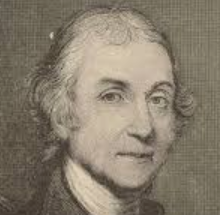
Respect a parliamentary king, and chearfully pay all parliamentary taxes; but have nothing to do with a parliamentary religion, or a parliamentary God. Religious rights, and religious liberty, are things of inestimable value. For these have many of our ancestors suffered and died; and shall we, in the sunshine of prosperity, desert that glorious cause, from which no storms of adversity or persecution could make them swerve? Let us consider if as a duty of the first rank with respect to moral obligation, to transmit to our posterity, and provide, as far as we can, for transmitting, unimpaired, to the latest generations, that generous zeal for religion and liberty, which makes the memory of our forefathers so truly illustrious.
▼
Source
Vol. I : The Dedication (March 1772)
4 months ago
The working class will acquire the sense of the new discipline, the freely assumed self-discipline of the Social Democracy, not as a result of the discipline imposed on it by the capitalist state, but by extirpating, to the last root, its old habits of obedience and servility.
4 months ago
Whoever heard me assert that the grey cat playing just now in the yard is the same one that did jumps and tricks there five hundred years ago will think whatever he likes of me, but it is a stranger form of madness to imagine that the present-day cat is fundamentally an entirely different one.
▼
Source
Quoted by Jorge Luis Borges in his essay "A History of Eternity"
4 months ago
Once we begin to want, we fall under the jurisdiction of the Devil.
4 months ago
The forms of government appear to him almost without meaning; such subjects as the extension of suffrage, the guarantee of any kind of political right, are evidently in his eyes pitiful things, materialism more or less disguised. What he requires is that men should grow morally better, that the number of just men should increase: one wise man more in the world would be to him a fact of more importance than ten political revolutions.
▼
Source
Giuseppe Mazzini, 'On the Genius and Tendency of the Writings of Thomas Carlyle', British and Foreign Review (October 1843), quoted in Essays: Selected from the Writings, Literary, Political, and Religious, of Joseph Mazzini, ed. William Clarke (1887), p.
4 months ago
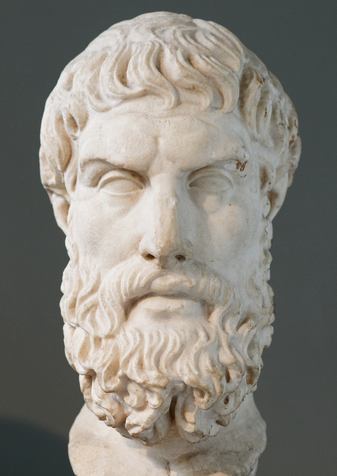
Where without any change in circumstances the things held to be just by law are seen not to correspond with the concept of justice in actual practice, such laws are not really just; but wherever the laws have ceased to be advantageous because of a change in circumstances, in that case the laws were for that time just when they were advantageous for the mutual dealings of the citizens, and subsequently ceased to be just when they were no longer advantageous.
4 months ago
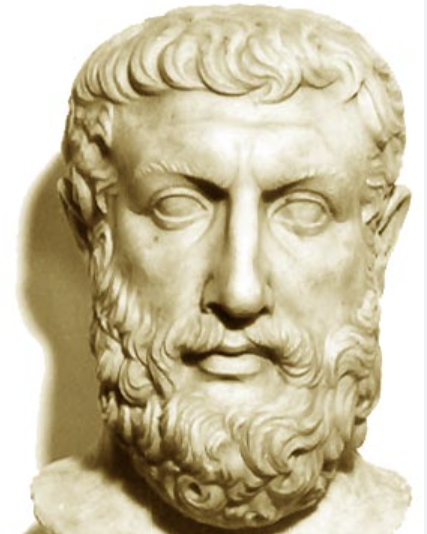
What... was the step that placed the Ionian cosmologists... above the [] level of the Maoris? ...[T]he real advance made by the scientific men of Miletos was that they left off telling tales. They gave up the hopeless task of describing what was, when as yet there was nothing, and asked instead what all things really are now.The great principle which underlies all their thinking, though it is first put into words by Parmenides, is that Nothing comes into being out of nothing, and nothing passes away into nothing. They saw, however, that particular things were always coming into being and passing away again, and from this it followed that their existence was no true or stable one. The only things that were real and eternal were the original matter which passed through all these changes and the motion which gave rise to them, to which was... added that law of proportion or compensation...
CivilSimian.com created by AxiomaticPanic, CivilSimian, Kalokagathia