
4 months ago
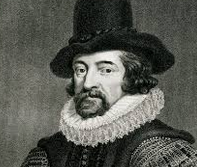
Human knowledge and human power meet in one; for where the cause is not known the effect cannot be produced. Nature to be commanded must be obeyed; and that which in contemplation is as the cause is in operation as the rule.
▼
Source
Aphorism 3
4 months ago
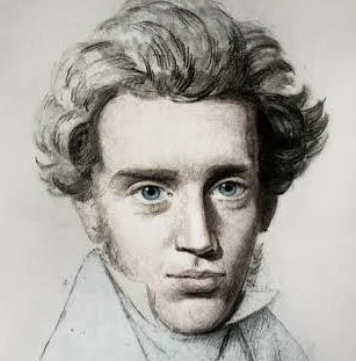
Lord Jesus Christ, the birds had nests, the foxes had dens, and you had no place where you could lay your head. You were homeless in the world-yet you yourself were a hiding place, the only place where the sinner could flee. And so even this very day you are a hiding place. When the sinner flees to you, hides himself with you, is hidden in you, he is eternally kept safe, since love hides a multitude of sins. P. 182
4 months ago
I used to be an atheist, until I realized I had nothing to shout during blowjobs. "Oh Random Chance! Oh Random Chance!" just doesn't cut it….
▼
Source
DragonCon, 2000 | This quote is knowingly or otherwise lifted from Bill Hicks' comedy routine, or vice versa.
4 months ago
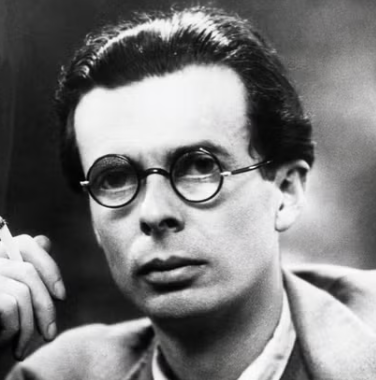
Half of the human race lives in manifest obedience to the lunar rhythm; and there is evidence to show that the psychological and therefore the spiritual life, not only of women, but of men too, mysteriously ebbs and flows with the changes of the moon. There are unreasoned joys, inexplicable miseries, laughters and remorses without a cause. Their sudden and fantastic alternations constitute the ordinary weather of our minds. These moods, of which the more gravely numinous may be hypostasized as gods, the lighter, if we will, as hobgoblins and fairies, are the children of the blood and humours. But the blood and humours obey, among many other masters, the changing moon. Touching the soul directly through the eyes and, indirectly, along the dark channels of the blood, the moon is doubly a divinity.
▼
Source
"Meditation on the Moon"
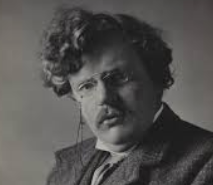
4 months ago
It is always the secure who are humble.
▼
Source
"A Defence of Humilities"
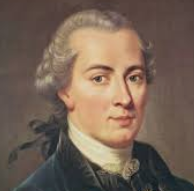
4 months ago
The more one presupposes that his own power will suffice him to realize what he desires the more practical is that desire. When I treat a man contemptuously, I can inspire him with no practical desire to appreciate my grounds of truth. When I treat any one as worthless, I can inspire him with no desire to do right.
▼
Source
Part III : Selection on Education from Kant's other Writings, Ch. I Pedagogical Fragments, # 15
4 months ago
Not only must we seek the measure of motions and actions by themselves, but much more in comparison; for this is of excellent use and very general application. Now we find that the flash of a gun is seen sooner than its report is heard... and this is owing it seems to the motion of light being more rapid than that of sound. We find to that visible images are received by the sight faster than they are dismissed; thus the strings of the violin, when struck by the finger, are to appearance doubled and tripled, because the new image is received before the old one is gone; which is also why the reason why rings being spun round look like globes, and a lighted torch, carried hastily at night, seems to have a tail. And it was upon this inequality of motions in point of velocity that Galileo built his theory of flux and reflux of the sea; supposing that the earth revolved faster than the water could follow; and that the water was therefore first gathered in a heap and then fell down, as we see in a basin of water moved quickly. But this he devised upon an assumption which cannot be allowed, viz. that the earth moves; and also without being well informed as to the sexhorary motion of the tide.
▼
Source
Aphorism 46
4 months ago
Life is not a problem to be solved, but a reality to be experienced.
▼
Source
Attributed to Kierkegaard in a number of books, the earliest located on Google Books being the 1976 book Jack Kerouac: Prophet of the New Romanticism by Robert A. Hipkiss, [http://books.google.com/books?id=g_JaAAAAMAAJ&q=%22problem+to+be+solved%22#search_
4 months ago
You simply cannot invent any conspiracy theory so ridiculous and obviously satirical that some people somewhere don't already believe it.
▼
Source
Introduction, p. 16
4 months ago
I have tried to show that the Perennial Philosophy and its ethical corollaries constitute a Highest Common Factor, present in all the major religions of the world. To affirm this truth has never been more imperatively necessary than at the present time. There will never be enduring peace unless and until human beings come to accept a philosophy of life more adequate to the cosmic and psychological facts than the insane idolatries of nationalism and the advertising man's apocalyptic faith in Progress towards a mechanized New Jerusalem. All the elements of this philosophy are present, as we have seen, in the traditional religions. But in existing circumstances there is not the slightest chance that any of the traditional religions will obtain universal acceptance. Europeans and Americans will see no reason for being converted to Hinduism, say, or Buddhism. And the people of Asia can hardly be expected to renounce their own traditions for the Christianity professed, often sincerely, by the imperialists who, for four hundred years and more, have been systematically attacking, exploiting, and oppressing, and are now trying to finish off the work of destruction by “educating” them. But happily there is the Highest Common Factor of all religions, the Perennial Philosophy which has always and everywhere been the metaphysical system of prophets, saints and sages. It is perfectly possible for people to remain good Christians, Hindus, Buddhists, or Moslems and yet to be united in full agreement on the basic doctrines of the Perennial Philosophy.
4 months ago
As a fact, there is no shred of evidence to show that those who have had sad experiences tend to have a sad philosophy. There are numberless points upon which Dickens is spiritually at one with the poor, that is, with the great mass of mankind. But there is no point in which he is more perfectly at one with them than in showing that there is no kind of connection between a man being unhappy and a man being pessimistic. Sorrow and pessimism are indeed, in a sense, opposite things, since sorrow is founded on the value of something, and pessimism upon the value of nothing.
▼
Source
Ch 2: "The Boyhood of Dickens"
4 months ago
Kant's questions are so strange and arresting that no one who has once heard them ever forgets them. It is just the reverse with his answers to them: no one can ever remember what these are! And there is a simple reason for this: the questions never get answered at all. Once they have served as an excuse for the darkening of sufficient area of wood-pulp, they just get lost.
▼
Source
David Stove, The Plato Cult and Other Philosophical Follies (1991). Oxford: Blackwell, p. 53.
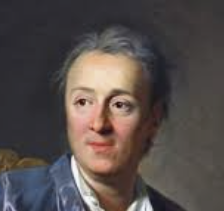
4 months ago
Distance is a great promoter of admiration!
▼
Source
As quoted in Thesaurus of Epigrams: A New Classified Collection of Witty Remarks, Bon Mots and Toasts (1942) by Edmund Fuller
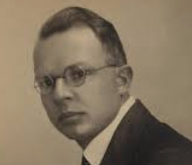
4 months ago
Frege's pair of concepts (nominatum and sense) is compared with our pair (extension and intension). The two pairs coincide in ordinary (extensional) contexts, but not in oblique (nonextensional) contexts.
▼
Source
p. 124 as cited in: E. Cornell Way (1991) Knowledge Representation and Metaphor. p. 183
4 months ago
The man who comes back through the Door in the Wall will never be quite the same as the man who went out. He will be wiser but less cocksure, happier but less self-satisfied, humbler in acknowledging his ignorance yet better equipped to understand the relationship of words to things, of systematic reasoning to the unfathomable Mystery which it tries, forever vainly, to comprehend.
▼
Source
Page 191
4 months ago
Fairy tales...are not responsible for producing in children fear, or any of the shapes of fear; fairy tales do not give the child the idea of the evil or the ugly; that is in the child already, because it is in the world already. Fairy tales do not give the child his first idea of bogey. What fairy tales give the child is his first clear idea of the possible defeat of bogey. The baby has known the dragon intimately ever since he had an imagination. What the fairy tale provides for him is a St. George to kill the dragon. Exactly what the fairy tale does is this: it accustoms him for a series of clear pictures to the idea that these limitless terrors had a limit, that these shapeless enemies have enemies in the knights of God, that there is something in the universe more mystical than darkness, and stronger than strong fear.
▼
Source
Ch. XVII: "The Red Angel" | Paraphrased: "Fairy tales are more than true — not because they tell us dragons exist, but because they tell us dragons can be beaten." Epigraph of Neil Gaiman's Coraline (2004). When questioned about the quote on his [http://n
4 months ago
Poetry must have something in it that is barbaric, vast and wild.

4 months ago
The circle of day and night is the law of the classical world: the most restricted but most demanding of the necessities of the world, the most inevitable but the simplest of the legislations of nature.This was a law that excluded all dialectics and all reconciliation, consequently laying the foundations for the smooth unity of knowledge as well as the uncompromising division of tragic existence. It reigns on a world without darkness, which knows neither effusiveness nor the gentle charms of lyricism. All is waking or dreams, truth or error, the light of being or the nothingness of shadow.
▼
Source
Part Two: 2. The Transcendence of Delirium
4 months ago
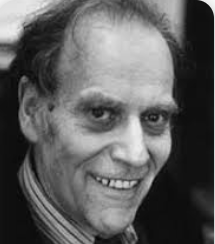
When asked his opinion of pragmatism, Morgenbesser replied "It's all very well in theory but it doesn't work in practice."
▼
Source
The Times, [https://www.thetimes.co.uk/article/sidney-morgenbesser-5cz8gg8qfvm Sidney Morgenbesser: Erudite and influential American linguistic philosopher with the analytical acuity of Spinoza and the blunt wit of Groucho Marx], September 8, 2004.
4 months ago
One Folk, One Realm, One Leader. Union with the unity of an insect swarm. Knowledgeless understanding of nonsense and diabolism. And then the newsreel camera had cut back to the serried ranks, the swastikas, the brass bands, the yelling hypnotist on the rostrum. And here once again, in the glare of his inner light, was the brown insectlike column, marching endlessly to the tunes of this rococo horror-music. Onward Nazi soldiers, onward Christian soldiers, onward Marxists and Muslims, onward every chosen People, every Crusader and Holy War-maker. Onward into misery, into all wickedness, into death!
4 months ago
For we that fight till the world is free, We are not easy in victory: We have known each other too long, my brother, And fought each other, the world and we.
▼
Source
A Song of Defeat
4 months ago
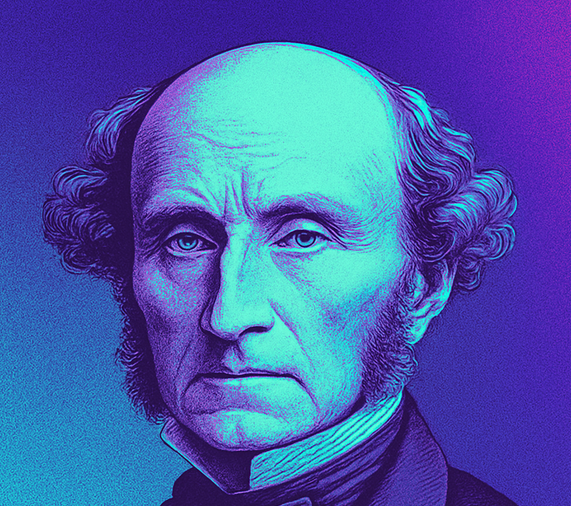
Granted that any practice causes more pain to animals than it gives pleasure to man; is that practice moral or immoral? And if, exactly in proportion as human beings raise their heads out of the slough of selfishness, they do not with one voice answer 'immoral,' let the morality of the principle of utility be for ever condemned.
▼
Source
Dr. Whewell on Moral Philosophy (1852), in Dissertations and Discussions: Political, Philosophical, and Historical, vol. 2, London: John W. Parker and son, 1859, [https://books.google.it/books?id=w-I3AQAAMAAJ&pg=PA485 p. 485]
4 months ago
The world is the house of the strong. I shall not know until the end what I have lost or won in this place, in this vast gambling den where I have spent more than sixty years, dicebox in hand, shaking the dice.
▼
Source
Conclusion
4 months ago
In the old system, the body of the condemned man became the king's property, on which the sovereign left his mark and brought down the effects of his power. Now he will be rather the property of society, the object of a collective and useful appropriation.
▼
Source
Chapter Three, The Gentle Way in Punishment

4 months ago
I'm never afraid. But in my case it's nothing to be proud of.
▼
Source
Raimon to Regina. p. 23
4 months ago
In every serious doctrine of the destiny of men, there is some trace of the doctrine of the equality of men. But the capitalist really depends on some religion of inequality. The capitalist must somehow distinguish himself from human kind; he must be obviously above it—or he would be obviously below it.
▼
Source
p. 34
4 months ago
To think that because those who wield power in society wield in the end that of government, therefore it is of no use to attempt to influence the constitution of the government by acting on opinion, is to forget that opinion is itself one of the greatest active social forces. One person with a belief is a social power equal to ninety-nine who have only interests.
▼
Source
Ch. I: To What Extent Forms of Government Are a Matter of Choice (p. 155)
4 months ago
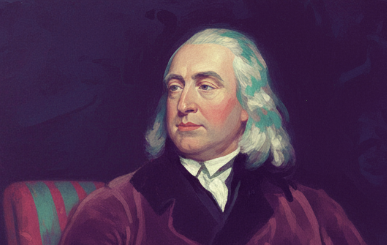
His primary concern was with neither psychology nor ethics, nor was it with "political theory", but with the reform of existing laws by means of a science of law... Bentham considered that both the Common Law and the administration that Parliament was supposed to supervise were incoherent and antiquated, and that systematic examination and comprehensive overhaul were just precisely what were required... To a considerable degree Bentham was adopting towards the legal institutions of his own country much the attitude that the rationalist Philosophes were adopting towards the whole of the social institutions of France.
▼
Source
Wilfrid Harrison, 'Introduction', Jeremy Bentham, A Fragment on Government and An Introduction to the Principles of Morals and Legislation (1948), pp. xviii, xxiii
4 months ago
Maybe the target nowadays is not to discover what we are but to refuse what we are.
▼
Source
p. 785
4 months ago
It is vain to apportion praise and blame. The truth is that if the vicious circle is so hard to break, it is because the two sexes are each the victim at once of the other and of itself. Between two adversaries confronting each other in their pure liberty, an agreement could be easily reached: the more so as the war profits neither. But the complexity of the whole affair derives from the fact that each camp is giving aid and comfort to the enemy; woman is pursuing a dream of submission, man a dream of identification. Want of authenticity does not pay: each blames the other for the unhappiness he or she has incurred in yielding to the temptations of the easy way; what man and woman loathe in each other is the shattering frustration of each one's own bad faith and baseness.
4 months ago
I've searched all the parks in all the cities — and found no statues of Committees.
▼
Source
As quoted in Trust Or Consequences: Build Trust Today Or Lose Your Market Tomorrow (2004) by Al Golin, p. 206; also in Storms of Life (2008) by Dr. Don Givens, p. 136
4 months ago
It appears... that a work similar in its object and general conception to that of Adam Smith, but adapted to the more extended knowledge and improved ideas of the present age, is the kind of contribution which Political Economy at present requires. The Wealth of Nations is in many parts obsolete, and in all, imperfect. Political Economy... has grown up almost from infancy since the time of Adam Smith; and the philosophy of society... has advanced many steps beyond the point at which he left it.
▼
Source
Preface (1848)
4 months ago
In "On the Peace"... in 355 B.C., Isocrates... argues that depraved orators "flatterers"... only say what the people desire to hear. ... The honest orator... is courageous enough, to oppose the demos. He has a critical and pedagogical role... to transform the will of the citizens so that they will serve the best interests of the city. ...Opposition between the people's will and the city's best interests is fundamental to Isocrates' criticism of the democratic institutions of Athens. ...He concludes ...it is not ...possible to be heard in Athens if one does not parrot the demos' will ...the only ...speakers left who have an audience are "reckless orators" and "comic poets" ...

4 months ago
The true disciple of philosophy is likely to be misunderstood by other men; they do not perceive that he is ever pursuing death and dying; and if this is true, why, having had the desire of death all his life long, should he repine at that which he has always been pursuing and desiring?
4 months ago
The greatest merit of the critical spirit is that it tends to cure fanaticism, and it is logical enough that in our own fanatical times the critical spirit should tend to disappear.
▼
Source
p. 143
4 months ago
The world would be astonished if it knew how great a proportion of its brightest ornaments—of those most distinguished even in popular estimation for wisdom and virtue—are complete sceptics in religion...
▼
Source
([https://archive.org/details/autobiography01mill/page/45/mode/1up p. 45])
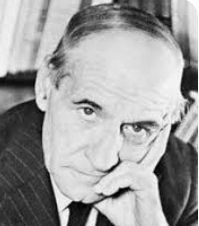
4 months ago
Liberalism — it is well to recall this today—is the supreme form of generosity; it is the right which the majority concedes to minorities and hence it is the noblest cry that has ever resounded in this planet. It announces the determination to share existence with the enemy; more than that, with an enemy which is weak. It was incredible that the human species should have arrived at so noble an attitude, so paradoxical, so refined, so acrobatic, so anti-natural. Hence, it is not to be wondered at that this same humanity should soon appear anxious to get rid of it. It is a discipline too difficult and complex to take firm root on earth.
▼
Source
Chap. VIII: The Masses Intervene In Everything, And Why Their Intervention Is Solely By Violence
4 months ago
The soul, being a harmony, can never utter a note at variance with the tensions and relaxations and vibrations and other affections of the strings out of which she is composed; she can only follow, she cannot lead them? ...And yet do we not now discover the soul to be doing the exact opposite—leading the elements of which she is believed to be composed; almost always opposing and coercing them in all sorts of ways throughout life... threatening and reprimanding the desires, passions, fears, as if talking to a thing which is not herself...

4 months ago
Metaphors and similes are the beginning of the democratic system of envy.
4 months ago
The experiences of this period had two very marked effects on my opinions and character. In the first place, they led me to adopt a theory of life, very unlike that on which I had before acted, and having much in common with what at that time I certainly had never heard of, the anti-self-consciousness theory of Carlyle.
▼
Source
([https://archive.org/details/autobiography01mill/page/141/mode/1up pp. 141-142])
4 months ago
Man must not only make himself: the weightiest thing he has to do is to determine what he is going to be. He is causa sui to the second power.
▼
Source
As quoted in Existentialism from Dostoevsky to Sartre, p. 155
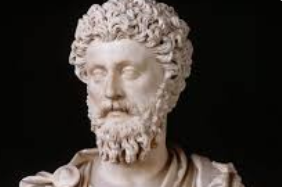
4 months ago
Yes, you can--if you do everything as if it were the last thing you were doing in your life, and stop being aimless, stop letting your emotions override what your mind tells you, stop being hypocritical, self-centered, irritable.
▼
Source
You will find rest from vain fancies if you perform every act in life as though it were your last. | II, 5 (Hayes translation)
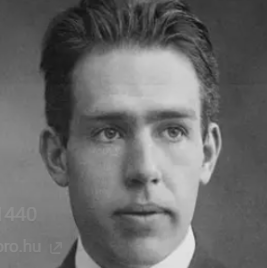
4 months ago
Some subjects are so serious that one can only joke about them.
▼
Source
As quoted in The Genius of Science: A Portrait Gallery (2000) by Abraham Pais, p. 24 | Some things are so serious that one can only joke about them. | Variant without any citation as to author in Denial is not a river in Egypt (1998) by Sandi Bachom, p. 8
4 months ago
False words are not only evil in themselves, but they infect the soul with evil.
▼
Source
Phaedo 115e | literally: 'For know well', he said, 'o dearest Kriton, that to not speak well is not only sinful by itself, but lets evil intrude into the soul.'(εὖ γὰρ ἴσθι, ἦ δ᾽ ὅς, ὦ ἄριστε Κρίτων, τὸ μὴ καλῶς λέγειν οὐ μόνον εἰς αὐτὸ τοῦτο πλημμελές, ἀ
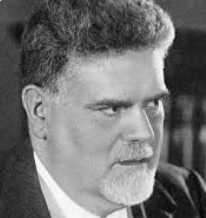
4 months ago
The authority of the State was not a product, but a presupposition. It could not depend on the people, in fact, the people depended on the State… The Fascist state, on the other hand, is a popular state, and, in that sense, a democratic State par excellence… Every citizen shares a relationship with the State and is so intimate that the State exists only in so far as it is made to exist by the citizen.
▼
Source
Orgini e dottrina del fascismo, Rome: Libreria del Littorio, (1929). Origins and Doctrine of Fascism, A. James Gregor, translator and editor, Transaction Publishers (2003) p. 28
4 months ago
Wisdom and contrivance are shown in overcoming difficulties, so there is no place for them in a Being for whom no difficulties exist
▼
Source
pages 176-177; Early Modern Texts page 16
4 months ago
Let no act be done at haphazard, nor otherwise than according to the finished rules that govern its kind.
▼
Source
IV, 2

4 months ago
Since ancient times, philosophers have maintained that to strive too hard for one's own happiness is self-defeating.
▼
Source
Chapter 5, Reason And Genes, p. 145
4 months ago
Neither one nor the other doth follow, for that both the assertions may be true. The Oracle adjudged Socrates the wisest of all men, whose knowledg is limited; Socrates acknowledgeth that he knew nothing in relation to absolute wisdome, which is infinite; and because of infinite, much is the same part as is little, and as is nothing (for to arrive... to the infinite number, it is all one to accumulate thousands, tens, or ciphers,) therefore Socrates well perceived his wisdom to be nothing, in comparison of the infinite knowledg which he wanted. But yet, because there is some knowledg found amongst men, and this not equally shared to all, Socrates might have a greater share thereof than others, and therefore verified the answer of the Oracle.
▼
Source
Galileo Galilei, Dialogue Concerning the Two Chief World Systems (1632) as quoted in the Salusbury translation, The Systeme of the World: in Four Dialogues (1661) p. 85

4 months ago
Only one thing is necessary: to possess God — All the senses, all the forces of the soul and of the spirit, all the exterior resources are so many open outlets to the Divinity; so many ways of tasting and of adoring God. We should be able to detach ourselves from all that is perishable and cling absolutely to the eternal and the absolute and enjoy the all else as a loan, as a usufruct…. To worship, to comprehend, to receive, to feel, to give, to act: this our law, our duty, our happiness, our heaven.
▼
Source
As translated in Bartlett's Familiar Quotations, 10th ed. (1919)
CivilSimian.com created by AxiomaticPanic, CivilSimian, Kalokagathia