

4 months ago
The notion of nothingness is not characteristic of laboring humanity: those who toil have neither time nor inclination to weigh their dust; they resign themselves to the difficulties or the doltishness of fate; they hope: hope is a slave's virtue.

4 months ago
A gifted noble people; a people of wild strong feelings, and of iron restraint over these: the characteristic of noble-mindedness, of genius.

4 months ago
When the throne of God is overturned, the rebel realizes that it is now his own responsibility to create the justice, order, and unity that he sought in vain within his own condition, and in this way to justify the fall of God. Then begins the desperate effort to create, at the price of crime and murder if necessary, the dominion of man.
4 months ago
Hope, danger's comforter...
▼
Source
Book V, 5.103-[1]
4 months ago
Where conscious subjectivity is concerned, there is no distinction between the observation and the thing observed.
▼
Source
The Rediscovery of the Mind, p. 97, MIT Press (1992) .
4 months ago
Never tell evil of a man, if you do not know it for certainty, and if you know it for a certainty, then ask yourself, 'Why should I tell it?'
▼
Source
As quoted in What Billingsgate Thought: A Country Gentleman's Views on Snobbery (1919) by William Alexander Newman Dorland
4 months ago
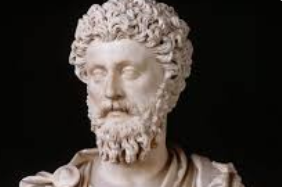
Whenever you suffer pain, keep in mind that it's nothing to be ashamed of and that it can't degrade your guiding intelligence, nor keep it from acting rationally and for the common good. And in most cases you should be helped by the saying of Epicurus, that pain is never unbearable or unending, so you can remember these limits and not add to them in your imagination. Remember too that many common annoyances are pain in disguise, such as sleepiness, fever and loss of appetite. When they start to get you down, tell yourself you are giving in to pain.
▼
Source
VII. 64
4 months ago
The reasonable worship of a just God who punishes and rewards, would undoubtedly contribute to the happiness of men; but when that salutary knowledge of a just God is disfigured by absurd lies and dangerous superstitions, then the remedy turns to poison.
▼
Source
p. 184
4 months ago
Philosophy: impersonal anxiety; refuge among anemic ideas.
4 months ago
Is not every true Reformer, by the nature of him, a Priest first of all? He appeals to Heaven's invisible justice against Earth's visible force; knows that it, the invisible, is strong and alone strong. He is a believer in the divine truth of things; a seer, seeing through the shows of things; a worshipper, in one way or the other, of the divine truth of things; a Priest, that is. If he be not first a Priest, he will never be good for much as a Reformer.
4 months ago
You know what charm is: a way of getting the answer 'yes' without having asked any clear question.
4 months ago
Coition is a slight attack of apoplexy. For man gushes forth from man, and is separated by being torn apart with a kind of blow.
▼
Source
Freeman (1948), p. 150
4 months ago
Every man has his fault, and honesty is his.
▼
Source
Lucullus, scene i
4 months ago
Descartes may have made a lot of mistakes, but he was right about this: you cannot doubt the existence of your own consciousness. That's the first feature of consciousness, it's real and irreducible. You cannot get rid of it by showing that it's an illusion in a way that you can with other standard illusions.
4 months ago
Venerate four characters: the sanguine, who has checked volatility and the rage for pleasure; the choleric, who has subdued passion and pride; the phlegmatic, emerged from indolence; and the melancholy, who has dismissed avarice, suspicion and asperity.
▼
Source
No. 609
4 months ago
Voltaire, the greatest skeptic of his day, the materialist par excellence, shared Bailly's belief. He thought it quite likely that: Long before the empires of China and India, there had been nations cultured, learned, and powerful, which a deluge of barbarians overpowered and thus replunged into their primitive state of ignorance and savagery, or what they call the state of pure nature. Lettres sur l'Atlantide, p. 15. This conjecture is but a half-guess. There were such "deluges of barbarians" in the Fifth Race. With regard to the Fourth, it was a bonâ fide deluge of water which swept it away. Neither Voltaire nor Bailly, however, knew anything of the Secret Doctrine of the East. That which with Voltaire was the shrewd conjecture of a great intellect, was with Bailly a "question of historical facts."
▼
Source
H.P. Blavatsky, The Secret Doctrine, Vol. 2, p. 786 (1888)
4 months ago
Objection to scientific knowledge: this world doesn't deserve to be known.
4 months ago
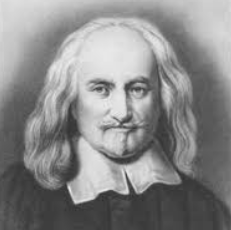
The same, without such opinion, DESPAIRE.
▼
Source
The First Part, Chapter 6, p. 25
4 months ago
Far be it from me to say or insinuate a word of disparagement against such characters as Hampden, Elliot, Pym; whom I believe to have been right worthy and useful men. I have read diligently what books and documents about them I could come at;—with the honestest wish to admire, to love and worship them like Heroes; but I am sorry to say, if the real truth must be told, with very indifferent success! At bottom, I found that it would not do. They are very noble men, these; step along in their stately way, with their measured euphemisms, philosophies, parliamentary eloquences, Ship-moneys, Monarchies of Man; a most constitutional, unblamable, dignified set of men. But the heart remains cold before them.
4 months ago
Of no writer can it be said with greater truth that the half is greater than the whole. His histories may still be studied as models of balanced and lucid narrative. His letters hold an honoured place even among the greatest. Above all, his fame rests securely upon his two stories, Zadig and Candide, those little masterpieces of swift irony and crystal-clear criticism which, in a hundred and fifty years, have lost not one spark of their brilliance, and which will perish only with the death of the French tongue. If we might give to Voltaire and Diderot two books apiece, and exclude the erudition which was their pride, they would stand unchallenged in their century. Candide and Zadig are still supreme, and what but they are worthy to be set on the same shelf with the Neveu de Rameau and the Paradoxe?
▼
Source
Charles Whibley, Political Portraits. Second Series (1923), pp. 258-259
4 months ago
Thanks to depression — that alpinism of the indolent — we scale every summit and daydream over every precipice from our bed.
4 months ago
So that in the first place, I put for a general inclination of all mankind a perpetual and restless desire of Power after power, that ceaseth only in Death. And the cause of this is not always that a man hopes for a more intensive delight than he has already attained to, or that he cannot be content with a moderate power: but because he cannot assure the power and means to live well, which he hath present, without the acquisition of more.
▼
Source
The First Part, Chapter 11, p. 47
4 months ago
The English are a dumb people. They can do great acts, but not describe them.
▼
Source
Bk. III, ch. 5.
4 months ago
There are many who know many things, yet are lacking in wisdom.
4 months ago
The art of storytelling is reaching its end because the epic side of truth, wisdom, is dying out.
4 months ago
It would be better for me … that multitudes of men should disagree with me rather than that I, being one, should be out of harmony with myself.
▼
Source
Words spoken by Socrates, 482c
4 months ago
That is why classical Utopias, and the modern dystopias which ironically incorporate their ideals, are static. … The technically expert citizen is expert only in his allotted task; for him to think about the value of that task is for him to pass completely beyond the limits of what is permissible.
▼
Source
p. 282.
4 months ago
But of such writers the number is yet (and will I fear always be so) small, that I shall not need to make many exceptions, when I treat of the usefulness of writing books of essays, in comparison of that of writing systematically: or, at least... whilst I presume not to judge of other men's abilities, I hope it may be lawful for me to confess freely to you concerning myself, that I am very sensible of my being far from having such a stock of experiments and observations, as I judge requisite to write systematically; and I am apt to impute many of the deficiencies to be met with in the theories and reasonings of such great wits as Aristotle, Campanella, and some other celebrated philosophers, chiefly to this very thing, that they have too hastily, and either upon a few observations, or at least without a competent number of experiments, presumed to establish principles, and deliver axioms.
4 months ago
The wrinkles of a nation are as visible as those of an individual.
4 months ago
Another doctrine repugnant to Civill Society, is that whatsoever a man does against his Conscience, is Sinne; and it dependeth on the presumption of making himself judge of Good and Evill. For a man's Conscience and his Judgement are the same thing, and as the Judgement, so also the Conscience may be erroneous.
▼
Source
The Second Part, Chapter 29, p. 168
4 months ago
This poor amphibious Pope too gives loaves to the Poor; has in him more good latent than he is himself aware of. His poor Jesuits, in the late Italian Cholera, were, with a few German Doctors, the only creatures whom dastard terror had not driven mad: they descended fearless into all gulfs and bedlams; watched over the pillow of the dying, with help, with counsel and hope; shone as luminous fixed stars, when all else had gone out in chaotic night: honour to them!

4 months ago
My own sense of how to behave in a simulation has more traditional roots in the theory of perception. I've long believed that each of us lives in an egocentric simulation of the world run by the mind/brain. Since the zombies of each (waking) simulation have sentient real world counterparts, one should treat them as though they were real. Nonetheless as an angst-ridden teenager, my dawning acceptance of an inferential realist theory of perception made me feel as if I'd been condemned to solitary confinement for life. The sense of loneliness was indescribable. Naïve realism is better for one's mental health.
▼
Source
"[https://ieet.org/index.php/IEET2/more/bostrom20071226 Origins and Theory of the World Transhumanist Association]", Institute for Ethics and Emerging Technologies, 26 Dec. 2007
4 months ago
The peasantry are wiser in their ignorance than the savants of St Petersburg in their learning.
▼
Source
Chapter Six, The Flight From Laputa, p. 128
4 months ago
Moreover, there is a victory and defeat—the first and best of victories, the lowest and worst of defeats—which each man gains or sustains at the hands, not of another, but of himself; this shows that there is a war against ourselves going on within every one of us.
▼
Source
Book I | Sometimes paraphrased as "The first and best victory is to conquer self".
4 months ago
The yoke of religion has not always been easy, nor its burden light—a result arising, in part from the ignorance of the world at large, but more especially from the mistakes of those who had the charge and guidance of a great spiritual force, and who guided it blindly.
4 months ago
But I will not... trouble you with what I have largely discoursed in the Sceptical Chymist, to call in question the grounds on which Chymists assert, that all mixt bodies are compounded of Salt, Sulphur, and Mercury. For it may suffice me now to tell you that, whatsoever they may be able to obtain from other bodies, it does not appear by Experience, which is the grand, if not the onely, Argument they rely on, that all mixt bodies that have Qualities consist of their tria prima, since they have not been able, that we know, truly, and without new Compositions, to resolve into those three, either Gold, or Silver, or Crystal, or Venetian Talck, or some other bodies, that I elsewhere name; & yet these bodies are endowed with divers Qualities, as the two former with Fusibleness and Malleability, and all of them with Weight and Fixity; so that in these and the like bodies, whence Chymisats have not made it yet appear, that their Salt, Sulphur and Mercury, can be truly and adequately separated, 'twill scarce be other than precarious to derive the malleableness, colour, and other Qualities of such bodies from those Principles.
4 months ago
In a republic, that paradise of debility, the politician is a petty tyrant who obeys the laws.
4 months ago
On the dust of our heroic ancestors we too sit ballot-boxing, saying to one another, It is well, it is well! By inheritance of their noble struggles, we have been permitted to sit slothful so long. By noble toil, not by shallow laughter and vain talk, they made this English Existence from a savage forest into an arable inhabitable field for us; and we, idly dreaming it would grow spontaneous crops forever,—find it now in too questionable a state.
4 months ago
To be sure, risks abound; but no one is proposing compassionate stewardship of ecosystems by philosophers. Humans are capable of choosing our own future pain-sensitivity too; but any species-wide genomic shift in human pain tolerance will depend on the willingness of prospective parents to use preimplantation genetic screening.
▼
Source
"[https://www.gene-drives.com/ Compassionate Biology: How CRISPR-based "gene drives" could cheaply, rapidly and sustainably reduce suffering throughout the living world]", BLTC Research, 2016

4 months ago
Political conservatism cannot be separated from personal conservatism. Dissolute individuals, those who are incapable of preserving and restoring traditional norms in their own lives, are not a material out of which cohesive and enduring families can be built. No tribe or nation can persist if its sons and daughters are not zealous to preserve their inheritance intact and to restore it when it has decayed or been forgotten.
▼
Source
p. 391
4 months ago
In one place revolutionary philosophers went on strike because they got a reading list including Plato, Descartes and other bourgeois idiots, instead of relevant great philosophers like Che Guevara and Mao.
▼
Source
Leszek Kolakowski, commenting on leftist campus radicals of the 1960s, in "My Correct Views on Everything: A Rejoinder to Edward Thompson's 'Open Letter to Leszek Kolakowski'", Socialist Register (1974)
4 months ago
To experience and live out a harmony with the world, in a manner quite different from that of everyday life — this, we have said, is the meaning of "festival." But no more intense harmony with the world can be thought of than that of "Praise of God," the worship of the Creator of this world. Now, as I have often experienced, this statement is often received with a mixture of discomfort and various other feelings, but its truth cannot be denied. The most festive festival that can be celebrated is religious worship or "cult," and there is no festival that does not get its life from such worship or does not actually derive its origin from this. There is no worship "without the gods," whether it be mardi gras or a wedding.
▼
Source
pp. 50–51
4 months ago
In theory, it matters little to me whether I live as whether I die; in practice, I am lacerated by every anxiety which opens an abyss between life and death.
4 months ago
Our English careers to born genius are twofold. There is the silent or unlearned career of the Industrialisms, which are very many among us; and there is the articulate or learned career of the three professions, Medicine, Law (under which we may include Politics), and the Church. Your born genius, therefore, will first have to ask himself, Whether he can hold his tongue or cannot? True, all human talent, especially all deep talent, is a talent to do, and is intrinsically of silent nature; inaudible, like the Sphere Harmonies and Eternal Melodies, of which it is an incarnated fraction.
4 months ago
It may be expedient but it is not just that some should have less in order that others may prosper.
▼
Source
Chapter I, Section 3, pg. 15
4 months ago
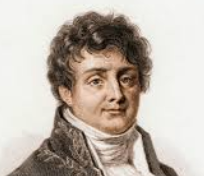
I am sorry not to have known the mathematician who first made use of this method because I would have cited him. Regarding the researches of d'Alembert and Euler could one not add that if they knew this expansion they made but a very imperfect use of it. They were both persuaded that an arbitrary and discontinuous function could never be resolved in series of this kind, and it does not seem that anyone had developed a constant in cosines of multiple arcs, the first problem which I had to solve in the theory of heat.
4 months ago
When we are young, we take a certain pleasure in our infirmities. They seem so new, so rich! With age, they no longer surprise us, we know them too well. Now, without anything unexpected in them, they do not deserve to be endured.
4 months ago
The more I reflect on it, the more I must admire how completely nature had taught him; how completely he was devoted to his work, to the task of his life, and content to let all pass by unheeded that had not relation to this. It is a singular fact, for example, that though a man of such openness and clearness, he had never, I believe, read three pages of Burns's poems. Not even when all about him became noisy and enthusiastic, I the loudest, on that matter, did he feel it worth while to renew his investigation of it, or once turn his face towards it. The poetry he liked (he did not call it poetry) was truth, and the wisdom of reality. Burns, indeed, could have done nothing for him. As high a greatness hung over his world as over that of Burns — the ever-present greatness of the Infinite itself. Neither was he, like Burns, called to rebel against the world, but to labor patiently at his task there, uniting the possible with the necessary to bring out the real, wherein also lay an ideal.
4 months ago
Clearly when the liberties are left unrestricted they collide with one another.
▼
Source
Chapter IV, Section 32, p. 203
CivilSimian.com created by AxiomaticPanic, CivilSimian, Kalokagathia