
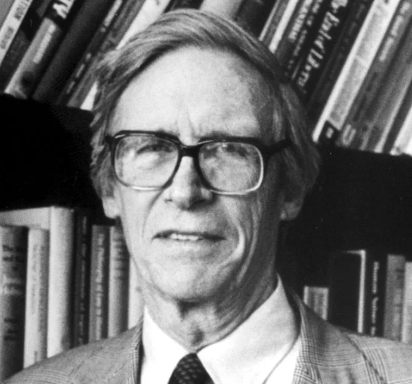
4 months ago
There are infinitely many variations of the initial situation and therefore no doubt indefinitely many theorems of moral geometry.
▼
Source
Chapter III, Section 21, pg. 126
4 months ago
If all the strata of air of... the atmosphere... preserved their density with their transparency, and lost only the mobility... peculiar to them, this mass of air, thus become solid, on being exposed to the rays of the sun, would produce an effect the same in kind... as just described.
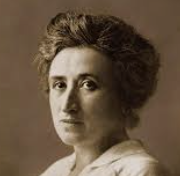
4 months ago
Every legal constitution is the product of a revolution. In the history of classes, revolution is the act of political creation, while legislation is the political expression of the life of a society that has already come into being. Work for reform does not contain its own force independent from revolution. During every historic period, work for reforms is carried on only in the direction given to it by the impetus of the last revolution and continues as long as the impulsion from the last revolution continues to make itself felt. Or, to put it more concretely, in each historic period work for reforms is carried on only in the framework of the social form created by the last revolution. Here is the kernel of the problem.
▼
Source
Ch. 8
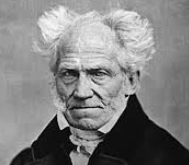
4 months ago
How every line is of such strong, determined, and consistent meaning! And on every page we encounter deep, original, lofty thoughts, while the whole world is suffused with a high and holy seriousness.
▼
Source
About Indian sacred scriptures. quoted in Londhe, S. (2008). A tribute to Hinduism: Thoughts and wisdom spanning continents and time about India and her culture. New Delhi: Pragun Publication.

4 months ago
At this very moment, I am suffering — as we say in French, j'ai mal. This event, crucial for me, is nonexistent, even inconceivable for anyone else, for everyone else. Except for God, if that word can have a meaning.

4 months ago
A great man shows his greatness by the way he treats little men.
4 months ago
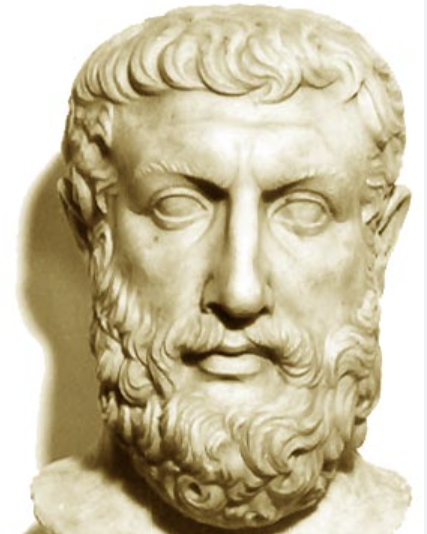
Never will this prevail, that the things that are not are — bar your thought from this road of inquiry.
▼
Source
Frag. B 7.1-2, quoted by Plato, Sophist, 237a
4 months ago
At best the principles that economists have supposed the choices of rational individuals to satisfy can be presented as guidelines for us to consider when we make our decisions.
▼
Source
Chapter IX, Section 84, p. 558
4 months ago
As the greatest things often take their rise from the smallest beginnings, so the worst things sometimes proceed from good intentions. This was certainly the case with respect to the origin of Christian Idolatry. All the early heresies arose from men who wished well to the gospel, and who meant to recommend it to the Heathens, and especially to philosophers among them, whose prejudices they found great difficulty in conquering. Now we learn from the writings of the apostles themselves, as well as from the testimony of later writers, that the circumstance at which mankind in general, and especially the more philosophical part of them, stumbled the most, was the doctrine of a crucified Saviour. They could not submit to become the disciples of a man who had been exposed upon a cross, like the vilest malefactor. Of this objection to Christianity we find traces in all the early writers, who wrote in defence of the gospel against the unbelievers of their age, to the time of Lactantius; and probably it may be found much later. He says, "I know that many fly from the truth out of their abhorrence of the cross." We, who only learn from history that crucifixion was a kind of death to which slaves and the vilest of malefactors were exposed, can but very imperfectly enter into their prejudices, so as to feel what they must have done with respect to it. … Though this circumstance was "unto the Jews a stumbling-block, and unto the Greeks foolishness," it was to others "the power of God and the wisdom of God." 1 Cor. i. 23, 24. For this circumstance at which they cavilled, was that in which the wisdom of God was most conspicuous; the death and resurrection of a man, in all respects like themselves, being better calculated to give other men an assurance of their own resurrection, than that of any super-angelic being, the laws of whose nature they might think to be very different from those of their own. But, "since by man came death, so by man came also the resurrection of the dead." Later Christians, however, and especially those who were themselves attached to the principles of either the Oriental or the Greek philosophy, unhappily took another method of removing this obstacle; and instead of explaining the wisdom of the divine dispensations in the appointment of a man, a person in all respects like unto his brethren, for the redemption of men, and of his dying in the most public and indisputable manner, as a foundation for the clearest proof of a real resurrection, and also of a painful and ignominious death, as an example to his followers who might be exposed to the same … they began to raise the dignity of the person of Christ, that it might appear less disgraceful to be ranked amongst his disciples.
▼
Source
Part I : The History of Opinions Relating to Jesus Christ,
4 months ago
Historically, the errors committed by a truly revolutionary movement are infinitely more fruitful than the infallibility of the cleverest Central Committee.
4 months ago
It is asserted that beasts have no rights; the illusion is harboured that our conduct, so far as they are concerned, has no moral significance, or, as it is put in the language of these codes, that "there are no duties to be fulfilled towards animals." Such a view is one of revolting coarseness, a barbarism of the West, whose source is Judaism. In philosophy, however, it rests on the assumption, despite all evidence to the contrary, of the radical difference between man and beast,—a doctrine which, as is well known, was proclaimed with more trenchant emphasis by Descartes than by any one else: it was indeed the necessary consequence of his mistakes.
▼
Source
Part III, Ch. VIII, 7, [https://archive.org/stream/basisofmorality00schoiala#page/218/mode/2up p. 218]
4 months ago
The farther men get from God, the farther they advance into the knowledge of religions.
4 months ago
In the mid-nineteenth century and after, the fear of social disintegration was mostly a conservative concern. After the turbulent 1840s in England, the Victorian polemicist Thomas Carlyle worried about what force would discipline “the masses, full of beer and nonsense” as more and more of them received the right to vote. Carlyle’s remedy was a militarized welfare dictatorship, administered not by the existing ruling class but by a new elite composed of selfless captains of industry and other natural heroes of the order of Oliver Cromwell and Frederick the Great. The Nazis later claimed Carlyle as a forerunner.
▼
Source
Robert Paxton, The Anatomy of Fascism (2004), p. 35
4 months ago
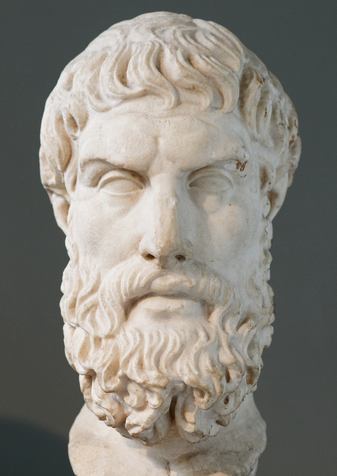
There are two kinds of pleasure: one consisting in a state of rest, in which both body and mind are undisturbed by any kind of pain; the other arising from an agreeable agitation of the senses, producing a correspondent emotion in the soul. It is upon the former of these that the enjoyment of life chiefly depends. Happiness may therefore be said to consist in bodily ease, and mental tranquility.
4 months ago
The theory of Parmenides is the inevitable outcome of a corporeal monism, and his bold declaration of it ought to have destroyed that theory... If he had lacked courage to work out the prevailing views... to their logical conclusion... men might have gone on in the endless circle of opposition, rarefaction and condensation, one and many, for ever. ...[T]he thoroughgoing dialectic of Parmenides ...made progress possible. Philosophy must now cease [either] to be monistic or... corporealist. It could not cease to be corporealist; for the incorporeal was still unknown. It therefore ceased to be monistic, and arrived at the atomic theory... matter in motion.
4 months ago
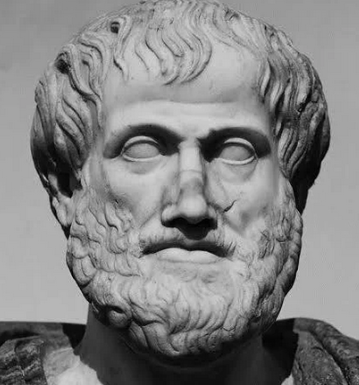
Philosophy is the science of truth.
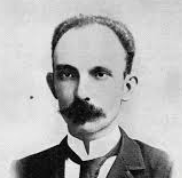
4 months ago
The spirit of a government must be that of the country. The form of a government must come from the makeup of the country. Government is nothing but the balance of the natural elements of a country.
▼
Source
Our America (1891)
4 months ago
This book founds a doctrine which is effectively post-Cartesian, or even post-Lacanian, a doctrine of what, for thought, both un-binds the Heidegerean connection between being and truth and institutes the subject, not as support or origin, but as fragment of the process of a truth.
▼
Source
Introduction
4 months ago
From the fundamental nature of the Philistine, it follows that, in regard to others, as he has no intellectual but only physical needs, he will seek those who are capable of satisfying the latter not the former. And so of all the demands he makes of others the very smallest will be that of any outstanding intellectual abilities. On the contrary, when he comes across these they will excite his antipathy and even hatred. For here he has a hateful feeling of inferiority and also a dull secret envy which he most carefully attempts to conceal even from himself; but in this way it grows sometimes into a feeling of secret rage and rancour. Therefore it will never occur to him to assess his own esteem and respect in accordance with such qualities, but they will remain exclusively reserved for rank and wealth, power and influence, as being in his eyes the only real advantages to excel in which is also his desire.
▼
Source
E. Payne, trans. (1974) Vol. 1, pp. 344–345
4 months ago
The poor, by thinking unceasingly of money, reach the point of losing the spiritual advantages of non-possession, thereby sinking as low as the rich.
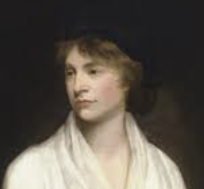
4 months ago
You know I am not born to tread in the beaten track — the peculiar bent of my nature pushes me on.
▼
Source
Letter to Everina Wollstonecraft (7 November 1787)
4 months ago
The bodies of which the world is composed are solids, and therefore have three dimensions. Now, three is the most perfect number,—it is the first of numbers, for of one we do not speak as a number, of two we say both, but three is the first number of which we say all. Moreover, it has a beginning, a middle, and an end.
▼
Source
I. 1. as translated by William Whewell and as quoted by Florian Cajori, A History of Physics in its Elementary Branches (1899) as Aristotle's proof that the world is perfect.
4 months ago
It is not the form of things that must be attended to but their spirit. The real is what matters, not the apparent. In politics, reality is that which is unseen. Politics is the art of combining a nation’s diverse or opposing factors to the benefit of its domestic well-being, and of saving the country from the open enmity or covetous friendship of other nations.

4 months ago
Together with the histories of Polybius and Livy, Cicero’s polemical speeches and writings, and his personal correspondence, form some of the most important historical resources for understanding the Roman legal and political system. Here we focus only on his political theory narrowly construed, part of his program to adapt Greek philosophy to Roman social and political purposes, bypassing even the extended defense of the role of oratory in political life that became something like a handbook for the study of rhetoric.
4 months ago
That the outer man is a picture of the inner, and the face an expression and revelation of the whole character, is a presumption likely enough in itself, and therefore a safe one to go on; borne out as it is by the fact that people are always anxious to see anyone who has made himself famous .... Photography … offers the most complete satisfaction of our curiosity.
▼
Source
Vol. 2, Ch. 29, § 377
4 months ago
There is no one whose death I have not longed for, at one moment or another.
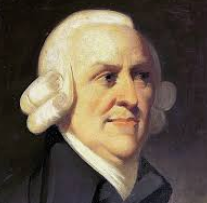
4 months ago
The annual labour of every nation is the fund which originally supplies it with all the necessaries and conveniences of life which it annually consumes.
▼
Source
Introduction and Plan of the Work, p. 1.
4 months ago
It is justice, not charity, that is wanting in the world.
▼
Source
Ch. 9
4 months ago
A scientific theory is usually felt to be better than its predecessors not only in the sense that it is a better instrument for discovering and solving puzzles but also because it is somehow a better representation of what nature is really like. One often hears that successive theories grow ever closer to, or approximate more and more closely to, the truth. Apparently generalizations like that refer not to the puzzle-solutions and the concrete predictions derived from a theory but rather to its ontology, to the match, that is, between the entities with which the theory populates nature and what is “really there.”Perhaps there is some other way of salvaging the notion of ‘truth’ for application to whole theories, but this one will not do. There is, I think, no theory-independent way to reconstruct phrases like ‘really there’; the notion of a match between the ontology of a theory and its “real” counterpart in nature now seems to me illusive in principle. Besides, as a historian, I am impressed with the implausability of the view. I do not doubt, for example, that Newton’s mechanics improves on Aristotle’s and that Einstein’s improves on Newton’s as instruments for puzzle-solving. But I can see in their succession no coherent direction of ontological development. On the contrary, in some important respects, though by no means in all, Einstein’s general theory of relativity is closer to Aristotle’s than either of them is to Newton’s.
4 months ago
There is no city that is truly one other than this city that we [anahnti] are involved in bringing forth.
▼
Source
Averroes, Ralph Lerner (1974) Averroes On Plato's Republic. p. xxiv

4 months ago
In thinking of history in this [progressive & eschatological] way Islam shares common ground with Christianity and with the secular creeds of the modern West. It is misleading to represent Islam and ‘the West’ as forming civilisations that have nothing in common. Christianity and Islam are integral parts of western monotheism, and as such they share a view of history that marks them off from the rest of the world. Both are militant faiths that seek to convert all humankind. Other religions have been implicated in twentieth-century violence—the state cult of Shintō in Japan during the militarist period and Hindu nationalism in contemporary India, for example. But only Christianity and Islam have engendered movements that are committed to the systematic use of force to achieve universal goals.
▼
Source
Enlightenment and Terror in the Twentieth Century: Terror and the Western Tradition
4 months ago
As for the life of money-making, it is one of constraint, and wealth is manifestly not the good of which we are in search, for it is only useful as a means to something else, and for this reason there is less to be said for it than for the ends mentioned before, which are, at any rate, desired for their own sakes.
▼
Source
(Bk. 1, Chapter III)
4 months ago
Whenever a theory appears to you as the only possible one, take this as a sign that you have neither understood the theory nor the problem which it was intended to solve.
▼
Source
Objective Knowledge: An Evolutionary Approach (1972)
4 months ago
If people would but understand that they are not the sons of some fatherland or other, nor of Governments, but are sons of God, and can therefore neither be slaves nor enemies one to another - those insane, unnecessary, worn-out, pernicious organizations called Governments, and all the sufferings, violations, humiliations and crimes which they occasion, would cease.
▼
Source
Patriotism and Government
4 months ago
A genuine man goes to the roots. To be a radical is no more than that: to go to the roots. He who does not see things in their depth should not call himself a radical.
4 months ago
Religion always poses a problem for capitalism because, by saying that some things are sacred, it insists that not everything is saleable.
▼
Source
p. 85
4 months ago
Intellect is invisible to the man who has none.
▼
Source
Our Relation to Others, § 23
4 months ago
Hope is the normal form of delirium.
4 months ago
The establishment of any new manufacture, of any new branch of commerce, or any new practice in agriculture, is always a speculation, from which the projector promises himself extraordinary profits. These profits sometimes are very great, and sometimes, more frequently, perhaps, they are quite otherwise; but in general they bear no regular proportion to those of other older trades in the neighbourhood. If the project succeeds, they are commonly at first very high. When the trade or practice becomes thoroughly established and well known, the competition reduces them to the level of other trades.
▼
Source
Chapter X, Part I, p. 136 (tendency of the rate of profit to fall).
4 months ago
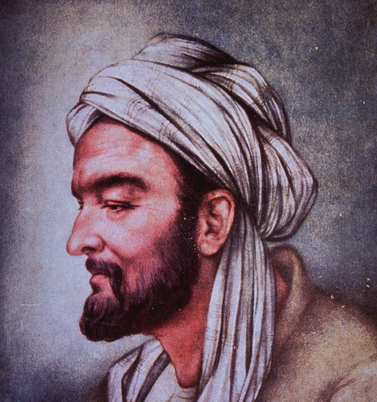
Medicine considers the human body as to the means by which it is cured and by which it is driven away from health.
▼
Source
As quoted in [http://books.google.com.bh/books?id=KTWDxDEY-Q0C&lpg=PA75&dq=Medicine%20considers%20the%20human%20body%20as%20to%20the%20means%20by%20which%20it%20is%20cured%20and%20by%20which%20it%20is%20driven%20away%20from%20health.&pg=PA75#v=onepage&q=M
4 months ago
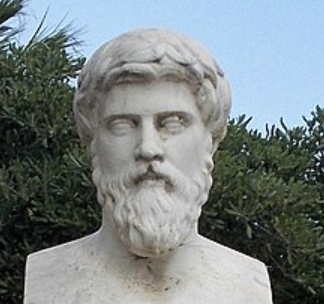
Lycurgus the Lacedæmonian brought long hair into fashion among his countrymen, saying that it rendered those that were handsome more beautiful, and those that were deformed more terrible. To one that advised him to set up a democracy in Sparta, "Pray," said Lycurgus, "do you first set up a democracy in your own house."
▼
Source
57 Lycurgus
4 months ago
The basis of science is the empirical method, which uses the senses to build up a picture of the world; but science tells us that our senses have evolved to help us get by, not to show us the world as it is. Science is only a systematic examination of our impressions, and in the end all each of us has left are our own sensations ... The end-result of the empirical method, then, is that each individual is left alone with their own experiences. We can escape this solitude, Balfour suggested, only if we accept that there is a divine mind.
▼
Source
Cross-correspondences (p. 69-70)
4 months ago
Thus every action must be due to one or other of seven causes: chance, nature, compulsion, habit, reasoning, anger, or appetite.
▼
Source
Book I, 1369a.5 | Variant: All human actions have one or more of these seven causes: chance, nature, compulsions, habit, reason, passion and desire.
4 months ago
We must plan for freedom, and not only for security, if for no other reason than that only freedom can make security secure.
▼
Source
Vol. 2, Ch. 21 "An Evaluation of the Prophecy"
4 months ago
The whole plan of our order should be based on the idea of preparing men of firmness and virtue bound together by unity of conviction—aiming at the punishment of vice and folly, and patronizing talent and virtue: raising worthy men from the dust and attaching them to our Brotherhood. Only then will our order have the power unobtrusively to bind the hands of the protectors of disorder and to control them without their being aware of it. In a word, we must found a form of government holding universal sway, which should be diffused over the whole world without destroying the bonds of citizenship, and beside which all other governments can continue in their customary course and do everything except what impedes the great aim of our order, which is to obtain for virtue the victory over vice
▼
Source
Book VI, Chapter VII
4 months ago
A person's brain and body do not have to be in the same place.
▼
Source
talking about the use of neural implants in Kevin Warwick "Human Enhancement - The Way Ahead", ACM Ubiquity, October 2014.
4 months ago
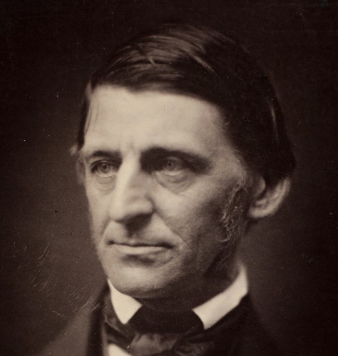
The Religion that is afraid of science dishonours God and commits suicide. It acknowledges that it is not equal to the whole of truth, that it legislates, tyrannizes over a village of God's empires but is not the immutable universal law. Every influx of atheism, of skepticism is thus made useful as a mercury pill assaulting and removing a diseased religion and making way for truth.
▼
Source
March 4, 1831
4 months ago
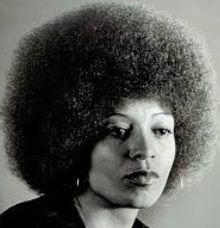
The colonization of the Southern economy by capitalists from the North gave lynching its most vigorous impulse. If Black people, by means of terror and violence, could remain the most brutally exploited group within the swelling ranks of the working class, the capitalists could enjoy a double advantage. Extra profits would result from the superexploitation of Black labor, and white workers’ hostilities toward their employers would be defused. White workers who assented to lynching necessarily assumed a posture of racial solidarity with the white men who were really their oppressors. This was a critical moment in the popularization of racist ideology.
4 months ago
I'd rather offer my life as a sacrifice than be necessary to anything.
4 months ago
It would be too ridiculous to go about seriously to prove that wealth does not consist in money, or in gold and silver; but in what money purchases, and is valuable only for purchasing. Money no doubt, makes always a part of the national capital; but it has already been shown that it generally makes but a small part, and always the most unprofitable part of it.
▼
Source
Chapter I, p. 470.
CivilSimian.com created by AxiomaticPanic, CivilSimian, Kalokagathia