
5 months ago
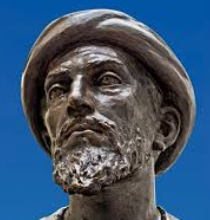
Second Theory.—Whilst one part of the Universe owes its existence to Providence and is under control of a ruler and governor, another part is abandoned and left to chance. This is the view of Aristotle about Providence... He holds that God controls the spheres and what they contain; therefore the individual beings in the spheres remain permanently in the same form. ...From the existence of the spheres other beings derive existence, which are constant in their species but not in their individuals.
▼
Source
Ch.17

5 months ago
Nor mourn the unalterable Days That Genius goes and Folly stays.
▼
Source
In Memoriam E. B. E., st. 9
5 months ago
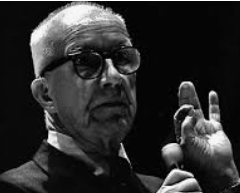
Neither the great political and financial power structures of the world, nor the specialization-blinded professionals, nor the population in general realize... that it is now highly feasible to take care of everybody on Earth at a higher standard of living than any have ever known. It no longer has to be you or me. Selfishness is unnecessary and henceforth unrationalizable as mandated by survival.
5 months ago
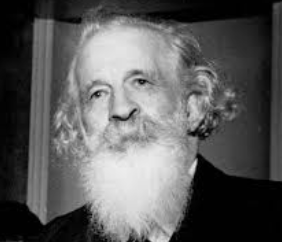
To feel most beautifully alive means to be reading something beautiful, ready always to apprehend in the flow of language the sudden flash of poetry.
▼
Source
A Retrospective Glance at the Lifework of a Master of Books
5 months ago
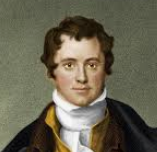
The strength of the feeling may be gleaned, too, from the sentences with which the Rev. Dr. Dibdin, who... began the lecture introductory to the Session of 1808."...If it had pleased Providence to deprive the world of all further benefit from his original talents and intense application, there has certainly been sufficient already effected by him to entitle him to be classed among the brightest scientific luminaries of his country. ...These may justly be placed among the most brilliant and valuable discoveries which have ever been made in chemistry, for a great chasm in the chemical system has been filled up; a blaze of light has been diffused over that part which before was utterly dark; and new views have been opened, so numerous and interesting, that the more any man who is versed in chemistry reflects on them, the more he finds to admire and heighten his expectation of future important results.Mr. Davy's name, in consequence of these discoveries, will be always recorded in the annals of science amongst those of the most illustrious philosophers of his time. His country... will be proud of him, and it is no small honour to the that these great discoveries have been made within its walls—in that laboratory, and by those instruments... placed at the disposal and for the use of its most excellent professor of chemistry."
5 months ago
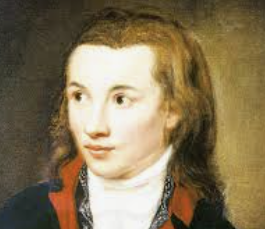
Goethe is an altogether practical Poet. He is in his works what the English are in their wares: highly simple, neat, convenient and durable. He has done in German Literature what Wedgwood did in English Manufacture. He has, like the English, a natural turn for Economy, and a noble Taste acquired by Understanding. Both these are very compatible, and have a near affinity in the chemical sense.

5 months ago
Work at these things, practice them, these are the things you ought to desire; they are what will put you on the path of divine virtue — yes, by the one who entrusted our soul with the tetraktys, source of ever-flowing nature. Pray to the gods for success and get to work.
▼
Source
As quoted in Divine Harmony: The Life and Teachings of Pythagoras by John Strohmeier and Peter Westbrook. (1999)
5 months ago
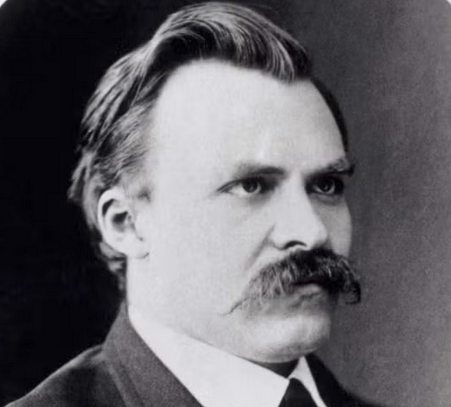
Nobody is more inferior than those who insist on being equal.
▼
Source
Often attributed to Nietzsche especially on social media, but no citation is ever given, and the only source I can find that states Nietzche said this was a mock interview by Richard Marshall.
5 months ago
Schopenhauer, Arthur: The World as Will and Representation
5 months ago
This is the way how we have to understand the accounts of trials; we must not think that God desires to examine us and to try us in order to know what He did not know before. Far is this from Him; He is far above that which ignorant and foolish people imagine concerning Him, in the evil of their thoughts. Note this.
▼
Source
Ch.24
5 months ago
Men love to wonder, and that is the seed of our science.
▼
Source
Works and Days; sometimes misquoted as "Men love to wonder, and that is the seed of science."
5 months ago
I set about fifty-five years ago (1927) to see what a penniless, unknown human individual with a dependent wife and newborn child might be able to do effectively on behalf of all humanity...

5 months ago
This also is a beautiful circumstance, that they referred every thing to Pythagoras, and called it by his name, and that they did not ascribe to themselves the glory of their own inventions, except very rarely.
5 months ago
The King that followeth Truth, and ruleth according to Justice, shall reign quietly: but he that doth the contrary, seeketh another to reign for him.
5 months ago
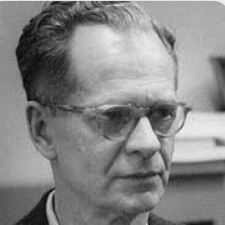
Today behaviourists like Skinner imprison the very concept of man within the limits of what they conclude from their artificial tests with animals.
▼
Source
John Berger, [https://books.google.com/books?id=u-rYLIF7H20C&pg=PA14 About Looking (1980), "Why Look at Animals?", p. 14]
5 months ago
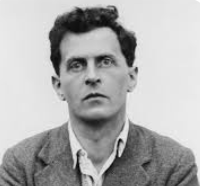
The World and Life are one. Physiological life is of course not "Life". And neither is psychological life. Life is the world. Ethics does not treat of the world. Ethics must be a condition of the world, like logic. Ethics and Aesthetics are one.
▼
Source
Journal entry (24 July 1916), p. 77e
5 months ago
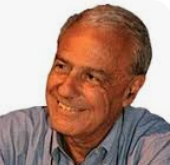
For me, Meister Eckhart is truly Meister, magister, as his contemporaries called him. He is the Christian who most deeply understood the Gospel message and, at the same time, the medieval philosopher who was able to gather the best of the classical heritage. His works are all equally important, both those in the vernacular, intended for the people, and those in Latin, created for the university environment. From a more philosophical-theoretical point of view, however, it can be said that the ‘'Commentary on the Gospel of John’' is the most dense and relevant work, while for a more immediate access to his thought and experience, it is certainly the works in the vernacular, the ‘'Sermons’' or the so-called ‘'Treatises’' that are most useful. They are also the most fascinating, profound and at the same time simple works, accessible to all, as only a great teacher of life – ‘Lebemeister’, and not just ‘Lesemeister’, or professor, as Heidegger noted about him – can be.
5 months ago
A good symbol is the best argument and is a missionary to persuade thousands.
▼
Source
Poetry and Imagination
5 months ago
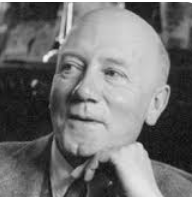
There is no important problem in any branch of philosophy which is not treated by Kant, and he never treated a problem without saying something illuminating and original about it. He was certainly wrong on many points of detail, and he may well be wrong in his fundamental principles; but, when all criticisms have been made, it seems to me that Kant’s failures are more important than most men’s successes.
▼
Source
From Five Types of Ethical Theory (1930)
5 months ago
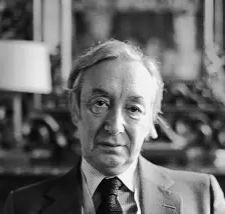
There never comes a point where a theory can be said to be true. The most that one can claim for any theory is that it has shared the successes of all its rivals and that it has passed at least one test which they have failed.
▼
Source
Philosophy in the Twentieth Century (1982) p. 133.

5 months ago
It is unlikely that the good of a snail should reside in its shell: so is it likely that the good of a man should?
▼
Source
Book I, ch. 20, § 17.
5 months ago
Ten is the very nature of number. All Greeks and all barbarians alike count up to ten, and having reached ten revert again to the unity. And again, Pythagoras maintains, the power of the number 10 lies in the number 4, the tetrad. This is the reason: if one starts at the unit (1) and adds the successive number up to 4, one will make up the number 10 (1+2+3+4 = 10). And if one exceeds the tetrad, one will exceed 10 too.... So that the number by the unit resides in the number 10, but potentially in the number 4. And so the Pythagoreans used to invoke the Tetrad as their most binding oath: "By him that gave to our generation the Tetractys, which contains the fount and root of eternal nature..."
▼
Source
Aëtius of Antioch Aëtius (I. 3.8)
5 months ago
Tell them I've had a wonderful life.
▼
Source
Last words, to his doctor's wife (28 April 1951)–as quoted in Ludwig Wittgenstein : A Memoir (1966) by Norman Malcolm, p. 100

5 months ago
Shihonage is the foundation of Aikido. All you ever need to master is shihonage.
▼
Source
Shihonage (or Shiho-nage the "Four Corner Throw") is a technique of maintaining control over an opponent in Aikido, as quoted in Aikido Shugyo (1991) by Gōzō Shioda, p. 61
5 months ago
I read your piece on Plato. Holmes, when you strike at a king, you must kill him.
▼
Source
Said to a young Oliver Wendell Holmes, Jr., who had written a piece critical of Plato in response to his earlier conversation with Emerson, as reported by Felix Frankfurter in Harlan Buddington Phillips, Felix Frankfurter Reminisces (1960), p. 59
5 months ago
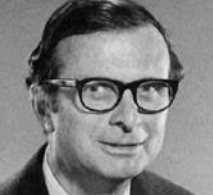
It is only natural to expect that improvement can occur in certain sectors of the system without our having delved deeply into the characteristics of the whole system. Thus, for example, there is a tradition in Western thought that parts of the whole system can be studied and improved more or less in isolation from the rest of the system.So deeply ingrained is this concept of social improvement in Western thought that we naturally think it proper to subdivide our society into functional elements. We think it proper that each element develop its own criteria of improvement and that the elements be as free as possible from the interference of the other parts of the social structure... Men have neglected a very serious problem in defining improvement. The problem is very simple: How can we design improvement in large systems without understanding the whole system, and if we the answer is that we cannot, how is it possible to understand the whole system?
▼
Source
p. 2 as cited in: John P. van Gigch (1991) System Design Modeling and Metamodeling. p. 145.
5 months ago
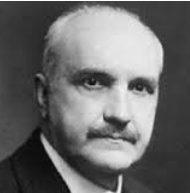
[Everything] ideal has a natural basis and everything natural an ideal development.
5 months ago
Why, what is weeping and sighing? A judgement. What is misfortune? A judgement. What are strife, disagreement, fault-finding, accusing, impiety, foolishness? They are all judgements.
▼
Source
Book III, ch. 3, § 18–19.
5 months ago
No one will deny that the soul of Pythagoras was sent to mankind from Apollo's domain, having either been one of his attendants, or more intimate associates, which may be inferred both from his birth, and his versatile wisdom.
▼
Source
Iamblichus of Chalcis, Life of Pythagoras translated by Thomas Taylor; Ch. 2: Youth, Education, Travels
5 months ago
A serious and good philosophical work could be written consisting entirely of jokes.
▼
Source
As quoted in "A View from the Asylum" in Philosophical Investigations from the Sanctity of the Press (2004), by Henry Dribble, p. 87
5 months ago
To injure an opponent is to injure yourself. To control aggression without inflicting injury is the Art of Peace.
5 months ago
The value of a principle is the number of things it will explain; and there is no good theory of disease which does not at once suggest a cure.
▼
Source
p. 212
5 months ago
Suppose we consider, not the rationality of holism, but its spirituality. Holism traditionally says that a collection of beings may have a collective property that cannot be inferred from the properties of its members.
▼
Source
p. 212; cited in Janet Judy McIntyre-Mills (2003) Critical Systemic Praxis for Social and Environmental Justice. p. 65
5 months ago
No system would have ever been framed if people had been simply interested in knowing what is true, whatever it may be. What produces systems is the interest in maintaining against all comers that some favourite or inherited idea of ours is sufficient and right. ** p. 49
5 months ago
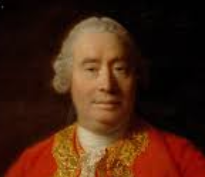
What may at first occur on this head, is, that as nothing can be contrary to truth or reason, except what has a reference to it, and as the judgments of our understanding only have this reference, it must follow, that passions can be contrary to reason only so far as they are accompany'd with some judgment or opinion. According to this principle, which is so obvious and natural, `tis only in two senses, that any affection can be call'd unreasonable. First, When a passion, such as hope or fear, grief or joy, despair or security, is founded on the supposition or the existence of objects, which really do not exist. Secondly, When in exerting any passion in action, we chuse means insufficient for the design'd end, and deceive ourselves in our judgment of causes and effects. Where a passion is neither founded on false suppositions, nor chuses means insufficient for the end, the understanding can neither justify nor condemn it. `Tis not contrary to reason to prefer the destruction of the whole world to the scratching of my finger. `Tis not contrary to reason for me to chuse my total ruin, to prevent the least uneasiness of an Indian or person wholly unknown to me. `Tis as little contrary to reason to prefer even my own acknowledge'd lesser good to my greater, and have a more ardent affection for the former than the latter. A trivial good may, from certain circumstances, produce a desire superior to what arises from the greatest and most valuable enjoyment; nor is there any thing more extraordinary in this, than in mechanics to see one pound weight raise up a hundred by the advantage of its situation. In short, a passion must be accompany'd with some false judgment. in order to its being unreasonable; and even then `tis not the passion, properly speaking, which is unreasonable, but the judgment.
▼
Source
Part 3, Section 3
5 months ago
No man is free who is not master of himself.
▼
Source
Fragment 35 ([https://en.wikisource.org/wiki/Epictetus,_the_Discourses_as_reported_by_Arrian,_the_Manual,_and_Fragments/Fragments Oldfather translation])
5 months ago
Pythagoras was a man of the most various accomplishments, and appears to have penetrated in different directions into the depths of human knowledge. He sought wisdom in its retreats of fairest promise, in Egypt and other distant countries. In this investigation he employed the earlier period of his life, probably till he was forty, and devoted the remainder to such modes of proceeding, as appeared to him the most likely to secure the advantage of what he had acquired to a late posterity. He founded a school, and delivered his acquisitions by oral communication to a numerous body of followers. He divided his pupils into two classes, the one neophytes, to whom was explained only the most obvious and general truths, the other who were admitted into the entire confidence of the master. These last he caused to throw their property into a common stock, and to live together in the same place of resort. He appears to have spent the latter half of his life in that part of Italy, called Magna Graecia, so denominated in some degree from the numerous colonies of Grecians by whom it was planted, and partly perhaps from the memory of the illustrious things which Pythagoras achieved there.
5 months ago
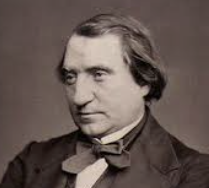
A Muslim who knows French will never be a dangerous Muslim.
▼
Source
quoted in Arvidsson, Stefan (2006), Aryan Idols: Indo-European Mythology as Ideology and Science, translated by Sonia Wichmann, Chicago and London: The University of Chicago Press.'(107)
5 months ago
144. The child learns to believe a host of things. I.e. it learns to act according to these beliefs. Bit by bit there forms a system of what is believed, and in that system some things stand unshakeably fast and some are more or less liable to shift. What stands fast does so, not because it is intrinsically obvious or convincing; it is rather held fast by what lies around it.

5 months ago
The history of the preceding Muslim dynasties had taught Aurangzeb that the strength of Islam did not depend ... so much on the goodwill of the people of this land as on the strength of the ruling race.
▼
Source
quoted in Jain, M. (2010). Parallel pathways: Essays on Hindu-Muslim relations, 1707-1857. p 15ff quoting Malik 1971
5 months ago
England laughed at American authorship and we sent her Emerson...
▼
Source
Frederick Douglass, [http://teachingamericanhistory.org/library/document/self-made-men/ "Self-Made Men"] (1872)
5 months ago
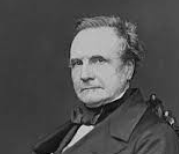
It is difficult to pronounce on the opinion of the ministers of our Church as a body: one portion of them, by far the least informed, protests against anything which can advance the honour and the interests of science, because, in their limited and mistaken view, science is adverse to religion. This is not the place to argue that great question. It is sufficient to remark, that the best-informed and most enlightened men of all creeds and pursuits, agree that truth can never damage truth, and that every truth is allied indissolubly by chains more or less circuitous with all other truths; whilst error, at every step we make in its diffusion, becomes not only wider apart and more discordant from all truths, but has also the additional chance of destruction from all rival errors.
▼
Source
p. 225
5 months ago
All living souls welcome whatsoever they are ready to cope with; all else they ignore, or pronounce to be monstrous and wrong, or deny to be possible.
▼
Source
Ch. 3, P. 62
5 months ago
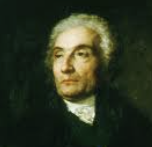
Men do not lead the revolution; it is the Revolution that uses men. They are right when they say it goes all alone. This phrase means that never has the Divinity shown itself so clearly in any human event. If the vilest instruments are employed, punishment is for the sake of regeneration.
▼
Source
Chapter I, p. 8
5 months ago
From the comparison of theism and idolatry, we may form some other observations, which will also confirm the vulgar observation that the corruption of the best things gives rise to the worst.
▼
Source
Part X - With regard to courage or abasement
5 months ago
Nicomachus... mentions the customary Pythagorean divisions of quantum and the science that deals with each. Quantum is either discrete or continuous. Discrete quantum in itself considered, is the subject of Arithmetic; if in relation, the subject of Music. Continuous quantum, if immovable, is the subject of Geometry; if movable, of Spheric (Astronomy). These four sciences formed the of the Pythagoreans. With the (which Nicomachus does not mention) of Grammar, Logic, and Rhetoric, they composed the seven liberal arts taught in the schools of the Roman Empire.
▼
Source
George Johnson, [https://books.google.com/books?id=FIpNAAAAMAAJ The Arithmetical Philosophy of Nicomachus of Gersa] (1916)
5 months ago
A teacher who can show good, or indeed astounding results while he is teaching, is still not on that account a good teacher, for it may be that, while his pupils are under his immediate influence, he raises them to a level which is not natural to them, without developing their own capacities for work at this level, so that they immediately decline again once the teacher leaves the schoolroom.
▼
Source
p. 43e
5 months ago
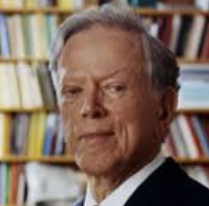
Modern experimentation is often like driving an automobile. The details and theory of the instruments being used in the experiment are not known to the experimenter except in a very general way. (...) Experimenters are taught in an explicit way, often, how to write up reports of their experiments. But the tradition here is like sports reporting. Only the results of the experiment are reported in any serious detail. The procedures are not.
▼
Source
Pragmatism in Physics, in P. Weingartner, G. Schurz & G. Dorn (Eds.), The Role of Pragmatics in Contemporary Philosophy. Vienna: Holder-Pichler-Tempsky (1998), p. 245, ISSN=1026-9347.
5 months ago
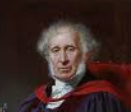
Although every part of the human frame has been fashioned by the same Divine hand and exhibits the most marvellous and beneficent adaptions for the use of men, the human eye stands pre-eminent above them all as the light of the body and the organ by which we become acquainted with the minutest and the nearest, the largest and most remote of the Creator’s work
▼
Source
As quoted in Good Words (1862), Volume 3. p. 170. | Also quoted in Martyr of science, Royal Scottish Museum (1984), p. 80.
5 months ago
Man cannot be wicked without being evil, nor evil without being degraded, nor degraded without being punished, nor punished without being guilty. In short … there is nothing so intrinsically plausible as the theory of original sin.
▼
Source
"Second Dialogue," p. 38
CivilSimian.com created by AxiomaticPanic, CivilSimian, Kalokagathia