

4 months ago
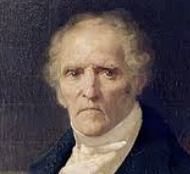
It is further interesting to remark that the finest characters among women with which ancient Greece presents us were formed in the school of Pythagoras, and the same is true of the men.
▼
Source
Annie Besant, The Ancient Wisdom, p. 22 (1897)
4 months ago
If children are a joy for the well-to-do, they are a torment for seven-eights of all civlizees, who cannot afford to maintain and educate them.
4 months ago
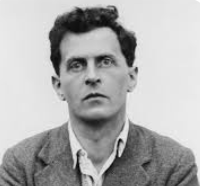
A religious symbol does not rest on any opinion. And error belongs only with opinion. One would like to say: This is what took place here; laugh, if you can.
▼
Source
Ch. 7 : Remarks on Frazer's Golden Bough, p. 123
4 months ago
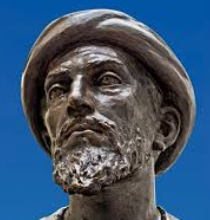
As a corollary we have to add that the Guide cannot be called a theological work, for Maimonides does not know of theology as a discipline distinct from metaphysics. Nor is it a book of religion, for he expressly excludes religious, together with ethical topics from the subject matter of his work. Until we shall have rediscovered a body of terms which are flexible enough to fit Maimonides' thought, the safest course will be to limit the description of the Guide to the statement that it is a book devoted to the explanation of the secret teaching of the Bible.
▼
Source
Leo Strauss, Persecution and the Art of Writing (1952), 3. Literary Character of the Guide for the Perplexed
4 months ago
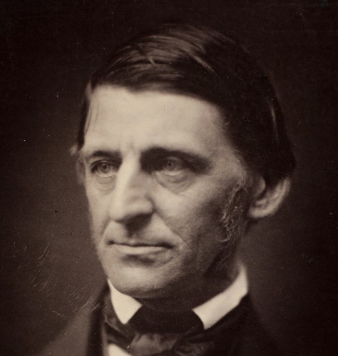
The virtues of society are the vices of the saints.
▼
Source
Circles
4 months ago
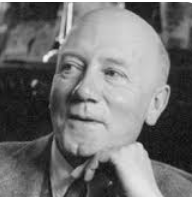
Take an eighteenth century English whig. Let him be a mystic. Endow him with the logical subtlety of the great schoolmen and their belief in the powers of human reason, with the business capacity of a successful lawyer, and with the lucidity of the best type of French mathematician. Inspire him (Heaven knows how) in his early youth with a passion for Hegel. Then subject him to the teaching of Sidgwick and the continual influence of Moore and Russell. Set him to expound Hegel. What will be the result? Hegel himself could not have answered this question a priori, but the course of world history has solved it ambulando by producing McTaggart.
▼
Source
From John McTaggart Ellis McTaggart (1928)
4 months ago
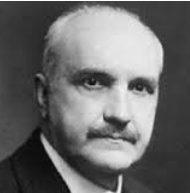
Culture is on the horns of this dilemma: if profound and noble, it must remain rare, if common, it must become mean.
▼
Source
Ch. IV: The Aristocratic Ideal
4 months ago
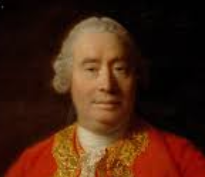
Nothing is more usual and more natural for those, who pretend to discover anything new to the world in philosophy and the sciences, than to insinuate the praises of their own systems, by decrying all those, which have been advanced before them. And indeed were they content with lamenting that ignorance, which we still lie under in the most important questions, that can come before the tribunal of human reason, there are few, who have an acquaintance with the sciences, that would not readily agree with them. 'Tis easy for one of judgment and learning, to perceive the weak foundation even of those systems, which have obtained the greatest credit, and have carried their pretensions highest to accurate and profound reasoning. Principles taken upon trust, consequences lamely deduced from them, want of coherence in the parts, and of evidence in the whole, these are every where to be met with in the systems of the most eminent philosophers, and seem to have drawn disgrace upon philosophy itself.
▼
Source
Introduction

4 months ago
For freedom is not acquired by satisfying yourself with what you desire, but by destroying your desire.
▼
Source
Book IV, ch. 1, § 175.
4 months ago
It was through philosophy, he said, that he had come to be surprised at nothing.
▼
Source
Plutarch in Recta Audiendi Rationa, XI.
4 months ago
Philosophy may in no way interfere with the actual use of language; it can in the end only describe it.
▼
Source
§ 124

4 months ago
Atemi accounts for 99% of Aikido.
▼
Source
As quoted in Traditional Aikido (1974) by Morihiro Saito, p. 38
4 months ago
A vivid thought brings the power to paint it; and in proportion to the depth of its source is the force of its projection.
▼
Source
p. 261
4 months ago
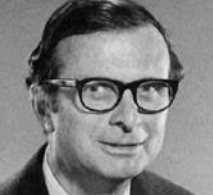
What seems to emerge is not a moral reprimand of the management scientist, but rather a moral problem of the profession, a wicked moral problem.
▼
Source
p. 142 cited in: Rob Hundman (2010) Weerbarstig veranderen. p. 38
4 months ago
The truth is cruel, but it can be loved, and it makes free those who have loved it.
▼
Source
p. 107
4 months ago
THERE is no method of reasoning more common, and yet none more blameable, than, in philosophical disputes, to endeavour the refutation of any hypothesis, by a pretence of its dangerous consequences to religion and morality. When any opinion leads to absurdities, it is certainly false; but it is not certain that an opinion is false, because it is of dangerous consequence. Such topics, therefore, ought entirely to be forborne; as serving nothing to the discovery of truth, but only to make the person of an antagonist odious.
▼
Source
Of Liberty and Necessity, Part II (http://www.bartleby.com/37/3/12.html)
4 months ago
If the Pythagorean metempsychosis should be thoroughly explained and compared with the modern theory of evolution, it would be found to supply every "missing link" in the chain of the latter. But who of our scientists would consent to lose his precious time over the vagaries of the ancients. Notwithstanding proofs to the contrary, they not only deny that the nations of the archaic periods, but even the ancient philosophers had any positive knowledge of the Heliocentric system. The "Venerable Bedes," the Augustines and Lactantii appear to have smothered, with their dogmatic ignorance, all faith in the more ancient theologists of the pre-Christian centuries. But now philology and a closer acquaintance with Sanskrit literature have partially enabled us to vindicate them from these unmerited imputations. In the Vedas, for instance, we find positive proof that so long ago as 2000 B.C., the Hindu sages and scholars must have been acquainted with the rotundity of our globe and the Heliocentric system. Hence, Pythagoras and Plato knew well this astronomical truth; for Pythagoras obtained his knowledge in India, or from men who had been there, and Plato faithfully echoed his teachings.
▼
Source
Vol. I, [https://www.theosociety.org/pasadena/isis/iu1-01.htm Ch. I], p.8.
4 months ago
You get tragedy where the tree, instead of bending, breaks.
▼
Source
1929, p. 1
4 months ago
A good stance and posture reflect a proper state of mind.
4 months ago
A cheery, child-like soul, impervious to the evidence of evil.
▼
Source
George Santayana, "The Genteel Tradition in American Philosophy" in University of California Chronicle, Vol. 13 (1911), p. 366
4 months ago
For the goal planner, reality stops at the boundaries of the problem. For the objective- planner, it stops at the boundaries set by feasibility and to some extent by responsibility. For the ideal-planner, there are no "real" boundaries.
▼
Source
p. 106
4 months ago
Although a poem be not made by counting of syllables upon the fingers, yet "numbers" is the most poetical synonym we have for verse, and "measure" the most significant equivalent for beauty, for goodness, and perhaps even for truth. Those early and profound philosophers, the followers of Pythagoras, saw the essence of all things in number, and it was by weight, measure, and number, as we read in the Bible, that the Creator first brought Nature out of the void.
▼
Source
Interpretations of Poetry and Religion (1900), p. 251
4 months ago
Ignorance is the mother of Devotion: A maxim that is proverbial, and confirmed by general experience. Look out for a people, entirely destitute of religion: If you find them at all, be assured, that they are but few degrees removed from brutes. What so pure as some of the morals, included in some theological system? What so corrupt as some of the practices, to which these systems give rise?
▼
Source
Part XV - General corollary
4 months ago
§2. Since this treatise (i. e. Book X of Euclid.) has the aforesaid aim and object, it will not be unprofitable for us to consolidate the good which it contains. Indeed the sect (or school) of Pythagoras was so affected by its reverence for these things that a saying became current in it, namely, that he who first disclosed the knowledge of surds or irrationals and spread it abroad among the common herd, perished by drowning: which is most probably a parable by which they sought to express their conviction that firstly, it is better to conceal (or veil) every surd, or irrational, or inconceivable in the universe, and, secondly, that the soul which by error or heedlessness discovers or reveals anything of this nature which is in it or in this world, wanders [thereafter] hither and thither on the sea of nonidentity (i. e. lacking all similarity of quality or accident), immersed in the stream of the coming-to-be and the passing-away, where there is no standard of measurement. This was the consideration which Pythagoreans and the Athenian Stranger held to be an incentive to particular care and concern for these things and to imply of necessity the grossest foolishness in him who imagined these things to be of no account.
▼
Source
p. 64.
4 months ago
You could attach prices to thoughts. Some cost a lot, some a little. And how does one pay for thoughts? The answer, I think, is: with courage.
▼
Source
p. 52e

4 months ago
Our India is the best of all countries in the world.
4 months ago
Machinery of a very beautiful kind has been contrived for copying accurately, on a reduced or an enlarged scale, both medals and statues. The itself could not be justly excluded from a purely industrial exhibition, if, placed in the centre of a series diminishing on the one side to a statuette of a foot high, and increasing on the other to a figure double her own height. Such a series, though fairly introduced as an illustration of industrial art, would, indeed, itself be highly interesting to the fine arts, as exhibiting the effect of change of magnitude, when the proportions remain identical.
▼
Source
p. 52-53
4 months ago
The sentiment that dominates all Rousseau’s works is a certain plebeian anger that excites him against every kind of superiority. The energetic submission of the wise man bends nobly under the indispensable empire of social distinctions, and never does be appear greater than when he bows; but Rousseau has nothing at all of this loftiness. Weak and surly, he spent his life spouting insults to the great, as he would have offered the same to the people if he had been born a great lord.
4 months ago
What peculiar privilege has this little agitation of the brain which we call thought, that we must thus make it the model of the whole universe? Our partiality in our own favour does indeed present it on all occasions; but sound philosophy ought carefully to guard against so natural an illusion.
▼
Source
Philo to Cleanthes, Part II
4 months ago
The sole remaining task for philosophy is the analysis of language.
▼
Source
Though this has been quoted extensively as if it were a statement of Wittgenstein, it was apparently first published in A Brief History of Time (1988) by Stephen Hawking, p. 175, where it is presented in quotation marks and thus easily interpreted to be a

4 months ago
The attempt to construct a fundamental taxonomy of the sciences encounters great difficulties. For instance, logicians and mathematicians disagree among themselves about the objects of their respective research; there is no agreement on the relation of theoretical physics to empirical knowledge and to mathematics. The so-called social sciences are particularly difficult to classify. They have not been demarcated by systematic considerations. In Duhem and Poincarè, general considerations are not only exemplified, but the origins of the concepts and of the problems are traced right from the initial observation of facts if at all possible.
▼
Source
p. 269
4 months ago
Man, made after God's image, was a nobler creation than twinkling sparks in the sky, or than the larger and more useful lamp of the moon.
▼
Source
More Worlds Than One: The Creed of the Philosopher and the Hope of the Christian (1856), p. 207
4 months ago
No human institution can endure unless supported by the Hand which supports all; that is to say, if it is not especially consecrated to Him at its origin. The more it is penetrated with the Divine principle, the more durable it will be. How strange is the blindness of men in our age! They boast of their knowledge, and are ignorant of everything, since they are ignorant of themselves. They know not what they are, nor what they can do. An invincible pride bears them on continually to overthrow every thing which they have not made; and in order to work out new creations, they separate themselves from the source of all existence. Jean-Jacques Rousseau has, however, very well said, Little, vain man, show me thy power, and I will show thee thy weakness. It might be said, with as much truth and more profit, Little, vain man, confess to me thy weakness, and I will show thee thy strength.
▼
Source
XLVI, p. 130
4 months ago
Hume's account of justice is part of a larger account of the moral and political virtues generally. Hume wrote as a philosophical anthropologist, not as a reformer, unlike Bentham and Mill who set out to reform our moral outlook rather than merely to explain it.
▼
Source
Alan Ryan, Introduction in Justice (1993) edited by Alan Ryan

4 months ago
Men who long for freedom begin the attempt to obtain it by entreating their masters to be kind enough to protect them by modifying the laws which these masters themselves have created! But times and tempers are changed. Rebels are everywhere to be found who no longer wish to obey the law without knowing whence it comes, what are its uses, and whither arises the obligation to submit to it, and the reverence with which it is encompassed. The rebels of our day are criticizing the very foundations of society which have hitherto been held sacred, and first and foremost amongst them that fetish, law. The critics analyze the sources of law, and find there either a god, product of the terrors of the savage, and stupid, paltry, and malicious as the priests who vouch for its supernatural origin, or else, bloodshed, conquest by fire and sword. They study the characteristics of law, and instead of perpetual growth corresponding to that of the human race, they find its distinctive trait to be immobility, a tendency to crystallize what should be modified and developed day by day.
▼
Source
I

4 months ago
Just as the good physician should go and offer his services where the sick are most numerous, so, said Diogenes the man of wisdom should take up his abode where fools are thickest in order to convict them of their folly and reprove them.
▼
Source
p. 379
4 months ago
Let your brother work hard at the French poets. Let him learn them by heart, especially the incomparable Racine; never mind whether he understands him yet or not. I didn't understand him when my mother used to come repeating his verses by my bedside, and lulled me to sleep with her fine voice to the sound of that inimitable music. I knew hundreds of lines long before I knew how to read; and it is thus that my ears, accustomed betimes to this ambrosia, have never since been able to endure any sourer draught.
▼
Source
Letter to his daughter Constance de Maistre
4 months ago
My philosophical views approach somewhat closely those of the late Countess of Conway, and hold a middle position between Plato and Democritus, because I hold that all things take place mechanically as Democritus and Descartes contend against the views of Henry More and his followers, and hold too, nevertheless, that everything takes place according to a living principle and according to final causes — all things are full of life and consciousness, contrary to the views of the Atomists.
▼
Source
Letter to Thomas Burnet (1697), as quoted in Platonism, Aristotelianism and Cabalism in the Philosophy of Leibniz (1938) by Joseph Politella, p. 18
4 months ago
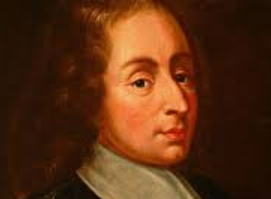
These philosophers of the world place contrarieties in the same subject; for the one attributed greatness to nature and the other weakness to this same nature, which could not subsist; whilst faith teaches us to place them in different subjects: all that is infirm belonging to nature, all that is powerful belonging to grace. Such is the marvelous and novel union which God alone could teach, and which he alone could make, and which is only a type and an effect of the ineffable union of two natures in the single person of a Man-God.
4 months ago
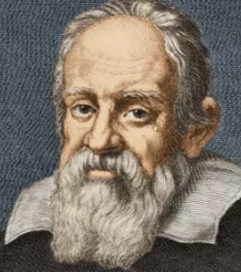
Philosophy is written in this grand book, which stands continually open before our eyes (I say the 'Universe'), but can not be understood without first learning to comprehend the language and know the characters as it is written. It is written in mathematical language, and its characters are triangles, circles and other geometric figures, without which it is impossible to humanly understand a word; without these one is wandering in a dark labyrinth.
▼
Source
From Italian: La filosofia è scritta in questo grandissimo libro che continuamente ci sta aperto innanzi a gli occhi (io dico l'universo), ma non si può intendere se prima non s'impara a intender la lingua, e conoscer i caratteri, ne' quali è scritto. Egl
4 months ago
It is often said that Anarchists live in a world of dreams to come, and do not see the things which happen today. We do see them only too well, and in their true colors, and that is what makes us carry the hatchet into the forest of prejudice that besets us.Far from living in a world of visions and imagining men better than they are, we see them as they are; and that is why we affirm that the best of men is made essentially bad by the exercise of authority, and that the theory of the "balancing of powers" and "control of authorities" is a hypocritical formula, invented by those who have seized power, to make the "sovereign people," whom they despise, believe that the people themselves are governing. It is because we know men that we say to those who imagine that men would devour one another without those governors: "You reason like the king, who, being sent across the frontier, called out, 'What will become of my poor subjects without me?'"

4 months ago
There are many marvellous stories told of Pherecydes. For it is said that he was walking along the seashore at Samos, and that seeing a ship sailing by with a fair wind, he said that it would soon sink; and presently it sank before his eyes. At another time he was drinking some water which had been drawn up out of a well, and he foretold that within three days there would be an earthquake; and there was one.
▼
Source
Pherecydes, 2.
4 months ago
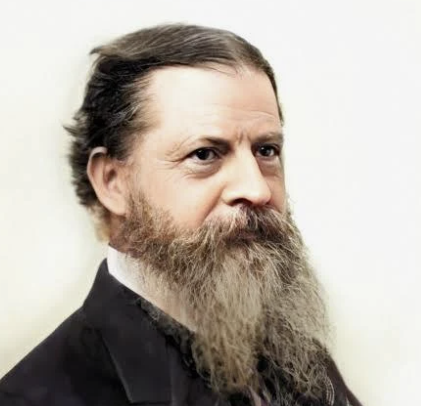
It is important to understand what I mean by semiosis. All dynamic action, or action of brute force, physical or psychical, either takes place between two subjects, — whether they react equally upon each other, or one is agent and the other patient, entirely or partially, — or at any rate is a resultant of such actions between pairs. But by "semiosis" I mean, on the contrary, an action, or influence, which is, or involves, a cooperation of three subjects, such as a sign, its object, and its interpretant, this tri-relative influence not being in any way resolvable into actions between pairs.
▼
Source
"Pragmatism" (1907) in The Essential Peirce : Selected Philosophical Writings (1998) edited by the Peirce Edition Project, Vol. 2, p. 411, Indiana University Press.
4 months ago
One man will say a thing of himself without comprehending its excellence, in which another will discern a marvelous series of conclusions, which makes us affirm that it is no longer the same expression, and that he is no more indebted for it to the one from whom he has learned it, than a beautiful tree belongs to the one who cast the seed, without thinking of it, or knowing it, into the fruitful soil which caused its growth by its own fertility.
4 months ago
I have been in my bed for five weeks, oppressed with weakness and other infirmities from which my age, seventy four years, permits me not to hope release. Added to this (proh dolor! [O misery!]) the sight of my right eye — that eye whose labors (dare I say it) have had such glorious results — is for ever lost. That of the left, which was and is imperfect, is rendered null by continual weeping.
▼
Source
Letter to Élie Diodati (4 July 1637), as translated in [http://books.google.com/books?id=ixUCAAAAYAAJ The Private Life of Galileo : Compiled primarily from his correspondence and that of his eldest daughter, Sister Maria Celeste (1870)] by Mary Allan-Olne

4 months ago
Kant speaks of the "thing-in-itself" (Ding an sich) in order to distinguish it from the "thing-for-us" (Ding fur uns), that is, as a "phenomenon." A thing-in-itself is that which is not approachable through experience as are the rocks, plants, and animals. Every thing-for-us is as a thing and also a thing-in-itself, which means that it is recognized absolutely withing the absolute knowledge of God. But not every thing-in-itself is also a thing-for-us: God, for instance, is a thing-in-itself, as Kant uses the word, according to the meaning of Christian theology. p. 5
4 months ago
It is evident, as Proudhon has already pointed our, that the smallest attack upon property will bring in its train the complete disorganization of the system based upon private enterprise and wage labor. Society itself will be forced to take production in hand, in its entirety, and to reorganize it to meet the needs of the whole people.
▼
Source
Ch. 5 : Food, p. 99
4 months ago
Antisthenes used to say that envious people were devoured by their own disposition, just as iron is by rust.
▼
Source
Antisthenes, 4.

4 months ago
There comes up another difficulty which more nearly concerns our vanity: namely, the impossibility of our conceiving this property [the faculty of feeling] as a dependence or attribute of matter.
▼
Source
Ch. VI Concerning the Sensitive Faculty of Matter
4 months ago
If the sensation that precedes the present by half a second were still immediately before me, then on the same principle, the sensation preceding that would be immediately present, and so on ad infinitum. Now, since there is a time [period], say a year, at the end of which an idea is no longer ipso facto present, it follows that this is true of any finite interval, however short.
CivilSimian.com created by AxiomaticPanic, CivilSimian, Kalokagathia