

4 months ago
The unfortunate thing about public misfortunes is that everyone regards himself as qualified to talk about them.
4 months ago
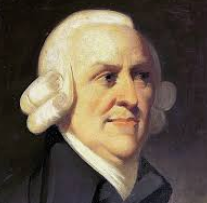
Every man is, no doubt, by nature, first and principally recommended to his own care; and as he is fitter to take care of himself than of any other person, it is fit and right that it should be so.
▼
Source
Section II, Chap. II.

4 months ago
In the present state of society it appears necessary to go back to first principles in search of the most simple truths, and to dispute with some prevailing prejudice every inch of ground. To clear my way, I must be allowed to ask some plain questions, and the answers will probably appear as unequivocal as the axioms on which reasoning is built; though, when entangled with various motives of action, they are formally contradicted either by the words or conduct of men.
▼
Source
Ch. 1, opening
4 months ago
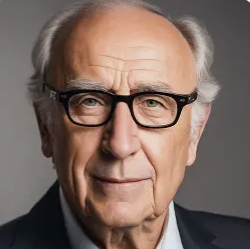
To my complete surprise, that exposure to out-of-date scientific theory and practice radically undermined some of my basic conceptions about the nature of science and the reasons for its special success.Those conceptions were ones I had previously drawn partly from scientific training itself and partly from a long-standing avocational interest in the philosophy of science. Somehow, whatever their pedagogic utility and their abstract plausibility, those notions did not at all fit the enterprise that historical study displayed. Yet they were and are fundamental to many discussions of science, and their failures of verisimilitude therefore seemed thoroughly worth pursuing. The result was a drastic shift in my career plans, a shift from physics to history of science and then, gradually, from relatively straightforward historical problems back to the more philosophical concerns that had initially led me to history.
4 months ago
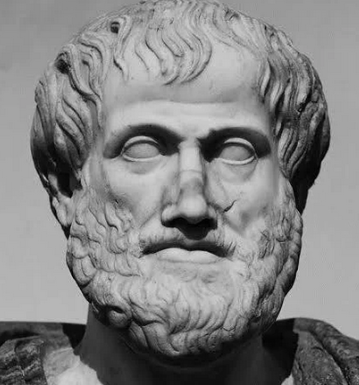
Music directly represents the passion of the soul. If one listens to the wrong kind of music, he will become the wrong kind of person.
▼
Source
Aristotle, Complete works of Aristotle, Vol. I
4 months ago
Freedoms, like privileges, prevail or are imperiled together. You cannot harm or strive to achieve one without harming or furthering all.
4 months ago
The sky was dark, the night was black, obscurity reigned, the gleam of the wolves eyes was the only light that came to sight, the howling of the jackal was the only sound to be heard, conspiracies were in the making while slanderers and the malicious were busily chattering
▼
Source
Quote in: Ali Rahnema An Islamic Utopian: A Political Biography of Ali Shariati. (2000), p. 258 | Rahnema commented that "Shariati did not believe he had any chance of returning to Ershad and evaluated his situation in a poetical and macabre fashion".
4 months ago
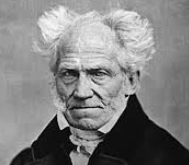
In youth it is the outward aspect of things that most engages us; while in age, thought or reflection is the predominating quality of the mind. Hence, youth is the time for poetry, and age is more inclined to philosophy. In practical affairs it is the same: a man shapes his resolutions in youth more by the impression that the outward world makes upon him; whereas, when he is old, it is thought that determines his actions.
4 months ago
To try curing someone of a "vice," of what is the deepest thing he has, is to attack his very being, and this is indeed how he himself understands it, since he will never forgive you for wanting him to destroy himself in your way and not his.
4 months ago
Labour was the first price, the original purchase-money that was paid for all things. It was not by gold or by silver, but by labour, that all the wealth of the world was originally purchased; and its value, to those who possess it, and who want to exchange it for some new productions, is precisely equal to the quantity of labour which it can enable them to purchase or command.
▼
Source
Chapter V, p. 38.
4 months ago
It is the preservation of the species, not of individuals, which appears to be the design of Deity throughout the whole of nature.
▼
Source
Letter 22
4 months ago
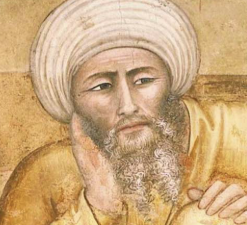
If teleological study of the world is philosophy, and if the Law commands such a study, then the Law commands philosophy.
▼
Source
FM 44 as cited in: Oliver Leaman (2002) An Introduction to Classical Islamic Philosophy, p. 179
4 months ago
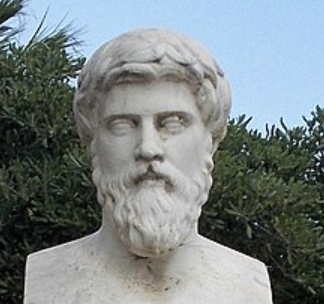
When Philip had news brought him of divers and eminent successes in one day, "O Fortune!" said he, "for all these so great kindnesses do me some small mischief."
▼
Source
34 Philip

4 months ago
The populist rant about greedy banks that is being loudly ventilated in Congress is a distraction from the true causes of the crisis. The dire condition of America's financial markets is the result of American banks operating in a free-for-all environment that these same American legislators created. It is America's political class that, by embracing the dangerously simplistic ideology of deregulation, has responsibility for the present mess.
4 months ago
May not we then confidently pronounce that man happy who realizes complete goodness in action, and is adequately furnished with external goods? Or should we add, that he must also be destined to go on living not for any casual period but throughout a complete lifetime in the same manner, and to die accordingly, because the future is hidden from us, and we conceive happiness as an end, something utterly and absolutely final and complete? If this is so, we shall pronounce those of the living who possess and are destined to go on possessing the good things we have specified to be supremely blessed, though on the human scale of bliss.
▼
Source
Book I, 1101a.10
4 months ago
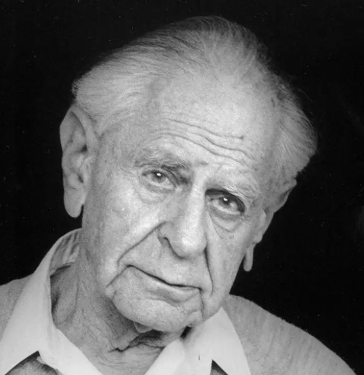
Philosophers should consider the fact that the greatest happiness principle can easily be made an excuse for a benevolent dictatorship. We should replace it by a more modest and more realistic principle — the principle that the fight against avoidable misery should be a recognized aim of public policy, while the increase of happiness should be left, in the main, to private initiative.
▼
Source
As quoted in 1,001 Pearls of Wisdom (2006) by David Ross
4 months ago
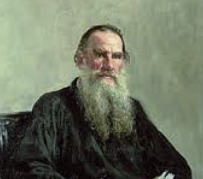
People usually think that progress consists in the increase of knowledge, in the improvement of life, but that isn't so. Progress consists only in the greater clarification of answers to the basic questions of life. The truth is always accessible to a man. It can't be otherwise, because a man's soul is a divine spark, the truth itself. It's only a matter of removing from this divine spark (the truth) everything that obscures it. Progress consists, not in the increase of truth, but in freeing it from its wrappings. The truth is obtained like gold, not by letting it grow bigger, but by washing off from it everything that isn't gold.
▼
Source
Tolstoy's Diaries (1985) edited and translated by R. F. Christian. London: Athlone Press, Vol 2, p. 512
4 months ago
[On Schopenhauer:] I went away conscious that I had seen not only a genius-of ideas, but also a character of the most genuine sublimity . . I felt myself . . . transported into a new existence. Francis of Assisi and the other heroes of asceticism had become my ideals.
▼
Source
Quoted by Harry Slochower in "Julius Bahnsen, Philosopher of Heroic Despair, 1830-1881" (1932), The Philosophical Review, 41(4), p. 372
4 months ago
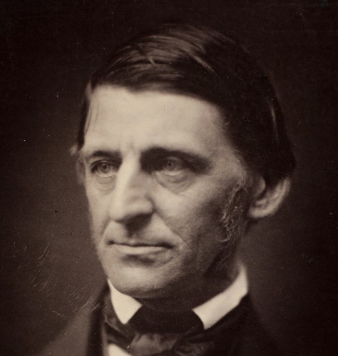
He who is in love is wise and is becoming wiser, sees newly every time he looks at the object beloved, drawing from it with his eyes and his mind those virtues which it possesses.
▼
Source
The Method of Nature (1841), p. 25

4 months ago
I am a Communist because I am convinced that the reason we have been forcefully compelled to eke out an existence at the very lowest level of American society has to do with the nature of capitalism. If we are going to rise out of our oppression, our poverty, if we are going to cease being the targets of the racist-minded mentality of racist policemen, we will have to destroy the American capitalist system. We will have to obliterate a system in which a few wealthy capitalists are guaranteed the privilege of becoming richer and richer, whereas the people who are forced to work for the rich, and especially Black people, never take any significant step forward.
▼
Source
p. 483
4 months ago
For a work to become immortal it must possess so many excellences that it will not be easy to find a man who understands and values them all; so that there will be in all ages men who recognise and appreciate some of these excellences; by this means the credit of the work will be retained throughout the long course of centuries and ever-changing interests, for, as it is appreciated first in this sense, then in that, the interest is never exhausted.
4 months ago
Except for music, everything is a lie, even solitude, even ecstasy. Music, in fact, is the one and the other, only better.
4 months ago
It is the natural effect of improvement, however, to diminish gradually the real price of almost all manufactures.
▼
Source
Chapter XI, Part III, (Conclusion..) p. 282.
4 months ago
What measures, then, shall we adopt? What machine employ, or what reason consult by means of which we may contemplate this ineffable beauty; a beauty abiding in the most divine sanctuary without ever proceeding from its sacred retreats lest it should be beheld by the profane and vulgar eye? We must enter deep into ourselves, and, leaving behind the objects of corporeal sight, no longer look back after any of the accustomed spectacles of sense. For, it is necessary that whoever beholds this beauty, should withdraw his view from the fairest corporeal forms; and, convinced that these are nothing more than images, vestiges and shadows of beauty, should eagerly soar to the fair original from which they are derived. For he who rushes to these lower beauties, as if grasping realities, when they are only like beautiful images appearing in water, will, doubtless, like him in the fable, by stretching after the shadow, sink into the lake and disappear. For, by thus embracing and adhering to corporeal forms, he is precipitated, not so much in his body as in his soul, into profound and horrid darkness; and thus blind, like those in the infernal regions, converses only with phantoms, deprived of the perception of what is real and true.
4 months ago
After he routed Pharnaces Ponticus at the first assault, he wrote thus to his friends: "I came, I saw, I conquered."
▼
Source
Cæsar
4 months ago
There are not two kinds of human being, savage and civilized. There is only the human animal, forever at war with itself.
▼
Source
An Old Chaos: Frozen Horses and Deserts of Brick (p. 25)
4 months ago
Although I consider our political world to be the best of which we have any historical knowledge, we should beware of attributing this fact to democracy or to freedom. Freedom is not a supplier who delivers goods to our door. Democracy does not ensure that anything is accomplished — certainly not an economic miracle. It is wrong and dangerous to extol freedom by telling people that they will certainly be all right once they are free. How someone fares in life is largely a matter of luck or grace, and to a comparatively small degree perhaps also of competence, diligence, and other virtues. The most we can say of democracy or freedom is that they give our personal abilities a little more influence on our well-being.
4 months ago
While imprisoned in the shed Pierre had learned not with his intellect but with his whole being, by life itself, that man is created for happiness, that happiness is within him, in the satisfaction of simple human needs, and that all unhappiness arises not from privation but from superfluity. And now during these last three weeks of the march he had learned still another new, consolatory truth- that nothing in this world is terrible. He had learned that as there is no condition in which man can be happy and entirely free, so there is no condition in which he need be unhappy and lack freedom. He learned that suffering and freedom have their limits and that those limits are very near together....
▼
Source
Bk. XIV, ch. 12
4 months ago
Writings are naturally accessible to all who can read. Therefore a philosopher who chose the second way could expound only such opinions as were suitable for the nonphilosophic majority: all of his writings would have to be, strictly speaking, exoteric. These opinions would not be in all respects consonant with truth. Being a philosopher, that is, hating "the lie in the soul" more than anything else, he would not deceive himself about the fact that such opinions are merely "likely tales," or "noble lies," or "probable opinions," and would leave it to his philosophic readers to disentangle the truth from its poetic or dialectic presentation. But he would defeat his purpose if he indicated clearly which of his statements expressed a noble lie, and which the still more noble truth.
▼
Source
p. 35
4 months ago
He needs no library, for he has not done thinking; no church, for he is himself a prophet; no statute book, for he hath the Lawgiver; no money, for he is value itself; no road, for he is at home where he is.
▼
Source
December 26, 1839
4 months ago
There are now thirty-three prisons, thirty eight camps, sixteen community correctional facilities, and five tiny prisoner mother facilities in California. In 2002, there were 157,979 people incarcerated in these institutions, including approximately twenty thousand people whom the state holds for immigration violations.
▼
Source
Chapter One
4 months ago
One grasps incomparably more things in boredom than by labor, effort being the mortal enemy of meditation.
4 months ago
If the importation of foreign cattle, for example, were made ever so free, so few could be imported, that the grazing trade of Great Britain could be little affected by it. Live cattle are, perhaps, the only commodity of which the transportation is more expensive by sea than by land.
▼
Source
Chapter II
4 months ago
We wish, in a word, equality — equality in fact as a corollary, or rather, as primordial condition of liberty. From each according to his faculties, to each according to his needs; that is what we wish sincerely and energetically.
▼
Source
As quoted in The Old Order and the New (1890) by J. Morris Davidson
4 months ago
...Lucretius talked epicureanism stoically (like Heine’s Englishman taking his pleasures sadly), and concluded on his stren gospel of pleasure by committing suicide. His noble epic “on the Nature of Things", follows Epicurus in damning pleasure with faint praise. Almost contemporary with Caesar and Pompey, he lived in the midst of turmoil and alarms; his nervous pen is forever inditing prayers to tranquility and peace. One pictures him as a timid soul whose youth had been darkened with religious fears; for he never tires of telling his readers that there's no hell, except here, and there are no gods except gentlemanly ones who live in a garden of Epicurus in the clouds, and never intrude in the affairs of men.
4 months ago
No doubt markets transmit information in the way that Hayek claimed. But what reason is there to believe that – unlike any other social institution – they have a built-in capacity to correct their mistakes? History hardly supports the supposition. Moods of irrational exuberance and panic can, and often do, swamp the price-discovery functions of markets.
4 months ago
Never aim at more precision than... required by the problem...
4 months ago
The only absolute knowledge attainable by man is that life is meaningless.
▼
Source
Ch. 5, translated by David Patterson, 1983
4 months ago
The adjective “political” in “political philosophy” designates not so much the subject matter as a manner of treatment; from this point of view, I say, “political philosophy” means primarily not the philosophic study of politics, but the political, or popular, treatment of philosophy, or the political introduction to philosophy—the attempt to lead qualified citizens, or rather their qualified sons, from the political life to the philosophic life.
▼
Source
p. 93
4 months ago
Every natural fact is a symbol of some spiritual fact.
▼
Source
Language
4 months ago
Demand for women’s studies, like demand for black studies, Chicano/Latino, Asian American, Native American studies, are linked to larger quest for equality, justice, freedom. We are interested not in race and gender (and class and sexuality and disability) per se, by themselves, but primarily as they have been acknowledged as conditions for hierarchies of power, so that we can transform them into intertwined vectors of struggle for freedom.
4 months ago
Meaning of life
4 months ago
Though the principles of the banking trade may appear somewhat abstruse, the practice is capable of being reduced to strict rules. To depart upon any occasion from these rules, in consequence of some flattering speculation of extraordinary gain, is almost always extremely dangerous, and frequently fatal to the banking company which attempts it.
▼
Source
Chapter I, Part III, p. 820.
4 months ago
All religions are cruel, all founded on blood; for all rest principally on the idea of sacrifice — that is, on the perpetual immolation of humanity to the insatiable vengeance of divinity.
4 months ago
Wisdom, if it were young, would cherish love, nursing it with devotion, deepening it with sacrifice, vitalizing with parentage, making all things subordinate to it till the end. Even though it consumes us in its service and overwhelms us with tragedy, even though it breaks us down with separations, let it be first. How can it matter what price we pay for love?
▼
Source
Ch. 2 : On Youth

4 months ago
It would be better if they [rulers] compelled the Jews to work for their living, as they do in parts of Italy, than that, living without occupation, they can grow rich only by usury (solis usuris ditentur).
▼
Source
art. 2
4 months ago
Is there really someone who, searching for a group of wise and sensitive persons to regulate him for his own good, would choose that group of people that constitute the membership of both houses of Congress?
▼
Source
Ch. 2 : The State of Nature; Protective Associations, p. 14
4 months ago
Further acquaintance with the labors of the Quakers and their works — with Fox, Penn, and especially the work of Dymond (published in 1827) — showed me not only that the impossibility of reconciling Christianity with force and war had been recognized long, long ago, but that this irreconcilability had been long ago proved so clearly and so indubitably that one could only wonder how this impossible reconciliation of Christian teaching with the use of force, which has been, and is still, preached in the churches, could have been maintained in spite of it.
▼
Source
Chapter I, The Doctrine of Non-resistance to Evil by Force has been Professed by a Minority of Men from the Very Foundation of Christianity
4 months ago
In my opinion, the only serious attempt to “save” Americans from cultural relativism has come from the students of Leo Strauss.
▼
Source
James R. Flynn, Where Have All the Liberals Gone? Race, Class, and Ideals in America (2008) Chapter 8. William James and Leo Strauss
CivilSimian.com created by AxiomaticPanic, CivilSimian, Kalokagathia