
4 months ago
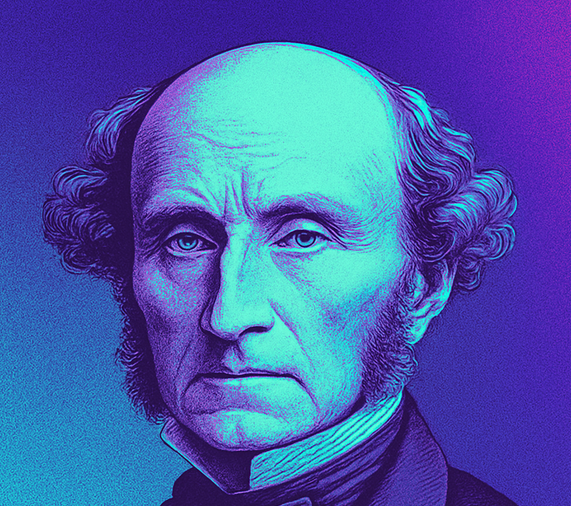
Scott does this still better than Wordsworth, and a very second-rate landscape does it more effectually than any poet. What made Wordsworth's poems a medicine for my state of mind, was that they expressed, not mere outward beauty, but states of feeling, and of thought coloured by feeling, under the excitement of beauty. They seemed to be the very culture of the feelings, which I was in quest of. In them I seemed to draw from a Source of inward joy, of sympathetic and imaginative pleasure, which could be shared in by all human beings; which had no connexion with struggle or imperfection, but would be made richer by every improvement in the physical or social condition of mankind. From them I seemed to learn what would be the perennial sources of happiness, when all the greater evils of life shall have been removed. And I felt myself at once better and happier as I came under their influence.
▼
Source
([https://archive.org/details/autobiography01mill/page/147/mode/1 pp. 147-148])
4 months ago
In this initial illimitableness of possibilities that characterizes one who has no nature there stands out only one fixed, pre-established, and given line by which he may chart his course, only one limit: the past.
▼
Source
“Man has no nature”
4 months ago
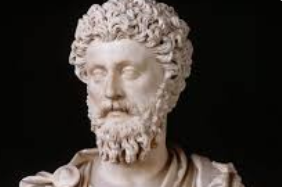
Yet living and dying, honour and dishonour, pain and pleasure, riches and poverty, and so forth are equally the lot of good men and bad. Things like these neither elevate nor degrade; and therefore they are no more good than they are evil.
▼
Source
II, 11
4 months ago
I go into the Upanishads to ask questions.
▼
Source
As quoted in God Is Not One : The Eight Rival Religions That Run the World and Why Their Differences Matter (2010), by Stephen Prothero, Ch, 4 : Hinduism : The Way of Devotion, p. 144

4 months ago
The evidence of our own eyes makes it more plausible to believe that the world was not created by any god at all. If, however, we insist on believing in divine creation, we are forced to admit that the god who made the world cannot be all-powerful and all good. He must be either evil or a bungler.
▼
Source
[https://www.project-syndicate.org/commentary/the-god-of-suffering?barrier=accesspaylog The God of Suffering?] Project Syndicate, 2008

4 months ago
If I am to live longer, perhaps I must live out my old age, seeing and hearing less, understanding worse, coming to learn with more difficulty and to be more forgetful, and growing worse than those to whom I was once superior. Indeed, life would be unliveable, even if I did not notice the change. And if I see the change, how could life not be even more wretched and unpleasant?
▼
Source
Memorabilia IV.8.8
4 months ago
After criticising Georg Wilhelm Friedrich Hegel so much for establishing a system of categories that predetermined the path that spiritual development had to follow, the neo-Hegelians of Italy were unable to do anything other than replace it with a more restricted set of categories from which we cannot escape. What a beautiful story, deluding itself that it is walking when in reality it is always standing still in the small circle of those few forms, marking its steps in a monotonous rhythm! But life has little respect for these a priori assumptions; it teaches us that spiritual categories, no less than the physical-mathematical categories of space, time, cause and quantity, are schemes that we construct to coordinate our experiences, and that they have nothing fixed, nothing necessary or eternal that can be deduced a priori.
4 months ago
His systematic account of the nature and methods of 'science', in the broadest sense, attained an authority in England that was positively papal.
▼
Source
Stefan Collini, 'The tendencies of things: John Stuart Mill and the philosophic method', in Stefen Collini, Donald Winch and John Burrow, That Noble Science of Politics: A Study in Nineteenth-Century Intellectual History (1983), p. 130
4 months ago
People try to get away from it all—to the country, to the beach, to the mountains. You always wish that you could too. Which is idiotic: you can get away from it anytime you like. By going within. Nowhere you can go is more peaceful—more free of interruptions—than your own soul.
▼
Source
IV, 4(Hays translation)
4 months ago
Science does not stand still, and neither does philosophy, although the latter has a tendency to walk in circles.
▼
Source
Afterword To The 2011 Edition, p. 187
4 months ago
Socrates gave a lot of advice, and he was given Hemlock to drink.
▼
Source
Rose Kennedy, in an interview with Barbara Walters (November 1968)

4 months ago
Put personal ambition away from you, and then you will find consolation in living or in dying, whatever may happen to you.
▼
Source
3 May 1849
4 months ago
Our questions and answers are in part determined by the historical tradition in which we find ourselves. We apprehend truth from our own source within the historical tradition. The content of our truth depends upon our appropriating the historical foundation. Our own power of generation lies in the rebirth of what has been handed down to us. If we do not wish to slip back, nothing must be forgotten; but if philosophising is to be genuine our thoughts must arise from our own source. Hence all appropriation of tradition proceeds from the intentness of our own life. The more determinedly I exist, as myself, within the conditions of the time, the more clearly I shall hear the language of the past, the nearer I shall feel the glow of its life.
4 months ago
Time is a sort of river of passing events, and strong is its current; no sooner is a thing brought to sight than it is swept by and another takes its place, and this too will be swept away.
▼
Source
IV, 43

4 months ago
We shall never learn to know ourselves except by endeavoring to know God; for, beholding His greatness we realize our own littleness; His purity shows us our foulness; and by meditating upon His humility we find how very far we are from being humble.
▼
Source
First Mansions, Ch. 2 : The Human Soul, as translated by the Benedictines of Stanbrook (1911), revised and edited by Fr. Benedict Zimmerman

4 months ago
A peace must be had; and all mankind sees plainly now, in how vile a manner former opportunities were neglected of making a better than at this hour we have reason to expect.
▼
Source
Letter to Lord Orrery (30 March 1711), quoted in 'The Letters of Henry St. John to the Earl of Orrery, 1709–1711', ed. H. T. Dickinson, Camden Miscellany, Vol. XXVI (1975), p. 163
4 months ago
The controlling Intelligence understands its own nature, and what it does, and whereon it works.
▼
Source
VI, 5

4 months ago
Except by name, Jean Paul Friedrich Richter is little known out of Germany. The only thing connected with him, we think, that has reached this country is his saying,—imported by Madame de Staël, and thankfully pocketed by most newspaper critics, — "Providence has given to the French the empire of the land; to the English that of the sea; to the Germans that of—the air!"
▼
Source
Richter.
4 months ago
For the very Church itself is, properly and principally, the Spirit Himself, in whom is the Trinity of the One Divinity—Father, Son, and Holy Spirit. (The Spirit) combines that Church which the Lord has made to consist in “three.” And thus, from that time forward, every number (of persons) who may have combined together into this faith is accounted “a Church,” from the Author and Consecrator (of the Church). And accordingly “the Church,” it is true, will forgive sins: but (it will be) the Church of the Spirit, by means of a spiritual man; not the Church which consists of a number of bishops. For the right and arbitrament is the Lord’s, not the servant’s; God’s Himself, not the priest’s.
▼
Source
Chapter XXI.—Of the Difference Between Discipline and Power, and of the Power of the Keys.
4 months ago
My aim is to fix this principle, that limitations on a crown ought to be carried as far as it is necessary to secure the liberties of a people; and that all such limitations may subsist, without weakening or endangering monarchy.
▼
Source
p. 97
4 months ago
Montaigne puts not self-satisfied understanding but a consciousness astonished at itself at the core of human existence.
▼
Source
Signs, trans. R. McCleary (Evanston: 1964), p. 203
4 months ago
Adorn thyself with simplicity and with indifference towards the things which lie between virtue and vice. Love mankind. Follow God. The poet says that Law rules all. And it is enough to remember that law rules all.
▼
Source
VII, 31
4 months ago
These things, which we state lightly enough here, are yet of deep import, and indicate a mighty change in our whole manner of existence. For the same habit regulates not our modes of action alone, but our modes of thought and feeling. Men are grown mechanical in head and in heart, as well as in hand. They have lost faith in individual endeavour, and in natural force, of any kind. Not for internal perfection, but for external combinations and arrangements, for institutions, constitutions, for Mechanism of one sort or other, do they hope and struggle. Their whole efforts, attachments, opinions, turn on mechanism, and are of a mechanical character.
4 months ago
It is the failing of a certain literature to believe that life is tragic because it is wretched. Life can be magnificent and overwhelming — that is its whole tragedy. Without beauty, love, or danger it would be almost easy to live. And M. Sartre's hero does not perhaps give us the real meaning of his anguish when he insists on those aspects of man he finds repugnant, instead of basing his reasons for despair on certain of man's signs of greatness. The realization that life is absurd cannot be an end, but only a beginning. This is a truth nearly all great minds have taken as their starting point. It is not this discovery that is interesting, but the consequences and rules of action drawn from it.
▼
Source
Review of Nausea by Jean-Paul Sartre, published in the newspaper Alger Républicain (20 October 1938), p. 5; also quoted in Albert Camus and the Philosophy of the Absurd (2002) by Avi Sagi, p. 43
4 months ago
This is said with more spirit than truth.
▼
Source
St. Augustine on some of Tertullian's bolder statements.
4 months ago
One [method] is by a Watch to keep time exactly. But, by reason of the motion of the Ship, the Variation of Heat and Cold, Wet and Dry, and the Difference of Gravity in different Latitudes, such a watch hath not yet been made.
▼
Source
Written in remarks to the 1714 Longitude committee; quoted in Longitude (1995) by Dava Sobel, p. 52 (i998 edition) )
4 months ago
In each of us there dwells a mystery, and that mystery is the human personality.
▼
Source
The Rights of Man and Natural Law (1943), p. 2.
4 months ago
Look to the essence of a thing, whether it be a point of doctrine, of practice, or of interpretation.
▼
Source
Πρόσεχε τῷ ὑποκειμένῳ ἢ τῇ ἐνεργείᾳ ἢ τῷ δόγματι ἢ τῷ σημαινομένῳ. | VIII, 22
4 months ago
Knowledge is the plague of life, and consciousness, an open wound in its heart.
4 months ago
Man is a tool-using animal...Without tools he is nothing, with tools he is all.
▼
Source
Bk. I, ch. 5.
4 months ago
Since we're all going to die, it's obvious that when and how don't matter.

4 months ago
She hath several ways to break up house, but her best is without a disease. This is her mystical walk, an exit only to return.
4 months ago
The day when efficacy would prevail over truth will never come for the Church, for then the gates of hell would have prevailed against her.
▼
Source
p. 94.
4 months ago
Objective judgment, now, at this very moment. Unselfish action, now, at this very moment. Willing acceptance—now, at this very moment—of all external events. That's all you need. (Hays translation)
▼
Source
IX, 6
4 months ago
Everyone must destroy their life. According to the way they do it, they're either triumphants or failures.
4 months ago
Misery which, through long ages, had no spokesman, no helper, will now be its own helper and speak for itself.
▼
Source
Pt. I, Bk. VII, ch. 8.
4 months ago
All systems of morality are based on the idea that an action has consequences that legitimize or cancel it. A mind imbued with the absurd merely judges that those consequences must be considered calmly. It is ready to pay up. In other words, there may be responsible persons, but there are no guilty ones, in its opinion. At very most, such a mind will consent to use past experience as a basis for its future actions.
4 months ago
Bless'd souls, whose care it was this first to knowAnd thus the mansions of the light attain:How credible to hold that minds like these Transcend both human littleness and vice.If Thou, O Jehovah, my God, wilt enlighten me, darkness shall be made light.
▼
Source
p.56
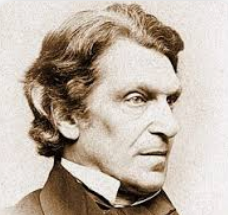
4 months ago
All spiritual strength for ourselves, all noble ties to one another, have their real source in that inner sanctuary where God denies his lonely audience to none. Its secrets are holy; its asylum, inviolate; its consolations, sure; and all are open to the simple heart-word, "Thou art my hiding-place."
▼
Source
Vol. II, p. 253.
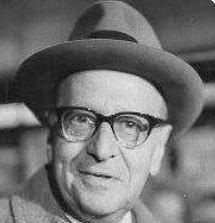
4 months ago
The world is so possessed by the power of what is and the efforts of adjustment to it, that the adolescent's rebellion, which once fought the father because his practices contradicted his own ideology, can no longer crop up. … Psychologically, the father is … replaced by the world of things.
▼
Source
p. 41-42.
4 months ago
What need is there of suspicious fear, since it is in thy power to inquire what ought to be done? And if thy seest clear, go by this way content, without turning back: but if thy dost not see clear, stop and take the best advisers. But if any other things oppose thee, go on according to thy powers with due consideration, keeping to that which appears to be just. For it is best to reach this object, and if thou dost fail, let thy failure be in attempting this. He who follows reason in all things is both tranquil and active at the same time, and also cheerful and collected.
▼
Source
X, 12
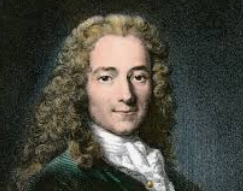
4 months ago
Being of opinion that the doctrine and history of so extraordinary a sect as the Quakers were very well deserving the curiosity of every thinking man, I resolved to make myself acquainted with them, and for that purpose made a visit to one of the most eminent of that sect in England, who, after having been in trade for thirty years, had the wisdom to prescribe limits to his fortune, and to his desires, and withdrew to a small but pleasant retirement in the country, not many miles from London. Here it was that I made him my visit. His house was small, but neatly built, and with no other ornaments but those of decency and convenience.
4 months ago
The initial revelation of any monastery: everything is nothing. Thus begin all mysticisms. It is less than one step from nothing to God, for God is the positive expression of nothingness.
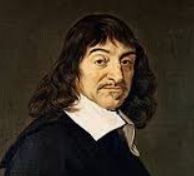
4 months ago
His decipherment of Nature might be crude, yet he had the courage to insist that the mechanical sense could be made of the workings of Nature, throughout the realms of physics, chemistry, and even physiology. By reasserting the unity and rationality of Nature, he did as much as any man to put seventeenth-century scientists back on the intellectual road first trodden by the Greeks.
▼
Source
, , The Architecture of Matter (1962)
4 months ago
No nobler feeling than this of admiration for one higher than himself dwells in the breast of man. It is to this hour, and at all hours, the vivifying influence in man's life.
4 months ago
The greatest saving one can make in the order of thought is to accept the unintelligibility of the world — and to pay attention to man.
4 months ago
In practice we always base our preparations against an enemy on the assumption that his plans are good; indeed, it is right to rest our hopes not on a belief in his blunders, but on the soundness of our provisions. Nor ought we to believe that there is much difference between man and man, but to think that the superiority lies with him who is reared in the severest school.
▼
Source
Variant translation: "Instead, we think the plans of our neighbors are as good as our own, and we can't work out whose chances at war are better in a speech. So we always make our preparations in action, on the assumption that our enemies know what they a
4 months ago
The idea that a culture can preserve its originality by barricading itself against foreign influences is an old illusion that has always produced the opposite of the desired result. Isolation breeds sterility. It is the free circulation of cultural products and talents that allows each society to perpetuate and renew itself.
▼
Source
p. 105
4 months ago
All things in nature become identical with the phenomena they present when submitted to the practices of our laboratories, whose problems no less than their apparatus express in turn the problems and interests of society as it is. This view may be compared with that of a criminologist maintaining that trustworthy knowledge of a human being can be obtained only by the well-tested and streamlined examining methods applied to a suspect in the hands of the metropolitan police.
▼
Source
describing the pragmatist view, p. 49.
4 months ago
That to expect bad people not to injure others is crazy. It's to ask the impossible. And to let them behave like that to other people but expect them to exempt you is arrogant—the act of a tyrant. (Hays translation)
▼
Source
XI, 18
CivilSimian.com created by AxiomaticPanic, CivilSimian, Kalokagathia