
4 months ago
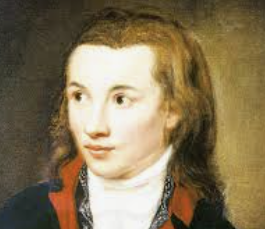
The first Man is the first Spirit-seer; all appears to him as Spirit. What are children, but first men? The fresh gaze of the Child is richer in significance than the forecasting of the most indubitable Seer.

4 months ago
Cut not fire with a sword.
▼
Source
Symbol 9 | Variant translation: Poke not the fire with a sword. | As quoted in Short Sayings of Great Men: With Historical and Explanatory Notes (1882) by Samuel Arthur Bent, p. 455
4 months ago
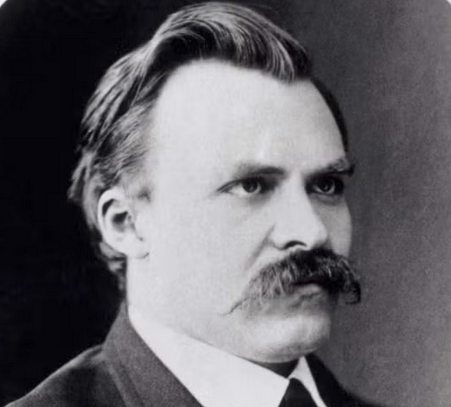
Everyone who enjoys thinks that the principal thing to the tree is the fruit, but in point of fact the principal thing to it is the seed.—Herein lies the difference between them that create and them that enjoy.
4 months ago
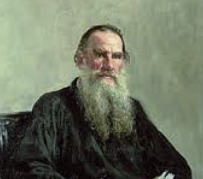
The universal is the unfolding of the potential of diverse and multiple locals, acting in self-organized ways but guided by the common principles of love and reverence for life. Tolstoy wrote from his deathbed: "Understanding that welfare for human beings lies only in their unity, and that unity cannot be attained by violence. Unity can only be reached when each person, not thinking about unity, thinks only about fulfilling the laws of life. Only this supreme law of love, alike for all humans, unifies humanity."
▼
Source
Vandana Shiva Earth Democracy: Justice, Sustainability, and Peace (2005)
4 months ago
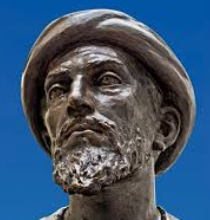
The third class of evils comprise those which everyone causes to himself by his own action. This is the largest class, and is far more numerous than the second class. It is especially of these evils that all men complain,—only few men are found that do not sin against themselves by this kind of evil. ...This class of evil originates in man's vices, such as excessive desire for eating, drinking, and love; indulgence in these things in undue measure, or in improper manner, or partaking of bad food. This course brings diseases and afflictions upon the body and soul alike.
▼
Source
Ch.12
4 months ago
Too busy with the crowded hour to fear to live or die.
▼
Source
Quatrains, Nature
4 months ago
The explicable requires the inexplicable. Experience requires the nonexperienceable. The obvious requires the mystical. This is a powerful group of paired concepts generated by the complementarity of conceptuality.
▼
Source
[http://www.rwgrayprojects.com/synergetics/s05/p0000.html#501.10 501.13]
4 months ago
When a reasonable Soul forsaketh his divine nature, and becometh beast-like, it dieth. For though the substance of the Soul be incorruptible: yet, lacking the use of Reason, it is reputed dead; for it loseth the Intellective Life.
4 months ago
Ethical control may survive in small groups, but the control of the population as a whole must be delegated to specialists—to police, priests, owners, teachers, therapists, and so on, with their specialized reinforcers and their codified contingencies.
▼
Source
Beyond Freedom and Dignity (1971), p. 155
4 months ago
My difficulty is only an — enormous — difficulty of expression.
▼
Source
Journal entry (8 March 1915) p. 40
4 months ago
Everything in the varying human affairs is due to chance, according to Aristotle, to the Divine Will alone according to the Ashariyah, to Divine Wisdom according to the Mu'tazilites, to the merits of man according to our opinion. It is therefore possible, according to the Ashariyah, that God inflicts pain on a good and pious man in this world, and keeps him forever in fire, which is assumed to rage in the world to come; they simply say it is the will of God. The Mu'tazilites would consider this an injustice, and therefore assume that every being, even an ant, that is stricken with pain, has compensation for it... and it is due to God's Wisdom, that a being is struck and afflicted in order to receive compensation. We, however, believe that all these human affairs are managed with justice; far be it from God to do wrong, to punish any one unless the punishment is necessary and merited. It is distinctly stated in the Law, that all is done in accordance with justice; and the words of our Sages generally express the same idea.
▼
Source
Ch.17
4 months ago
Life is not so short but that there is always time enough for courtesy.
▼
Source
Social Aims
4 months ago
It is the integrity of each individual human that is in final examination.
4 months ago
Reason is not measured by size or height, but by principle.
▼
Source
Book I, ch. 12, § 26.
4 months ago
It is better to suffer, than to do, wrong.
4 months ago
The subject does not belong to the world, but it is a limit of the world. (5.632)
▼
Source
Original German: Das Subjekt gehört nicht zur Welt, sondern es ist eine Grenze der Welt.
4 months ago
The reason of a commandment, whether positive or negative, is clear, and its usefulness evident, if it directly tends to remove injustice, or to teach good conduct that furthers the well-being of society, or to impart a truth which ought to be believed either on its own merit or as being indispensable for facilitating the removal of injustice or the teaching of good morals. There is no occasion to ask for the object of such commandments; for no one can, e.g., be in doubt as to the reason why we have been commanded to believe that God is one; why we are forbidden to murder, steal, and to take vengeance, or to retaliate, or why we are commanded to love one another. But there are precepts concerning which people are in doubt, and of divided opinions, some believing they are mere commands, and serve no purpose whatever, whilst others believe that they serve a certain purpose, which, however is unknown to man. Such are those precepts which in their literal meaning do not seem to further any of the three above-named results: to impart some truth, to teach some moral, or to remove injustice. They do not seem to have any influence upon the well-being of the soul by imparting any truth, or upon the well-being of the body by suggesting such ways and rules as are useful in the government of a state, or in the management of a household. ...I will show that all these and similar laws must have some bearing upon one of the following three things, viz., the regulation of our opinions, or the improvement of our social relations, which implies two things, the removal of injustice, and the teaching of good morals.
▼
Source
Ch.28
4 months ago
A mind does not receive truth as a chest receives jewels that are put into it, but as the stomach takes up food into the system. It is no longer food, but flesh, and is assimilated. The appetite and the power of digestion measure our right to knowledge. He has it who can use it. As soon as our accumulation overruns our invention or power to use, the evils of intellectual gluttony begin,— congestion of the brain, apoplexy, and strangulation.
▼
Source
"The Natural History of Intellect", p. 30
4 months ago
I find people only listen to you when they ask you to talk to them.

4 months ago
They call it "friendship" and "peace," and further "harmony" and "unanimity": for these are all cohesive and unificatory of opposites and dissimilars. Hence they also call it "marriage." And there are also three ages in life.
▼
Source
On the Triad
4 months ago
Every habit and faculty is confirmed and strengthened by the corresponding actions, that of walking by walking, that of running by running.
▼
Source
Book II, ch. 18, § 1
4 months ago
A foolish consistency is the hobgoblin of little minds, adored by little statesmen and philosophers and divines. With consistency a great soul has simply nothing to do. He may as well concern himself with his shadow on the wall. Speak what you think now in hard words, and to-morrow speak what to-morrow thinks in hard words again, though it contradict every thing you said to-day. — "Ah, so you shall be sure to be misunderstood." — Is it so bad, then, to be misunderstood? Pythagoras was misunderstood, and Socrates, and Jesus, and Luther, and Copernicus, and Galileo, and Newton, and every pure and wise spirit that ever took flesh. To be great is to be misunderstood.
▼
Source
Ralph Waldo Emerson in Self-Reliance (1841)
4 months ago
Woman is degraded and made to believe that nature destined her exclusively to menial domestic labors, which in the combined order will be so abridged as to be performed without oppression to either sex.
▼
Source
The Theory of Social Organization
4 months ago
The aim of philosophy is to erect a wall at the point where language stops anyway.
▼
Source
Ch. 9 : Philosophy, p. 187
4 months ago
Has not printing freed the education of the people from all political and religious shackles? It would be vain for any despotism to invade all the schools ... The instruction that every man is free to receive from books in silence and solitude can never be completely corrupted. It is enough for there to exist one corner of free earth from which the press can scatter its leaves. How with the multitude of different books, with the innumerable copies of each book, of reprints that can be made available at a moment’s notice, how could it be possible to bolt every door, to seal every crevice through which truth aspires to enter?
▼
Source
Sketch for a Historical Picture of the Progress of the Human Mind, 1794 (New York: The Noonday Press, 1955) p.102.
4 months ago
Every man is a divinity in disguise, a god playing the fool. It seems as if heaven had sent its insane angels into our world as to an asylum. And here they will break out into their native music, and utter at intervals the words they have heard in heaven; then the mad fit returns, and they mope and wallow like dogs!
▼
Source
p. 165
4 months ago
The individuation process, as the way of development and maturation of the psyche, does not follow a straight line, nor does it always lead onwards and upwards. The course it follows is rather “stadial”, consisting of progress and regress, flux and stagnation in alternating sequence. Only when we glance back over a long stretch of the way can we notice the development. If we wish to mark out the way somehow or other, it can equally well be considered a “spiral”, the same problems and motifs occurring again and again on different levels.
▼
Source
p. 216; cited by Jolande Jacobi (1983) The way of individuation. p. 34, translation of Der Weg zur Individuation. Rascher, Zürich 1965
4 months ago
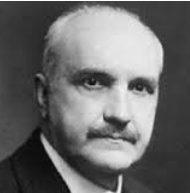
History is nothing but assisted and recorded memory. It might almost be said to be no science at all, if memory and faith in memory were not what science necessarily rest on. In order to sift evidence we must rely on some witness, and we must trust experience before we proceed to expand it. The line between what is known scientifically and what has to be assumed in order to support knowledge is impossible to draw. Memory itself is an internal rumour; and when to this hearsay within the mind we add the falsified echoes that reach us from others, we have but a shifting and unseizable basis to build upon. The picture we frame of the past changes continually and grows every day less similar to the original experience which it purports to describe.
▼
Source
Ch. 2 "History"
4 months ago
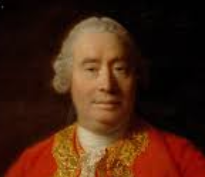
This deficiency in our ideas is not, indeed, perceived in common life, nor are we sensible, that in the most usual conjunctions of cause and effect we are as ignorant of the ultimate principle, which binds them together, as in the most unusual and extraordinary. But this proceeds merely from an illusion of the imagination; and the question is, how far we ought to yield to these illusions. This question is very difficult, and reduces us to a very dangerous dilemma, whichever way we answer it. For if we assent to every trivial suggestion of the fancy; beside that these suggestions are often contrary to each other; they lead us into such errors, absurdities, and obscurities, that we must at last become asham'd of our credulity. Nothing is more dangerous to reason than the flights of the imagination, and nothing has been the occasion of more mistakes among philosophers. Men of bright fancies may in this respect be compar'd to those angels, whom the scripture represents as covering their eyes with their wings. This has already appear'd in so many instances, that we may spare ourselves the trouble of enlarging upon it any farther.
▼
Source
Part 4, Section 7
4 months ago
These reasonings are unconnected: "I am richer than you, therefore I am better"; "I am more eloquent than you, therefore I am better." The connection is rather this: "I am richer than you, therefore my property is greater than yours;" "I am more eloquent than you, therefore my style is better than yours." But you, after all, are neither property nor style.
▼
Source
(44).
4 months ago
In spite of the dominance of mechanistic thought in the contemporary world, a perplexing residue of the magical tradition still survives in the form of several issues, solutions to which do not appear possible within the context of a purely mechanical view of the world.... It is important to recognize that the materialist, scientific paradigm that dominates the late twentieth century world and provides the basis for its dominant institutions, has its basis in the life and work of Pythagoras, one of the most significant representatives of the perennial philosophy and a founder of the magical tradition. This spirit, which gave rise to our world view, is a spirit that must be recaptured if our civilization is to flourish. The choice is a clear one to many, and was summed up in a book title by the late Pythagorean and futurist Buckminster Fuller, Utopia or Oblivion.
▼
Source
John Strohmeier and Peter Westbrook, in Divine Harmony : The Life and Teachings of Pythagoras (1999).
4 months ago
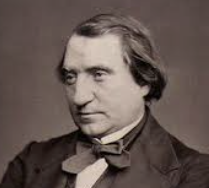
Never has any one been less a priest than Jesus, never a greater enemy of forms, which stifle religion under the pretext of protecting it. By this we are all his disciples and his successors; by this he has laid the eternal foundation-stone of true religion; and if religion is essential to humanity, he has by this deserved the Divine rank the world has accorded him.
▼
Source
Ch. 5.
4 months ago
The human body is the best picture of the human soul.
▼
Source
Pt II, p. 178

4 months ago
True Budo is done for the sake of "building peace". Train every day so as to make peace between this spirit Budo and all things manifested on the face of the Earth.
▼
Source
(p. 26)
4 months ago
Once you make a decision, the universe conspires to make it happen.
▼
Source
Attributed to Emerson in The Gift of Depression: Twenty-one Inspirational Stories Sharing Experience, Strength, and Hope (2001) by John F. Brown, p. 56, no prior occurrence of this statement has been located; it seems to be derived from one which occurs i
4 months ago
The ultimate meaning of the systems approach . . . lies in the creation of a theory of deception and in a fuller understanding of the ways in which the human being can be deceived about (her) his world, and in the interaction between these different viewpoints.
▼
Source
p. 229; cited in Charles Smith (2007) "Deception Meets Enlightenment: From a Viable Theory of Deception to a Quirk About Humanity's Potential". In: World Futures Vol 63, p. 42
4 months ago
My atheism, like that of Spinoza, is true piety towards the universe and denies only gods fashioned by men in their own image, to be servants of their human interests.
▼
Source
"On My Friendly Critics"
4 months ago
When anyone tells me, that he saw a dead man restored to life, I immediately consider with myself, whether it be more probable, that this person should either deceive or be deceived, or that the fact, which he relates, should really have happened. I weigh the one miracle against the other; and according to the superiority, which I discover, I pronounce my decision, and always reject the greater miracle. If the falsehood of his testimony would be more miraculous, than the event which he relates; then, and not till then, can he pretend to command my belief or opinion.
▼
Source
Section 10 : Of Miracles Pt. 1
4 months ago
It has fallen to the lot of one people, the ancient Greeks, to endow human thought with two outlooks on the universe neither of which has blurred appreciably in more than two thousand years. ...The first was the explicit recognition that proof by deductive reasoning offers a foundation for the structure of number and form. The second was the daring conjecture that nature can be understood by human beings through mathematics, and that mathematics is the language most adequate for idealizing the complexity of nature into appreciable simplicity. Both are attributed by persistent Greek tradition to Pythagoras in the sixth century before Christ. ...there is an equally persistent tradition that it was Thales... who first proved a theorem in geometry. But there seems to be no claim that Thales... proposed the inerrant tactic of definitions, postulates, deductive proof, theorem as a universal method in mathematics. ...in attributing any specific advance to Pythagoras himself, it must be remembered that the Pythagorean brotherhood was one of the world's earliest unpriestly cooperative scientific societies, if not the first, and that its members assigned the common work of all by mutual consent to their master.
▼
Source
Eric Temple Bell, The Development of Mathematics (1940)
4 months ago
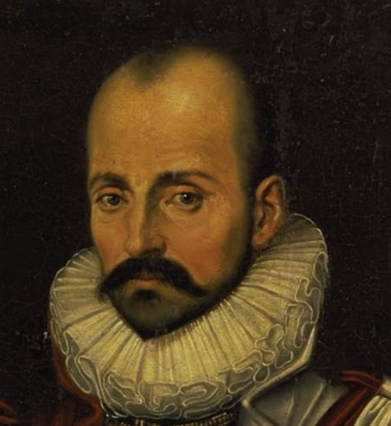
The dictator does not consider his power firmly established until he has reached the point where there is no man under him who is of any worth. ... This method tyrants use of stultifying their subjects cannot be more clearly observed than in what Cyrus did with the Lydians after he had taken Sardis, their chief city, and had at his mercy the captured Croesus, their fabulously rich king. When news was brought to him that the people of Sardis had rebelled, it would have been easy for him to reduce them by force; but being unwilling either to sack such a fine city or to maintain an army there to police it, he thought of an unusual expedient for reducing it. He established in it brothels, taverns, and public games, and issued the proclamation that the inhabitants were to enjoy them. He found this type of garrison so effective that he never again had to draw the sword against the Lydians. These wretched people enjoyed themselves inventing all kinds of games, so that the Latins have derived the word from them, and what we call pastimes they call ludi, as if they meant to say Lydi. Not all tyrants have manifested so clearly their intention to effeminize their victims; but in fact, what the aforementioned despot publicly proclaimed and put into effect, most of the others have pursued secretly as an end.
▼
Source
Part 2
4 months ago
Resting on your laurels is as dangerous as resting when you are walking in the snow. You doze off and die in your sleep.
▼
Source
p. 35e
4 months ago
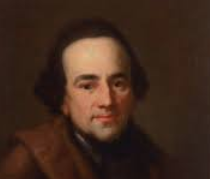
The state gives orders and coerces, religion teaches and persuades. The state prescribes laws, religion commandments. The state has physical power and uses it when necessary; the power of religion is love and benificence. The one abandons the disobedient and expels him; the other receives him in its bosom and seeks to instruct, or at least to console him.
▼
Source
p. 45
4 months ago
Churchman recognized in his critical systemic thinking that the human mind is not able to know the whole. … Yet the human mind, for Churchman, may appreciate the essential quality of the whole. For Churchman, appreciation of this essential quality begins … when first you see the world through the eyes of another. The systems approach, he says, then goes on to discover that every worldview is terribly restricted. Consequently, with Churchman, a rather different kind of question about practice surfaces. … That is, who is to judge that any one bounded appreciation is most relevant or acceptable? Each judgment is based on a rationality of its own that chooses where a boundary is to be drawn, which issues and dilemmas thus get on the agenda, and who will benefit from this. For each choice it is necessary to ask, What are the consequences to be expected insofar as we can evaluate them and, on reflection, how do we feel about that? As Churchman points out, each judgment of this sort is of an ethical nature since it cannot escape the choice of who is to be the client—the beneficiary—and thus which issues and dilemmas will be central to debate and future action. In this way, the spirit of C. West Churchman becomes our moral conscience. A key principle of systemic thinking, according to Churchman, is to remain ethically alert. Boundary judgments facilitate a debate in which we are sensitized to ethical issues and dilemmas.
▼
Source
Robert L. Flood (1999, p. 252-253) as cited in: Michael H. G. Hoffmann (2007) Searching for Common Ground on Hamas Through Logical Argument Mapping. p. 5
4 months ago
The writer-philosopher George Santayana is credited with the phrase: “Those who cannot remember the past are condemned to repeat it.” Yet here we are, repeating that of just 52 years ago. Let us pray that come 2072, Americans then have at last heeded Santayana's warning and Dr. King’s dream is no longer words in a speech but reality being lived.
▼
Source
[https://www.joplinglobe.com/opinion/columns/geoff-caldwell-how-long-will-history-have-to-repeat-before-we-learn/article_e68d8df7-bf98-50a3-9ccc-2da8568ca8c2.html Geoff Caldwell: How long will history have to repeat before we learn?, The Joplin Globe] (Ju
4 months ago
If nature has been frugal in her gifts and endowments, there is the more need of art to supply her defects. If she has been generous and liberal, know that she still expects industry and application on our part, and revenges herself in proportion to our negligent ingratitude. The richest genius, like the most fertile soil, when uncultivated, shoots up into the rankest weeds; and instead of vines and olives for the pleasure and use of man, produces, to its slothful owner, the most abundant crop of poisons.
▼
Source
Part I, Essay 16: The Stoic
4 months ago
Animals come when their names are called. Just like human beings.
▼
Source
p. 67e
4 months ago
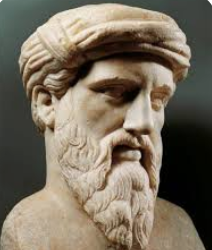
The nature is pleased to nature. The nature overcomes the nature. The Nature dominated nature.
▼
Source
Synesios in a comment about Demokritos, in K. C. Schmieder, The History of Alchemy (2005) p. 64; a translation of Geschichte der Alchemie (1832).
4 months ago
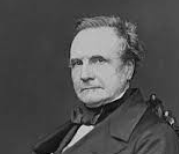
In the course of my inquiries, I met with the work upon the Trinity, by Dr. Samuel Clarke. This I carefully examined, and although very far from being satisfied, I ceased from further inquiry. This change arose probably from my having acquired the much more valuable work of the same author, on the Being and Attributes of God. This I studied, and felt that its doctrine was much more intelligible and satisfactory than that of the former work. I may now state, as the result of a long life spent in studying the works of the Creator, that I am satisfied they afford far more satisfactory and more convincing proofs of the existence of a supreme Being than any evidence transmitted through human testimony can possibly supply.
▼
Source
"Passages from the life of a philosopher", The Athanasian Creed , p. 403
4 months ago
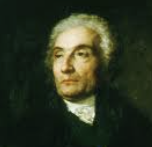
There is nothing but violence in the universe; but we are spoiled by a modern philosophy that tells us all is good, whereas evil has tainted everything, and in a very real sense, all is evil, since nothing is in its place.
▼
Source
Chapter III, p. 31
4 months ago
Character is the result of a system of stereotyped principles.
▼
Source
Hume never used the word "stereotype" (the term was not invented until 1798).
CivilSimian.com created by AxiomaticPanic, CivilSimian, Kalokagathia