
4 months ago
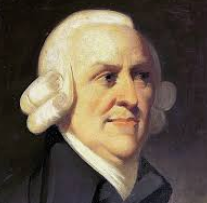
When the profits of trade happen to be greater than ordinary, over-trading becomes a general error both among great and small dealers.
▼
Source
Chapter I, p. 469.
4 months ago
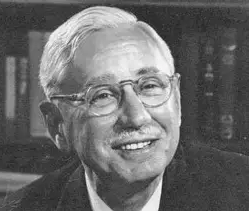
To speak ill of others is a dishonest way of praising ourselves; let us be above such transparent egotism. If you can't say good and encouraging things, say nothing. Nothing is often a good thing to do, and always a clever thing to say.
▼
Source
[https://web.archive.org/web/20130106111821/http://www.willdurant.com/youth.htm We Have a Right To Be Happy Today], commencement address at the Webb School of Claremont, California (7 June 1958)
4 months ago
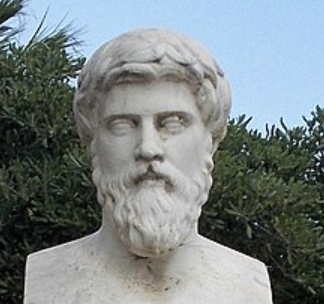
[Plutarch's Lives are] crowded with very wise maxims and rules of life.
▼
Source
David Chytraeus in the anthology Artis Historicae Penus (Basel, 1579), II, 477, quoted in Peter Burke, 'A Survey of the Popularity of Ancient Historians, 1450–1700', History and Theory, Vol. 5, No. 2 (1966), p. 142

4 months ago
In Leopardi’s view, the universal claims of Christianity were a licence for universal savagery. Because it is directed to all of humanity, the Christian religion is usually praised, even by its critics, as an advance on Judaism. Leopardi – like Freud a hundred years later – did not share this view. The crimes of medieval Christendom were worse than those of antiquity, he believed, precisely because they could be defended as applying universal principles: the villainy introduced into the world by Christianity was ‘entirely new and more terrible … more horrible and more barbarous than that of antiquity’. Modern rationalism renews the central error of Christianity – the claim to have revealed the good life for all of humankind. Leopardi described the secular creeds that emerged in modern times as expressions of ‘half-philosophy’, a type of thinking with many of the defects of religion. What Leopardi called ‘the barbarism of reason’ – the project of remaking the world on a more rational model – was the militant evangelism of Christianity in a more dangerous form. Events have confirmed Leopardi’s diagnosis. As Christianity has waned, the intolerance it bequeathed to the world has only grown more destructive. From imperialism through communism and incessant wars launched to promote democracy and human rights, the most barbarous forms of violence have been promoted as means to a higher civilization.
▼
Source
The Faith of Puppets: Leopardi and the Souls of Machines (p.32-3)
4 months ago
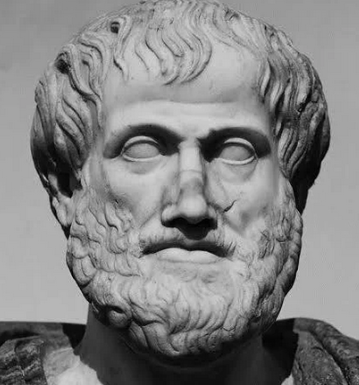
He penetrated into the whole universe of things, and subjected its scattered wealth to intelligence; and to him the greater number of the philosophical sciences owe their origin and distinction.
▼
Source
Georg Wilhelm Friedrich Hegel, Vorlesungen über die Gesch. der Philos. (1833) II. 298, as quoted in Aristotle: a Chapter from the History of Science by George Henry Lewes
4 months ago
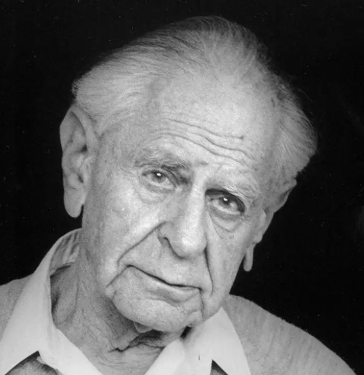
As a rule, begin my lectures on Scientific Method by telling my students that scientific method does not exist. ...having been ...the one and only professor of this non-existent subject within the British Commonwealth.
4 months ago
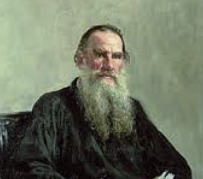
Reason has discovered the struggle for existence and the law that I must throttle all those who hinder the satisfaction of my desires. That is the deduction reason makes. But the law of loving others could not be discovered by reason, because it is unreasonable.
▼
Source
Pt. VIII, ch. 13
4 months ago
The sophist is concerned with wisdom, not for its own sake, not because he hates the lie in the soul more than anything else, but for the sake of the honor or the prestige that attends wisdom.
▼
Source
p. 116
4 months ago
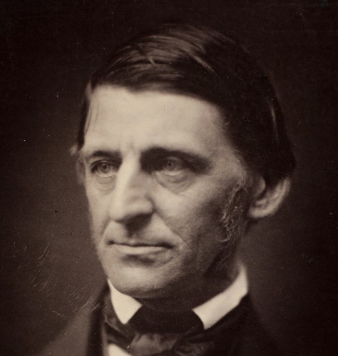
The book written against fame and learning has the author's name on the title-page.
▼
Source
1857

4 months ago
The transformation of imprisoned bodies - and they are in their majority bodies of color - into sources of profit who consume and also often produce all kinds of commodities, devours public funds, which might otherwise be available for social programs such as education, housing, childcare, recreation, and drug programs.
▼
Source
Chapter Five

4 months ago
To think we could have spared ourselves from living all that we have lived!
4 months ago
To found a great empire for the sole purpose of raising up a people of customers, may at first appear a project fit only for a nation of shopkeepers. It is however, a project altogether unfit for a nation of shopkeepers; but extremely fit for a nation whose government is influenced by shopkeepers.
▼
Source
Chapter VII, Part Third, p. 667.
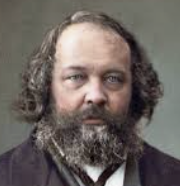
4 months ago
The materialistic, realistic, and collectivist conception of freedom, as opposed to the idealistic, is this: Man becomes conscious of himself and his humanity only in society and only by the collective action of the whole society. He frees himself from the yoke of external nature only by collective and social labor, which alone can transform the earth into an abode favorable to the development of humanity. Without such material emancipation the intellectual and moral emancipation of the individual is impossible. He can emancipate himself from the yoke of his own nature, i.e. subordinate his instincts and the movements of his body to the conscious direction of his mind, the development of which is fostered only by education and training. But education and training are preeminently and exclusively social … hence the isolated individual cannot possibly become conscious of his freedom. To be free … means to be acknowledged and treated as such by all his fellowmen. The liberty of every individual is only the reflection of his own humanity, or his human right through the conscience of all free men, his brothers and his equals.I can feel free only in the presence of and in relationship with other men. In the presence of an inferior species of animal I am neither free nor a man, because this animal is incapable of conceiving and consequently recognizing my humanity. I am not myself free or human until or unless I recognize the freedom and humanity of all my fellowmen. Only in respecting their human character do I respect my own. ... I am truly free only when all human beings, men and women, are equally free. The freedom of other men, far from negating or limiting my freedom, is, on the contrary, its necessary premise and confirmation.
▼
Source
Variant translations: | A natural society, in the midst of which every man is born and outside of which he could never become a rational and free being, becomes humanized only in the measure that all men comprising it become, individually and collectively
4 months ago
To all Christian governments Christianity was not a rule of means but a means of rule; Christ was for the people, Machiavelli was preferred by the kings. The state in some measure had civilized man, but who would civilize the state?
▼
Source
Chapter 6, p. 229

4 months ago
With regard to the abuse of authority, this also may come about in two ways. First, when what is ordered by an authority is opposed to the object for which that authority was constituted (if, for example, some sinful action is commanded or one which is contrary to virtue, when it is precisely for the protection and fostering of virtue that authority is instituted). In such a case, not only is there no obligation to obey the authority, but one is obliged to disobey it, as did the holy martyrs who suffered death rather than obey the impious commands of tyrants. Secondly, when those who bear such authority command things which exceed the competence of such authority; as, for example, when a master demands payment from a servant which the latter is not bound to make, and other similar cases. In this instance the subject is free to obey or disobey.
▼
Source
in Aquinas: Selected Political Writings (Basil Blackwell: 1974), p. 183

4 months ago
As a young man Porphyry tried to gain as broad a knowledge as he possibly could by studying many languages and religions. At that time Athens was the main centre for learning, so it was natural that someone with a thirst for knowledge as Porphyry had should travel there to continue his studies. In Athens Porphyry became a student of Longinus who: — ... was a 'living library and walking museum' and the academic's critical attention to detail, clarity of style and erudition left their permanent mark on the keen student. It was Longinus who gave Porphyry that nickname. In fact it was a clever pun since 'Porphyry' means 'purple' in Greek and he was given this name since he came from Tyre which was famous for the production of the royal purple dye and his name 'Malchus' meant 'king' = 'royal' = 'purple'.
▼
Source
J J O'Connor and E F Robertson, in [http://www-history.mcs.st-andrews.ac.uk/Biographies/Porphyry.html "Porphyry Malchus" at University of St Andrews]
4 months ago
The first article republished in Studies in Philosophy, Politics and Economics, "Degrees of Explanation," originally published in 1955, was largely consistent with Popper's methodology. Hayek embraced Popper's "hypothetico-deductive" approach to science: "The conception of science as a hypothetico-deductive system has been expounded by Karl Popper in a manner which brings out clearly some very important points." Here, as elsewhere in his work, Hayek distinguished between the facts of the natural and social sciences primarily on the basis of their complexity.
▼
Source
Alan Ebenstein, Hayek's Journey: The Mind of Friedrich Hayek (2003), Ch. 14. Studies in Philosophy, Politics and Economics
4 months ago
If the slave-owner of our times has no slave, John, whom he can send to the cesspool, he has five shillings, of which hundreds of such Johns are in such need that the slave-owner of our times may choose any one out of hundreds of Johns and be a benefactor to him by giving him the preference, and allowing him, rather than another, to climb down into the cesspool.
▼
Source
Chapter 8: Slavery Exists Among Us
4 months ago
Liberal education is liberation from vulgarity. The Greeks had a beautiful word for “vulgarity”; they called it apeirokalia, lack of experience in things beautiful. Liberal education supplies us with experience in things beautiful.
▼
Source
“What is liberal education,” p. 8
4 months ago
The world is nothing, the man is all; in yourself is the law of all nature, and you know not yet how a globule of sap ascends; in yourself slumbers the whole of Reason; it is for you to know all, it is for you to dare all.
▼
Source
par. 48
4 months ago
We have been aware of the need for these institutional strategies at least since 1935 — but of course before, but I’m choosing 1935 because that was the year when W.E.B. Du Bois published his germinal Black Reconstruction in America. And the question was not what should individual Black people do, but rather how to reorganize and restructure post-slavery society in order to guarantee the incorporation of those who had been formerly enslaved. The society could not remain the same — or should not have remained the same. Neoliberalism resists change at the individual level. It asks the individual to adapt to conditions of capitalism, to conditions of racism.
4 months ago
It may indeed be doubted, whether butcher's meat is any where a necessary of life. Grain and other vegetables, with the help of milk, cheese, and butter, or oil, where butter is not to be had, it is known from experience, can, without any butcher's meat, afford the most plentiful, the most wholesome, the most nourishing, and the most invigorating diet.
▼
Source
Chapter II, Part II, Appendix to Articles I and II.

4 months ago
It goes without saying that any persons may attempt to unite kindred spirits, but, whatever their hopes and longings, none have the right to impose their vision of unity upon the rest.
▼
Source
Ch. 10 : A Framework for Utopia; The Framework as Utopian Common Ground, p. 325
4 months ago
Armies are necessary, before all things, for the defense of governments from their own oppressed and enslaved subjects.
▼
Source
Chapter VII, Significance of Compulsory Service
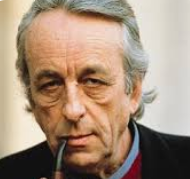
4 months ago
I shall call Ideological State Apparatuses (ISAs) a certain number of realities which present themselves to the immediate observer in the form of distinct and specialized institutions: ...
4 months ago
For there's no rood has not a star above it; The cordial quality of pear or plum Ascends as gladly in a single tree, As in broad orchards resonant with bees; And every atom poises for itself, And for the whole.
▼
Source
Musketaquid, st. 5
4 months ago
The metaphysical apologia at least betrayed the injustice of the established order through the incongruence of concept and reality. The impartiality of scientific language deprived what was powerless of the strength to make itself heard and merely provided the existing order with a neutral sign for itself. Such neutrality is more metaphysical than metaphysics.
▼
Source
E. Jephcott, trans., p. 17

4 months ago
The most natural Beauty in the World is Honesty, and Moral Truth. For all Beauty is Truth. True Features make the Beauty of a Face; and true Proportions the Beauty of Architecture; as true Measures that of Harmony and Musick.
▼
Source
Vol. 1, p. 77; "Sensus Communis".
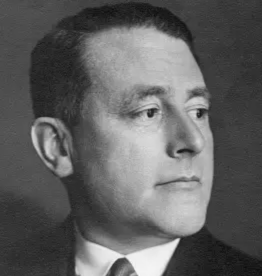
4 months ago
The state as the decisive political entity possesses an enormous power: the possibility of waging war and thereby publicly disposing of the lives of men. The jus belli contains such a disposition. It implies a double possibility: the right to demand from its own members the readiness to die and unhesitatingly to kill enemies.
4 months ago
Smith argued in 1776 that the division of labor was the basis for the separation between mental and manual labor, and therefore between natural philosopher and laborer.
▼
Source
Myles W. Jackson, Spectrum of Belief: Joseph Von Fraunhofer and the Craft of Precision Optics (2000)
4 months ago
Having acknowledged the measure of the good to be pleasure, i.e., beauty, the European upper classes went back in their comprehension of art to the gross conception of the primitive Greeks which Plato had already condemned. And with this understanding of life, a theory of art was formulated.
4 months ago
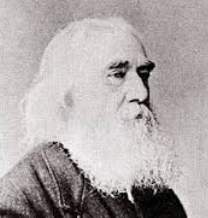
The science of mine and thine—the science of justice—is the science of all human rights; of all a man’s rights of person and property; of all his rights to life, liberty, and the pursuit of happiness.
▼
Source
Section I, p. 5
4 months ago
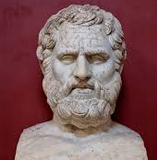
Keep cool: it will be all one a hundred years hence.
▼
Source
Montaigne; or, The Skeptic
4 months ago
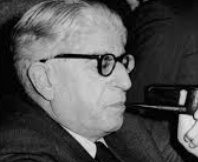
Love prudence.
4 months ago
The Roman came into the Promised Land that had become less and less as promised. The rich got along quite well with the foreign occupation; it provided protection from desperate peasants and patriotic resistance fighters. It provided protection from prophets who could be labeled "agitators" now, without any qualms.
▼
Source
p. 121
4 months ago
Smith "wrote that the ultimate goal of business is not to make a profit. Profit is just the means. The goal is general welfare."
▼
Source
Walter Wink (1992) Engaging the powers: Discernment and resistance in a world of domination., Vol. 3. HSRC Press, p. 68.
4 months ago
Amid this life based on coercion, one and the same thought constantly emerged among different nations, namely, that in every individual a spiritual element is manifested that gives life to all that exists, and that this spiritual element strives to unite with everything of a like nature to itself, and attains this aim through love.
▼
Source
II
4 months ago
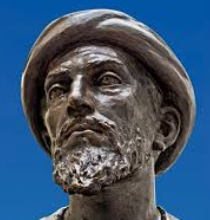
For it is said, "You shall strengthen the stranger and the dweller in your midst and live with him," that is to say, strengthen him until he needs no longer fall upon the mercy of the community or be in need.
▼
Source
Book 7 (Sefer Zera'im "Seeds"), Treatise 2 (Mattenot Aniyiim "Laws of obligatory gifts to the poor"), Chapter (Perek) 10, Halacha 7 (Translated by Jonathan J. Baker.) | Variant: Concerning this [Leviticus 25:35] states: "You shall support him, the strange
4 months ago
Solitude, the safeguard of mediocrity, is to genius the stern friend.
▼
Source
Culture
4 months ago
Life is the spirit incarnate in time.
4 months ago
The art of writing books is not yet invented. But it is at the point of being invented. Fragments of this nature are literary seeds. There may be many an infertile grain among them: nevertheless, if only some come up!
▼
Source
Fragment No. 114

4 months ago
Dear youths, I warn you cherish peace divine, And in your hearts lay deep these words of mine.
▼
Source
As reported by Heraclides, son of Sarapion, and Diogenes Laërtius, in Lives and Opinions of Eminent Philosophers, "Pythagoras", Sect. 7, in the translation of C. D. Yonge (1853)
4 months ago
You sacrifice yourself, your wealth torments you,You give away yourself,You don't take care of yourself, you don't love yourself;Great agony always compels you,The agony of an overflowing barn, an overabundant heart;But no one thanks you any longer ...
4 months ago
It is often better for a person to recognize a sin than to do a good deed. Recognizing a sin makes a person humble. Doing a good deed often can feed a person's pride.
▼
Source
p. 108
4 months ago
The generation of Isaiah did not require the detailed description; his account, "I saw the Lord," &c., sufficed. The generation of the Babylonian exile wanted to learn all the details. ...Isaiah was so familiar with it that he did not consider it necessary to communicate it to others as a new thing, especially as it was well known to the intelligent.
▼
Source
Ch.6
4 months ago
God said, I am tired of kings, I suffer them no more; Up to my ear the morning brings The outrage of the poor.
▼
Source
Boston Hymn, st. 2
4 months ago
The housing scenario we were working on clearly showed the inadequacy of our present system. At the present rate, the use of metals in housing would prove to be totally insufficient. Engendered materials such as plastics will have to be developed if we are to solve mankind’s housing needs. The housing scenario encompassed more than just the shelter needs of the world. As it evolved we saw that it would encompass communications and mobility... As a total service facility, the housing needs would encompass not only shelter but communications-with its own resultant education, medical information and attention, personal telephone contact with anyone, anywhere, and mobility with anyone going anywhere. These would be accomplished via closed-circuit television and telephone to a world central medical, educational, and travel-routing computer system.
4 months ago
I am a dreamer of words, of written words. I think I am reading; a word stops me. I leave the page. The syllables of the word begin to move around. Stressed accents begin to invert. The word abandons its meaning like an overload which is too heavy and prevents dreaming. Then words take on other meanings as if they had the right to be young. And the words wander away, looking in the nooks and crannies of vocabulary for new company, bad company.
▼
Source
Introduction, sect. 6
4 months ago
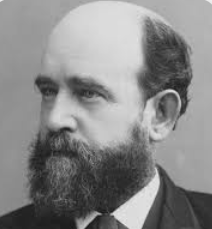
Many there are, too depressed, too embruted with hard toil and the struggle for animal existence, to think for themselves. Therefore the obligation devolves with all the more force on those who can. If thinking men are few, they are for that reason all the more powerful. Let no man imagine that he has no influence. Whoever he may be, and wherever he may be placed, the man who thinks becomes a light and a power. That for every idle word men may speak they shall give an account at the day of judgment, seems a hard saying. But what more clear than that the theory of the persistence of force, which teaches us that every movement continues to act and react, must apply as well to the universe of mind as to that of matter? Whoever becomes imbued with a noble idea kindles a flame from which other torches are lit, and influences those with whom he comes in contact, be they few or many. How far that influence, thus perpetuated, may extend, it is not given to him here to see. But it may be that the Lord of the Vineyard will know.
▼
Source
Ch. 21 : Conclusion

4 months ago
I think the Ethics will have a permanent effect on me.
▼
Source
Albert Einstein, having read Spinoza's Ethics again, wrote in a letter to Else, his cousin and later his wife (1915)
CivilSimian.com created by AxiomaticPanic, CivilSimian, Kalokagathia