



4 months ago
Our trouble is that we have ignored and thus feel insecure in the enormous spectrum of love which lies between rather formal friendship and genital sexuality, and thus are always afraid that once we overstep the bounds of formal friendship we must slide inevitably to the extreme of sexual promiscuity.
▼
Source
source
p. 91
7 months 2 weeks ago
People nowadays think that scientists exist to instruct them, poets, musicians, etc. to give them pleasure. The idea that these have something to teach them - that does not occur to them.
▼
Source
source
p. 36e
3 months 2 weeks ago
All is ephemeral - fame and the famous as well.
▼
Source
source
IV, 35
7 months 3 weeks ago
A Christian has no need of any law in order to be saved, since through faith we are free from every law. Thus all the acts of a Christian are done spontaneously, out of a sense of pure liberty. As Christians we do not seek our own advantage or salvation because we are already fully satisfied and saved by God's grace through faith. Now our only motive is to do that which is pleasing to God.
▼
Source
source
pp. 75-76
4 months ago
There are two great fundamental problems common to all thought: (i) the problem of world- and life-affirmation and world- and life-negation, and (2) the problem of ethics and the relations between ethics and these two forms of man's spiritual attitude to Being.
▼
Source
source
Preface, p. vii
6 months 2 weeks ago
The weapon of the Republic is terror, and virtue is its strength.
▼
Source
source
Act I.


6 months 1 week ago
The basic word I-Thou can be spoken only with one's whole being. The concentration and fusion into a whole being can never be accomplished by me, can never be accomplished without me. I require a Thou to become; becoming I, I say Thou.
7 months 3 weeks ago
What defects women have, we must check them for in private, gently by word of mouth, for woman is a frail vessel.
▼
Source
source
Table Talk, quoted in Luther On "Woman"
7 months 3 weeks ago
Every rich man is avaricious, in my opinion.
▼
Source
source
Ch. 14
6 months 5 days ago
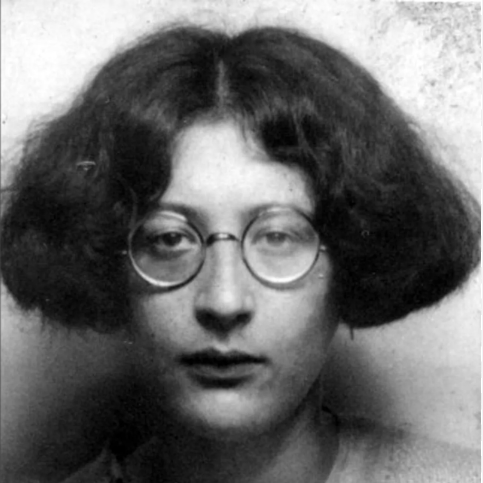
The notion of rights is linked with the notion of sharing out, of exchange, of measured quantity. It has a commercial flavor, essentially evocative of legal claims and arguments. Rights are always asserted in a tone of contention; and when this tone is adopted, it must rely upon force in the background, or else it will be laughed at.
▼
Source
source
p. 61
4 months 4 days ago
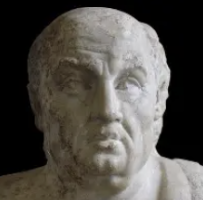
A large part of mankind is angry not with the sins, but with the sinners.
▼
Source
source
De Ira (On Anger): Book 2, cap. 28, line 8

8 months 2 weeks ago
Blessed are the hearts that can bend; they shall never be broken.
7 months 6 days ago
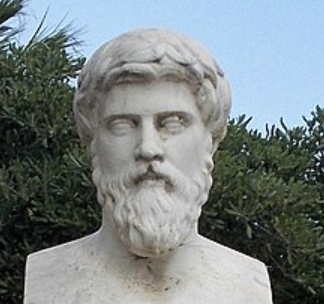
He made one of Antipater's recommendation a judge; and perceiving afterwards that his hair and beard were coloured, he removed him, saying, "I could not think one that was faithless in his hair could be trusty in his deeds."
▼
Source
source
40 Philip
6 months 1 week ago
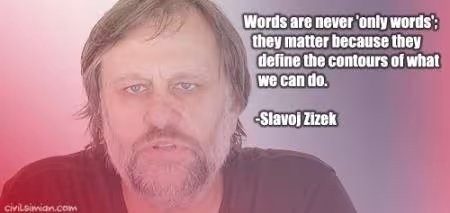
To feel most beautifully alive means to be reading something beautiful, ready always to apprehend in the flow of language the sudden flash of poetry.
▼
Source
source
A Retrospective Glance at the Lifework of a Master of Books
5 months 4 weeks ago
There's no need to fear or hope, but only to look for new weapons.
▼
Source
source
from Postscript on the Societies of Control

5 months 4 weeks ago
There is no more important rule of conduct in the world than this: attach yourself as much as you can to people who are abler than you and yet not so very different that you cannot understand them.
▼
Source
source
F 81
6 months 2 days ago
What is beginning to emerge, then, is a theory about psychic sensitivity. It runs as follows. When I relax deeply, it is as if someone opened up the partition between the two compartments of my brain, turning them into a single large room. I experience a sense of mental freedom as if I can suddenly breathe more deeply, and a feeling of contact with things. Everyone has had the experience of being in a state of hurry or excitement, and failing to notice that they have bruised or scratched themselves -- until the excitement evaporates and the pain makes itself known. Hurry and tension raise our sensitivity threshold, and at the same time, erect a glass wall between us and reality. In the "unicameral" state, this wall vanishes, and everything seems more real.
▼
Source
source
p. 51
6 months 3 weeks ago
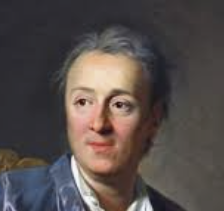
This is a work that cannot be completed except by a society of men of letters and skilled workmen, each working separately on his own part, but all bound together solely by their zeal for the best interests of the human race and a feeling of mutual good will.
▼
Source
source
Article on Encyclopedia, as translated in The Many Faces of Philosophy : Reflections from Plato to Arendt (2001), "Diderot", p. 237

3 months 4 weeks ago
Were I to pray for a taste which should stand me in stead under every variety of circumstances, and be a source of happiness and cheerfulness to me during life, and a shield against its ills, however things might go amiss and the world frown upon me, it would be a taste for reading... Give a man this taste, and the means of gratifying it, and you can hardly fail of making him a happy man; unless, indeed, you put into his hands a most perverse selection of books. You place him in contact with the best society in every period of history,-with the wisest, the wittiest, the tenderest, the bravest, and the purest characters who have adorned humanity. You make him a denizen of all nations, a contemporary of all ages. The world has been created for him.
▼
Source
source
Address on the opening of the Eton Library (1833) as quoted in A History of Inventions, Discoveries and Origins (1846) by John Beckmann, Tr. William Johnston, Vol. 1, frontispiece.

7 months 2 weeks ago
God made us: invented us as a man invents an engine. A car is made to run on petrol, and it would not run properly on anything else. Now God designed the human machine to run on Himself.
▼
Source
source
Book II, Chapter 3, "The Shocking Alternative"
5 months 3 weeks ago
The physicist who states a law of nature with the aid of a mathematical formula is abstracting a real feature of a real material world, even if he has to speak of numbers, vectors, tensors, state-functions, or whatever to make the abstraction.
▼
Source
source
"What is Mathematical Truth?"
6 months 1 day ago
Psychoanalysis is essentially a theory of unconscious strivings, of resistance, of falsification of reality according to one's subjective needs and expectations.
▼
Source
source
p. 109

4 months 1 week ago
Can the man say, Fiat lux, Let there be light; and out of chaos make a world? Precisely as there is light in himself, will he accomplish this.

7 months 2 weeks ago
My desire and wish is that the things I start with should be so obvious that you wonder why I spend my time stating them. This is what I aim at because the point of philosophy is to start with something so simple as not to seem worth stating, and to end with something so paradoxical that no one will believe it.

6 months 3 weeks ago
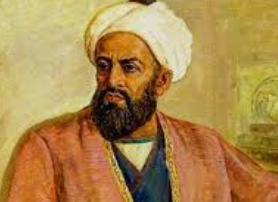
For those endowed with insight there is in reality no object of love but God, nor does anyone but He deserve love Love, Longing, Intimacy and Contentment.
▼
Source
source
Islamic Texts Society. 2011. p. 23. ISBN 978-1-903682-27-2. Translated with an introduction and notes by Eric Ormsby.

6 months 2 weeks ago
It is not, what a lawyer tells me I may do; but what humanity, reason, and justice, tell me I ought to do.
5 months 2 days ago
A city that outdistances Man's walking powers is a trap for Man. It threatens to become a prison from which he cannot escape unless he has mechanical means of transport, the thoroughfares for carrying these, and the purchasing power for commanding the use of artificial means of communication.
▼
Source
source
"Has Man's Metropolitan Environment Any Precedents?", Ekistics, vol. 22, no. 133 (December 1966) pp. 385-7
7 months 6 days ago
Lycurgus the Lacedæmonian brought long hair into fashion among his countrymen, saying that it rendered those that were handsome more beautiful, and those that were deformed more terrible. To one that advised him to set up a democracy in Sparta, "Pray," said Lycurgus, "do you first set up a democracy in your own house."
▼
Source
source
57 Lycurgus

7 months 1 week ago
As we speak cruel time is fleeing. Seize the day, believing as little as possible in the morrow.
▼
Source
source
Book I, ode xi, line 7

6 months 2 days ago
Crowley wanted to be a magician because he wanted power -- power over other people.
▼
Source
source
p. 157
3 months 1 week ago
The meaning of relativity has been widely misunderstood. Philosophers play with the word, like a child with a doll. Relativity, as I see it, merely denotes that certain physical and mechanical facts, which have been regarded as positive and permanent, are relative with regard to certain other facts in the sphere of physics and mechanics. It does not mean that everything in life is relative and that we have the right to turn the whole world mischievously topsy-turvy.
6 months 2 days ago
What excited me was the recognition that this was simply another version of the problem that had obsessed me all of my life -- the problem of those moments when life seems entirely delightful, when we experience a sensation of what G.K. Chesterton called "absurd good news." Life normally strikes most of us as hard, dull and unsatisfying; but in these moments, consciousness seems to glow and expand, and all the contradictions seem to be resolved. Which of the two visions is true? My own reflections had led me to conclude that the vision of "absurd good news" is somehow broader and more comprehensive than the feeling that life is dull, boring and meaningless. Boredom is basically a feeling of narrowness, and surely a narrow vision is bound to be less true than a broad one?
▼
Source
source
p. 16

6 months 2 weeks ago
Truths begin by a conflict with the police - and end by calling them in.

7 months 2 weeks ago
It was an important moment. The old partners of the spectacle of punishment, the body and the blood, gave way. A new character came of the scene, masked. It was the end of a certain kind of tragedy; comedy began, with shadow play, faceless voices, impalpable entities. The apparatus of punitive justice must now bite into this bodiless reality.
▼
Source
source
pp. 17
4 months 1 week ago
It has been observed that missiles and projectiles describe a curved path of some sort; however no one has pointed out the fact that this path is a parabola. But this and other facts, not few in number or less worth knowing, I have succeeded in proving; and what I consider more important, there have been opened up to this vast and most excellent science, of which my work is merely the beginning, ways and means by which other minds more acute than mine will explore its remote corners.
▼
Source
source
Author, Third Day. Change of Position
3 months 2 weeks ago
And that you may know... what kind of writings I mean, I shall name to you the learned Gassendus his little Syntagma of Epicurus's philosophy, and that most ingenious gentleman Monsieur Descartes his principles of philosophy. For though I purposely refrained, though not altogether from transiently consulting about a few particulars, yet from seriously and orderly reading over those excellent (though disagreeing) books, or so much as Sir Francis Bacon's Novum Organum, that I might not be prepossessed with any theory or principles, till I had spent some time in trying what things themselves would incline me to think; yet beginning now to allow myself to read those excellent books, I find by the little I have read in them already, that if I had read them before I began to write, I might have enriched the ensuing essays with divers truths, which they now want, and have explicated divers things much better than I fear I have done.
7 months 3 weeks ago
Let me give two cautions. 1) The one is, that you keep them to the practice of what you would have grow into a habit with them, by kind words, and gentle admonitions, rather as minding them of what they forget, than by harsh rebukes and chiding, as if they were wilfully guilty. 2) Another thing you are to take care of, is, not to endeavour to settle too many habits at once, lest by variety you confound them, and so perfect none. When constant custom has made any one thing easy and natural to 'em, and they practice it without reflection, you may then go on to another.
▼
Source
source
Sec. 66
3 months 2 weeks ago
Epicurus... supposes not only all mixt bodies, but all others to be produced by the various and casual occursions of atoms, moving themselves to and fro by an internal principle in the immense or rather infinite vacuum.
▼
Source
source
Carneades speaking
6 months 5 days ago
From the power to transform him into a thing by killing him there proceeds another power, and much more prodigious, that which makes a thing of him while he still lives.
▼
Source
source
in The Simone Weil Reader, p. 155

8 months 1 week ago
I have always been of the opinion that infamy earned by doing what is right is not infamy at all, but glory.
▼
Source
source
Speech I
7 months 2 weeks ago
A pupil from whom nothing is ever demanded which he cannot do never does all he can.
▼
Source
source
(p. 32)
7 months 2 weeks ago
I knew a parson who frightened his congregation terribly by telling them that the second coming was very imminent indeed, but they were much consoled when they found that he was planting trees in his garden.
▼
Source
source
"Defects in Christ's Teaching"
7 months 2 weeks ago
It is not by recognizing the want of courage in someone else that you acquire courage yourself.
▼
Source
source
p. 44e
CivilSimian.com created by AxiomaticPanic, CivilSimian, Kalokagathia