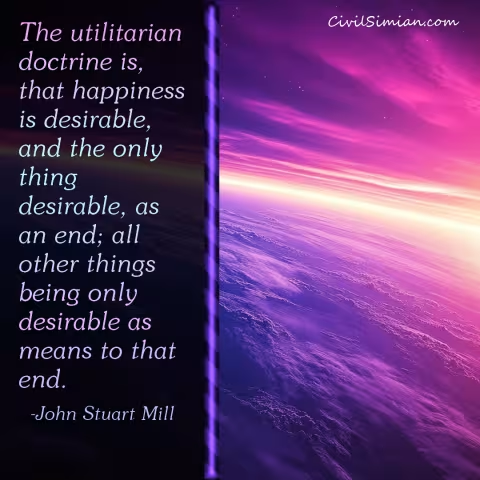
Most will say happiness is incalculable. Universally, aversion to suffering and death is enough...people can seek out their own happiness as long as this baseline is met. I believe that's negative utility.


The longing for guidance, for love and succor, provides the stimulus for the growth of a social or moral conception of God. This is the God of Providence, who protects, decides, rewards and punishes. This is the God who, according to man's widening horizon, loves and provides for the life of the race, or of mankind, or who even loves life itself. He is the comforter in unhappiness and in unsatisfied longing, the protector of the souls of the dead. This is the social or moral idea of God.
[I]n the wake of the growth of the animal-rights movement, there has recently arisen a hitherto unfelt need to demonise and demean our non-human victims - and those who try to help them - now that our previously well-nigh unquestioned right to kill and exploit them is being challenged. Bloodsports enthusiasts, for instance, currently spend a lot of time cataloguing the alleged depredations of our victims on the environment. Recreational animal-killers go to extraordinarily lengths to avoid admitting that they themselves enjoy hunting and killing other creatures for fun. But then until a few years ago such rationalisations seemed scarcely called for. Selfish DNA had honed our intuitions so that the most agonising bloodshed seemed simply "natural". "The Post-Darwinian Transition", The Animal Rights Library, 1996
The new education must consist essentially in this, that it completely destroys freedom of will in the soil which it undertakes to cultivate, and produces on the contrary strict necessity in the decisions of the will, the opposite being impossible. Such a will can henceforth be relied on with confidence and certainty.
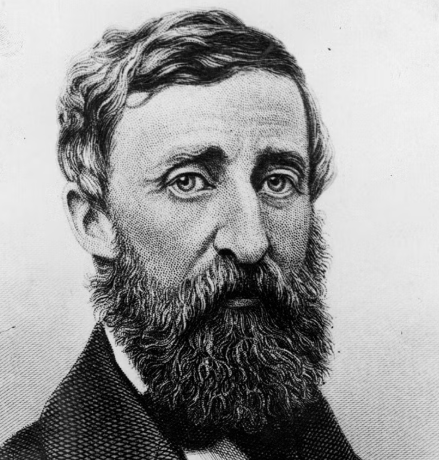
I am here to plead his cause with you. I plead not for his life, but for his character - his immortal life; and so it becomes your cause wholly, and is not his in the least. Some eighteen hundred years ago Christ was crucified; this morning, perchance, Captain Brown was hung. These are the two ends of a chain which is not without its links. He is not Old Brown any longer; he is an angel of light.
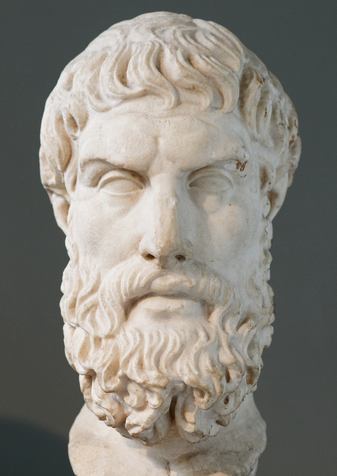
Pleasure, or pain, is not only good, or evil, in itself, but the measure of what is good or evil, in every object of desire or aversion; for the ultimate reason why we pursue one thing, and avoid another, is because we expect pleasure from the former, and apprehend pain from the latter. If we sometimes decline a present pleasure, it is not because we are averse to pleasure itself, but because we conceive, that in the present instance, it will be necessarily connected with a greater pain. In like manner, if we sometimes voluntarily submit to a present pain, it is because we judge that it is necessarily connected with a greater pleasure.
If we command our wealth, we shall be rich and free; if our wealth commands us, we are poor indeed.
You need a change of soul rather than a change of climate.

The ideal of human kinship that would brook no injustice or social wrong agave the only meaning and purpose to my life. This ideal I found in anarchism. Not, to be sure, in the distorted image of anarchism presented in the Press and by pseudo-social economists or hounded and persecuted by the powers that be. I found anarchism the moving spirit of beauty-of social harmony-of a free and untrammeled growth of the individual. This became my inspiration and my highest goal.
Gradually the village murmur subsided, and we seemed to be embarked on the placid current of our dreams, floating from past to future as silently as one awakes to fresh morning or evening thoughts.
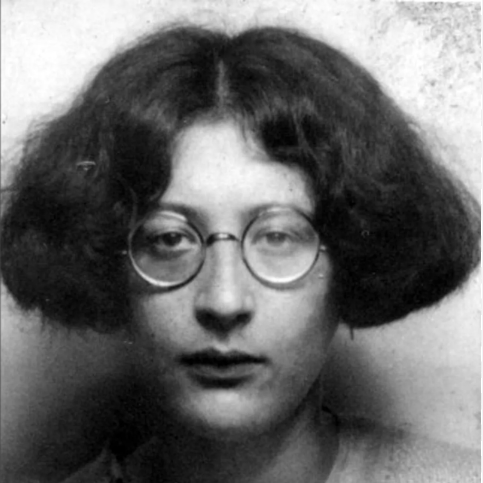
Meditation on the chance which led to the meeting of my mother and father is even more salutary than meditation on death.
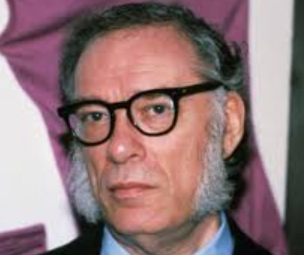
There is less trouble and trauma involved in writing a new piece than in trying to salvage an unsatisfactory old one.
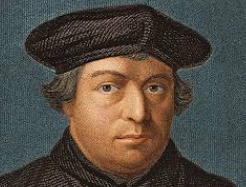
Who loves not woman, wine, and song / Remains a fool his whole life long.
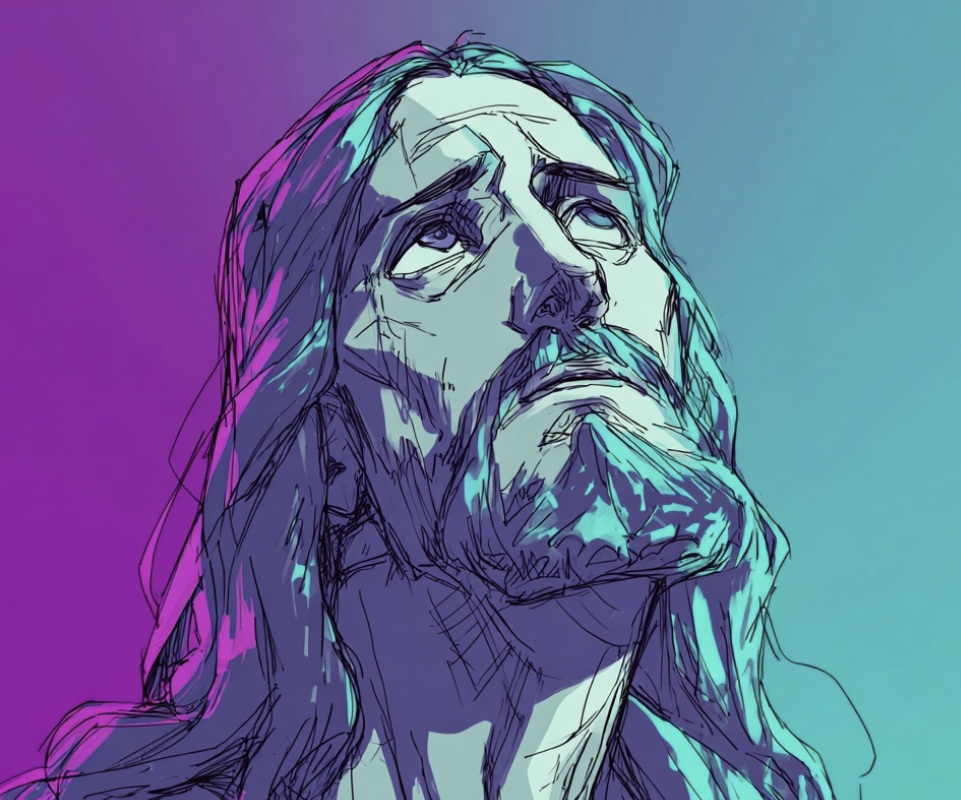
Go into the city to such a man, and say unto him, The Master saith, My time is at hand; I will keep the passover at thy house with my disciples.
Peace be with you. Receive my peace unto yourselves. Beware that no one lead you astray saying Lo here or lo there! For the Son of Man is within you. Follow after Him! Those who seek Him will find Him. Go then and preach the gospel of the Kingdom. Do not lay down any rules beyond what I appointed you, and do not give a law like the lawgiver lest you be constrained by it.
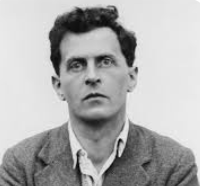
I don't know why we are here, but I'm pretty sure that it is not in order to enjoy ourselves.
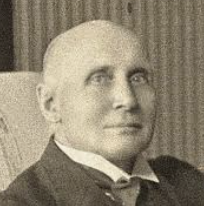
Buddhism is the most colossal example in the history of applied metaphysics.
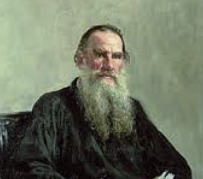
When an individual passes from one period of life to another a time comes when he cannot go on in senseless activity and excitement as before, but has to understand that although he has out-grown what before used to direct him, this does not mean that he must live without any reasonable guidance, but rather that he must formulate for himself an understanding of life corresponding to his age, and having elucidated it must be guided by it. And in the same way a similar time must come in the growth and development of humanity.
I hear beyond the range of sound, I see beyond the range of sight,New earths and skies and seas around, And in my day the sun doth pale his light.

As the Genesis story teaches, knowledge cannot save us from ourselves. If we know more than before, it means only that we have greater scope to enact our fantasies. But - as the Genesis myth also teaches - there is no way we can rid ourselves of what we know. If we try to regain a state of innocence, the result can only be a worse madness. The message of Genesis is that in the most vital areas of human life there can be no progress, only an unending struggle with our own nature.
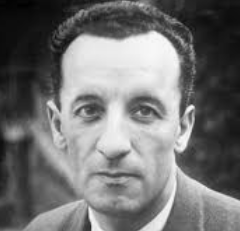
By becoming the pure subject who knows the world objectively, man ultimately realizes that absolute consciousness with respect to which the body and individual existence are no longer anything but objects; death is deprived of meaning. Reduced to the status of object of consciousness, the body could not be conceived as an intermediary between "things" and the consciousness which knows them.
Part of what makes moral philosophy an anachronistic field is that its practitioners continue to argue in this very traditional and aprioristic way even though they themselves do not claim that one can provide a systematic and indubitable 'foundation' for the subject. Most of them rely on what are supposed to be 'intuitions' without claiming that those intuitions deliver uncontroversial ethical premises, on the one hand, or that they have an ontological or epistemological explanation of the reliability of those intuitions, on the other.
My prayer is not the whimpering of a beggar nor a confession of love. Nor is it the petty reckoning of a small tradesman: Give me and I shall give you. My prayer is the report of a soldier to his general: This is what I did today, this is how I fought to save the entire battle in my own sector, these are the obstacles I encountered, this is how I plan to fight tomorrow.
Demonstrating is therefore only the means through which I strip my thought of the form of "mine-ness" so that the other person may recognize it as his own.
The function of knowledge in the decision-making process is to determine which consequences follow upon which of the alternative strategies.
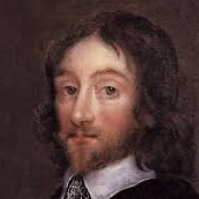
I could be content that we might procreate like trees, without conjunction, or that there were any way to perpetuate the world without this trivial and vulgar act of coition; It is the foolishest act a wise man commits in all his life, nor is there anything that will more deject his cooled imagination, when he shall consider what an odd and unworthy piece of folly he hath committed.
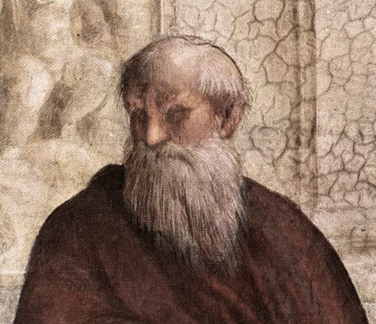
Hence, as Narcissus, by catching at the shadow, plunged himself in the stream and disappeared, so he who is captivated by beautiful bodies, and does not depart from their embrace, is precipitated, not with his body, but with his soul, into a darkness profound and repugnant to intellect (the higher soul), through which, remaining blind both here and in Hades, he associates with shadows.
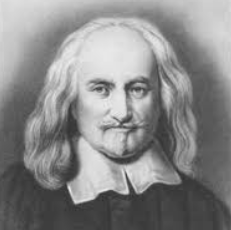
Understanding being nothing else, but conception caused by Speech.

Art is naturally concerned with man in his existential aspect, not in his scientific aspect. For the scientist, questions about man's stature and significance, suffering and power, are not really scientific questions; consequently he is inclined to regard art as an inferior recreation. Unfortunately, the artist has come to accept the scientist's view of himself. The result, I contend, is that art in the twentieth century - literary art in particular - has ceased to take itself seriously as the primary instrument of existential philosophy. It has ceased to regard itself as an instrument for probing questions of human significance. Art is the science of human destiny. Science is the attempt to discern the order that underlies the chaos of nature; art is the attempt to discern the order that underlies the chaos of man. At its best, it evokes unifying emotions; it makes the reader see the world momentarily as a unity.
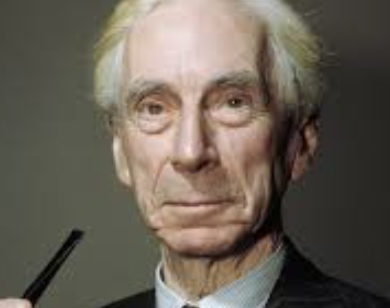
Modern physics... reduces matter to a set of events which proceed outward from a centre. If there is something further in the centre itself, we cannot know about it, and it is irrelevant to physics.

Let hopes and sorrows, fears and angers be, and think each day that dawns the last you'll see; For so the hour that greets you unforeseen, will bring with it enjoyment twice as keen.
I hold in fact(1) That small portions of space are in fact of a nature analogous to little hills on a surface which is on the average flat; namely, that the ordinary laws of geometry are not valid in them.(2) That this property of being curved or distorted is continually being passed on from one portion of space to another after the manner of a wave.(3) That this variation of the curvature of space is what really happens in that phenomenon which we call the motion of matter, whether ponderable or etherial.(4) That in the physical world nothing else takes place but this variation, subject possibly to the law of continuity.
For all knowledge and wonder (which is the seed of knowledge) is an impression of pleasure in itself.

For this also we will honour the poor Manchester Insurrection, and augur well of it. A deep unspoken sense lies in these strong men,- inconsiderable, almost stupid, as all they can articulate of it is. Amid all violent stupidity of speech, a right noble instinct of what is doable and what is not doable never forsakes them: the strong inarticulate men and workers, whom Fact patronises; of whom, in all difficulty and work whatsoever, there is good augury!
It is impossible to imagine a more dramatic and horrifying combination of scientific triumph with political and moral failure than has been shown to the world in the destruction of Hiroshima. From the scientific point of view, the atomic bomb embodies the results of a combination of genius and patience as remarkable as any in the history of mankind.
Nothing would prove more disastrous to our ideas, we contended, than to neglect the effect of the internal upon the external, of the psychological motives and needs upon existing institutions.
This was her finest role and the hardest one to play. Choosing between heaven and a ridiculous fidelity, preferring oneself to eternity or losing oneself in God is the age-old tragedy in which each must play his part.
She has forgotten speech and language and the restlessness of thoughts, has forgotten what is even greater restlessness, this self, has forgotten herself-she, the lost woman, who is now lost in her Savior, who, lost in him, rests at his feet-like a picture. He speaks about her; he says: Her many sins are forgiven her, because she loved much. Although she is present, it is almost as if she were absent; it is almost as if he changed her into a picture, a parable.
As in the presence of the Master, the Servants are equall, and without any honour at all; So are the Subjects, in the presence of the Soveraign. And though they shine some more, some lesse, when they are out of his sight; yet in his presence, they shine no more than the Starres in presence of the Sun.

He begins to think for himself and meets Nineteenth-century Rationalism Which can explain away religion by any number of methods.
May not this religious reticence, in these devout good souls, be perhaps a merit, and sign of health in them? Jocelin, Eadmer, and such religious men, have as yet nothing of 'Methodism;' no Doubt or even root of Doubt. Religion is not a diseased self-introspection, an agonising inquiry: their duties are clear to them, the way of supreme good plain, indisputable, and they are traveling on it. Religion lies over them like an all-embracing heavenly canopy, like an atmosphere and life-element, which is not spoken of, which in all things is presupposed without speech. Is not serene or complete Religion the highest aspect of human nature.
Well, Prince, so Genoa and Lucca are now just family estates of the Buonapartes. But I warn you, if you don't tell me that this means war, if you still try to defend the infamies and horrors perpetrated by that Antichrist-I really believe he is Antichrist-I will have nothing more to do with you and you are no longer my friend, no longer my 'faithful slave,' as you call yourself! But how do you do? I see I have frightened you-sit down and tell me all the news.

The need to devour oneself absolves one of the need to believe.

If ever there was a holy war, it was that which saved our liberties and gave us independence.
If he is not Nature herself, he is certainly the nature of Nature, and is the soul of the Soul of the world, if he is not the soul herself.
He who knows himself properly can very soon learn to know all other men. It is all reflection.
CivilSimian.com created by AxiomaticPanic, CivilSimian, Kalokagathia