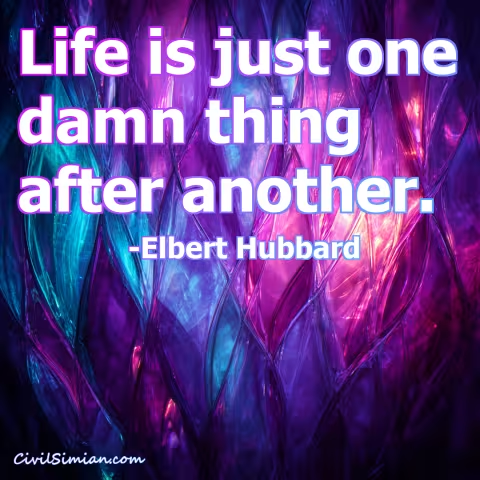
I'm at a point where my grand projects are out of the design phase and into the general administration phase, so I have some time to do some writing.



I am almost inclined to set it up as a canon that a children's story which is enjoyed only by children is a bad children's story. The good ones last. A waltz which you can like only when you are waltzing is a bad waltz.
Man's greatest concern is to know how he shall properly fill his place in the universe and correctly understand what he must be in order to be a man.
[I]n the wake of the growth of the animal-rights movement, there has recently arisen a hitherto unfelt need to demonise and demean our non-human victims - and those who try to help them - now that our previously well-nigh unquestioned right to kill and exploit them is being challenged. Bloodsports enthusiasts, for instance, currently spend a lot of time cataloguing the alleged depredations of our victims on the environment. Recreational animal-killers go to extraordinarily lengths to avoid admitting that they themselves enjoy hunting and killing other creatures for fun. But then until a few years ago such rationalisations seemed scarcely called for. Selfish DNA had honed our intuitions so that the most agonising bloodshed seemed simply "natural". "The Post-Darwinian Transition", The Animal Rights Library, 1996
I am convinced we do not only love ourselves in others but hate ourselves in others too.
...inversion...is an outlet that a child discovers when he is suffocating.

Men without their choice derive benefits from that association; without their choice they are subjected to duties in consequence of these benefits; and without their choice they enter into a virtual obligation as binding as any that is actual. Look through the whole of life and the whole system of duties. Much the strongest moral obligations are such as were never the results of our option. I allow, that if no supreme ruler exists, wise to form, and potent to enforce, the moral law, there is no sanction to any contract, virtual or even actual, against the will of prevalent power. On that hypothesis, let any set of men be strong enough to set their duties at defiance, and they cease to be duties any longer.

This dysfunction of power was related to a central excess: what might be called the monarchical 'super-power', which identified the right to punish with the personal power of the sovereign.
Love is better than hate, because it brings harmony instead of conflict into the desires of the persons concerned. Two people between whom there is love succeed or fail together, but when two people hate each other the success of either is the failure of the other.

Once a word has been allowed to escape, it cannot be recalled.
Necessity gives the law without itself acknowledging one.
The ruling power within, when it is in its natural state, is so related to outer circumstances that it easily changes to accord with what can be done and what is given it to do.
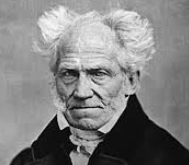
Europeans are awakening more and more to a sense that beasts have rights, in proportion as the strange notion is being gradually overcome and outgrown, that the animal kingdom came into existence solely for the benefit and pleasure of man. This view, with the corollary that non-human living creatures are to be regarded merely as things, is at the root of the rough and altogether reckless treatment of them, which obtains in the West.
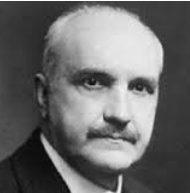
Culture is on the horns of this dilemma: if profound and noble, it must remain rare, if common, it must become mean.
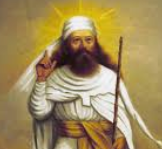
Thou shouldst not become presumptuous through great connections and race; for in the end thy trust is on thine own deeds.
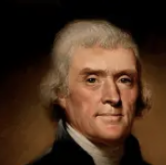
The whole art of government consists in the art of being honest.
Physicists and philosophers stick stubbornly to the principles of a mechanistic interpretation of the world after physics has, in its factual structure, already outgrown the latter. They have the same excuse as the inhabitant of the mainland who for the first time travels on the open sea: he will desperately try to stay in sight of the vanishing coast line, as long as there is no other coast in sight, towards which he steers.
"Do not die that we may not die," the dead cry out within you. "We had no time to enjoy the women we desired; be in time, sleep with them! We had no time to turn our thoughts into deeds; turn them into deeds! We had no time to grasp and to crystallize the face of our hope; make it firm!" ... But you must choose with care whom to hurl down again into the chasms of your blood, and whom you shall permit to mount once more into the light and the earth.
Friendship is always helpful, but love sometimes even does harm
Youth is learning to read (which is all that one learns in school), and is learning where and how to find what he may later need to know (which is the best of the arts that he acquires in college). Nothing learned from a book is worth anything until it is used and verified in life; only then does it begin to affect behavior and desire. It is Life that educates, and perhaps love more than anything else in life.
Let us... take in our hands the staff of experience... To be blind and to think that one can do without this staff is the worst kind of blindness.
Confidence is the only bond of friendship.
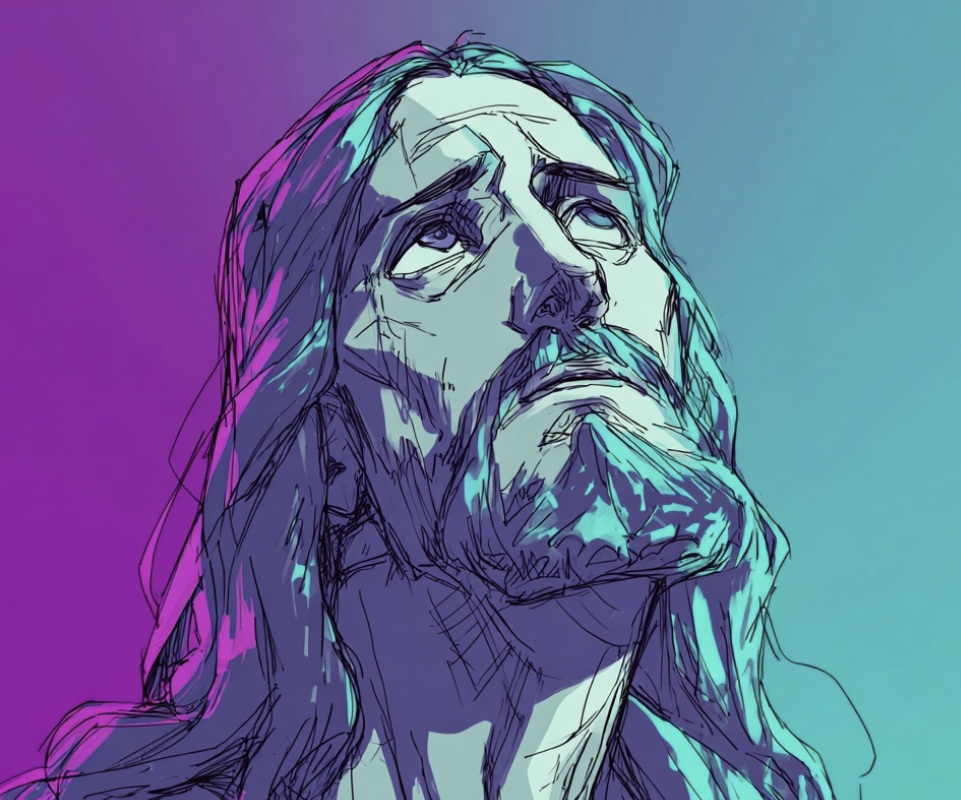
Verily I say unto you, All sins shall be forgiven unto the sons of men, and blasphemies wherewith soever they shall blaspheme: But he that shall blaspheme against the Holy Ghost hath never forgiveness, but is in danger of eternal damnation.
Faith which does not doubt is dead faith.
Man must be free of it all, of his bad conscience and of the bad salvation from this conscience in order to become in truth the way. Now, he no longer promises others the fulfillment of his duties, but promises himself the fulfillment of man.
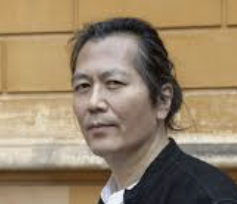
Disciplinary society is still governed by no. Its negativity produces madmen and criminals. In contrast, achievement society creates depressives and losers.
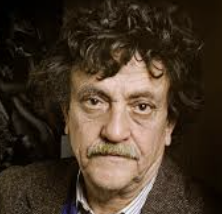
Say what you will about the sweet miracle of unquestioning faith, I consider a capacity for it terrifying and absolutely vile.
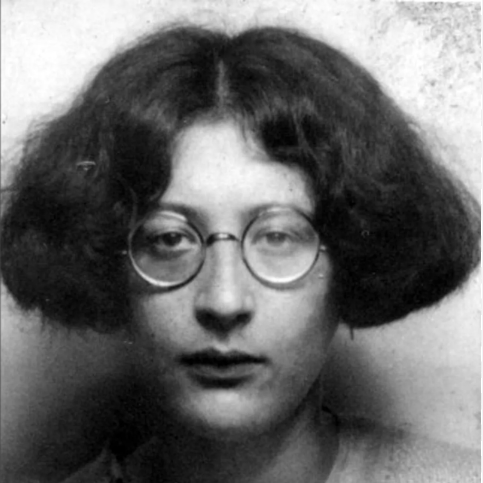
Maurras, with perfect logic, is an atheist. The Cardinal [Richelieu], in postulating something whose whole reality is confined to this world as an absolute value, committed the sin of idolatry. ... The real sin of idolatry is always committed on behalf of something similar to the State.
The men of England - the men, I mean of light and leading in England.
May we be those who shall heal this world.
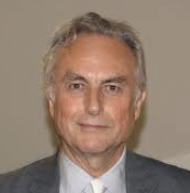
It is hard to believe that this simple truth is not understood by those leaders who forbid their followers to use effective contraceptive methods. They express a preference for 'natural' methods of population limitation, and a natural method is exactly what they are going to get. It is called starvation.
It is sometimes expedient to forget who we are.
Human reason is by nature architectonic.
Correspondences are like small clothes before the invention of suspenders; it is impossible to keep them up.
When I was 4 years old ... I dreamt that I'd been eaten by a wolf, and to my great surprise I was in the wolf's stomach and not in heaven.
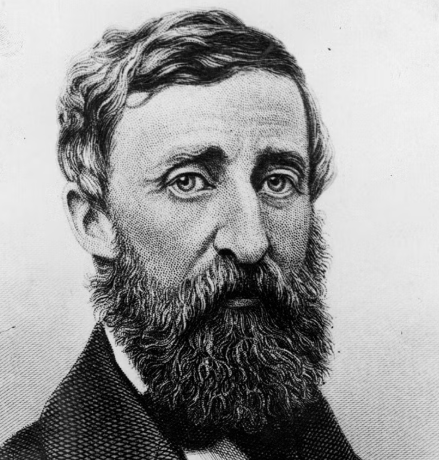
Money is not required to buy one necessity of the soul.
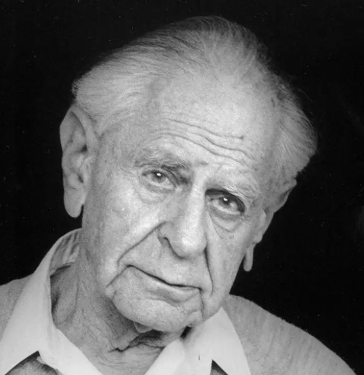
To be ignorant of the past is to remain a child.
I believe that every human being with a physically normal brain can learn a great deal and can be surprisingly intellectual. I believe that what we badly need is social approval of learning and social rewards for learning.We can all be members of the intellectual elite and then, and only then, will a phrase like "America's right to know" and, indeed, any true concept of democracy, have any meaning.
Let a fool hold his tongue and he will pass for a sage.

By virtue of the way it has organized its technological base, contemporary industrial society tends to be totalitarian. For "totalitarian" is not only a terroristic political coordination of society, but also a non-terroristic economic-technical coordination which operates through the manipulation of needs by vested interests.
He that dies in extreme old age will be reduced to the same state with him that is cut down untimely.
My prayer is not the whimpering of a beggar nor a confession of love. Nor is it the petty reckoning of a small tradesman: Give me and I shall give you. My prayer is the report of a soldier to his general: This is what I did today, this is how I fought to save the entire battle in my own sector, these are the obstacles I encountered, this is how I plan to fight tomorrow.
You need to know enough philosophy so that the methods of logical analysis are available to you to be used as a tool. One of the most depressing things about educated people today is that so few of them, even among professional intellectuals, are able to follow the steps of a simple logical argument.
In living bodies, how all the various limbs harmonize, and mutually combine, for common defence against injury! What can be more heterogeneous, and unlike, than the body and the soul? and yet with what strong bonds nature has united them, is evident from the pang of separation. As life itself is nothing else but the concordant union of body and soul, so is health the harmonious cooperation of all the parts and functions of the body.
Now, that we do not really know of what sort each thing is, or is not, has often been shown.
The capitalists soon had everything in their hands and nothing remained to the workers.
Physics is mathematical not because we know so much about the physical world, but because we know so little: it is only its mathematical properties that we can discover.
CivilSimian.com created by AxiomaticPanic, CivilSimian, Kalokagathia