


7 months 3 weeks ago
Courtesy is a science of the highest importance. It is, like grace and beauty in the body, which charm at first sight, and lead on to further intimacy and friendship, opening a door that we may derive instruction from the example of others, and at the same time enabling us to benefit them by our example, if there be anything in our character worthy of imitation.


8 months 2 weeks ago
You know what charm is: a way of getting the answer 'yes' without having asked any clear question.
7 months 3 weeks ago
By liberty, then, we can only mean a power of acting or not acting, according to the determinations of the will.
▼
Source
source
§ 8.23
5 months 2 weeks ago
To know what you prefer, instead of humbly saying Amen to what the world tells you you ought to prefer, is to have kept your soul alive.
▼
Source
source
An Inland Voyage (1878), Ch. III, "The Royal Sport Nautique".
7 months 2 weeks ago
It requires twenty years for a man to rise from the vegetable state in which he is within his mother's womb, and from the pure animal state which is the lot of his early childhood, to the state when the maturity of reason begins to appear. It has required thirty centuries to learn a little about his structure. It would need eternity to learn something about his soul. It takes an instant to kill him.
▼
Source
source
"Man: General Reflection on Man", 1771
7 months 2 weeks ago
Let them have what instructions you will, and ever so learned lectures of breeding daily inculcated into them, that which will most influence their carriage will be the company they converse with, and the fashion of those about them.
▼
Source
source
Sec. 67
3 months 2 weeks ago
Likewise, they call it "Chaos," which is Hesiod's first generator, because Chaos gives rise to everything else, as the monad does. It is also thought to be both "mixture" and "blending," "obscurity" and "darkness" thanks to the lack of articulation and distinction of everything which ensues from it. Anatolius says that it is called "matrix" and "matter," on the grounds that without it there is no number. The mark which signifies the monad is the source of all things.
▼
Source
source
On the Monad
6 months ago
Psychoanalysis, which interprets the human being as a socialized being, and the psychic apparatus as essentially developed and determined through the relationship of the individual to society, must consider it a duty to participate in the investigation of sociological problems to the extent the human being or his/her psyche plays any part at all.
▼
Source
source
"Psychoanalyse und Soziologie" (1929); published as "Psychoanalysis and Sociology" as translated by Mark Ritter, in Critical Theory and Society : A Reader (1989) edited by S. E. Bronner and D. M. Kellner
8 months 1 day ago
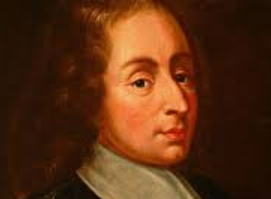
The mind must not be forced; artificial and constrained manners fill it with foolish presumption, through unnatural elevation and vain and ridiculous inflation, instead of solid and vigorous nutriment.
6 months 3 weeks ago
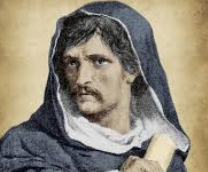
The Divine light is always in man, presenting itself to the senses and to the comprehension, but man rejects it.
▼
Source
source
As quoted in Life and Teachings of Giordano Bruno : Philosopher, Martyr, Mystic 1548 - 1600 (1913) by Coulson Turnbull
3 months 3 weeks ago
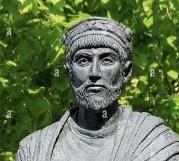
I lay it down that there is Matter, and also there are Material Species, but unless a Final Cause for them be previously assumed, we shall be, without perceiving it, introducing the doctrine of Epicurus: since if nothing be anterior to two efficient causes, a spontaneous flux and chance must have united the two together.
4 months 2 weeks ago
Today we have arrived at a point when the three principles [of modern resistance: 1. measure of efficacy, 2. the form of political and military organization correspond to the current forms of economic and social production, 3. democracy and freedom] coincide. The distributed network structure provides the model for an absolutely democratic organization that corresponds to the dominant forms of economic and social production and is also the most powerful weapon against the ruling power structure.
▼
Source
source
88
6 months 1 week ago
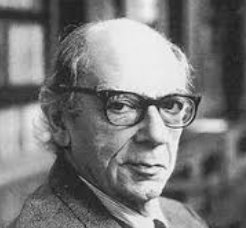
But to manipulate men, to propel them towards goals which you - the social reformer - see, but they may not, is to deny their human essence, to treat them as objects without wills of their own, and therefore to degrade them.

6 months 2 weeks ago
Yes! We believe in a higher principle than your virtue and the kind of morality you speak of so paltrily and without much conviction. We believe that there is no imperative or reward for virtue for the soul because it simply acts according to the necessity of its inherent nature. The moral imperative expresses itself in an ought and presupposes the concept of an evil next to that of good.
▼
Source
source
P. 43

7 months 2 weeks ago
It was the excess to which imaginary systems of religion had been carried, and the intolerance, persecutions, burnings, and massacres, they occasioned, that first induced certain persons to propagate infidelity; thinking, that upon the whole, that it was better not to believe at all, than to believe a multitude of things and complicated creeds, that occasioned so much mischief in the world. But those days are past, persecution has ceased, and the antidote then set up against it has no longer even the shadow of apology. We profess, and we proclaim in peace, the pure, unmixed, comfortable, and rational belief of a God, as manifested to us in the universe. We do this without any apprehension of that belief being made a cause of persecution as other beliefs have been, or of suffering persecution ourselves. To God, and not to man, are all men to account for their belief.
▼
Source
source
A Discourse, &c. &c.

3 months 2 weeks ago
We must admit, with the same frankness, that we are ignorant whether matter has in itself the faculty of feeling, or only the power of acquiring it by those modifications or forms to which matter is susceptible; for it is true that this faculty of feeling appears only in organic bodies.This is then another new faculty which might exist only potentially in matter, like all the others which have been mentioned; and this was the hypothesis of the ancients, whose philosophy, full of insight and penetration, deserves to be raised above the ruins of the philosophy of the moderns.
▼
Source
source
Ch. VI Concerning the Sensitive Faculty of Matter
6 months 1 week ago
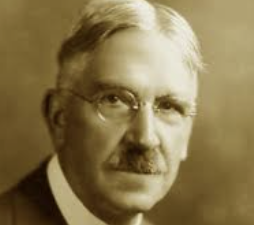
When there is genuine artistry in scientific inquiry and philosophic speculation, a thinker proceeds neither by rule nor yet blindly, but by means of meaning that exist immediately as feelings having qualitative color.
7 months 2 weeks ago
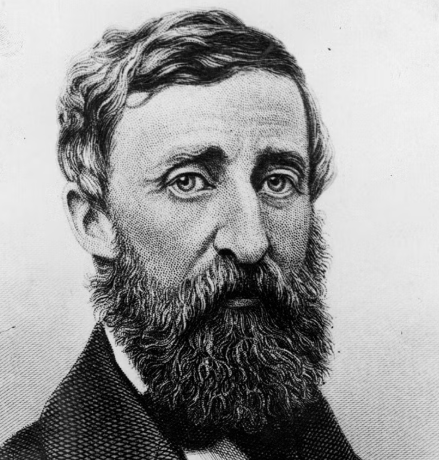
It would be worthy of the age to print together the collected Scriptures or Sacred Writings of the several nations, the Chinese, the Hindus, the Persians, the Hebrews, and others, as the Scripture of mankind. The New Testament is still, perhaps, too much on the lips and in the hearts of men to be called a Scripture in this sense. Such a juxtaposition and comparison might help to liberalize the faith of men. This is a work which Time will surely edit, reserved to crown the labors of the printing-press. This would be the Bible, or Book of Books, which let the missionaries carry to the uttermost parts of the earth.

6 months 2 weeks ago
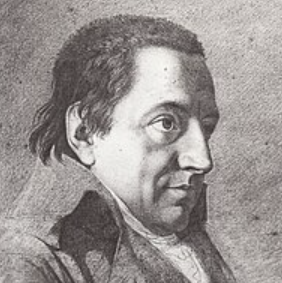
True Religion does not manifest itself outwardly, and impels man to no course of external conduct which he would not otherwise have adopted, but that it only completes his true In ward Being and Dignity. It is neither an Action, nor an incentive to Action, but a Thought:-it is LIGHT, and the One True Light, which bears within it all Life and all the forms of Life, and pervades their innermost substance. Once arisen, this Light flows on spontaneously forever, spreading itself forth without term or limit;-and it is as idle to bid it shine, as it would be to address such a command to the material sun when it stands in the noon-day heavens. It does this without our bidding; and if it shine not, then has it not arisen. At its uprising, Darkness, and the brood of spectres and phantasms which are born of Darkness, vanish of themselves.
▼
Source
source
p. 264
8 months 2 weeks ago
It was the addition of status that brought the little things: a more comfortable seat here, a better cut of meat there, a shorter wait in line at the other place. To the philosophical mind, these items might seem scarcely worth any great trouble to acquire.Yet no one, however philosophical, could give up those privileges, once acquired, without a pang. That was the point.
6 months 1 week ago
The philosophical anthropologist ... can know the wholeness of the person and through it the wholeness of man only when he does not leave his subjectivity out and does not remain an untouched observer.
▼
Source
source
p. 148
3 months 2 weeks ago
People try to get away from it all-to the country, to the beach, to the mountains. You always wish that you could too. Which is idiotic: you can get away from it anytime you like. By going within. Nowhere you can go is more peaceful-more free of interruptions-than your own soul.
▼
Source
source
(Hays translation) IV, 4
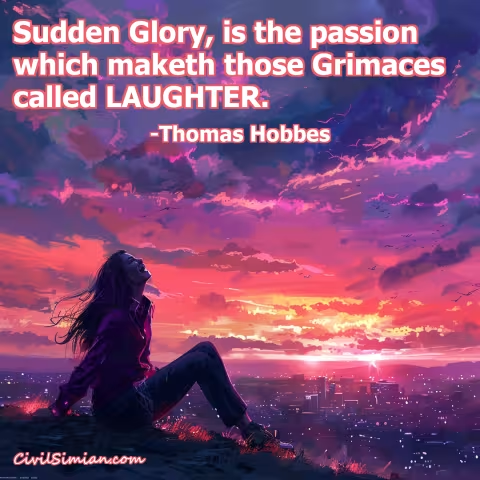
6 months 2 weeks ago
Superstition is the religion of feeble minds.
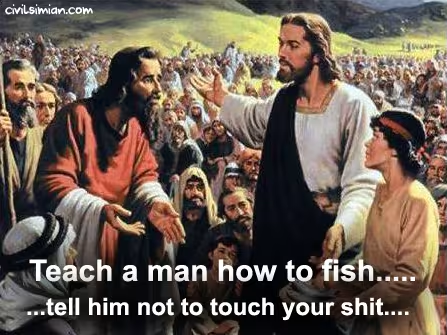
7 months 2 weeks ago
Tis the good reader that makes the good book; in every book he finds passages which seem confidences or asides hidden from all else and unmistakenly meant for his ear.
▼
Source
source
Success
6 months 2 weeks ago
People ... become so preoccupied with the means by which an end is achieved, as eventually to mistake it for the end. Just as money, which is a means of satisfying wants, comes to be regarded by a miser as the sole thing to be worked for, leaving the wants unsatisfied; so the conduct men have found preferable because most conducive to happiness, has come to be thought of as intrinsically preferable: not only to be made a proximate end (which it should be), but to be made an ultimate end, to the exclusion of the true ultimate end.
▼
Source
source
Ethics (New York:1915), § 14, pp. 38-39

7 months 1 week ago
The covetous man is ever in want.
▼
Source
source
Book I, epistle ii, line 56
7 months 2 weeks ago
The imitator dooms himself to hopeless mediocrity. The inventor did it because it was natural to him, and so in him it has a charm. In the imitator something else is natural, and he bereaves himself of his own beauty, to come short of another man's.
▼
Source
source
p. 26
5 months 3 days ago
A great chapter of the history of the world is written in the chalk. Few passages in the history of man can be supported by such an overwhelming mass of direct and indirect evidence as that which testifies to the truth of the fragment of the history of the globe, which I hope to enable you to read, with your own eyes, tonight. Let me add, that few chapters of human history have a more profound significance for ourselves. I weigh my words well when I assert, that the man who should know the true history of the bit of chalk which every carpenter carries about in his breeches-pocket, though ignorant of all other history, is likely, if he will think his knowledge out to its ultimate results, to have a truer, and therefore a better, conception of this wonderful universe, and of man's relation to it, than the most learned student who is deep-read in the records of humanity and ignorant of those of Nature.
3 months 3 weeks ago
The world I believe is far too serious, and being far too serious, is it has need of a wise and merry philosophy.
▼
Source
source
Ch. I : The Awakening, p. 13

3 months 2 weeks ago
The ecological teaching of the Bible is simply inescapable: God made the world because He wanted it made. He thinks the world is good, and He loves it. It is His world; He has never relinquished title to it. And He has never revoked the conditions, bearing on His gift to us of the use of it, that oblige us to take excellent care of it.
▼
Source
source
God and Country
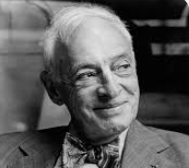
5 months 1 week ago
We are all such accidents. We do not make up history and culture. We simply appear, not by our own choice. We make what we can of our condition with the means available. We must accept the mixture as we find it - the impurity of it, the tragedy of it, the hope of it.
▼
Source
source
Great Jewish Short Stories, introduction to the Dell paperback edition
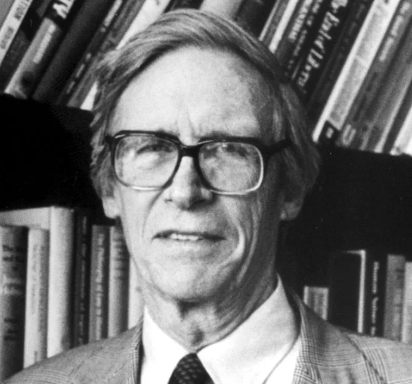
7 months 2 weeks ago
At best the principles that economists have supposed the choices of rational individuals to satisfy can be presented as guidelines for us to consider when we make our decisions.
▼
Source
source
Chapter IX, Section 84, p. 558
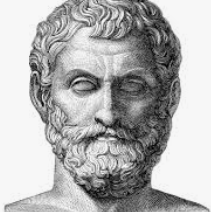
7 months ago
Nothing is more ancient than God, for He was never created; nothing more beautiful than the world, it is the work of that same God; nothing is more active than thought, for it flies over the whole universe; nothing is stronger than necessity, for all must submit to it.
▼
Source
source
As quoted in Love and Live Or Kill and Die: Realities of the Destruction of Human Life (2009) by James H. Wilson, p. 72
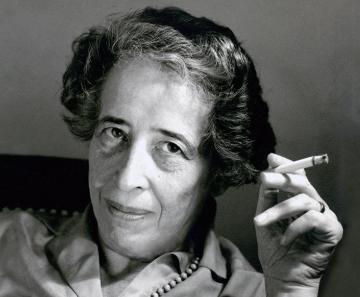
7 months 2 weeks ago
The emotions I feel are no more meant to be shown in their unadulterated state than the inner organs by which we live.
▼
Source
source
pp. 31-32


6 months 1 day ago
Man is as much a slave to his immediate surroundings now as he was when he lived in tree-huts. Give him the highest, the most exciting thoughts about man's place in the universe, the meaning of history; they can all be snuffed out in a moment if he wants his dinner, or feels irritated by a child squalling on a bus. He is bound by pettiness.
▼
Source
source
Chapter Two, World Without Values
8 months 2 weeks ago
It is the failing of a certain literature to believe that life is tragic because it is wretched. Life can be magnificent and overwhelming that is its whole tragedy. Without beauty, love, or danger it would be almost easy to live. And M. Sartre's hero does not perhaps give us the real meaning of his anguish when he insists on those aspects of man he finds repugnant, instead of basing his reasons for despair on certain of man's signs of greatness. The realization that life is absurd cannot be an end, but only a beginning. This is a truth nearly all great minds have taken as their starting point. It is not this discovery that is interesting, but the consequences and rules of action drawn from it.
5 months 2 weeks ago
Every day should be passed as if it were to be our last.
▼
Source
source
Maxim 633

6 months 2 weeks ago
He who must still exhort himself, and be exhorted, to will the good, has as yet no firm and ever-ready will, but wills a will anew every time he needs it. But he who has such a stable will, wills what he wills for ever, and cannot under any circumstances will otherwise than he always wills. For him freedom of the will is destroyed and swallowed up in necessity.
▼
Source
source
General Nature of New Eduction p 21
5 months 2 weeks ago
Guilt has to be understood not only as a way of checking one's own destructiveness, but as a mechanism for safeguarding the life of the other, one that emerges from our own need and dependency, from a sense that this life is not a life without another life. Indeed, when it turns into a safeguarding action, I am not sure it should still be called "guilt." If we do still use that term, we could conclude that "guilt" is strangely generative or that its productive form is reparation.
▼
Source
source
p. 93
3 months 2 weeks ago
At the establishment of our constitutions, the judiciary bodies were supposed to be the most helpless and harmless members of the government. Experience, however, soon showed in what way they were to become the most dangerous; that the insufficiency of the means provided for their removal gave them a freehold and irresponsibility in office; that their decisions, seeming to concern individual suitors only, pass silent and unheeded by the public at large; that these decisions, nevertheless, become law by precedent, sapping, by little and little, the foundations of the constitution, and working its change by construction, before any one has perceived that that invisible and helpless worm has been busily employed in consuming its substance. In truth, man is not made to be trusted for life, if secured against all liability to account.
CivilSimian.com created by AxiomaticPanic, CivilSimian, Kalokagathia