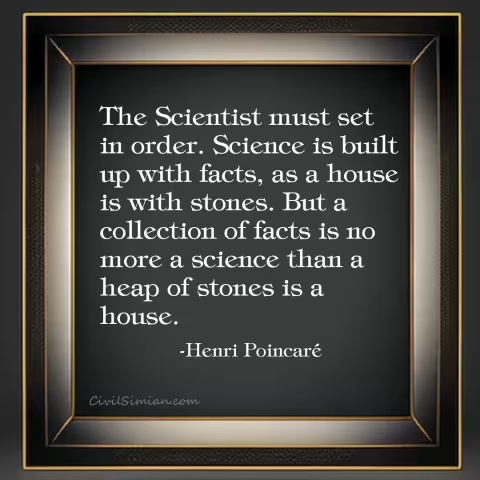
Same holds true with objective morality. Science and objective morality use the same facts, yet one is science and one is morality in the end...goals are subjective....


Marriage is a union between two persons - one man and one woman. A woman who has given herself up to one, can not give herself up to a second, for her whole dignity requires that she should belong only to this one.
Is not the minimal state, the framework for utopia, an inspiring vision? The minimal state treats us as inviolate individuals, who may not be used in certain ways by others as means or tools or instruments or resources; it treats us as persons having individual right with the dignity this constitutes. Treating us with respect by respecting our rights, it allows us, individually or with whom we please, to choose our life and to realize our ends and our conception of ourselves, insofar as we can, aided by the voluntary cooperation of other individuals possessing the same dignity. How dare any state or group of individuals do more. Or less.
A pupil and a teacher. The pupil will not let anything be explained to him, for he continually interrupts with doubts, for instance as to the existence of things, the meaning for words, etc. The teacher says "Stop interrupting me and do as I tell you. So far your doubts don't make sense at all."

To be honest, as critical as I am of people for being anti-human, I love everybody so much for sinking on this ship with me. Admit it or not, we're all dying together.
I do nothing, granted. But I see the hours pass - which is better than trying to fill them.
I do not know what postmodern is and how it differs from the premodern, nor do I feel that I ought to know.
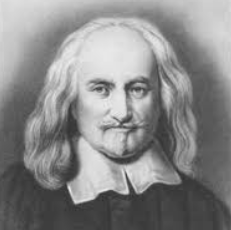
But if one Subject giveth Counsell to another, to do anything contrary to the Lawes, whether that Counsell proceed from evil intention, or from ignorance onely, it is punishable by the Common-wealth; because ignorance of the Law, is no good excuse, where every man is bound to take notice of the Lawes to which he is subject.
Another theme of the Wake that helps in the understanding of the paradoxical shift from cliché to archetype is "pastimes are past times". The dominant technologies of one age become the games and pastimes of a later age. In the twentieth century the number of past times that are simultaneously available is so vast as to create cultural anarchy. When all the cultures of the world are simultaneously present, the work of the artist in the elucidation of form takes on new scope and new urgency. Most men are pushed into the artist role. The artist cannot dispense with the principle of doubleness and interplay since this kind of hendiadys-dialogue is essential to the very structure of consciousness, awareness, and autonomy.
The mad mob does not ask how it could be better, only that it be different. And when it then becomes worse, it must change again. Thus they get bees for flies, and at last hornets for bees. Whether Soldiers Can Also Be in a State of Grace
The true test of civilization is, not the census, nor the size of the cities, nor the crops - no, but the kind of man the country turns out.
The most obvious division of society is into rich and poor; and it is no less obvious, that the number of the former bear a great disproportion to those of the latter. The whole business of the poor is to administer to the idleness, folly, and luxury of the rich; and that of the rich, in return, is to find the best methods of confirming the slavery and increasing the burdens of the poor. In a state of nature, it is an invariable law, that a man's acquisitions are in proportion to his labours. In a state of artificial society, it is a law as constant and as invariable, that those who labour most enjoy the fewest things; and that those who labour not at all have the greatest number of enjoyments. A constitution of things this, strange and ridiculous beyond expression! We scarce believe a thing when we are told it, which we actually see before our eyes every day without being in the least surprised.
And virtue they will curse, speaking harsh words.
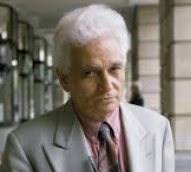
The end of man (as a factual anthropological limit) is announced to thought from the vantage of the end of man (as a determined opening or the infinity of a telos). Man is that which is in relation to his end, in the fundamentally equivocal sense of the word. Since always.
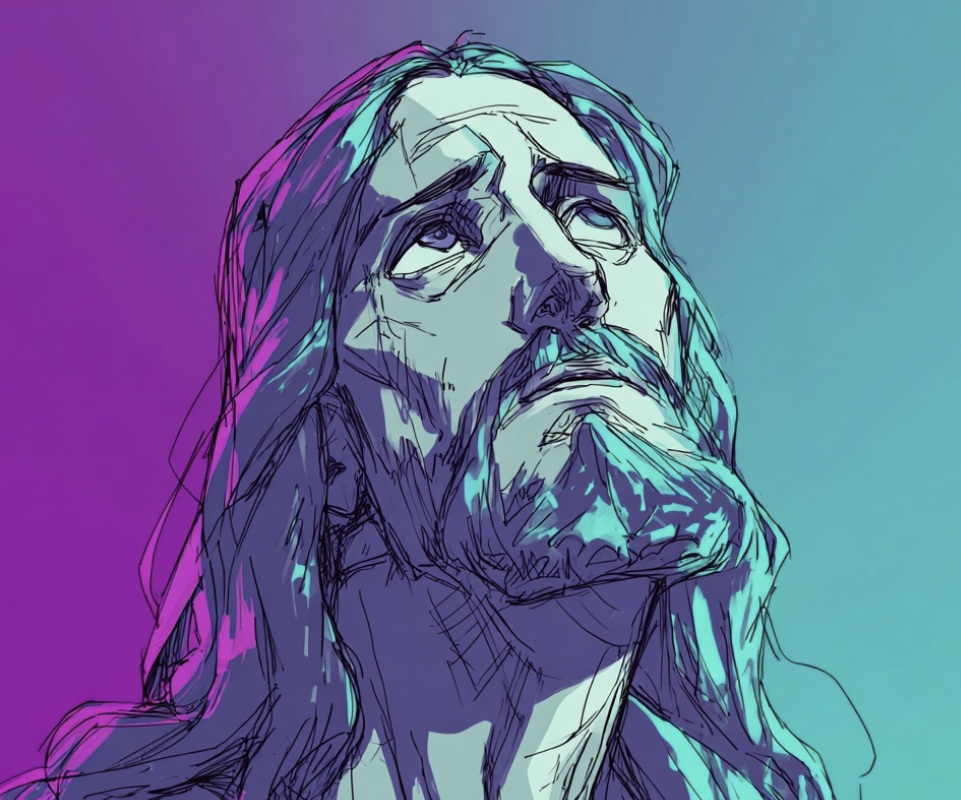
Behold, we go up to Jerusalem; and the Son of man shall be betrayed unto the chief priests and unto the scribes, and they shall condemn him to death, And shall deliver him to the Gentiles to mock, and to scourge, and to crucify him: and the third day he shall rise again.
That unwise body, the United Irishmen, have had the folly to represent those Evils as owing to this Country, when in truth its chief guilt is in its total neglect, its utter oblivion, its shameful indifference and its entire ignorance, of Ireland and of every thing that relates to it, and not in any oppressive disposition towards that unknown region.
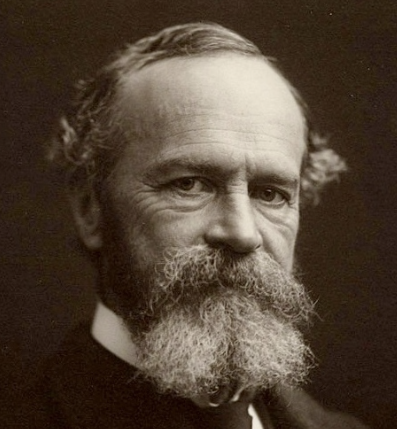
It is only by risking our persons from one hour to another that we live at all. And often enough our faith beforehand in an uncertified result is the only thing that makes the result come true.
It is beyond dispute that the state exercises very great power over human life and it always shows a tendency to go beyond the limits laid down for it.
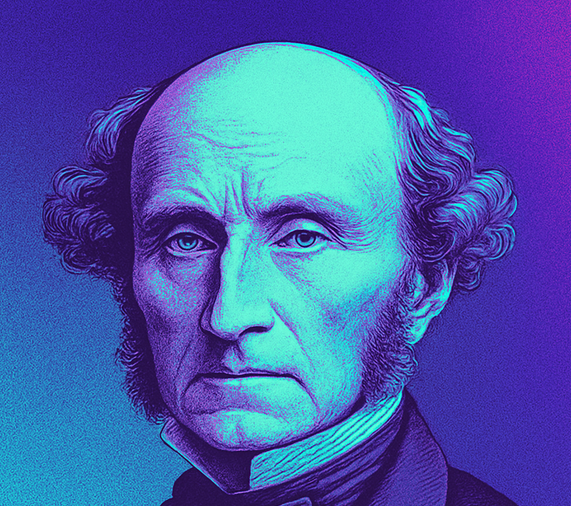
In the same year in which I began Latin, I made my first commencement in the Greek poet with the Iliad. After I had made some progress in this, my father put Pope's translation into my hands. It was the first English verse I had cared to read, and it became one of the books in which for many years I most delighted: I think I must have read it from twenty to thirty times through. I should not have thought it worth while to mention a taste apparently so natural to boyhood, if I had not, as I think, observed that the keen enjoyment of this brilliant specimen of narrative and versification is not so universal with boys, as I should have expected both à priori and from my individual experience.

The God idea is growing more impersonal and nebulous in proportion as the human mind is learning to understand natural phenomena and in the degree that science progressively correlates human and social events.
We must make a very precise distinction between the official and consequently dictatorial prerogatives of society organized as a state, and of the natural influence and action of the members of a non-official, non-artificial society.
I am an investigator by inclination. I feel a great thirst for knowledge and an impatient eagerness to advance, also satisfaction at each progressive step. There was a time when I thought that all this could constitute the honor of humanity, and I despised the mob, which knows nothing about it. Rousseau set me straight. This dazzling excellence vanishes; I learn to honor men, and would consider myself much less useful than common laborers if I did not believe that this consideration could give all the others a value, to establish the rights of humanity.
What is the Jew?...What kind of unique creature is this whom all the rulers of all the nations of the world have disgraced and crushed and expelled and destroyed; persecuted, burned and drowned, and who, despite their anger and their fury, continues to live and to flourish. What is this Jew whom they have never succeeded in enticing with all the enticements in the world, whose oppressors and persecutors only suggested that he deny (and disown) his religion and cast aside the faithfulness of his ancestors?! The Jew - is the symbol of eternity. ... He is the one who for so long had guarded the prophetic message and transmitted it to all mankind. A people such as this can never disappear. The Jew is eternal. He is the embodiment of eternity.
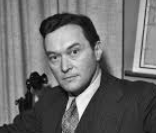
There is nothing disastrous in the temporary nature of our ideas. They are always that. But there may very easily be a train of evil in the self-deception which regards them as final. I think God will forgive us our skepticism sooner than our Inquisitions.

As to [General Douglas] Macarthur, I don't feel in a position to have clear opinions about anyone I know only from newspapers. You see, whenever they deal with anyone (or anything) I know myself, I find they're always a mass of lies & misunderstandings: so I conclude they're no better in the places where I don't know.
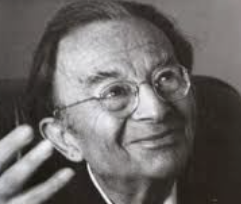
In spite of the universalistic spirit of the monotheistic Western religions and of the progressive political concepts that are expressed in the idea "that all men are created equal," love for mankind has not become a common experience. Love for mankind is looked upon as an achievement which, at best, follows love for an individual or as an abstract concept to be realized only in the future. But love for man cannot be separated from love for one individual. To love one person productively means to be related to his human core, to him as representing mankind. Love for one individual, in so far as it is divorced from love for man, can refer only to the superficial and to the accidental; of necessity it remains shallow.
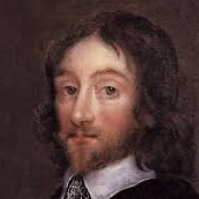
Happy are they that go to bed with grave music like Pythagoras.
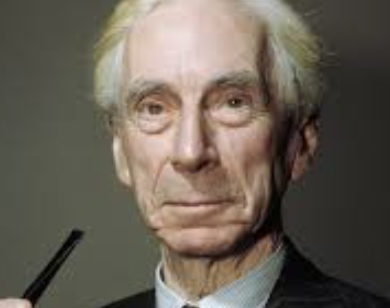
He asked my religion and I replied 'agnostic'. He asked how to spell it, and remarked with a sigh: 'Well, there are many religions, but I suppose they all worship the same God. This remark kept me cheerful for about a week.
Every other art,-as poetry, music, painting,-may be practised without the process showing forth the rules according to which it is conducted ;-but in the self-cognizant art of the philosopher, no step can be taken without declaring the grounds upon which it proceeds.
In ressentiment morality, love for the "small," the "poor," the "weak," and the "oppressed" is really disguised hatred, repressed envy, an impulse to detract, etc., directed against the opposite phenomena: "wealth," "strength," "power," "largesse." When hatred does not dare to come out into the open, it can be easily expressed in the form of ostensible love-love for something which has features that are the opposite of those of the hated object. This can happen in such a way that the hatred remains secret. When we hear that falsely pious, unctuous tone (it is the tone of a certain "socially-minded" type of priest), sermonizing that love for the "small" is our first duty, love for the "humble" inspirit, since God gives "grace" to them, then it is often only hatred posing as Christian love.
Experience declares that man is the only animal which devours his own kind; for I can apply no milder term to the governments of Europe, and to the general prey of the rich on the poor.
What cannot be imagined cannot even be talked about.
What is marvelous is that each day brings us a new reason to disappear.
The world's biggest power is the youth and beauty of a woman.
Since the working-class lives from hand to mouth,it buys as long as it has the means to buy.

These are the two vices that beset Government Offices; both of them originating in insufficient Intellect,-that sad insufficiency from which, directly or indirectly, all evil whatsoever springs!
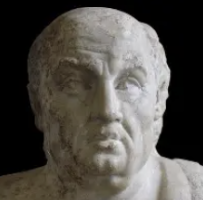
Fortune has taken away, but Fortune has given.
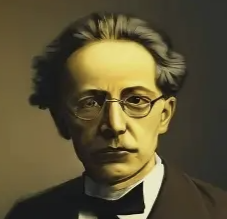
Because the Egoist is to himself the warder of the human, and has nothing to say to the state except: "Get out of my sunshine!"
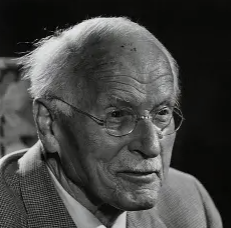
Your vision will become clear only when you can look into your own heart. Without, everything seems discordant; only within does it coalesce into unity. Who looks outside dreams; who looks inside awakes.
Heroes abound at the dawn of civilizations, during pre-Homeric and Gothic epochs, when people, not having yet experienced spiritual torture, satisfy their thirst for renunciation through a derivative: heroism.
Immediate luminousness, in short, philosophical reasonableness and moral helpfulness are the only available criteria. Saint Teresa might have had the nervous system of the placidest cow, and it would not now save her theology, if the trial of the theology by these other tests should show it to be contemptible. And conversely if her theology can stand these other tests, it will make no difference how hysterical or nervously off balance Saint Teresa may have been when she was with us here below.
The problem of establishing a perfect civic constitution is dependent upon the problem of a lawful external relation among states and cannot be solved without a solution of the latter problem.
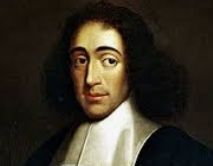
We feel and know that we are eternal.
Every process pushed far enough tends to reverse or flip suddenly. Chiasmus - the reversal to process caused by increasing its speed, scope or size.
CivilSimian.com created by AxiomaticPanic, CivilSimian, Kalokagathia