

7 months 2 weeks ago
Natural selection is like artificial selection, but without the human chooser. Instead of a human deciding which offspring shall die in which shall reproduce, nature 'decides'. The quotation marks are vital because nature doesn't consciously decide. This might seem too obvious to emphasize, but you'd be surprised by the number of people who think natural selection implies some kind of personal choice. They couldn't be more wrong. It just is the case that some offspring are more likely to die while others have what it takes to survive and reproduce. Therefore, as the generations go by, the average, typical creature in the population becomes ever better at the arts of surviving and reproducing. Ever better, I should specify, when, when measured against some absolute standard.
▼
Source
source
Chapter 1, "Facing Mount Rushmore" (p. 34)

5 months 2 weeks ago
In a word, the mass of the people counts for nothing in every political creation. A people even respects a government only because it is not its own creation. This feeling is engraved on its heart in profound characters. It submits to sovereignty because it senses that it is something sacred it can neither create nor destroy. If, as a consequence of corruption and perfidious suggestions, this preventive sentiment is somehow effaced, if it has the misfortune of believing itself called as a body to reform the State, all is lost. This is why, even in free States, it is extremely important that the men who govern be separated from the mass of the people by that personal respect stemming from birth and wealth.
▼
Source
source
p. 73
5 months 2 weeks ago
In order to be transmuted into knowledge, every perception is and must be ordered and organized into categories. The extent, however, to which we can organize and express our experience in such conceptual forms is, in turn, dependent upon the frames of reference which happen to be available at a given historical moment. The concepts which we have and the universe of discourse in which we move, together with the directions in which they tend to elaborate themselves, are dependent largely upon the historical-social situation of the intellectually active and responsible members of the group.
7 months 4 weeks ago
In order for music to free itself, it will have to pass over to the other side - there where territories tremble, where the structures collapse, where the ethoses get mixed up, where a powerful song of the earth is unleashed, the great ritornelles that transmutes all the airs it carries away and makes return.
▼
Source
source
from Essays Critical and Clinical, p. 104.

9 months 2 weeks ago
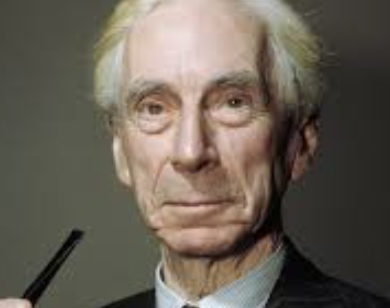
We later learned that all the nineteen passengers in the non-smoking compartment had been killed. When the plane had hit the water a hole had been made in the plane and the water had rushed in. I had told a friend at Oslo who was finding me a place that he must find me a place where I could smoke, remarking jocularly, 'If I cannot smoke, I shall die'. Unexpectedly, this turned out to be true.

9 months 1 week ago
With a malicious man carry on no conflict, and do not molest him in any way whatever.
8 months 2 weeks ago
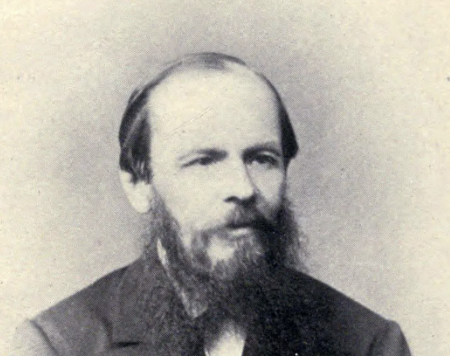
Brothers, love is a teacher; but one must know how to acquire it, for it is hard to acquire, it is dearly bought, it is won slowly by long labour. For we must love not only occasionally, for a moment, but for ever. Everyone can love occasionally, even the wicked can.
▼
Source
source
Book VI, Chapter 3: Conversations and Exhortations of Father Zossima
9 months 2 weeks ago
Belief in eternal hell fire was an essential item of Christian belief until pretty recent times. In this country, as you know, it ceased to be an essential item because of a decision of the Privy Council, and from that decision the Archbishop of Canterbury and the Archbishop of York dissented; but in this country our religion is settled by Act of Parliament, and therefore the Privy Council was able to override Their Graces and hell was no longer necessary to a Christian. Consequently I shall not insist that a Christian must believe in hell. What is a Christian?
▼
Source
source
1927
10 months 3 weeks ago
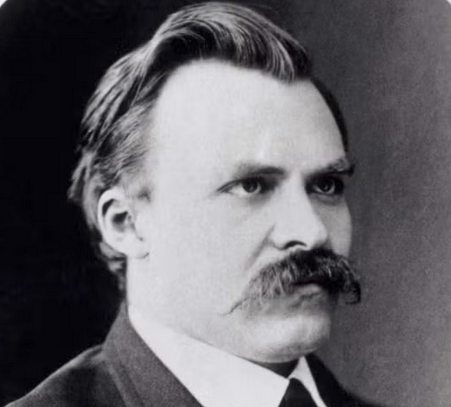
With all great deceivers there is a noteworthy occurrence to which they owe their power. In the actual act of deception... they are overcome by belief in themselves. It is this which then speaks so miraculously and compellingly to those who surround them.
9 months 2 weeks ago
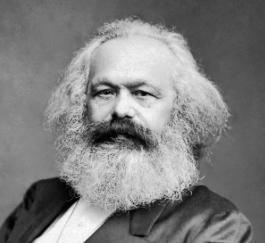
Last words are for fools who haven't said enough.
▼
Source
source
Various attributions,

6 months 1 week ago
Is it not a right glorious thing, and set of things, this that Shakspeare has brought us? For myself, I feel that there is actually a kind of sacredness in the fact of such a man being sent into this Earth.
6 months 1 week ago
All things are subject to decay and change.
▼
Source
source
The General History of Polybius as translated by James Hampton' (1762), Vol. II, pp. 177-178
5 months 2 weeks ago
Live as on a mountain. ...Let men see, let them know a real man who lives according to nature. If they cannot endure him, let them kill him. For that is better than to live thus.
▼
Source
source
X, 15

9 months 1 week ago
Fame and wealth without wisdom are unsafe possessions.
6 months 3 days ago
But the wise man knows that all things are in store for him. Whatever happens, he says: "I knew it."

8 months 2 weeks ago
The advantage of meditating upon life and death is being able to say anything at all about them.
7 months 2 weeks ago
Think about the two qualities that a virus, or any sort of parasitic replicator, demands of a friendly medium, the two qualities that make cellular machinery so friendly towards parasitic DNA, and that make computers so friendly towards computer viruses. These qualities are, firstly, a readiness to replicate information accurately, perhaps with some mistakes that are subsequently reproduced accurately; and, secondly, a readiness to obey instructions encoded in the information so replicated.
9 months 2 weeks ago
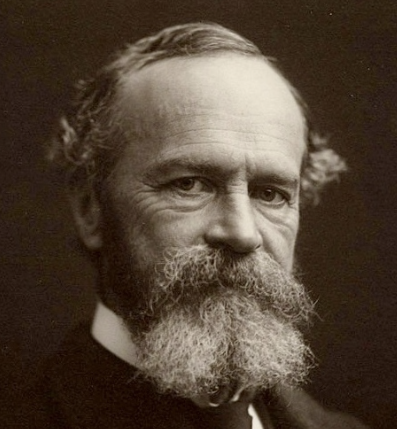
Freedom is only necessity understood.
▼
Source
source
The Dilemma of Determinism, 1884
10 months 2 weeks ago
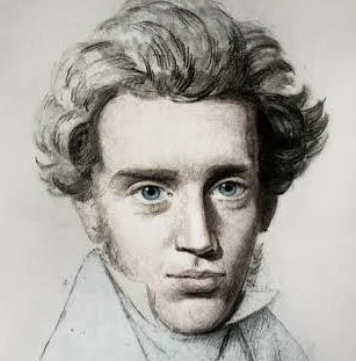
I can understand myself in believing, although in addition I can in a relative misunderstanding comprehend the human aspect of this life: but comprehend faith or comprehend Christ, I cannot.
9 months 1 week ago
Seek after the good, and with much toil shall ye find it; the evil turns up of itself without your seeking it.
9 months 2 weeks ago
The baby, assailed by eyes, ears, nose, skin, and entrails at once, feels it all as one great blooming, buzzing confusion; and to the very end of life, our location of all things in one space is due to the fact that the original extents or bignesses of all the sensations which came to our notice at once, coalesced together into one and the same space.
▼
Source
source
Ch. 13
9 months 1 week ago
If it recedes one day, leaving behind its works and signs on the shores of our civilization, the structuralist invasion might become a question or the historian of ideas, or perhaps even an object. But the historian would be deceived if he came to this pass: by the very act of considering the structuralist invasion as an object he would forget its meaning and would forget that what is at stake, first of all, is an adventure of vision, a conversion of the way of putting questions to any object posed before us, to historical objects-his own- in particular. And, unexpectedly among these, the literary objects.
▼
Source
source
Force and Signification
10 months 3 weeks ago
If you have hitherto believed that life was one of the highest value and now see yourselves disappointed, do you at once have to reduce it to the lowest possible price?

8 months 1 week ago
When we cannot obtain a thing, we comfort ourselves with the reassuring thought that it is not worth nearly as much as we believed.
▼
Source
source
L. Coser, trans. (1973), p. 73
9 months 3 weeks ago
The universal and lasting establishment of peace constitutes not merely a part, but the whole final purpose and end of the science of right as viewed within the limits of reason.
9 months 2 weeks ago
Every artist was first an amateur.
▼
Source
source
Progress of Culture
5 months 4 weeks ago
A man with two trades to his credit can easily learn another ten.
5 months 2 weeks ago
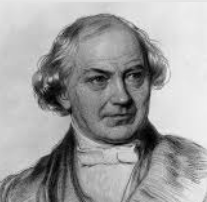
'Induction' is a term applied to describe the 'process' of a true Colligation of Facts by means of an exact and appropriate Conception. 'An Induction' is also employed to denote the 'proposition' which results from this process. An Induction is not the mere sum of the Facts which are colligated. The Facts are not only brought together, but seen in a new point of view. 'The Consilience of Inductions' takes place when an Induction, obtained from one class of facts, coincides with an Induction, obtained from another different class.
7 months 1 day ago
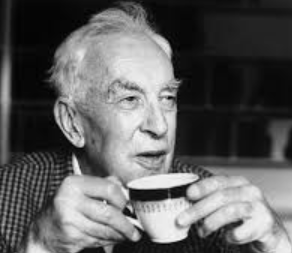
No collection of facts is ever complete, because the Universe is without bounds. And no synthesis or interpretation is ever final, because there are always fresh facts to be found after the first collection has been provisionally arranged.
▼
Source
source
Vol. 1
5 months 2 weeks ago
..If you are troubled by external circumstances, it is not the circumstances that trouble you, but your own perception of them - and they are in your power to change at any time.
9 months 2 weeks ago
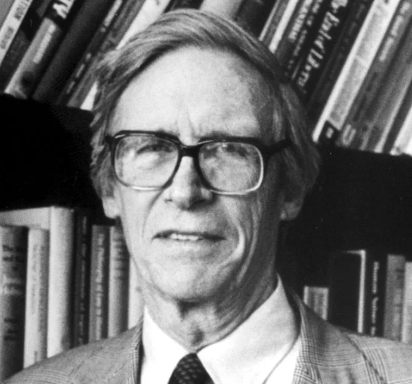
I have tried to set forth a theory that enables us to understand and to assess these feelings about the primacy of justice. Justice as fairness is the outcome: it articulates these opinions and supports their general tendency.
▼
Source
source
Chapter IX, Section 87, p. 586
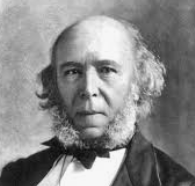
8 months 2 weeks ago
Volumes might be written upon the impiety of the pious.
▼
Source
source
Pt. I, The Unknowable; Ch. V, The Reconciliation
8 months 2 weeks ago
As the years pass, the number of those we can communicate with diminishes. When there is no longer anyone to talk to, at last we will be as we were before stooping to a name.
9 months 2 weeks ago
We are always getting ready to live, but never living.
▼
Source
source
April 12, 1834
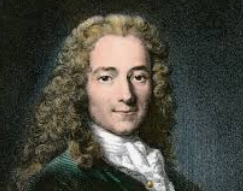
9 months 2 weeks ago
Man ought to be content, it is said; but with what?
▼
Source
source
Pensées, Remarques, et Observations de Voltaire; ouvrage posthume (1802)
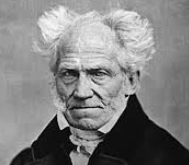
9 months 2 weeks ago
It is difficult, if not impossible, to define the limit of our reasonable desires in respect of possessions.
▼
Source
source
E. Payne, trans. (1974) Vol. 1, p. 346
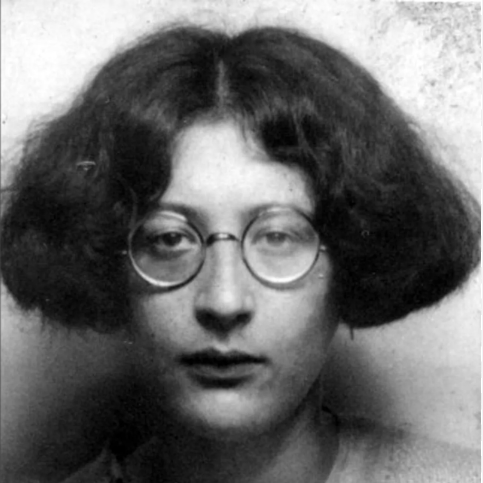
8 months 4 days ago
Besides, it is written that the tree shall be known by its fruits. The Church has borne too many evil fruits for there not to have been some mistake at the beginning. Europe has been spiritually uprooted, cut off from that antiquity in which all the elements of our civilization have their origin; and she has gone about uprooting the other continents from the sixteenth century onwards. Missionary zeal has not Christianized Africa, Asia and Oceania, but has brought these territories under the cold, cruel and destructive domination of the white race, which has trodden down everything. It would be strange, indeed, that the word of Christ should have produced such results if it had been properly understood.
▼
Source
source
Section 9
9 months 2 weeks ago
It seems clear to me that marriage ought to be constituted by children, and relations not involving children ought to be ignored by the law and treated as indifferent by public opinion. It is only through children that relations cease to be a purely private matter.
▼
Source
source
Letter to Ottoline Morrell, January 30, 1916
5 months 2 weeks ago
The Pythagoreans thought those who teach for the sake of reward show themselves worse than sculptors, or artists who perform the work sitting. For these, when someone orders wood to make a statue of Hermes, search for wood suited to receive the proper form; while those pretend that they can readily produce the works of virtue from every nature.
9 months 2 weeks ago
In the vaunted works of Art The master stroke is Nature's part.
▼
Source
source
Art
9 months 2 weeks ago
In this distribution of functions, the scholar is the delegated intellect. In the right state, he is, Man Thinking. In the degenerate state, when the victim of society, he tends to become a mere thinker, or, still worse, the parrot of other men's thinking.
▼
Source
source
pars. 7-8
1 year 1 month ago
I already am eating from the trash can all the time. The name of this trash can is ideology. The material force of ideology makes me not see what I am effectively eating.
8 months 2 weeks ago
Under the natural course of things each citizen tends towards his fittest function. Those who are competent to the kind of work they undertake, succeed, and, in the average of cases, are advanced in proportion to their efficiency; while the incompetent, society soon finds out, ceases to employ, forces to try something easier, and eventually turns to use.
▼
Source
source
Vol. 3, Ch. VII, Over-Legislation
8 months 2 weeks ago
The irony of world history turns everything upside down. We, the "revolutionaries," the "rebels"-we are thriving far better on legal methods than on illegal methods and revolt. The parties of order, as they call themselves, are perishing under the legal conditions created by themselves. They cry despairingly with Odilon Barrot: la légalité notes tue, legality is the death of us; whereas we, under this legality, get firm muscles and rosy cheeks and look like eternal life.
▼
Source
source
Introduction (1895) to Marx's The Class Struggles in France (1848-50), p. 27
CivilSimian.com created by AxiomaticPanic, CivilSimian, Kalokagathia