

5 months 3 weeks ago
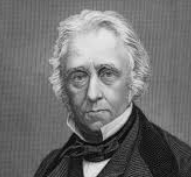
Time, and reflection, and discussion, have produced their natural effect on minds eminently intelligent and candid. No intermediate shades of opinion are now left. There is no twilight. The light has been divided from the darkness. Two parties are ranged in battle array against each other. There is the standard of monopoly. Here is the standard of free trade; and by the standard of free trade I pledge myself to stand firmly.
▼
Source
source
Speech in Edinburgh (2 December 1845), quoted in Speeches of the Right Honourable T. B. Macaulay, M.P. (1854), p. 423

8 months 6 days ago
We are reformers in spring and summer; in autumn and winter we stand by the old - reformers in the morning, conservatives at night. Reform is affirmative, conservatism is negative; conservatism goes for comfort, reform for truth.
▼
Source
source
p. 223
4 months 2 days ago
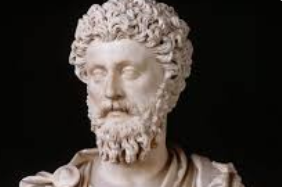
Love that only which happens to thee and is spun with the thread of thy destiny. For what is more suitable?
▼
Source
source
VII, 57
5 months 1 day ago
A multitude is irreducible multiplicity; the singular social differences that constitute the multitude must always be expressed and can never be flattened into sameness, unity, identity, or indifference. ... the compact identities of factory workers in the dominant countries have been undermined with the rise of short-term contracts and forced mobility of new forms of work; how migration has challenged traditional notions of national identity; how family identity has changed and so forth.
▼
Source
source
105
8 months 6 days ago
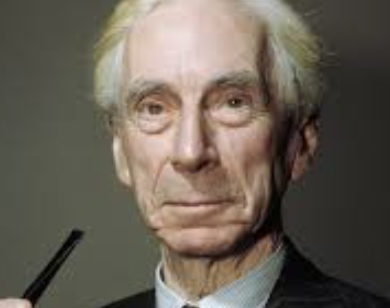
The criminal law has, from the point of view of thwarted virtue, the merit of allowing an outlet for those impulses of aggression which cowardice, disguised as morality, restrains in their more spontaneous forms. War has the same merit. You must not kill you neighbor, whom perhaps you genuinely hate, but by a little propaganda this hate can be transferred to some foreign nation, against whom all your murderous impulses become patriotic heroism.
▼
Source
source
Part III: Man and Himself, Ch. 17: Fear, p. 175
9 months 6 days ago
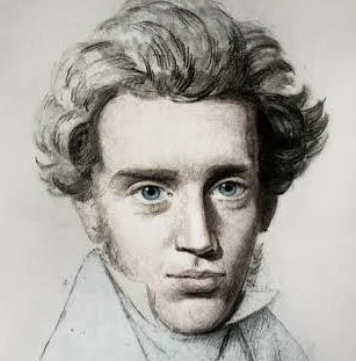
When you read God's Word, in everything you read, continually to say to yourself: It is I to whom it is speaking - this is earnestness, precisely this is earnestness. Not a single one of those to whom the cause of Christianity in the higher sense has been entrusted forgot to urge this again and again as most crucial, as unconditionally the condition if you are to come to see yourself in the mirror.

4 months 5 days ago
What could be more absurd, to begin with, than our attitude of high moral outrage against other nations for manufacturing the selfsame weapons that we manufacture? The difference, as our leaders say, is that we will use these weapons virtuously, whereas our enemies will use them maliciously - a proposition that too readily conforms to a proposition of much less dignity: we will use them in our interest, whereas our enemies will use them in theirs.

4 months 3 weeks ago
What is all Knowledge too, but recorded Experience, and a product of History; of which, therefore, Reasoning and Belief, no less than Action and Passion, are essential materials.
▼
Source
source
On History.
8 months 2 weeks ago
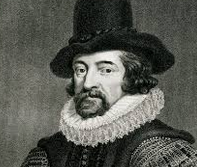
It is not the pleasure of curiosity, nor the quiet of resolution, nor the raising of the spirit, nor victory of wit, nor faculty of speech that are the true ends of knowledge, but it is a restitution and reinvesting, in great part, of man to the sovereignty and power, for whensoever he shall be able to call the creatures by their true names, he shall again command them.
▼
Source
source
Valerius Terminus: Of the Interpretation of Nature (ca. 1603), in Works, Vol. I, p. 83; The Works of Francis Bacon (1819), Vol. 2, p. 133

8 months 1 week ago
The mariner of old said to Neptune in a great tempest, "O God! thou mayest save me if thou wilt, and if thou wilt thou mayest destroy me; but whether or no, I will steer my rudder true."
▼
Source
source
Book II, Ch. 16. Of Glory
4 months 2 days ago
You may break your heart, but men will still go on as before.
▼
Source
source
VIII, 4
4 months 2 weeks ago
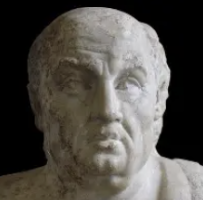
I should prefer that Fortune keep me in her camp rather than in the lap of luxury. If I am tortured, but bear it bravely, all is well; if I die, but die bravely, it is also well.

8 months 4 days ago
He sees as well as you do that courage is not simply one of the virtues, but the form of every virtue at the testing point, which means, at the point of highest reality. A chastity or honesty, or mercy, which yields to danger will be chaste or honest or merciful only on conditions.
▼
Source
source
Letter XXIX
8 months 1 week ago
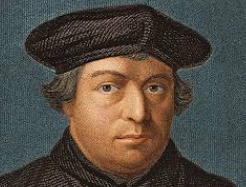
The true Gospel has it that we are justified by faith alone, without the deeds of the Law.
▼
Source
source
Chapter 2
4 months 2 weeks ago
Who, then, can be more ignorant of nature than he who classes this cruel and hurtful vice as belonging to her best and most polished work?
8 months 6 days ago
A poem is one undivided unimpeded expression fallen ripe into literature, and it is undividedly and unimpededly received by those for whom it was matured.
4 months 3 weeks ago
Ever, as before, does Madness remain a mysterious-terrific, altogether infernal boiling-up of the Nether Chaotic Deep, through this fair-painted Vision of Creation, which swims thereon, which we name the Real.
▼
Source
source
Bk. III, ch. 8.
6 months 2 weeks ago
People have committed suicide because of their failure to realize the passions for love, power, fame, revenge. Cases of suicide because of a lack of sexual satisfaction are virtually nonexistent.
▼
Source
source
p. 30
8 months 1 week ago
All happiness or unhappiness solely depends upon the quality of the object to which we are attached by love.
▼
Source
source
I, 9; translation by W. Hale White (Revised by Amelia Hutchison Stirling)
6 months 4 weeks ago
See thou tell no man; but go thy way, shew thyself to the priest, and offer the gift that Moses commanded, for a testimony unto them.
▼
Source
source
8:4 (KJV) Said to a man cured of leprosy.

8 months 1 week ago
What good would it be to possess the whole universe if one were its only survivor?
▼
Source
source
A Lasting Peace Through the Federation of Europe, 1756
6 months 3 days ago
There is a real, living unity in our time, as in any other, but it lies submerged under a superficial hubbub of sensation.
▼
Source
source
Letter to Harold Adam Innis (14 March 1951), published in Letters of Marshall McLuhan (1987), p. 223

6 months 3 days ago
Bless Madison Ave for restoring the magical art of the cavemen to suburbia.
▼
Source
source
(p. 130)
6 months 2 weeks ago
What is called an acute knowledge of human nature is mostly nothing but the observer's own weaknesses reflected back from others.
▼
Source
source
G 7
4 months 2 weeks ago
But let us now dismiss these poetical fictions; because with what is divine they have mingled much of human alloy; and let us now consider what the deity has declared concerning himself and the other gods. The region surrounding the Earth has its existence in virtue of birth. From whom then does it receive its eternity and imperishability, if not from him who holds all things together within defined limits, for it is impossible that the nature of bodies (material) should be without a limit, inasmuch as they cannot dispense with a Final Cause, nor exist through themselves.
6 months 3 weeks ago
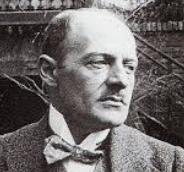
In ressentiment morality, love for the "small," the "poor," the "weak," and the "oppressed" is really disguised hatred, repressed envy, an impulse to detract, etc., directed against the opposite phenomena: "wealth," "strength," "power," "largesse." When hatred does not dare to come out into the open, it can be easily expressed in the form of ostensible love-love for something which has features that are the opposite of those of the hated object. This can happen in such a way that the hatred remains secret. When we hear that falsely pious, unctuous tone (it is the tone of a certain "socially-minded" type of priest), sermonizing that love for the "small" is our first duty, love for the "humble" inspirit, since God gives "grace" to them, then it is often only hatred posing as Christian love.
▼
Source
source
L. Coser, trans. (1961), pp. 96-97

6 months 4 weeks ago
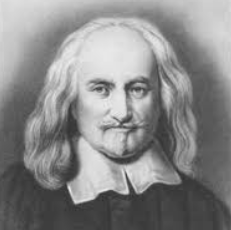
Hereby it is manifest, that during the time men live without a common Power to keep them all in awe, they are in that conditions called Warre; and such a warre, as is of every man, against every man.
▼
Source
source
The First Part, Chapter 13, p. 62
6 months 3 weeks ago
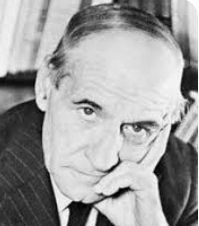
The mass-man sees in the State an anonymous power, and feeling himself, like it, anonymous, he believes that the State is something of his own. Suppose that in the public life of a country some difficulty, conflict, or problem presents itself, the mass-man will tend to demand that the State intervene immediately and undertake a solution directly with its immense and unassailable resources. This is the gravest danger that to-day threatens civilisation: State intervention; the absorption of all spontaneous social effort by the State.
▼
Source
source
Chapter XIII: The Greatest Danger, The State
6 months 5 days ago
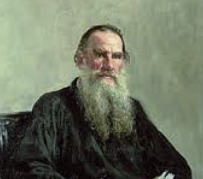
When the Indians complain that the English have enslaved them it is as if drunkards complained that the spirit-dealers who have settled among them have enslaved them. You tell them that they might give up drinking, but they reply that they are so accustomed to it that they cannot abstain, and that they must have alcohol to keep up their energy. Is it not the same thing with the millions of people who submit to thousands or even to hundreds, of others - of their own or other nations? If the people of India are enslaved by violence it is only because they themselves live and have lived by violence, and do not recognize the eternal law of love inherent in humanity.
▼
Source
source
V
8 months 6 days ago
Yes, if you happen to be interested in philosophy and good at it, but not otherwise - but so does bricklaying. Anything you're good at contributes to happiness. When asked "Does philosophy contribute to happiness?"
▼
Source
source
(SHM 76), as quoted in The quotable Bertrand Russell (1993), p. 149
6 months 3 days ago
Unlike previous environmental changes, the electric media constitutes a total and near-instanteous transformation of culture, values and attitudes.
8 months 1 week ago
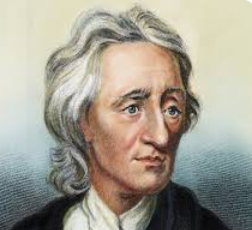
I doubt not but one great reason why many children abandon themselves wholly to silly sports, and trifle away all their time insipidly, is, because they have found their curiosity baulk'd, and their inquiries neglected. But had they been treated with more kindness and respect, and their questions answered, as they should, to their satisfaction; I doubt not but that they would have taken more pleasure in learning, and improving their knowledge, wherein there would still be newness and variety, which is what they are delighted with, than in returning over and over to the same play and play-things.
▼
Source
source
Sec. 118

9 months 2 days ago
Can one be a saint without God?, that's the problem, in fact the only problem, I'm up against today.
6 months 2 weeks ago
One cannot demand of a scholar that he show himself a scholar everywhere in society, but the whole tenor of his behavior must none the less betray the thinker, he must always be instructive, his way of judging a thing must even in the smallest matters be such that people can see what it will amount to when, quietly and self-collected, he puts this power to scholarly use.
▼
Source
source
J 85
8 months 5 days ago
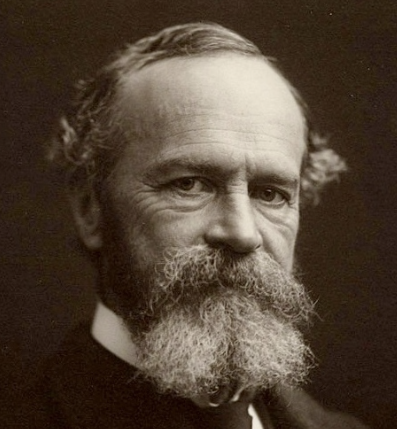
Pretend what we may, the whole man within us is at work when we form our philosophical opinions. Intellect, will, taste, and passion co-operate just as they do in practical affairs; and lucky it is if the passion be not something as petty as a love of personal conquest over the philosopher across the way.
6 months 2 weeks ago
Scientists, animated by the purpose of proving they are purposeless, constitute an interesting subject for study.

7 months 2 days ago
For a long while I have lived with the notion that I was the most normal being that ever existed. This notion gave me the taste, even the passion for being unproductive: what was the use of being prized in a world inhabited by madmen, a world mired in mania and stupidity? For whom was one to bother, and to what end? It remains to be seen if I have quite freed myself from this certitude, salvation in the absolute, ruin in the immediate.
7 months 2 days ago
We understand God by everything in ourselves that is fragmentary, incomplete, and inopportune.
8 months 6 days ago
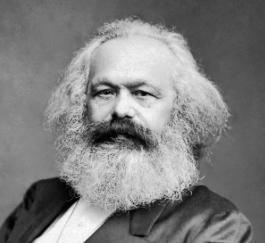
There is something in human history like retribution; and it is a rule of historical retribution that its instrument be forged not by the offended, but by the offender himself. The first blow dealt to the French monarchy proceeded from the nobility, not from the peasants. The Indian revolt does not commence with the ryots, tortured, dishonoured and stripped naked by the British, but with the sepoys, clad, fed and petted, fatted and pampered by them.
▼
Source
source
In an article written for the New York Daily Tribune, September 16, 1857
5 months ago
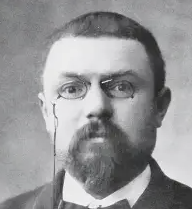
Is the position tenable, that certain phenomena, possible in Euclidean space, would be impossible in non-Euclidean space, so that experience, in establishing these phenomena, would directly contradict the non-Euclidean hypothesis? For my part I think no such question can be put. To my mind it is precisely equivalent to the following, whose absurdity is patent to all eyes: are there lengths expressible in meters and centimeters, but which can not be measured in fathoms, feet, and inches, so that experience, in ascertaining the existence of these lengths, would directly contradict the hypothesis that there are fathoms divided into six feet?
▼
Source
source
Ch. V: Experiment and Geometry (1905) Tr. George Bruce Halstead
8 months 6 days ago
The first thing to realize, if you wish to become a philosopher, is that most people go through life with a whole world of beliefs that have no sort of rational justification, and that one man's world of beliefs is apt to be incompatible with another man's, so that they cannot both be right. People's opinions are mainly designed to make them feel comfortable; truth, for most people is a secondary consideration.
▼
Source
source
"How to Become a Philosopher" (1942), in The Art of Philosophizing, and Other Essays (New York: Philosophical Library, 1968), p. 2
8 months 4 days ago
What can you ever really know of other people's souls - of their temptations, their opportunities, their struggles? One soul in the whole creation you do know: and it is the only one whose fate is placed in your hands. If there is a God, you are, in a sense, alone with Him. You cannot put Him off with speculations about your next door neighbours or memories of what you have read in books.
▼
Source
source
Book IV, Chapter 10, "Nice People or New Men"
7 months 3 weeks ago
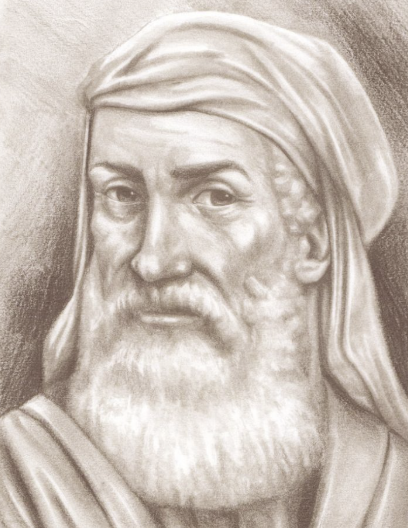
What needs saying is worth saying twice.
▼
Source
source
fr. 25
8 months ago
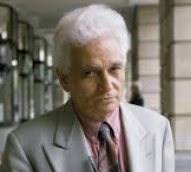
To live, by definition, is not something one learns. Not from oneself, it is not learned from life, taught by life. Only from the other and by death. In any case from the other at the edge of life. At the internal border or the external border, it is a heterodidactics between life and death.
▼
Source
source
Exordium

5 months 2 weeks ago
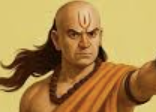
The world's biggest power is the youth and beauty of a woman.
CivilSimian.com created by AxiomaticPanic, CivilSimian, Kalokagathia