


7 months 1 week ago
Every central government worships uniformity: uniformity relieves it from inquiry into an infinity of details.
▼
Source
source
Book Four, Chapter III.
4 months 2 days ago
Let opinion be taken away, and no man will think himself wronged. If no man shall think himself wronged, then is there no more any such thing as wrong.
▼
Source
source
IV. 7, trans. Méric Casaubon
8 months 5 days ago
A genuine first-hand religious experience like this is bound to be a heterodoxy to its witnesses, the prophet appearing as a mere lonely madman. If his doctrine prove contagious enough to spread to any others, it becomes a definite and labeled heresy. But if it then still prove contagious enough to triumph over persecution, it becomes itself an orthodoxy; and when a religion has become an orthodoxy, its day of inwardness is over: the spring is dry; the faithful live at second hand exclusively and stone the prophets in their turn. The new church, in spite of whatever human goodness it may foster, can be henceforth counted on as a staunch ally in every attempt to stifle the spontaneous religious spirit, and to stop all later bubblings of the fountain from which in purer days it drew its own supply of inspiration.
▼
Source
source
Lectures XIV and XV, "The Value of Saintliness"
6 months 3 weeks ago
This was once revealed to me in a dream.

7 months 1 day ago
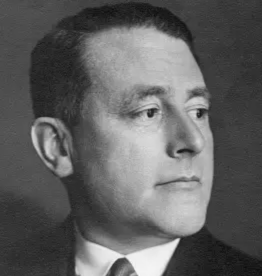
In order to deceive melancholy, you must keep moving. Once you stop, it wakens, if in fact it has ever dozed off.
4 months 4 days ago
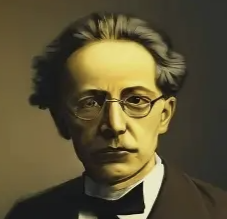
The various philosophies of life presented themselves as a conquest of materialism, or in any case, they readily claimed it. That does not change anything: their valuations, revaluations, and explanations of disvalue have been emptied into the over-all secularization stream, where they have only hastened the tendency to unlearn, which is a neutralizing process, after all.
4 months 2 weeks ago
The State's behavior is violence, and it calls its violence "law"; that of the individual, "crime." The state calls its own violence law, but that of the individual, crime.
▼
Source
source
As quoted in The Great Quotations (1960) by George Seldes, p. 664
5 months 2 days ago
Looking back we can see how indirectly we know the environment in which nevertheless we live. We can see that the news of it comes to us now fast, now slowly; but that whatever we believe to be a true picture, we treat as if it were the environment itself.
▼
Source
source
Ch. I: "The World Outside and the Pictures in Our Heads", p. 4
8 months 2 weeks ago
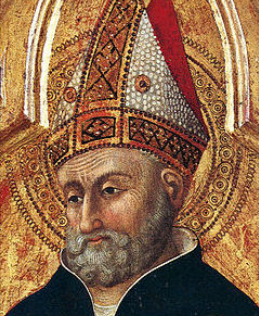
Therefore let every Christian, yea, let the whole body of Christ everywhere cry out, despite the tribulations it endures, despite temptations and countless scandals, saying: "Preserve my soul, for I am holy; save Thy servant, O my God, that trusteth in thee" (Ps. 85:2) No, this holy one is not proud, for he trusts in God.
▼
Source
source
p.429
6 months 3 weeks ago
Answers determined by the social division of labor become truth as such.
▼
Source
source
p. 50: Describing the pragmatist view
8 months 5 days ago
The collective name for the ripe fruits of religion in a character is Saintliness. The saintly character is the character for which spiritual emotions are the habitual centre of the personal energy; and there is a certain composite photograph of universal saintliness, the same in all religions, of which the features can easily be traced.
▼
Source
source
Lectures XI, XII, AND XIII : "Saintliness"
7 months 5 days ago
A gentleman, even if he loses everything he owns, must show no emotion. Money must be so far beneath a gentleman that it is hardly worth troubling about.
9 months 2 days ago
Art is the activity that exalts and denies simultaneously. "No artist tolerates reality," says Nietzsche.
8 months 6 days ago
If children were brought into the world by an act of pure reason alone, would the human race continue to exist? Would not a man rather have so much sympathy with the coming generation as to spare it the burden of existence?
▼
Source
source
"On the Sufferings of the World"
6 months 1 week ago
To every action there is always opposed an equal reaction; or, the mutual actions of two bodies upon each other are always equal, and directed to contrary parts.
▼
Source
source
Laws of Motion, III
7 months 6 days ago
Men who undertake considerable things, even in a regular way, ought to give us ground to presume ability.
7 months 1 day ago
After all, why should ordinary people want to contemplate the End, especially when we see the condition of those who do?

7 months 4 weeks ago
The disappearance of public executions marks therefore the decline of the spectacle; but it also marks a slackening of the hold on the body.
▼
Source
source
Chapter One, The Spectacle of the Scaffold
4 months 2 days ago
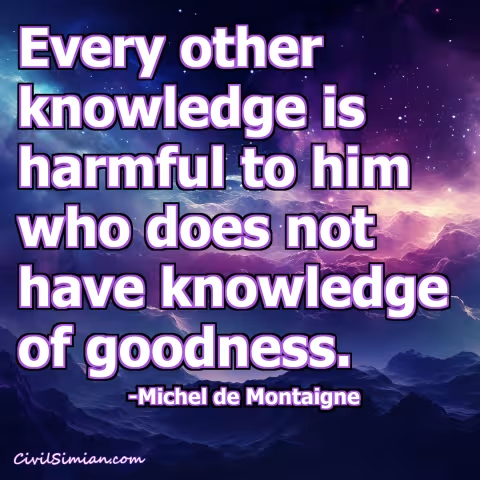
Is it not better to use what is in thy power like a free man than to desire in a slavish and abject way what is not in thy power?
▼
Source
source
IX, 40
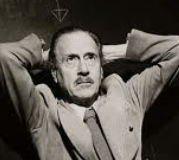
6 months 3 days ago
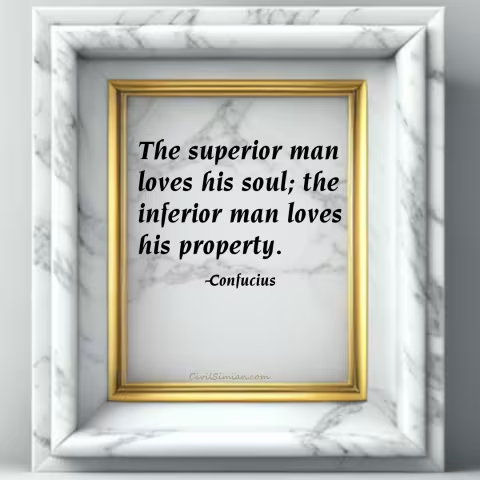
All media are extensions of some human faculty -- psychic or physical.

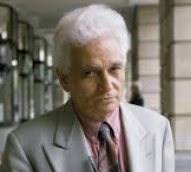
8 months ago
When I say that this phase is necessary, the word phase is perhaps not the most rigorous one. It is not a question of a chronological phase, a given moment, or a page that one day simply will be turned, in order to go on to other things. The necessity of this phase is structural; it is the necessity of an interminable analysis: the hierarchy of dual oppositions always reestablishes itself. Unlike those authors whose death does not await their demise, the time for overturning is never a dead letter.
▼
Source
source
p. 41-42

5 months 1 week ago
Universality is the foundation for law. Individuals are treated as ends in themselves, symmetry is applied and justice emerges. Ideologically, we don't have to try to be "good". This kind of kills freedom. We just have to avoid the worst of the bad, like killing, to preserve universality and justice.
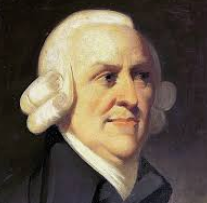
8 months 1 week ago
For a very small expence the public can facilitate, can encourage, and can even impose upon almost the whole body of the people, the necessity of acquiring those most essential parts of education.
▼
Source
source
Chapter I, Part III, Article II, p. 847.

5 months 1 week ago
Human beings act, certainly. But none of them knows why they act as they do. There is a scattering of facts, which can be known and reported. Beyond these facts are the stories that are told. Human beings may behave like puppets, but no one is pulling the strings.
▼
Source
source
In The Puppet Theatre: Puppetry, Conspiracy and Ouija Boards (p. 136)
4 months 2 weeks ago
A word of honour, an oath, is one only for him whom I entitle to receive it; he who forces me to it obtains only a forced, a hostile word, the word of a foe, whom one has no right to trust; for the foe does not give us the right.
▼
Source
source
Cambridge 1995, p. 269

7 months 1 day ago
Nostalgia, more than anything, gives us the shudder of our own imperfection.
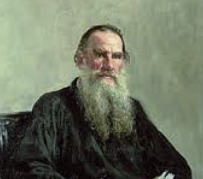
6 months 5 days ago
If Mormonism is able to endure, unmodified, until it reaches the third and fourth generation, it is destined to become the greatest power the world has ever known.
▼
Source
source
This quote originates in Thomas J. Yates, "Count Tolstoi and the 'American Religion' ", Improvement Era (February 1939)
4 months 2 days ago
Then what should we work for? Only this: proper understanding; unselfish action; truthful speech. A resolve to accept whatever happens as necessary and familiar, flowing like water from that same source and spring.
▼
Source
source
(Hays translation) IV, 33

4 months 3 weeks ago
Paganism we recognized as a veracious expression of the earnest awe-struck feeling of man towards the Universe; veracious, true once, and still not without worth for us. But mark here the difference of Paganism and Christianism; one great difference. Paganism emblemed chiefly the Operations of Nature; the destinies, efforts, combinations, vicissitudes of things and men in this world; Christianism emblemed the Law of Human Duty, the Moral Law of Man. One was for the sensuous nature: a rude helpless utterance of the first Thought of men,-the chief recognized virtue, Courage, Superiority to Fear. The other was not for the sensuous nature, but for the moral. What a progress is here, if in that one respect only-!
4 months 2 weeks ago
Only when an ideal of peace is born in the minds of the peoples will the institutions set up to maintain this peace effectively fulfill the function expected of them.

8 months 5 days ago
Self-trust is the first secret of success.
▼
Source
source
Success

4 months 3 weeks ago
Consider how, even in the meanest sorts of Labour, the whole soul of a man is composed into a kind of real harmony, the instant he sets himself to work! Doubt, Desire, Sorrow, Remorse, Indignation, Despair itself, all these like helldogs lie beleaguering the soul of the poor dayworker, as of every man: but he bends himself with free valour against his task, and all these are stilled, all these shrink murmuring far off into their caves. The man is now a man. The blessed glow of Labour in him, is it not as purifying fire, wherein all poison is burnt up, and of sour smoke itself there is made bright blessed flame!
8 months 6 days ago
I do not pretend to start with precise questions. I do not think you can start with anything precise. You have to achieve such precision as you can, as you go along.
4 months 3 weeks ago
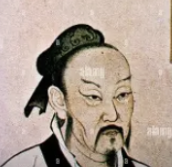
He who outrages benevolence is called a ruffian: he who outrages righteousness is called a villain. I have heard of the cutting off of the villain Chow, but I have not heard of the putting of a ruler to death.
▼
Source
source
1B:8, In relation to righteousness and the overthrow of the tyrannous King Zhou of Shang, as translated by Sir Robert Kennaway Douglas, China (1904), p. 8
8 months 5 days ago
Far or forgot to me is near; Shadow and sunlight are the same; The vanished gods to me appear; And one to me are shame and fame.
▼
Source
source
Brahma, st. 2
8 months 6 days ago
Passing from quantity to quality of population, we come to the question of eugenics. We may perhaps assume that, if people grow less superstitious, government will acquire the right to sterilize those who are not considered desirable as parents. This power will be used, at first, to diminish imbecility, a most desirable object. But probably, in time, opposition to the government will be taken to prove imbecility, so that rebels of all kinds will be sterilized. Epileptics, consumptives, dipsomaniacs and so on will gradually be included; in the end, there will be a tendency to include all who fail to pass the usual school examinations. The result will be to increase the average intelligence; in the long run, it may be greatly increased. But probably the effect upon really exceptional intelligence will be bad. Mr. Micawber, who was Dickens's father, would hardly have been regarded as a desirable parent. How many imbeciles ought to outweigh one Dickens I do not profess to know.
7 months 5 days ago
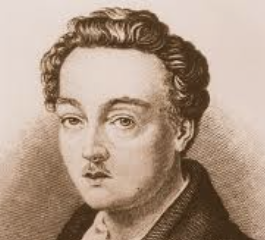
How many women does one need to sing the scale of love all the way up and down?
▼
Source
source
Act I.

6 months 3 weeks ago
Sociology does not 'negate' philosophy, in the sense of taking over the hidden content of philosophy and carrying it into social theory and practice, but sets itself up as a realm apart from philosophy, with a province and truth of its own. Comte is rightly held to be the inaugurator of this separation between philosophy and sociology.
▼
Source
source
P. 375
4 months 1 week ago
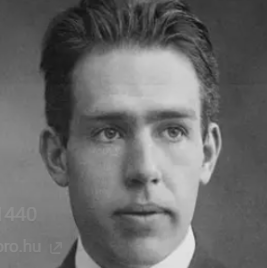
Physics is to be regarded not so much as the study of something a priori given, but rather as the development of methods of ordering and surveying human experience. In this respect our task must be to account for such experience in a manner independent of individual subjective judgement and therefore objective in the sense that it can be unambiguously communicated in ordinary human language.
▼
Source
source
The Unity of Human Knowledge
8 months 1 week ago
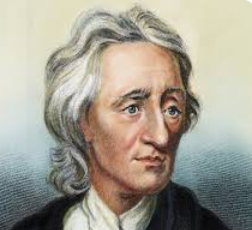
Children should not be suffer'd to lose the consideration of human nature in the shufflings of outward conditions. The more they have, the better humor'd they should be taught to be, and the more compassionate and gentle to those of their brethren who are placed lower, and have scantier portions. If they are suffer'd from their cradles to treat men ill and rudely, because, by their father's title, they think they have a little power over them, at best it is ill-bred; and if care be not taken, will by degrees nurse up their natural pride into an habitual contempt of those beneath them. And where will that probably end but in oppression and cruelty?
▼
Source
source
Sec. 117
6 months 3 weeks ago
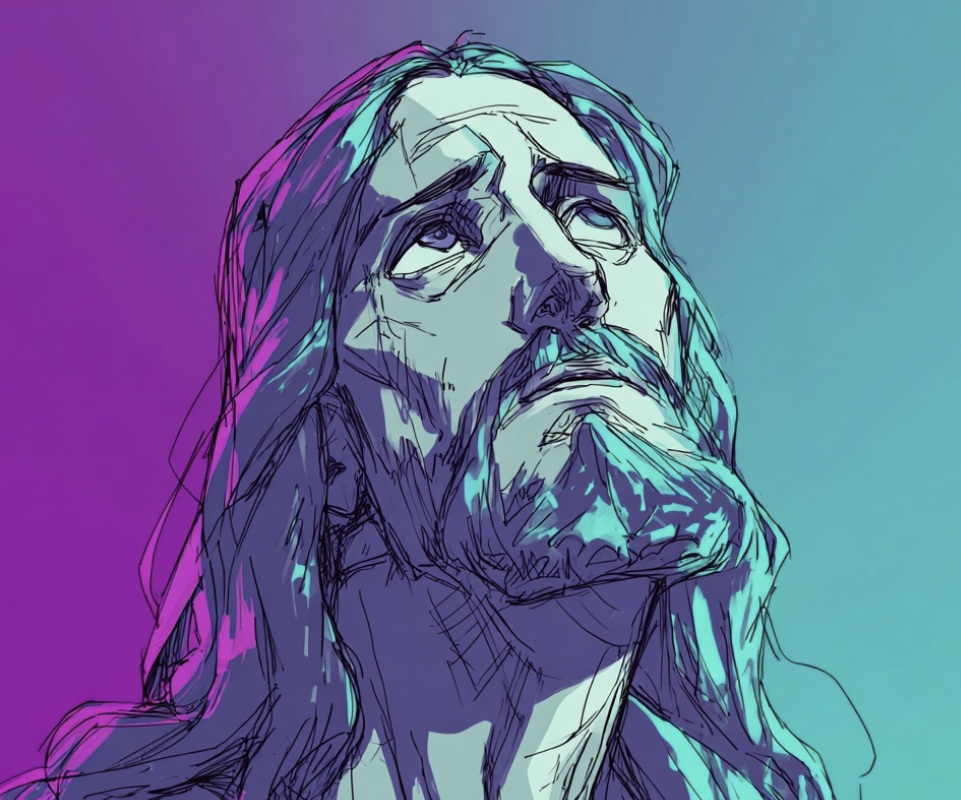
His disciples said to Him, "When will the Kingdom come?" Jesus said, "It will not come by waiting for it. It will not be a matter of saying 'Here it is' or 'There it is.' Rather, the Kingdom of the Father is spread out upon the earth, and men do not see it."
4 months 2 days ago
The ancients, persuaded that there is no body without a moving force, regarded the substance of bodies as composed of two primitive attributes. It was held that, through one of these attributes, this substance has the capacity for moving and, through the other, the capacity for being moved.
▼
Source
source
Ch. V Concerning the Moving Force of Matter
CivilSimian.com created by AxiomaticPanic, CivilSimian, Kalokagathia