
This is a recent interest of mine. Ask yourself the question: Why is it not justice to kill a man that kills a mouse? Then, apply that answer to a hypothetical being that stands over humanity with humanity as the mouse.


The fact that goals may be dependent for their force on other more distant ends leads to the arrangement of these goals in a hierarchy - each level to be considered as an end relative to the levels below it and as a mean to the levels above it.
Evil perpetually tends to disappear.
Adam came from great power and great wealth, but he was not worthy of you. For had he been worthy, he would not have tasted death.

If we are going to be destroyed by an atomic bomb, let that bomb when it comes find us doing sensible and human things - praying, working, teaching, reading, listening to music, bathing the children, playing tennis, chatting to our friends over a pint and a game of darts - not huddled together like frightened sheep and thinking about bombs. They might break our bodies (a microbe can do that) but they need not dominate our minds.
The man who is fortunate in his choice of son-in-law gains a son; the man unfortunate in his choice loses his daughter also.
It makes a great difference in the force of a sentence whether a man be behind it or no.
The rapid development of science... has, as it were, burst its old shell, now become too narrow.
Often things realised in thought are more vivid than than the same things in inattentive physical experience. But the things apprehended as mental are always subject to the condition that we come to a stop when we come to explore ever higher grades of complexity in their realised relationships. We always find tat we have thought of just this - whatever it may be - and of no more.
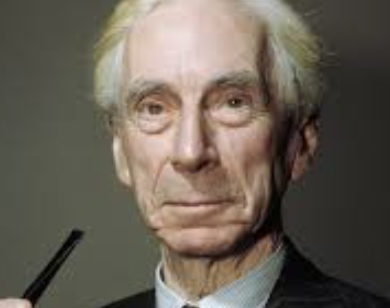
The Chinese are a great nation, incapable of permanent suppression by foreigners. They will not consent to adopt our vices in order to acquire military strength; but they are willing to adopt our virtues in order to advance in wisdom. I think they are the only people in the world who quite genuinely believe that wisdom is more precious than rubies. That is why the West regards them as uncivilized.
He sees as well as you do that courage is not simply one of the virtues, but the form of every virtue at the testing point, which means, at the point of highest reality. A chastity or honesty, or mercy, which yields to danger will be chaste or honest or merciful only on conditions.

Hatred, as well as love, renders its votaries credulous.
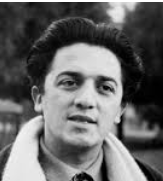
Experience is what you get while looking for something else.
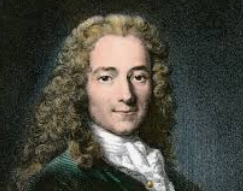
To pray to God is to flatter oneself that with words one can alter nature.
Apart from autograph hunters, I get... many letters from Hindus, beseeching me to adopt some form of mysticism, from young Americans, asking me where I think the line should be drawn in petting, and from Poles, urging me to admit that while all other nationalism may be bad that of Poland is wholly noble. I get letters from engineers who cannot understand Einstein, and from parsons who think that I cannot understand Genesis, from husbands whose wives have deserted them - not (they say) that that would matter, but the wives have taken the furniture with them, and what in these circumstances should an enlightened male do? ...I get letters (concerning whose genuineness I am suspicious) trying to get me to advocate abortion, and I get letters from young mothers asking my opinion of bottle-feeding.
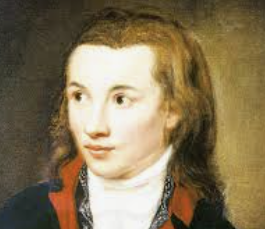
Sleep is for the inhabitants of Planets only. In another time, Man will sleep and wake continually at once. The greater part of our Body, of our Humanity itself, yet sleeps a deep sleep.

The straightening board was created because of warped wood, and the plumb line came into being because of things that are not straight. Rulers are established and ritual and rightness are illuminated because the nature is evil.
The plague of man is boasting of his knowledge.
Monotheistic religions alone furnish the spectacle of religious wars, religious persecutions, heretical tribunals, that breaking of idols and destruction of images of the gods, that razing of Indian temples and Egyptian colossi, which had looked on the sun 3,000 years: just because a jealous god had said, 'Thou shalt make no graven image.'
Critical social science attempts to determine when theoretical statements grasp invariant regularities of social action as such and when they express ideologically frozen relations of dependence that can in principle be transformed.
For the moment, the jazz is playing; there is no melody, just notes, a myriad of tiny tremors. The notes know no rest, an inflexible order gives birth to them then destroys them, without ever leaving them the chance to recuperate and exist for themselves.... I would like to hold them back, but I know that, if I succeeded in stopping one, there would only remain in my hand a corrupt and languishing sound. I must accept their death; I must even want that death: I know of few more bitter or intense impressions.
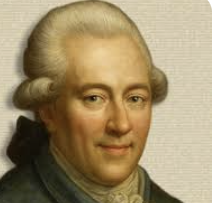
If it were true what in the end would be gained? Nothing but another truth. Is this such a mighty advantage? We have enough old truths still to digest, and even these we would be quite unable to endure if we did not sometimes flavor them with lies.
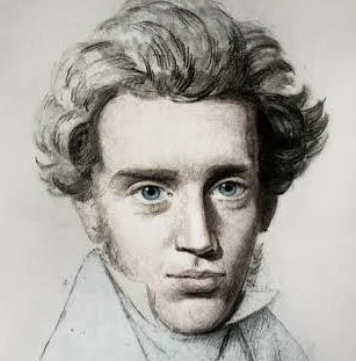
Freedom's possibility is not the ability to choose the good or the evil. The possibility is to be able. In a logical system, it is convenient to say that possibility passes over into actuality. However, in actuality it is not so convenient, and an intermediate term is required. The intermediate term is anxiety, but it no more explains the qualitative leap than it can justify it ethically. Anxiety is neither a category of necessity nor a category of freedom; it is entangled freedom, where freedom is not free in itself but entangled, not by necessity, but in itself.
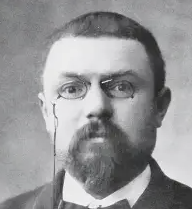
If all the parts of the universe are interchained in a certain measure, any one phenomenon will not be the effect of a single cause, but the resultant of causes infinitely numerous; it is, one often says, the consequence of the state of the universe the moment before.
The dreamer must contaminate the others by his dream, he must make them fall into it.
And every man, in love or pride, Of his fate is ever wide.
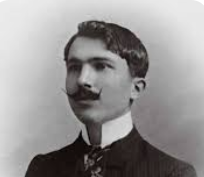
I hold the brimming wineglass and relive the toils of my grandfathers and great-grandfathers. The sweat of my labor runs down like a fountain from my tall, intoxicated brow. I am a sack filled with meat and bones, blood, sweat, and tears, desires and visions.
Two conflicting types of educational systems spring from these conflicting aims. One is public and common to many, the other private and domestic. If you wish to know what is meant by public education, read Plato's Republic. Those who merely judge books by their titles take this for a treatise on politics, but it is the finest treatise on education ever written. In popular estimation the Platonic Institute stands for all that is fanciful and unreal. For my own part I should have thought the system of Lycurgus far more impracticable had he merely committed it to writing. Plato only sought to purge man's heart; Lycurgus turned it from its natural course. The public institute does not and cannot exist, for there is neither country nor patriot. The very words should be struck out of our language. The reason does not concern us at present, so that though I know it I refrain from stating it.
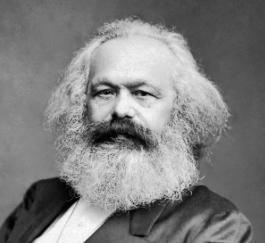
When we have weighed everything, and when our relations in life permit us to choose any given position, we may take that one which guarantees us the greatest dignity, which is based on ideas of whose truth we are completely convinced, which offers the largest field to work for mankind and approach the universal goal for which every position is only a means: perfection.
I must say, that the whole Scheme of the war is mistaken, (or appears to me to be so), for it ought to be, not for Dunkirk, or this or t'other Town-but to drive Jacobinism from the world.
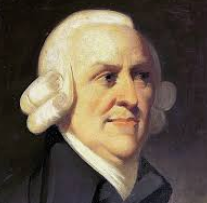
When the act of navigation was made, though England and Holland were not actually at war, the most violent animosity subsisted between the two nations. ... It is not impossible, therefore, that some of the regulations of this famous act may have proceeded from national animosity. They are as wise, however, as if they had all been dictated by the most deliberate wisdom. National animosity at that particular time aimed at the very same object which the most deliberate wisdom would have recommended, the diminution of the naval power of Holland, the only naval power which could endanger the security of England.
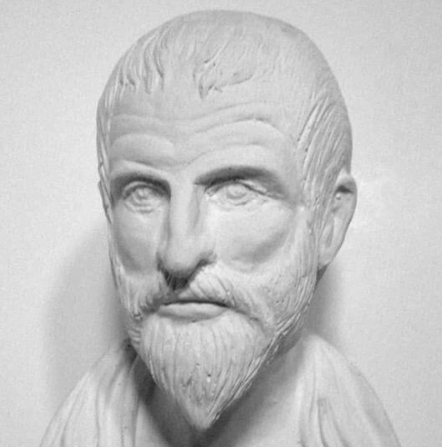
A transition, therefore, is not undeservedly made from sense to consideration, and from this to the nobler energies of intellect. Hence, as the certain knowledge of numbers received its origin among the Phœnicians, on account of merchandise and commerce, so geometry was found out among the Egyptians from the distribution of land. When Thales, therefore, first went into Egypt, he transferred this knowledge from thence into Greece: and he invented many things himself, and communicated to his successors the principles of many. Some of which were, indeed, more universal, but others extended to sensibles.
First, [the bourgeoisie] must recognize his own impotence, his incapacity to believe in a sense of history, even if his reason leans towards the truth, the passions and prejudices produced by his class position, prevent him from accepting it. So he should not exert himself with proving the truth of the historical mission of the working class; rather, he should learn to subdue his petty bourgeois passions and prejudices. He should take lessons from those who were once as important as he is now but are ready to risk all for the revolutionary Cause.
One has to do something new in order to see something new.

With other beliefs crumbling, many seek to return to what they piously describe as "Enlightenment values". But these values were not as unambiguously benign as is nowadays commonly supposed.
Oblivious of Democritus, the unwilling materialists of our day have generally been awkwardly intellectual and quite incapable of laughter. If they have felt anything, they have felt melancholy. Their allegiance and affection were still fixed on those mythical sentimental worlds which they saw to be illusory. The mechanical world they believed in could not please them, in spite of its extent and fertility. Giving rhetorical vent to their spleen and prejudice, they exaggerated nature's meagreness and mathematical dryness. When their imagination was chilled they spoke of nature, most unwarrantably, as dead, and when their judgment was heated they took the next step and called it unreal.

Luther's merit in literary history is of the greatest: his dialect became the language of all writing. They are not well written, these Four-and-twenty Quartos of his; written hastily, with quite other than literary objects. But in no Books have I found a more robust, genuine, I will say noble faculty of a man than in these. A rugged honesty, homeliness, simplicity; a rugged sterling sense and strength. He dashes out illumination from him; his smiting idiomatic phrases seem to cleave into the very secret of the matter. Good humor too, nay tender affection, nobleness and depth: this man could have been a Poet too! He had to work an Epic Poem, not write one.
Paradox is the technique for seizing the conflicting aspects of any problem. Paradox coalesces or telescopes various facets of a complex process in a single instant.
Every cause produces more than one effect.
Human or general needs can be satisfied through society; for satisfaction of unique needs you must do some seeking. A friend and a friendly service, or even an individual's service, society cannot procure you. And yet you will every moment be in need of such a service, and on the slightest occasions require somebody who is helpful to you. Therefore do not rely on society, but see to it that you have the wherewithal to - purchase the fulfilment of your wishes.
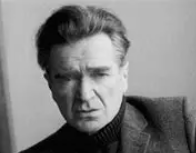
It makes no sense to say that death is the goal of life, but what else is there to say?
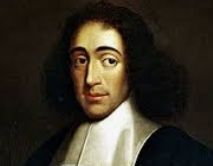
A free man thinks of death least of all things; and his wisdom is a meditation not of death but of life.
With clarity and quiet, I look upon the world and say: All that I see, hear, taste, smell, and touch are the creations of my mind. The sun comes up and the sun goes down in my skull. Out of one of my temples the sun rises, and into the other the sun sets. The stars shine in my brain; ideas, men, animals browse in my temporal head; songs and weeping fill the twisted shells of my ears and storm the air for a moment.
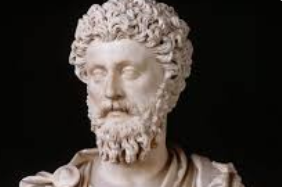
Do not think that what is hard for you to master is humanly impossible; but if a thing is humanly possible, consider it to be within your reach.
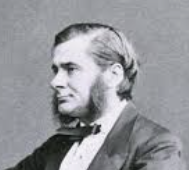
God give me strength to face a fact though it slay me.
We have convictions only if we have studied nothing thoroughly.
CivilSimian.com created by AxiomaticPanic, CivilSimian, Kalokagathia