


7 months 5 days ago
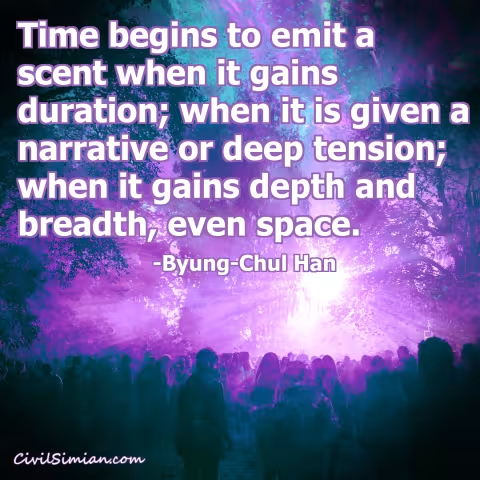
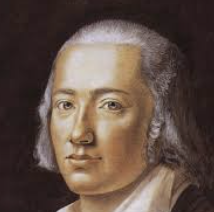
It was not delight, not wonder that arose among us, it was the peace of heaven. A thousand times have I said it to her and to myself: the most beautiful is also the most sacred. And such was everything in her. Like her singing, even so was her life.
8 months 3 days ago
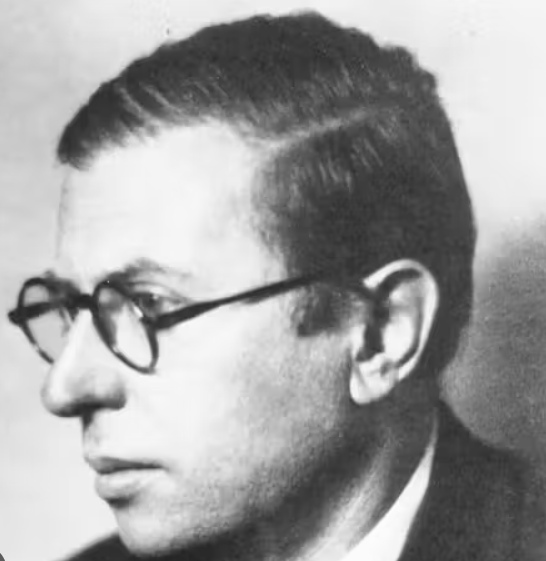
For man holds his ground only by surpassing himself, in the same sense in which it is said that one ceases to love if one does not love increasingly everyday.
▼
Source
source
p. 238
8 months 1 week ago
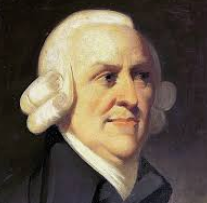
What is prudence in the conduct of every private family, can scarce be folly in that of a great kingdom.
▼
Source
source
Chapter II, p. 490.
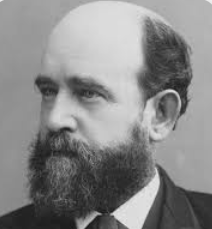
4 months 3 days ago
It is impossible to read the works of the economists who since the time of Smith have endeavored to build up and elucidate the science of political economy without seeing how, over and over again, they stumble over the law of wages without once recognizing it. Yet, "if it were a dog it would bite them!" Indeed, it is difficult to resist the impression that some of them really saw this law of wages, but, fearful of the practical conclusions to which it would lead, preferred to ignore and cover it up, rather than use it as the key to problems which without it are so perplexing. A great truth to an age which has rejected and trampled on it, is not a word of peace, but a sword!
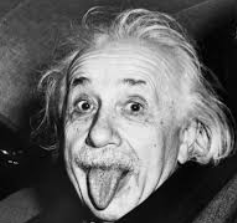
3 months 3 weeks ago
I do not think that religion is the most important element. We are held together rather by a body of tradition, handed down from father to son, which the child imbibes with his mother's milk. The atmosphere of our infancy predetermines our idiosyncrasies and predilections.
▼
Source
source
In response to a question about whether religion is the tie holding the Jews together.

7 months 3 weeks ago
Let hopes and sorrows, fears and angers be, and think each day that dawns the last you'll see; For so the hour that greets you unforeseen, will bring with it enjoyment twice as keen.
▼
Source
source
Book I, epistle iv, line 12 (translated by John Conington)
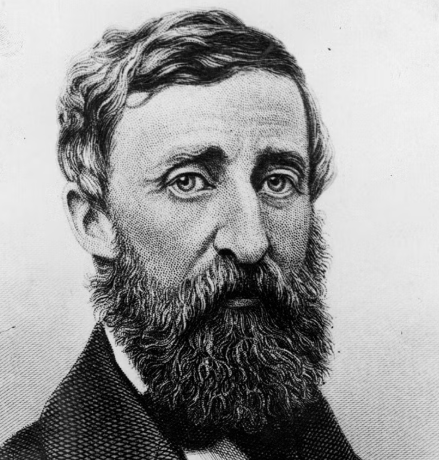
8 months 5 days ago
A living dog is better than a dead lion. Shall a man go and hang himself because he belongs to the race of pygmies, and not be the biggest pygmy that he can? Let every one mind his own business, and endeavor to be what he was made. Why should we be in such desperate haste to succeed, and in such desperate enterprises? If a man does not keep pace with his companions, perhaps it is because he hears a different drummer. Let him step to the music which he hears, however measured or far away.
▼
Source
source
pp. 366-67
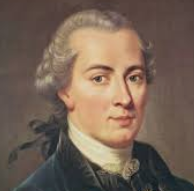
8 months 1 week ago
There must be a seed of every good thing in the character of men, otherwise no one can bring it out. Lacking that, analogous motives, honor, etc., are substituted. Parents are in the habit of looking out for the inclinations, for the talents and dexterity, perhaps for the disposition of their children, and not at all for their heart or character.
▼
Source
source
Part III : Selection on Education from Kant's other Writings, Ch. I Pedagogical Fragments, # 13

7 months ago
When we have no further desire to show ourselves, we take refuge in music, the Providence of the abulic.
4 months 1 day ago
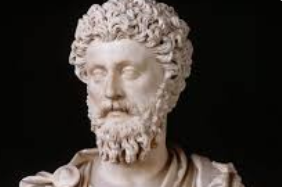
Learn to ask of all actions, "Why are they doing that?" Starting with your own.
▼
Source
source
(Hays translation) X, 37
9 months 2 days ago
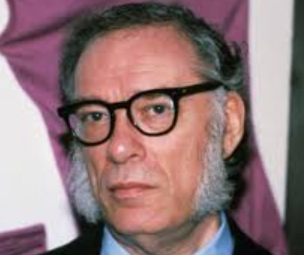
Individual science fiction stories may seem as trivial as ever to the blinder critics and philosophers of today — but the core of science fiction, its essence, the concept around which it revolves, has become crucial to our salvation if we are to be saved at all.
6 months 3 weeks ago
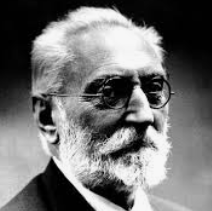
Yes, I know well that others before me have felt what I feel and express; that many others feel it today, although they keep silence about it. ...And I do not keep silence about it because it is for many the thing which must not be spoken, the abomination of abominations - infandum - and I believe that it is necessary now and again to speak the thing which must not be spoken. ...Even if it should lead only to irritating the devotees of progress, those who believe that truth is consolation, it would lead to not a little. To irritating them and making them say: "Poor fellow! if he would only use his intelligence to better purpose!... Someone perhaps will add that I do not know what I say, to which I shall reply that perhaps he may be right - and being right is such a little thing! - but that I feel what I say and I know what I feel and that suffices me. And that it is better to be lacking in reason than to have too much of it.
4 months 3 weeks ago
Scientific revolutions are inaugurated by a growing sense... that an existing paradigm has ceased to function adequately in the exploration of an aspect of nature to which that paradigm itself had previously led the way. p. 91
▼
Source
source
2012 ed.
8 months 4 days ago
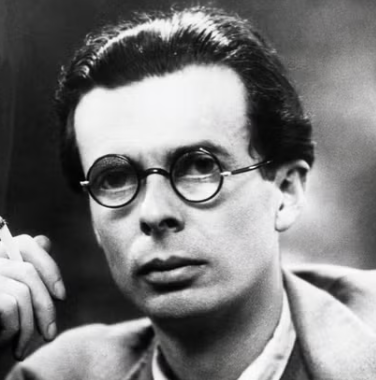
At least two thirds of our miseries spring from human stupidity, human malice, and those great motivators and justifiers of malice and stupidity, idealism, dogmatism and proselytizing zeal on behalf of religious or political idols.
▼
Source
source
Tomorrow and Tomorrow and Tomorrow, 1952
9 months 5 days ago
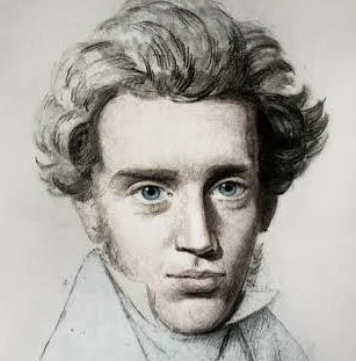
It is true that in the confessional it is the pastor who preaches; but the true preacher is still the secret-sharer in your inner being. The pastor can preach only in vague generalities; the preacher in your inner being is just the opposite; he speaks simply and solely about you, to you, and within you.
4 months 2 weeks ago
As the State formerly played a most important part in the revolutions that abolished the old economic systems, so it must again be the State that should abolish capitalism.
▼
Source
source
p. 170

6 months 4 days ago
Genuine religion is not about speculating about God or the soul or about what happened in the past or will happen in the future; it cares only about one thing-finding out exactly what should or should not be done in this lifetime.
▼
Source
source
p. 3
7 months ago
We should, out of decency, choose for ourselves the moment to disappear.
4 months 4 days ago
Never buy what you do not want, because it is cheap; it will be dear to you.
8 months 6 days ago
Change alone is eternal, perpetual, immortal.
▼
Source
source
Unverified attribution noted in Respectfully Quoted: A Dictionary of Quotations (1993), ed. Suzy Platt, Library of Congress, p. 39;
7 months 3 weeks ago
He wins every hand who mingles profit with pleasure, by delighting and instructing the reader at the same time.
▼
Source
source
Line 343
6 months 4 days ago
The condition of life to which people of the well-to-do classes are accustomed is that of an abundant production of various articles necessary for their comfort and pleasure, and these things are obtained only thanks to the existence of factories and works organized as at present. And, therefore, discussing the improvement of the workers' position, the men of science belonging to the well- to-do classes always have in view only such improvements as will not do away with the system of factory-production and those conveniences of which they avail themselves.
▼
Source
source
Chapter V: Why Learned Economists Assert What Is False
8 months 1 week ago
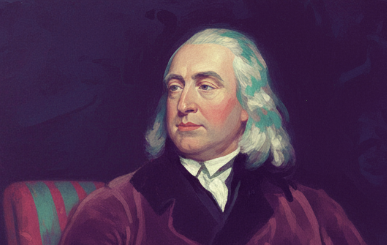
Figure to yourself the mixture of surprise and delight which has this instant been poured into my mind by the sound of my name, as uttered by you, in the speech just read to me out of the Morning Herald... By one and the same man, not only Parliamentary Reform, but Law Reform advocated. Advocated? and by what man? By one who, in the vulgar sense of profit and loss, has nothing to gain by it... Yes, only from Ireland could such self-sacrifice come; nowhere else: least of all in England, cold, selfish, priest-ridden, lawyer-ridden, lord-ridden, squire-ridden, soldier-ridden England, could any approach to it be found.
▼
Source
source
Letter to Daniel O'Connell (15 July 1828) , quoted in The Works of Jeremy Bentham, Vol. X (1843), pp. 594-595
6 months 3 weeks ago
In this initial illimitableness of possibilities that characterizes one who has no nature there stands out only one fixed, pre-established, and given line by which he may chart his course, only one limit: the past.
▼
Source
source
"Man has no nature"
6 months 4 days ago
If a poor person envies a rich person, he is no better than the rich person.
▼
Source
source
p. 89
4 months 3 weeks ago
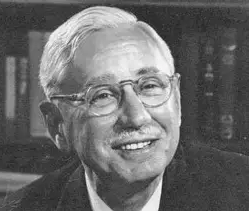
The death of Alexander (323 BC) quickened this process of decay. The boy-emperor, barbarian though he remained after all of Aristotle's tutoring, had yet learned to revere the rich culture of Greece, and had dreamed of spreading that culture through the Orient in the wake of his victorious armies.... But he had underrated the inertia and resistance of the Oriental mind, and the mass and depth of Oriental culture. It was only a youthful fancy, after all, to suppose that so immature and unstable a civilization as that of Greece could be imposed upon a civilization immeasurably more widespread, and rooted in the most venerable traditions. The quantity of Asia proved too much for the quality of Greece.
8 months 5 days ago
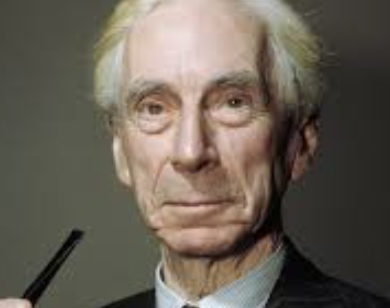
Every man would like to be God, if it were possible; some few find it difficult to admit the impossibility.
▼
Source
source
Ch. 1: The Impulse to Power
7 months 5 days ago
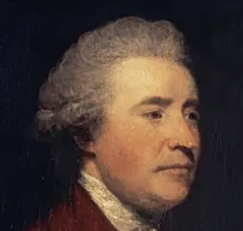
Good order is the foundation of all good things.
4 months 2 weeks ago
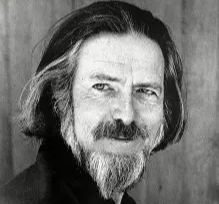
When you tell a girl how beautiful she is, she will say, "Now isn't that just like a man! All you men think about is bodies. OK, so I'm beautiful, but I got my body from my parents and it was just luck. I prefer to be admired for myself, not my chassis." Poor little chauffeur! All she is saying is that she has lost touch with her own astonishing wisdom and ingenuity, and wants to be admired for some trivial tricks that she can perform with her conscious attention. And we are all in the same situation, having dissociated ourselves from our bodies and from the whole network of forces in which bodies can come to birth and live.
▼
Source
source
p. 112
6 months 3 weeks ago
England is the paradise of individuality, eccentricity, heresy, anomalies, hobbies, and humors.
▼
Source
source
"The British Character"
8 months 2 weeks ago
He who created us without our help will not save us without our consent.
▼
Source
source
St. Augustine, Sermo 169, 11, 13: PL 38, 923 as quoted in Fr. Mitch Pacwa, S. J.. Saved: A Bible Study Guide for Catholics (p. 15). Our Sunday Visitor. Kindle Edition.

6 months 3 weeks ago
Therefore every scribe which is instructed unto the kingdom of heaven is like unto a man that is an householder, which bringeth forth out of his treasure things new and old.
▼
Source
source
13:52 (KJV)

7 months 4 weeks ago
Between the fine point of the brush and the steely gaze, the scene is about to yield up its volume.
▼
Source
source
Las Meninas
8 months 1 week ago
The second is the partiality for unity proper to the philosophical mind, whence this wide-spread canon has flown forth: principles are not to be multiplied beyond supreme necessity, to which we give in our adhesion, not because we have insight into causal unity in the world either by reason or experience, but as seeking it by an impulse of the intellect which seems to itself to have by thus much advanced in the explication of phenomena, by as much as it is granted to it to descend from the same principle to a greater number of consequences,
4 months 4 days ago
The fundamental terms of a system of Nomenclature may "be conveniently borrowed from casual or arbitrary circumstances.
8 months 5 days ago
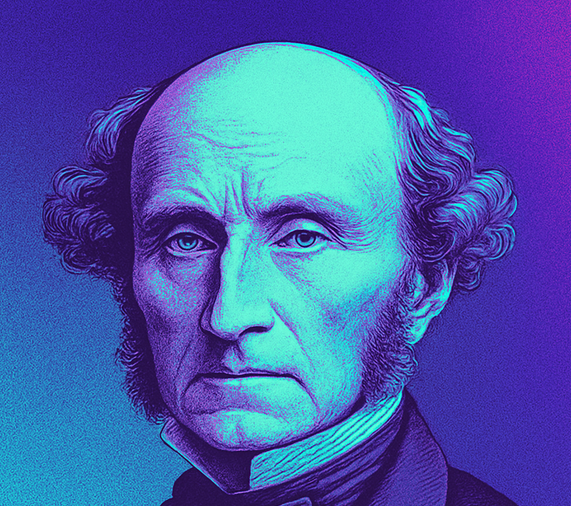
The entire history of social improvement has been a series of transitions, by which one custom or institution after another, from being a supposed primary necessity of social existence, has passed into the rank of an universally stigmatized injustice and tyranny. So it has been with the distinctions of slaves and freemen, nobles and serfs, patricians and plebeians; and so it will be, and in part already is, with the aristocracies of colour, race, and sex.
▼
Source
source
Ch. 5
4 months 2 weeks ago
If man puts his honor first in relying upon himself, knowing himself and applying himself, this in self-reliance, self-assertion, and freedom, he then strives to rid himself of the ignorance which makes a strange impenetrable object a barrier and a hindrance to his self-knowledge.
▼
Source
source
p. 23
6 months ago
To travel hopefully is a better thing than to arrive.
▼
Source
source
El Dorado.

8 months 3 days ago
"They would say," he answered, "that you do not fail in obedience through lack of love, but have lost love because you never attempted obedience."
▼
Source
source
Ch. 7 : The Pendragon, section 2
7 months 4 days ago
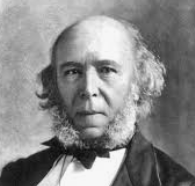
When men hire themselves out to shoot other men to order, asking nothing about the justice of their cause, I don't care if they are shot themselves.
▼
Source
source
"Patriotism", p. 126
4 months 4 days ago
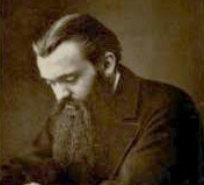
The goodness and greatness of a man do not justify us in accepting a belief upon the warrant of his authority, unless there are reasonable grounds for supposing that he knew the truth of what he was saying. And there can be no grounds for supposing that a man knows that which we, without ceasing to be men, could not be supposed to verify.
8 months 6 days ago
A book can never be anything more than the impression of its author's thoughts [Ein Buch kann nie mehr seyn, als der Abdruck der Gedanken des Verfassers]. The value of these thoughts lies either in the matter about which he has thought, or in the form in which he develops his matter - that is to say, what he has thought about it.
6 months 1 week ago
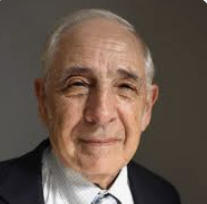
The Intentionality of the mind not only creates the possibility of meaning, but limits its forms.
▼
Source
source
P. 166.
CivilSimian.com created by AxiomaticPanic, CivilSimian, Kalokagathia