

4 months 2 weeks ago
Things that were hard to bear are sweet to remember.
▼
Source
source
lines 656-657;
4 months ago
Furthermore, the monad produces itself and is produced from itself, since it is self-sufficient and has no power set over it and is everlasting; and it is evidently the cause of permanence, just as God is thought to be in the case of actual physical things, and to be the preserver and maintainer of natures.
▼
Source
source
On the Monad
8 months 3 days ago
Let us not underrate the value of a fact; it will one day flower in a truth.
▼
Source
source
"Natural History of Massachusetts". The Dial (July 1842) p. 39
7 months 2 weeks ago
After he routed Pharnaces Ponticus at the first assault, he wrote thus to his friends: "I came, I saw, I conquered."
▼
Source
source
Cæsar
8 months 6 days ago
In our reasonings concerning matter of fact, there are all imaginable degrees of assurance, from the highest certainty to the lowest species of moral evidence. A wise man, therefore, proportions his belief to the evidence.
▼
Source
source
Section X: Of Miracles; Part I. 87
7 months 1 week ago
Shakespeare's fault is not the greatest into which a poet may fall. It merely indicates a deficiency of taste.
8 months 3 days ago
My first advice (on how not to grow old) would be to choose you ancestors carefully. Although both my parents died young, I have done well in this respect as regards my other ancestors. My maternal grandfather, it is true, was cut off in the flower of his youth, at the age of sixty-seven, but my other three grandparents all lived to be over eighty. Of remoter ancestors I can only discover one who did not live to a great age, and he died of a disease which is now rare, namely, having his head cut off.
▼
Source
source
p. 50
6 months 2 weeks ago
If all men, by the act of being born, are destined to suffer violence, that is a truth to which the empire of circumstances closes their minds.
▼
Source
source
in The Simone Weil Reader, p. 163
6 months 2 weeks ago
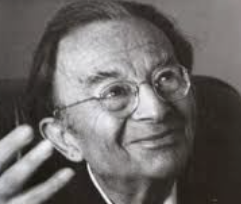
The revolutionary and critical thinker is in a certain way always outside of his society while of course he is at the same time also in it. That he is in it is obvious, but why is he outside it? First, because he is not brainwashed by the ruling ideology, that is to say, he has an extraordinary kind of independence of thought and feeling; hence he can have a greater objectivity than the average person has. There are many emotional factors too. And certainly I do not mean to enter here into the complex problem of the revolutionary thinker. But it seems to me essential that in a certain sense he transcends his society. You may say he transcends it because of the new historical developments and possibilities he is aware of, while the majority still think in traditional terms.
6 months 3 weeks ago
Whoever drinks from my mouth will become like me; I myself shall become that person, and the hidden things will be revealed to him.
8 months 2 weeks ago
These reasonings are unconnected: "I am richer than you, therefore I am better"; "I am more eloquent than you, therefore I am better." The connection is rather this: "I am richer than you, therefore my property is greater than yours;" "I am more eloquent than you, therefore my style is better than yours." But you, after all, are neither property nor style.
▼
Source
source
(44).
6 months 3 weeks ago
Persons who feel themselves to be exiles in this world-and what noble mind, from Empedocles down, has not had that feeling?-are mightily inclined to believe themselves citizens of another.
▼
Source
source
pp. 39-40

8 months 5 days ago
I shall need only myself to be happy.
▼
Source
source
As quoted in The prophetic voice, 1758-1778 by Lester G. Crocke, p. 148.
8 months 3 weeks ago
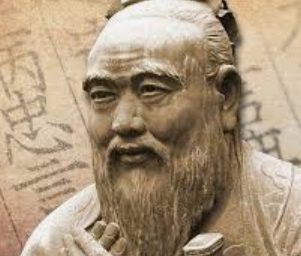
Listen widely to remove your doubts and be careful when speaking about the rest and your mistakes will be few. See much and get rid of what is dangerous and be careful in acting on the rest and your causes for regret will be few. Speaking without fault, acting without causing regret: 'upgrading' consists in this.

4 months 3 weeks ago
But there has also been the rise of populist movements within existing liberal democracies, and particularly within the United States and Britain, which were... the leaders of the neoliberal revolution... in the 1980s...
▼
Source
source
20:01

6 months 4 weeks ago
If we would regain our freedom, we must shake off the burden of sensation, no longer react to the world by our senses, break our bonds. For all sensation is a bond, pleasure as much as pain, joy as much as misery. The only free mind is the one that, pure of all intimacy with beings or objects, plies its own vacuity.
9 months 3 days ago
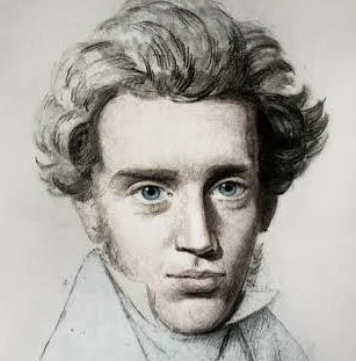
It is of this sort of divine service I used the expression that, in comparison with the Christianity of the New Testament, it is playing Christianity. The expression is essentially true and characterizes the thing perfectly. For what does it mean to play, when one reflects how the word must be understood in this connection? It means to imitate, to counterfeit, a danger when there is no danger, and to do it in such a way that the more art is applied to it, the more delusive the pretense is that the danger is present.
8 months 4 days ago
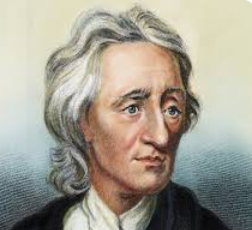
This life affords no solid satisfaction, but in the consciousness of having done well, and the hopes of another life.
▼
Source
source
Letter to Anthony Collins (23 August 1704), in The Works of John Locke, Vol. X (London, 1823), p. 298; quoted by William Julius Mickle in Voltain in the Shades (London, 1770), p. 7

8 months 2 days ago
We cannot overstate our debt to the Past, but the moment has the supreme claim. The Past is for us; but the sole terms on which it can become ours are its subordination to the Present. Only an inventor knows how to borrow, and every man is or should be an inventor. We must not tamper with the organic motion of the soul.
▼
Source
source
Quotation and Originality
6 months 4 weeks ago
Suicide is a sudden accomplishment, a lightning-like deliverance: it is nirvana by violence.

4 months 2 weeks ago
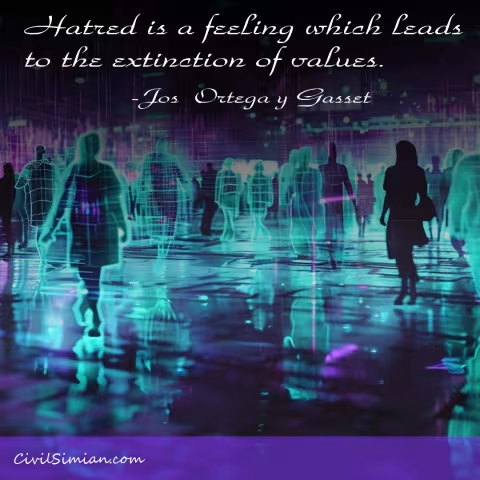
Life is to be fortified by many friendships. To love, and to be loved, is the greatest happiness of existence. If I lived under the burning sun of the equator, it would be a pleasure to me to think that there were many human beings on the other side of the world who regarded and respected me; I could and would not live if I were alone upon the earth, and cut off from the remembrance of my fellow-creatures. It is not that a man has occasion often to fall back upon the kindness of his friends; perhaps he may never experience the necessity of doing so; but we are governed by our imaginations, and they stand there as a solid and impregnable bulwark against all the evils of life.
▼
Source
source
Vol. I, ch. 6, "Of Friendship", p. 178
8 months 3 days ago
Government by majorities can be made less oppressive by devolution, by placing the decision of questions primarily affecting only a section of the community in the hands of that section, rather than of a Central Chamber. In this way, men are no longer forced to submit to decisions made in a hurry by people mostly ignorant of the matter in hand and not personally interested.
▼
Source
source
Ch VIII: The World As It Could Be Made
8 months 4 weeks ago
Man is the only creature who refuses to be what he is.
6 months 2 weeks ago
Ideas, cultures, and histories cannot seriously be understood or studied without their force, or more precisely their configurations of power, also being studied.
9 months ago
Men grew desperate and the border between bitter frustration and wild destruction is sometimes easily crossed.
4 months 3 weeks ago
Neoconservatives believed that history can be pushed along with the right application of power and will. Leninism was a tragedy in its Bolshevik version, and it has returned as farce when practiced by the United States. Neoconservatism, as both a political symbol and a body of thought, has evolved into something I can no longer support. ..."War" is the wrong metaphor for the broader struggle, since wars are fought at full intensity and have clear beginnings and endings. Meeting the jihadist challenge is more of a "long, twilight struggle" whose core is not a military campaign but a political contest for the hearts and minds of ordinary Muslims around the world.
▼
Source
source
From the essay "After Neoconservatism" in the New York Times Magazine
5 months 3 weeks ago
Apparently the rise of consciousness is linked to certain kinds of privation. It is the bitterness of self-consciousness that we knowers know best. Critical of the illusions that sustained mankind in earlier times, this self-consciousness of ours does little to sustain us now. The question is: which is disenchanted, the world itself or the consciousness we have of it?
▼
Source
source
A Matter of the Soul (1975), pp. 75-76
6 months 2 weeks ago
Man should possess an infinite appetite for life. It should be self-evident to him, all the time, that life is superb, glorious, endlessly rich, infinitely desirable. At present, because he is in a midway position between the brute and the truly human, he is always getting bored, depressed, weary of life. He has become so top-heavy with civilisation that he cannot contact the springs of pure vitality. Control of the prefrontal cortex will change all of this. He will cease to cast nostalgic glances towards the womb, for he will realise that death is no escape. Man is a creature of life and the daylight; his destiny lies in total objectivity.
▼
Source
source
pp. 317-318
8 months 5 days ago
Let us not forget what befits our present state in the pursuit of vain fancies. Mankind has its place in the sequence of things; childhood has its place in the sequence of human life; the man must be treated as a man and the child as a child. Give each his place, and keep him there. Control human passions according to man's nature; that is all we can do for his welfare. The rest depends on external forces, which are beyond our control.
4 months 2 days ago
We never repent of having eaten too little.
8 months 2 days ago
I will now confess my own utopia. I devoutly believe in the reign of peace and in the gradual advent of some sort of socialistic equilibrium. The fatalistic view of the war function is to me nonsense, for I know that war-making is due to definite motives and subject to prudential checks and reasonable criticisms, just like any other form of enterprise. And when whole nations are the armies, and the science of destruction vies in intellectual refinement with the science of production, I see that war becomes absurd and impossible from its own monstrosity. Extravagant ambitions will have to be replaced by reasonable claims, and nations must make common cause against them.
5 months 2 weeks ago
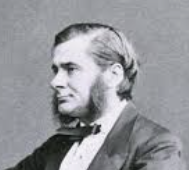
A small beginning has led us to a great ending. If I were to put the bit of chalk with which we started into the hot but obscure flame of burning hydrogen, it would presently shine like the sun. It seems to me that this physical metamorphosis is no false image of what has been the result of our subjecting it to a jet of fervent, though nowise brilliant, thought to-night. It has become luminous, and its clear rays, penetrating the abyss of the remote past, have brought within our ken some stages of the evolution of the earth. And in the shifting "without haste, but without rest" of the land and sea, as in the endless variation of the forms assumed by living beings, we have observed nothing but the natural product of the forces originally possessed by the substance of the universe.
4 months 1 day ago
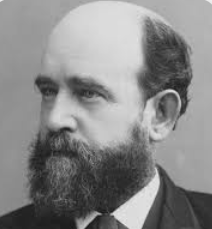
I am firmly convinced, as I have already said, that to effect any great social improvement, it is sympathy rather than self-interest, the sense of duty rather than the desire for self-advancement, that must be appealed to. Envy is akin to admiration, and it is the admiration that the rich and powerful excite which secures the perpetuation of aristocracies.
▼
Source
source
Ch. 21 : Conclusion

4 months 3 weeks ago
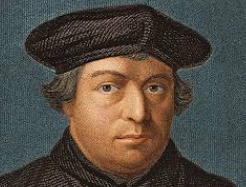
To this man life is already as earnest and awful, and beautiful and terrible, as death.
8 months 1 week ago
Insurrection ... never brings about the desired improvement. For insurrection lacks discernment; it generally harms the innocent more than the guilty. Hence, no insurrection is ever right, no matter how right the cause it seeks to promote.
▼
Source
source
pp. 62-63
9 months 3 days ago
If it were so, as conceited sagacity, proud of not being deceived, thinks, that we should believe nothing that we cannot see with our physical eyes, then we first and foremost ought to give up believing in love. ... We can be deceived by believing what is untrue, but we certainly are also deceived by not believing what is true. ... Which deception is more dangerous?
8 months 5 days ago
The second is the partiality for unity proper to the philosophical mind, whence this wide-spread canon has flown forth: principles are not to be multiplied beyond supreme necessity, to which we give in our adhesion, not because we have insight into causal unity in the world either by reason or experience, but as seeking it by an impulse of the intellect which seems to itself to have by thus much advanced in the explication of phenomena, by as much as it is granted to it to descend from the same principle to a greater number of consequences,

4 months 4 weeks ago
A person who is shallow aspires to depth; one who is ugly aspires to beauty; one who is narrow aspires to breadth; one who is poor aspires to wealth; one who is humble aspires to esteem. Whatever one lacks in oneself he must seek outside.
▼
Source
source
Sources of Chinese Tradition (1999), vol. 1, p. 181
6 months 4 weeks ago
We replace God as best we can; for every god is good, provided he perpetuates in eternity our desire for a crucial solitude. . . .
4 months 1 week ago
Universal love is really the way of the sage-kings. It is what gives peace to the rulers and sustenance to the people. The gentleman would do well to understand and practise universal love; then he would be gracious as a ruler, loyal as a minister, affectionate as a father, filial as a son, courteous as an elder brother, and respectful as a younger brother. So, if the gentleman desires to be a gracious ruler, a loyal minister, an affectionate father, a filial son, a courteous elder brother, and a respectful younger brother, universal love must be practised. It is the way of the sage-kings and the great blessing of the people.
▼
Source
source
Book 4; Universal Love III
8 months 6 days ago
Man can, indeed, act contrarily to the decrees of God, as far as they have been written like laws in the minds of ourselves or the prophets, but against that eternal decree of God, which is written in universal nature, and has regard to the course of nature as a whole, he can do nothing.
▼
Source
source
Ch. 2, Of Natural Right
4 months 2 days ago
I know, indeed, that some honest men fear that a republican government can not be strong, that this Government is not strong enough; but would the honest patriot, in the full tide of successful experiment, abandon a government which has so far kept us free and firm on the theoretic and visionary fear that this Government, the world's best hope, may by possibility want energy to preserve itself? I trust not.
6 months ago
We now live in a technologically prepared environment that blankets the earth itself. The humanly contrived environment of electric information and power has begun to take precedence over the old environment of "nature." Nature, as it were, begins to be the content of our technology.
▼
Source
source
p. 276

6 months 2 weeks ago
The child shows its individual tendencies in its plays, in its questions, in its association with people and things. But it has to struggle with everlasting external interference in its world of thought and emotion. It must not express itself in harmony with its nature, with its growing personality. It must become a thing, an object. Its questions are met with narrow, conventional, ridiculous replies, mostly based on falsehoods; and, when, with large, wondering, innocent eyes, it wishes to behold the wonders of the world, those about it quickly lock the windows and doors, and keep the delicate human plant in a hothouse atmosphere, where it can neither breathe nor grow freely.
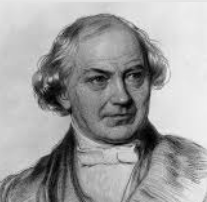
4 months 2 days ago
The 'Diagnosis', or Scheme of the Characters, comes, in the order of philosophy, after the Classification. The characters do not 'make' the classes, they only enable us to 'recognize' them. The Diagnosis is an Artificial Key to a Natural System.
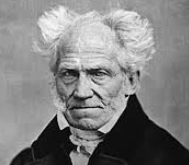
8 months 4 days ago
If you feel irritated by the absurd remarks of two people whose conversation you happen to overhear, you should imagine that you are listening to a dialogue of two fools in a comedy.
▼
Source
source
T. B. Saunders, trans., § 38
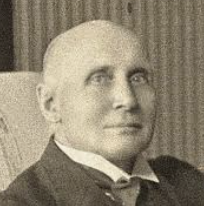
6 months 2 weeks ago
In the first place for over two centuries religion has been on the defensive, and on a weak defensive. The result of the repetition of this undignified retreat, during many generations, has at last almost entirely destroyed the intellectual authority of religious thinkers. Consider this contrast: when Darwin or Einstein proclaim theories which modify our ideas, it is a triumph for science. We do not go about saying that there is another defeat for science, because its old ideas have been abandoned. We know that another step of scientific insight has been gained. Religion will not regain its old power until it can face change in the same spirit as does science. Its principles may be eternal, but the expression of those principles requires continual development.
▼
Source
source
Ch. 12: "Religion and Science", p. 263
CivilSimian.com created by AxiomaticPanic, CivilSimian, Kalokagathia