

"We reason deeply, when we forcibly feel."
- Mary Wollstonecraft
See biography for Mary Wollstonecraft:
https://civilsimian.com/Mary-Wollstonecraft
Read Mary Wollstonecraft's work:
https://civilsimian.com/user/126/content


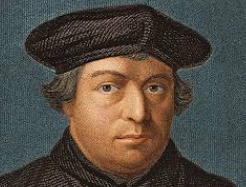
There can be no doubt that the Virgin Mary is in heaven. How it happened we do not know.
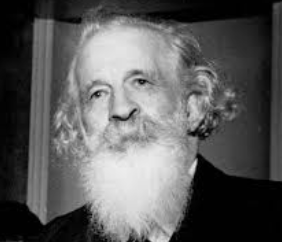
A special kind of beauty exists which is born in language, of language, and for language.

I read no newspaper now but Ritchie's, and in that chiefly the advertisments, for they contain the only truths to be relied on in a newspaper.
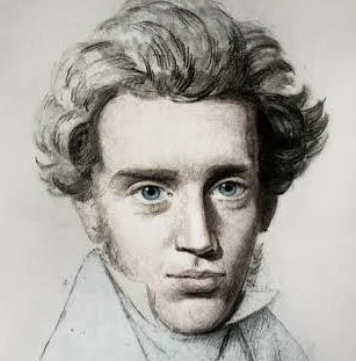
Now just as the historical gives occasion for the contemporary to become a disciple, but only it must be noted through receiving the condition from the God himself, since otherwise we speak Socratically, so the testimony of contemporaries gives occasion for each successor to become a disciple, but only it must be noted through receiving the condition from the God himself.
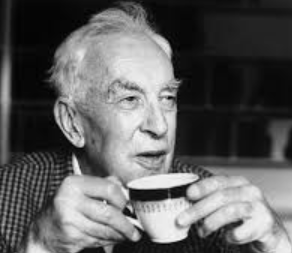
The equation of religion with belief is rather recent.
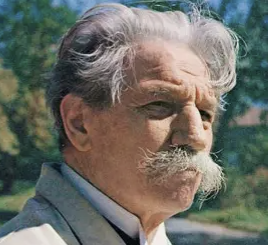
I was convinced - and I am so still - that the fundamental principles of Christianity have to be proved true by reasoning, and by no other method. Reason, I said to myself, is given us that we may bring everything within the range of its action, even the most exalted ideas of religion. And this certainty filled me with joy.
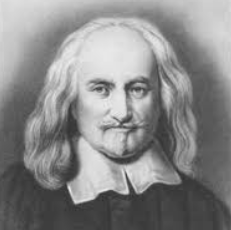
Science is the knowledge of Consequences, and dependence of one fact upon another: by which, out of that we can presently do, we know how to do something else when we will, or the like, another time.

Every legal constitution is the product of a revolution. In the history of classes, revolution is the act of political creation, while legislation is the political expression of the life of a society that has already come into being. Work for reform does not contain its own force independent from revolution. During every historic period, work for reforms is carried on only in the direction given to it by the impetus of the last revolution and continues as long as the impulsion from the last revolution continues to make itself felt. Or, to put it more concretely, in each historic period work for reforms is carried on only in the framework of the social form created by the last revolution. Here is the kernel of the problem.
Finally, every man will become dear and pleasing to every other man; all will be beloved by all! and, what is still more desirable, beloved also by Christ; to become acceptable to whom is the highest felicity of human nature.

Olympian bards who sung Divine ideas below, Which always find us young And always keep us so.
A great deal of talent is lost to the world for the want of a little courage. Every day sends to their graves a number of obscure men who have only remained obscure because their timidity has prevented them from making a first effort.
The human being, corrupted to the root, can neither desire nor perform anything but evil.
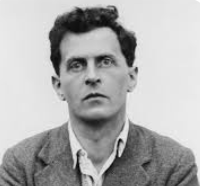
A teacher who can show good, or indeed astounding results while he is teaching, is still not on that account a good teacher, for it may be that, while his pupils are under his immediate influence, he raises them to a level which is not natural to them, without developing their own capacities for work at this level, so that they immediately decline again once the teacher leaves the schoolroom.
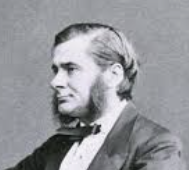
In an ideal University, as I conceive it, a man should be able to obtain instruction in all forms of knowledge, and discipline in the use of all the methods by which knowledge is obtained. In such a University, the force of living example should fire the student with a noble ambition to emulate the learning of learned men, and to follow in the footsteps of the explorers of new fields of knowledge. And the very air he breathes should be charged with that enthusiasm for truth, that fanaticism of veracity, which is a greater possession than much learning; a nobler gift than the power of increasing knowledge; by so much greater and nobler than these, as the moral nature of man is greater than the intellectual; for veracity is the heart of morality.

We do not "have" a body; rather, we "are" bodily.
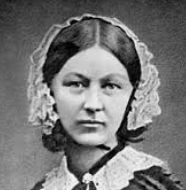
I have had a larger responsibility of human lives than ever man or woman had before. And I attribute my success to this - I never gave or took an excuse. Yes, I do see the difference now between me and other men. When a disaster happens, I act and they make excuses.
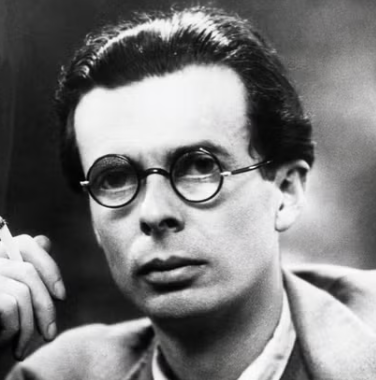
Art, I suppose, is only for beginners, or else for those resolute dead-enders, who have made up their minds to be content with the ersatz of Suchness, with symbols rather than with what they signify, with the elegantly composed recipe in lieu of actual dinner.
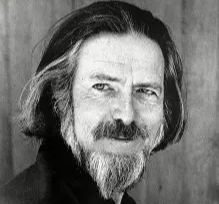
There is nothing wrong with meditating just to meditate, in the same way that you listen to music just for the music. If you go to concerts to "get culture" or to improve your mind, you will sit there as deaf as a doorpost.
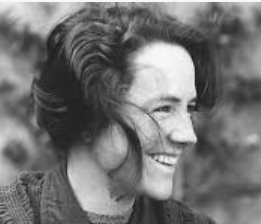
One can never pay in gratitude; one can only pay "in kind" somewhere else in life.
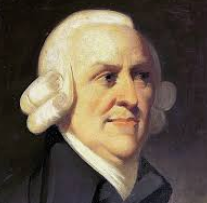
It is the highest impertinence and presumption, therefore, in kings and ministers, to pretend to watch over the economy of private people, and to restrain their expence, either by sumptuary laws, or by prohibiting the importation of foreign luxuries. They are themselves always, and without any exception, the greatest spendthrifts in the society. Let them look well after their own expence, and they may safely trust private people with theirs. If their own extravagance does not ruin the state, that of their subjects never will.
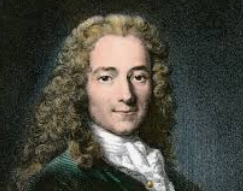
A minister of state is excusable for the harm he does when the helm of government has forced his hand in a storm; but in the calm he is guilty of all the good he does not do.

Nothing surpasses the pleasures of idleness: even if the end of the world were to come, I would not leave my bed at an ungodly hour.
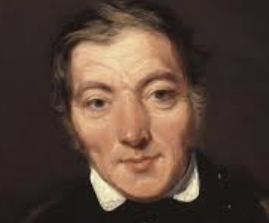
In advanced age, and in cases of disability from accident, natural infirmity or any other cause, the individual shall be supported by the colony, and receive every comfort which kindness can administer.
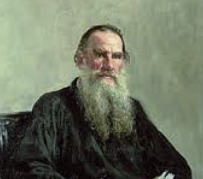
When I started life Hegelianism was the basis of everything: it was in the air, found expression in magazine and newspaper articles, in novels and essays, in art, in histories, in sermons, and in conversation. A man unacquainted with Hegel had no right to speak: he who wished to know the truth studied Hegel. Everything rested on him; and suddenly forty years have gone by and there is nothing left of him, he is not even mentioned - as though he had never existed. And what is most remarkable is that, like pseudo-Christianity, Hegelianism fell not because anyone refuted it, but because it suddenly became evident that neither the one nor the other was needed by our learned, educated world.
Everything over which I have might that cannot be torn from me remains my property; well, then let might decide about property, and I will expect everything from my might! Alien might, might that I leave to another, makes me an owned slave: then let my own might make me an owner. Let me then withdraw the might that I have conceded to others out of ignorance regarding the strength of my own might! Let me say to myself, what my might reaches to is my property; and let me claim as property everything that I feel myself strong enough to attain, and let me extend my actual property as far as I entitle, that is, empower, myself to take.
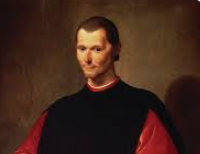
It is easier for the prince to make friends of those men who were contented under the former government, and are therefore his enemies, than of those who, being discontented with it, were favourable to him and encouraged him to seize it.
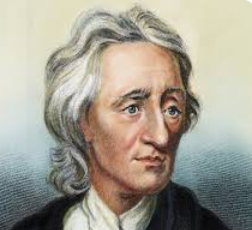
The scene should be gently open'd, and his entrance made step by step, and the dangers pointed out that attend him from several degrees, tempers, designs, and clubs of men. He should be prepared to be shocked by some, and caress'd by others; warned who are like to oppose, who to mislead, who to undermine him, and who to serve him. He should be instructed how to know and distinguish them; where he should let them see, and when dissemble the knowledge of them and their aims and workings.

Educate the children and it won't be necessary to punish the men.
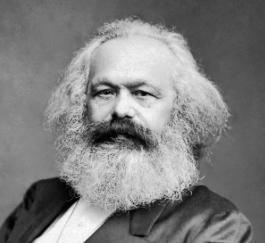
Communism differs from all previous movements in that it overturns the basis of all earlier relations of production and intercourse, and for the first time consciously treats all natural premises as the creatures of hitherto existing men, strips them of their natural character and subjugates them to the power of the united individuals. Its organisation is, therefore, essentially economic, the material production of the conditions of this unity; it turns existing conditions into conditions of unity. The reality, which communism is creating, is precisely the true basis for rendering it impossible that anything should exist independently of individuals, insofar as reality is only a product of the preceding intercourse of individuals themselves.
Man, servant and interpreter of Nature, does and understands only as much as he has observed of the order of Nature, either in reality or in mind; he neither knows nor can do more.
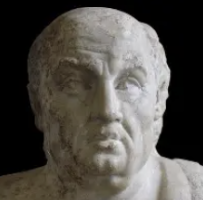
A large part of mankind is angry not with the sins, but with the sinners.
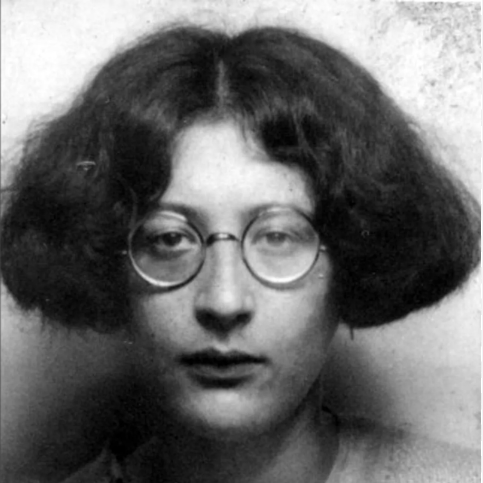
The prestige which constitutes three-fourths of might is first of all made up of that superb indifference which the powerful have for the weak, an indifference so contagious that it is communicated even to those who are its object.
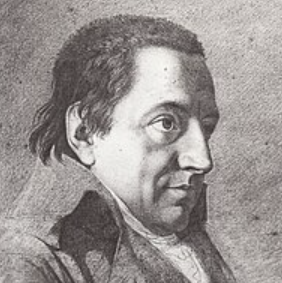
There is but One Principle that proceeds from God; and thus, in consequence of the unity of the Power, it is possible for each Individual to schematise his World of Sense in accordance with the law of that original harmony; - and every Individual, under the condition of being found on the way towards the recognition of the Imperative, must so schematise it. I might say: - Every Individual can and must, under the given condition, construct the True World of Sense, - for this indeed has beyond the universal and formal laws above deduced, no other Truth and Reality than this universal harmony.
Preference of vice to virtue, a manifest wrong judgment.
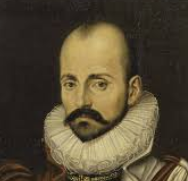
There is no pleasure to me without communication: there is not so much as a sprightly thought comes into my mind that it does not grieve me to have produced alone, and that I have no one to tell it to.
But what we've got going wrong is we've got a kind of bifurcation in cultural development:You take your classified telephone directory, and open up "Churches", and have a ruler in your hand. And you will find that the longest space is occupied by authoritarian, Bible-banging churches. And these people are barbarians, who take the written word of the Bible literally. Because they need terribly, they have a personal need, for something to depend on. ... The government realizes that there is a very large number of people like that; and therefore, to keep their votes, they have to pander to those kind of people. And these are the boys who never grew up; they always need Papa. ... The trouble is that the boys who need Papa, are violent. They have the guns. And they are the types of people who like to be soldiers, policemen-tough guys. And therefore they have a great deal of power.
What is more affectionate to others than man? Yet what is more savage against them than anger?
The first-beginnings of things cannot be seen by the eyes.
Immortality. I notice that as soon as writers broach this question they begin to quote. I hate quotation. Tell me what you know.
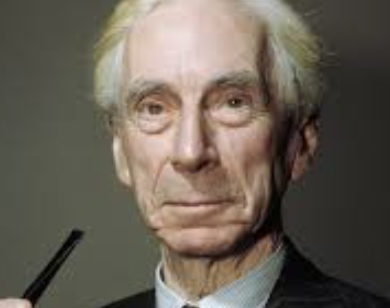
I have been merely oppressed by the weariness and tedium and vanity of things lately: nothing stirs me, nothing seems worth doing or worth having done: the only thing that I strongly feel worth while would be to murder as many people as possible so as to diminish the amount of consciousness in the world. These times have to be lived through: there is nothing to be done with them.
Cease therefore to be dismayed by the mere novelty and so to reject reason from your mind with loathing: weigh the questions rather with keen judgment and if they seem to you to be true, surrender, or if the thing is false, gird yourself to the encounter.
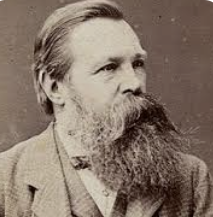
Wherever big industries displaced manufacture, the bourgeoisie developed in wealth and power to the utmost and made itself the first class of the country. The result was that wherever this happened, the bourgeoisie took political power into its own hands and displaced the hitherto ruling classes, the aristocracy, the guildmasters, and their representative, the absolute monarchy. The bourgeoisie annihilated the power of the aristocracy, the nobility, by abolishing the entailment of estates - in other words, by making landed property subject to purchase and sale, and by doing away with the special privileges of the nobility. It destroyed the power of the guildmasters by abolishing guilds and handicraft privileges. In their place, it put competition - that is, a state of society in which everyone has the right to enter into any branch of industry, the only obstacle being a lack of the necessary capital.
The march of the human mind is slow.
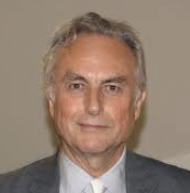
Unfortunately, instead of working out that they have probably misunderstood evolution, creationists conclude, instead, that evolution must be false.
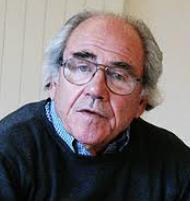
The need to speak, even if one has nothing to say, becomes more pressing when one has nothing to say, just as the will to live becomes more urgent when life has lost its meaning.
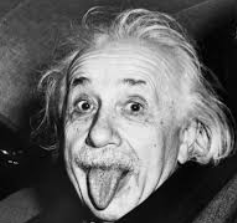
I do not believe in a God who maliciously or arbitrarily interferes in the personal affairs of mankind. My religion consists of a humble admiration for the vast power which manifests itself in that small part of the universe which our poor, weak minds can grasp!
CivilSimian.com created by AxiomaticPanic, CivilSimian, Kalokagathia