


3 months 3 weeks ago
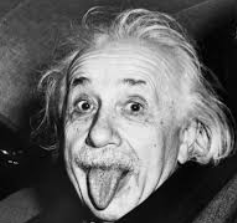
I am happy because I want nothing from anyone. I do not care about money. Decorations, titles or distinctions mean nothing to me. I do not crave praise. The only thing that gives me pleasure, apart from my work, my violin, and my sailboat, is the appreciation of my fellow workers.
8 months 3 days ago
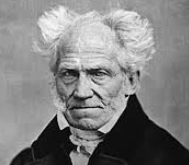
National character is only another name for the particular form which the littleness, perversity and baseness of mankind take in every country. Every nation mocks at other nations, and all are right. Variant translation: Every nation criticizes every other one - and they are all correct.
▼
Source
source
As quoted by Wolfgang Pauli in a letter to Abraham Pais (17 August 1950) published in The Genius of Science (2000) by Abraham Pais, p. 242
4 months 2 days ago
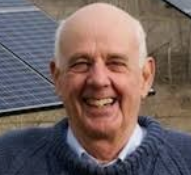
In the effort to tell a whole story, to see it whole and clear, I have had to imagine more than I have known.
▼
Source
source
"Imagination in Place"

8 months 4 days ago
One good schoolmaster is of more use than a hundred priests.
▼
Source
source
Worship and Church Bells, 1797
8 months 2 days ago
The object of art - like every other product - creates a public which is sensitive to art and enjoys beauty.
▼
Source
source
Introduction, p. 12.
8 months 6 days ago
Only geometry can hand us the thread [which will lead us through] the labyrinth of the continuum's composition, the maximum and the minimum, the infinitesimal and the infinite; and no one will arrive at a truly solid metaphysic except he who has passed through this [labyrinth].
▼
Source
source
Spring 1676
6 months 3 weeks ago
The pathfinders of modern thought did not derive what is good from the law. ... Their role in history was not that of adapting their words and actions to the text of old documents or generally accepted doctrines: they themselves created the documents and brought about the acceptance of their doctrines.
▼
Source
source
p. 33.
4 months 3 weeks ago
Alas! Your dear friend and servant Galileo has been for the last month hopelessly blind; so that this heaven, this earth, this universe, which I by my marvelous discoveries and clear demonstrations had enlarged a hundred thousand times beyond the belief of the wise men of bygone ages, henceforward for me is shrunk into such a small space as is filled by my own bodily sensations.
▼
Source
source
Letter to Élie Diodati (2 January 1638), as translated in The Private Life of Galileo : Compiled primarily from his correspondence and that of his eldest daughter, Sister Maria Celeste (1870) by Mary Allan-Olney, p. 279

6 months 1 week ago
The first consequence of the principle of bounded rationality is that the intended rationality of an actor requires him to construct a simplified model of the real situation in order to deal with it. He behaves rationally with respect to this model, and such behavior is not even approximately optimal with respect to the real world. To predict his behavior we must understand the way in which this simplified model is constructed, and its construction will certainly be related to his psychological properties as a perceiving, thinking, and learning animal.
▼
Source
source
p. 198; Cited in P. Slovic (1972, p. 2).
8 months 2 days ago
Hence money may be dirt, although dirt is not money.
▼
Source
source
Vol. I, Ch. 3, Section 2, pg. 123.
4 months 1 week ago
All women's dresses, in every age and country, are merely variations on the eternal struggle between the admitted desire to dress and the unadmitted desire to undress.
▼
Source
source
In Vogue, as quoted by The Reader's Digest, Vols. 30-31 (1937), p. 69
6 months 2 weeks ago
Nothing is more impressive than the fact that as mathematics withdrew increasingly into the upper regions of ever greater extremes of abstract thought, it returned back to earth with a corresponding growth of importance for the analysis of concrete fact. ...The paradox is now fully established that the utmost abstractions are the true weapons with which to control our thought of concrete fact.
▼
Source
source
Ch. 2: "Mathematics as an Element in the History of Thought", p. 46
4 months 3 weeks ago
Who is the happiest of men? He who values the merits of others, And in their pleasure takes joy, even as though 'twere his own. Not in the morning alone, not only at mid-day he charmeth; Even at setting, the sun is still the same glorious planet.
▼
Source
source
Distichs in The Poems of Goethe (1853) as translated in the original metres by Edgar Alfred Bowring
4 months 2 weeks ago
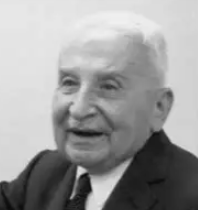
Socialism is the watchword and the catchword of our day. The socialist idea dominates the modem spirit. The masses approve of it. It expresses the thoughts and feelings of all; it has set its seal upon our time. When history comes to tell our story it will write above the chapter "The Epoch of Socialism." As yet, it is true, Socialism has not created a society which can be said to represent its ideal. But for more than a generation the policies of civilized nations have been directed towards nothing less than a gradual realization of Socialism.
▼
Source
source
Introduction : The Success of Socialist Ideas
6 months 2 days ago
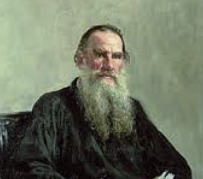
The assertion that art may be good art and at the same time incomprehensible to a great number of people is extremely unjust, and its consequences are ruinous to art itself...it is the same as saying some kind of food is good but most people can't eat it.

5 months 1 week ago
I may not be as unambiguously hostile to capitalism as many people are, but what I don't like about it is the commodification of personal experiences, it turns everyone into actors.
▼
Source
source
Quoted in Will Self, "John Gray: Forget everything you know," The Independent
9 months ago
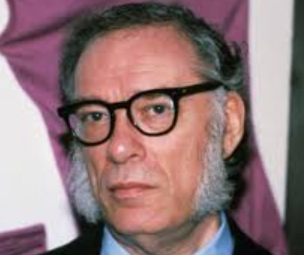
I don't believe in flying saucers... The energy requirements of interstellar travel are so great that it is inconceivable to me that any creatures piloting their ships across the vast depths of space would do so only in order to play games with us over a period of decades.
6 months 4 weeks ago
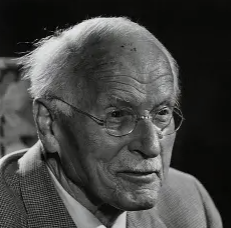
I am an orphan, alone; nevertheless I am found everywhere. I am one, but opposed to myself. I am youth and old man at one and the same time. I have known neither father nor mother, because I have had to be fetched out of the deep like a fish, or fell like a white stone from heaven. In woods and mountains I roam, but I am hidden in the innermost soul of man. I am mortal for everyone, yet I am not touched by the cycle of aeons.
▼
Source
source
Combining alchemical assertions
4 months 1 week ago
A very weighty argument is this - namely, that neither does the light which descends from thence, chiefly upon the world, mix itself with anything, nor admit of dirtiness or pollution, but remains entirely, and in all things that are, free from defilement, admixture, and suffering. Besides, we must pay attention to the other kinds of phenomena, both to the Intelligible, and yet more to the Sensible - whatever are connected with matter, or will manifest themselves in relation to our subject.
9 months ago
It's funny the respectable names you can give to superstition.
8 months 1 day ago
I do not overlook the fact that there are irrationalists who love mankind, and that not all forms of irrationalism engender criminality. But I hold that he who teaches that not reason but love should rule opens up the way for those who rule by hate. (Socrates, I believe, saw something of this when he suggested that mistrust or hatred of argument is related to mistrust or hatred of man).
▼
Source
source
Vol. 2, Ch. 24 "Oracular Philosophy and the Revolt against Reason"

6 months 3 weeks ago
Gentile himself call his doctrine 'absolute formalism': there is no; 'matter' apart from the pure 'form' of acting. 'The only matter there is in the spiritual act is the form itself, as activity.'
▼
Source
source
P. 407
6 months 4 weeks ago
By asserting the objectivity of the physical world, naturalism identifies the existence and the conditions of existence of the physical world with existence and the conditions of existence in general. It forgets that the world of the physicist necessarily refers back, through its intrinsic meaning, through the subjective world which one tries to exclude from reality as being pure appearance, conditioned by the empirical nature of man, which is incapable of reaching directly to a world of things in themselves. But while the world of the physicist claims to go beyond naive experience, his world really exists only in relation to naive experience.
▼
Source
source
The Theory Of Intuition In Husserls Phenomenology 1963, 1995 p. 9
5 months 1 week ago
The functional regions of the brain which subserve physical agony, the "pain centres", and the mainly limbic substrates of emotion, appear in phylogenetic terms to be remarkably constant in the vertebrate line. The neural pathways involving serotonin, the periaquaductal grey matter, bradykinin, dynorphin, ATP receptors, the major opioid families, substance P etc all existed long before hominids walked the earth. Not merely is the biochemistry of suffering disturbingly similar where not effectively type-identical across a wide spectrum of vertebrate (and even some invertebrate) species. It is at least possible that members of any species whose members have more pain cells exhibiting greater synaptic density than humans sometimes suffer more atrociously than we do, whatever their notional "intelligence".
▼
Source
source
1.9 The Taste of Depravity
5 months 3 weeks ago
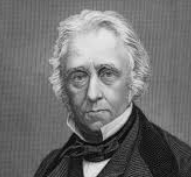
Hence it may be concluded that the happiest state of society is that in which supreme power resides in the whole body of a well-informed people. This is an imaginary, perhaps an unattainable, state of things. Yet, in some measure, we may approximate to it; and he alone deserves the name of a great statesman, whose principle it is to extend the power of the people in proportion to the extent of their knowledge, and to give them every facility for obtaining such a degree of knowledge as may render it safe to trust them with absolute power. In the mean time, it is dangerous to praise or condemn constitutions in the abstract; since, from the despotism of St. Petersburg to the democracy of Washington, there is scarcely a form of government which might not, at least in some hypothetical case, be the best possible.
▼
Source
source
pp. 161-162

8 months 3 days ago
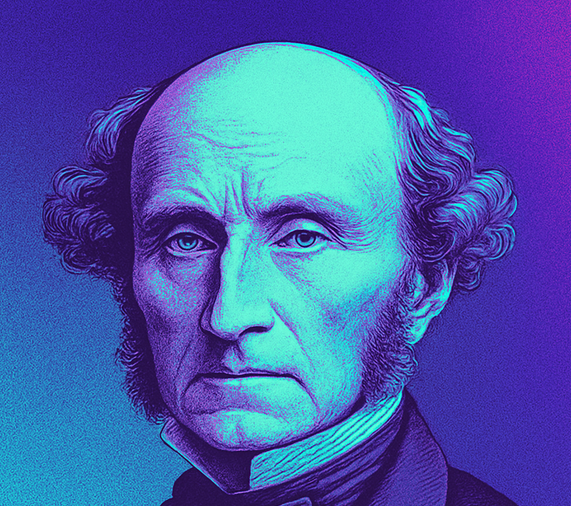
I believe that the early success and reputation of Carlyle's French Revolution, were considerably accelerated by what I wrote about it in the Review. Immediately on its publication, and before the commonplace critics, all whose rules and modes of judgment it set at defiance, had time to preoccupy the public with their disapproval of it, I wrote and published a review of the book, hailing it as one of those productions of genius which are above all rules, and are a law to themselves.
▼
Source
source
(p. 217)
6 months 1 week ago
Many things about our bodies would not seem to us so filthy and obscene if we did not have the idea of nobility in our heads.
▼
Source
source
D 6
7 months ago
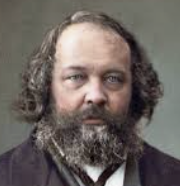
We wish, in a word, equality - equality in fact as a corollary, or rather, as primordial condition of liberty. From each according to his faculties, to each according to his needs; that is what we wish sincerely and energetically.
▼
Source
source
As quoted in The Old Order and the New (1890) by J. Morris Davidson
6 months 3 weeks ago
The metaphysical apologia at least betrayed the injustice of the established order through the incongruence of concept and reality. The impartiality of scientific language deprived what was powerless of the strength to make itself heard and merely provided the existing order with a neutral sign for itself. Such neutrality is more metaphysical than metaphysics.
▼
Source
source
E. Jephcott, trans., p. 17.

7 months 2 weeks ago
None can be free who is a slave to, and ruled by, his passions.
▼
Source
source
As quoted in Florilegium, XVIII, 23, as translated in Dictionary of Quotations (1906) by Thomas Benfield Harbottle, p. 368
8 months 2 days ago
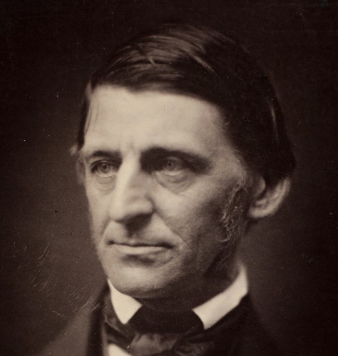
Literature is the effort of man to indemnify himself for the wrongs of his condition.
▼
Source
source
"Walter Savage Landor", from The Dial, xii, 1841
3 months 4 weeks ago
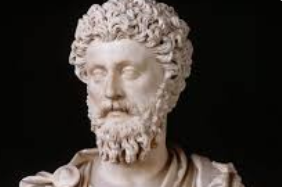
The universal nature has no external space; but the wondrous part of her art is that though she has circumscribed herself, everything which is within her which appears to decay and to grow old and to be useless she changes into herself, and again makes other new things from these very same, so that she requires neither substance from without nor wants a place into which she may cast that which decays. She is content then with her own space, and her own matter, and her own art.
▼
Source
source
VIII, 50
4 months 3 weeks ago
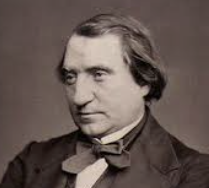
To write well is to think well; there is no art of style distinct from the culture of the mind. The good writer is a complete mind, gifted with judgment, passion, imagination, and at the same time well trained. The inner qualities of rectitude, of brilliant geniality, are not given; instruction, wealth of information, fulness of knowledge, are acquired. Thus good training of the mind is the only school of good style. Wanting that, you have merely rhetoric and bad taste.
▼
Source
source
As quoted in The Art of Authorship (1890) by George Bainton

7 months 1 week ago
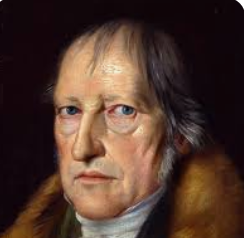
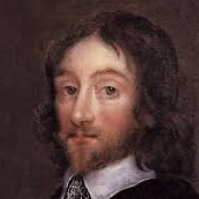
Persecution is a bad and indirect way to plant Religion.
▼
Source
source
Section 25
4 months 3 weeks ago
Never has any one been less a priest than Jesus, never a greater enemy of forms, which stifle religion under the pretext of protecting it. By this we are all his disciples and his successors; by this he has laid the eternal foundation-stone of true religion; and if religion is essential to humanity, he has by this deserved the Divine rank the world has accorded him.
▼
Source
source
Ch. 5.
8 months 6 days ago
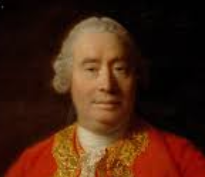
To oppose the torrent of scholastic religion by such feeble maxims as these, that it is impossible for the same thing to be and not to be, that the whole is greater than a part, that two and three make five; is pretending to stop the ocean with a bullrush. Will you set up profane reason against sacred mystery? No punishment is great enough for your impiety. And the same fires, which were kindled for heretics, will serve also for the destruction of philosophers.
▼
Source
source
Part XI - With regard to reason or absurdity

7 months 3 weeks ago
In adversity, remember to keep an even mind.
▼
Source
source
Book II, ode iii, line 1

8 months 5 days ago
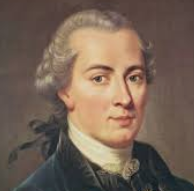
All the interests of my reason, speculative as well as practical, combine in the three following questions: 1. What can I know? 2. What ought I to do? 3. What may I hope?
▼
Source
source
B 832-833
8 months 2 weeks ago
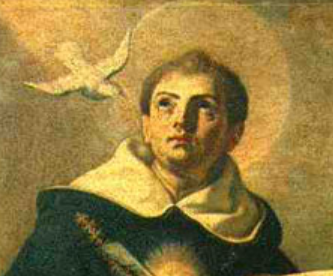
Suppose a person entering a house were to feel heat on the porch, and going further, were to feel the heat increasing, the more they penetrated within. Doubtless, such a person would believe there was a fire in the house, even though they did not see the fire that must be causing all this heat. A similar thing will happen to anyone who considers this world in detail: one will observe that all things are arranged according to their degrees of beauty and excellence, and that the nearer they are to God, the more beautiful and better they are.
▼
Source
source
Art. 1
6 months 2 weeks ago
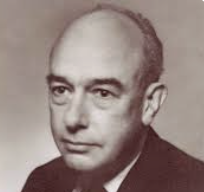
We cannot stem linguistic change, but we can drag our feet. If each of us were to defy Alexander Pope and be the last to lay the old aside, it might not be a better world, but it would be a lovelier language.
▼
Source
source
Quiddities: An Intermittently Philosophical Dictionary (1987), p. 231
6 months 1 week ago
Where the frontier of science once was is now the centre.
▼
Source
source
As quoted in A Dictionary of Scientific Quotations (1991) edited by Alan Lindsay Mackay, p. 153
CivilSimian.com created by AxiomaticPanic, CivilSimian, Kalokagathia