

8 months 2 weeks ago
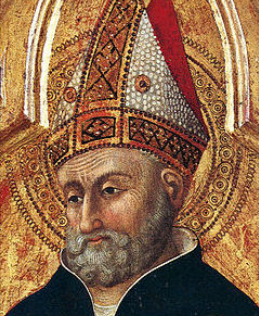
I became evil for no reason. I had no motive for my wickedness except wickedness itself. It was foul, and I loved it. I loved the self-destruction, I loved my fall, not the object for which I had fallen but my fall itself. My depraved soul leaped down from your firmament to ruin. I was seeking not to gain anything by shameful means, but shame for its own sake.
▼
Source
source
II, 4

5 months 3 weeks ago
Even the constantly reiterated insistence that we are miserable offenders, born in sin, is a kind of inverted arrogance: such vanity, to presume that our moral conduct has some sort of cosmic significance, as though the Creator of the Universe wouldn't have better things to do than tot up our black marks and our brownie points. The universe is all concerned with me. Is that not the arrogance that passeth all understanding? The Intellectual and Moral Courage of Atheism
▼
Source
source
Originally from 2007; quotes are from the slightly revised 2019 version on the website
8 months 1 week ago
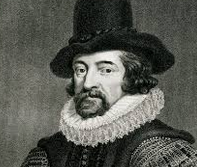
Hurl your calumnies boldly; something is sure to stick.
▼
Source
source
De Augmentis Scientiarum
4 months 1 week ago
It is especially important for Westerners to understand that high lamas, Zen masters, and Hindu gurus in the discipline of yoga are human beings, not supermen. We must not put them, as we have put Jesus Christ, on pedestals of reverence so high that we automatically exclude ourselves from their states of consciousness.
▼
Source
source
Foreward to The Secret Oral Teachings in the Tibetan Buddhist Sects (1964)], by Alexandra David Neel
4 months 3 weeks ago
We should say: 'Causes almost identical take almost the same time to produce almost the same effects.'
4 months ago
I think we must be careful about too easily accepting, or being too easily grateful for, sacrifices made by others, especially if we have made none ourselves.
8 months 1 week ago
In true education, anything that comes to our hand is as good as a book: the prank of a page-boy, the blunder of a servant, a bit of table talk- they are all part of the curriculum.
▼
Source
source
The Autobiography of Michel de Montaigne, Chapter III, pg. 24 (Translated by Marvin Lowenthal
7 months 3 weeks ago
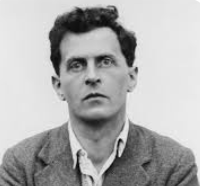
It is one of the chief skills of the philosopher not to occupy himself with questions which do not concern him.
▼
Source
source
Journal entry
4 months 2 weeks ago
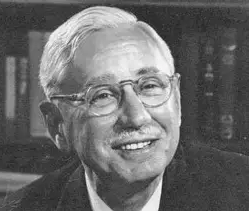
Here and everywhere is the struggle for existence, life inextricably enmeshed with war. All life living at the expense of life, every organism eating other organisms forever.
▼
Source
source
Ch. 4 : On Old Age
3 months 3 weeks ago
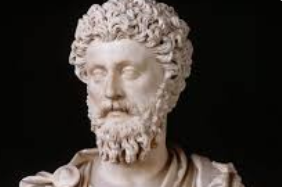
Never let the future disturb you. You will meet it, if you have to, with the same weapons of reason which today arm you against the present.
▼
Source
source
VII, 8 (Penguin Classics edition of Meditations, translated by Maxwell Staniforth)
8 months 4 weeks ago
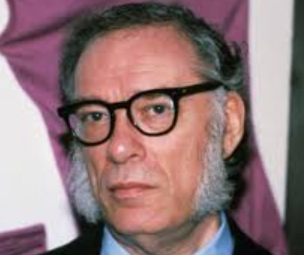
It is my own experience ... that commentators are far more ingenious at finding meaning than authors are at inserting it.
4 months ago
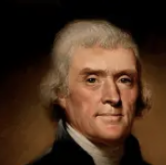
I consider the foundation of the Constitution as laid on this ground: That "all powers not delegated to the United States, by the Constitution, nor prohibited by it to the States, are reserved to the States or to the people." To take a single step beyond the boundaries thus specially drawn around the powers of Congress, is to take possession of a boundless field of power, no longer susceptible of any definition. The incorporation of a bank, and the powers assumed by this bill, have not, in my opinion, been delegated to the United States, by the Constitution... They are not among the powers specially enumerated...
▼
Source
source
Opinion against the constitutionality of a National Bank (1791), also quoted in The Writings of Thomas Jefferson "Memorial Edition" (20 Vols., 1903-04) edited by Andrew A. Lipscomb and Albert Ellery Bergh, Vol. 3, p. 146
7 months 6 days ago
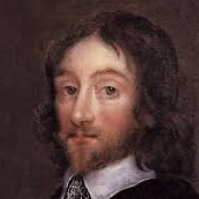
I could never divide myself from any man upon the difference of an opinion, or be angry with his judgement for not agreeing with me in that, from which perhaps within a few days I should dissent myself.
▼
Source
source
Section 6
8 months 1 week ago
There is a great difference between the Idols of the human mind and the Ideas of the divine. That is to say, between certain empty dogmas, and the true signatures and marks set upon the works of creation as they are found in nature.
▼
Source
source
Aphorism 23
8 months 1 day ago
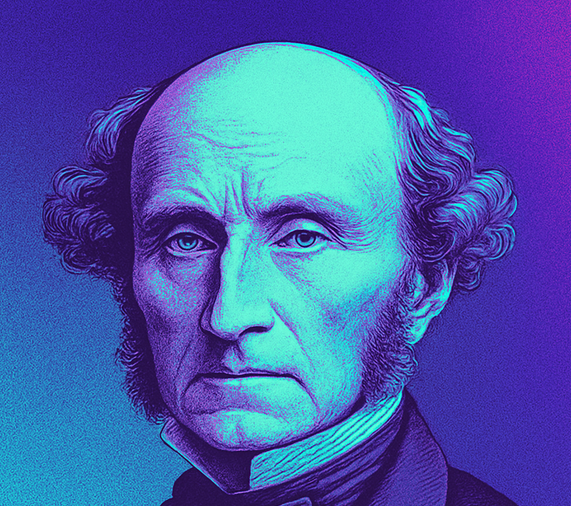
He regarded it with the feelings due not to a mere mental delusion, but to a great moral evil. He looked upon it as the greatest enemy of morality: first, by setting up factitious excellencies,-belief in creeds, devotional feelings, and ceremonies, not connected with the good of human kind,-and causing these to be accepted as substitutes for genuine virtues: but above all, by radically vitiating the standard of morals; making it consist in doing the will of a being, on whom it lavishes indeed all the phrases of adulation, but whom in sober truth it depicts as eminently hateful.
▼
Source
source
(p. 40)
8 months 3 weeks ago
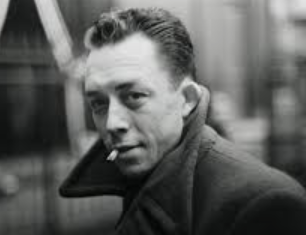
He discovered the cruel paradox by which we always deceive ourselves twice about the people we love — first to their advantage, then to their disadvantage.
5 months 2 weeks ago
The only medicine for suffering, crime, and all the other woes of mankind, is wisdom.
6 months 1 week ago
Today, to live means merely to produce.
7 months 5 days ago
If your little savage were left to himself and be allowed to retain all his ignorance, he would in time join the infant's reasoning to the grown man's passion, he would strangle his father and sleep with his mother.
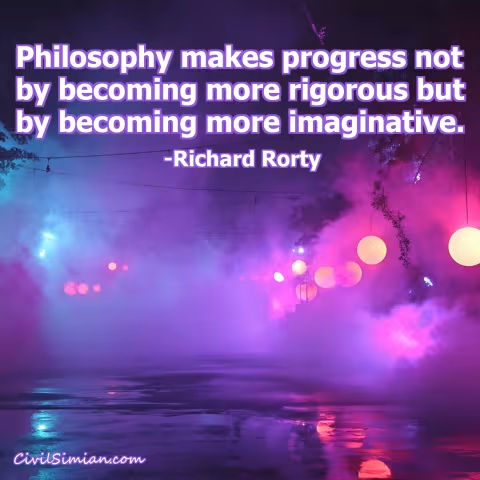

6 months 3 weeks ago
In the human reality, all existence that spends itself in procuring the prerequisites of existence is thus an "untrue" and unfree existence. Obviously this reflects the not at all ontological condition of a society based on the proposition that freedom is incompatible with the activity of procuring the necessities of life, that this activity is the "natural" function of a specific class, and that cognition of the truth and true existence imply freedom from the entire dimension of such activity. ... Society still is organized in such a way that procuring the necessities of life constitutes the full-time and life-long occupation of specific social classes, which are therefore unfree and prevented from a human existence. In this sense, the classical proposition according to which truth is incompatible with enslavement by socially necessary labor is still valid.
▼
Source
source
pp. 127-128
6 months 3 days ago
Such would be the successive phases of the image:it is the reflection of a profound reality;it masks and denatures a profound reality;it masks the absence of a profound reality;it has no relation to any reality whatsoever: it is its own pure simulacrum.In the first case, the image is a good appearance-representation is of the sacramental order. In the second, it is an evil appearance-it is of the order of maleficence. In the third, it plays at being an appearance-it is of the order of sorcery. In the fourth, it is no longer of the order of appearances, but of simulation.
8 months 2 weeks ago
An unjust law is no law at all.
▼
Source
source
On Free Choice Of The Will, Book 1, and 5
8 months 2 weeks ago
The kingdom, its states, and its families, may be perfectly ruled; dignities and emoluments may be declined; naked weapons may be trampled under the feet; but the course of the Mean cannot be attained to.
8 months ago
All that the conscious ego can do is to formulate wishes, which are then carried out by forces which it controls very little and understands not at all.
8 months 2 weeks ago
Look now, this is the starting point of philosophy: the recognition that different people have conflicting opinions, the rejection of mere opinion so that it comes to be viewed with mistrust, an investigation of opinion to determine whether it is rightly held, and the discovery of a standard of judgement, comparable to the balance that we have devised for the determining of weights, or the carpenter's rule for determining whether things are straight or crooked.
▼
Source
source
Book II, ch. 11, 13.
4 months ago
Novelty is a new kind of loneliness.
▼
Source
source
Healing
8 months 1 day ago
Homeliness is almost as great a merit in a book as in a house, if the reader would abide there. It is next to beauty, and a very high art.
▼
Source
source
Pearls of Thought (1881) p. 32
4 months 1 day ago
Her green eyes fluttered swiftly twice or thrice, then glazed,her mouth gaped open, bleating, then her jaws hung looseand retched up all her soul in lumps of clotting blood.
▼
Source
source
Death of Phida, Book VIII, line 410
9 months 1 day ago
The reason I cannot really say that I positively enjoy nature is that I do not quite realize what it is that I enjoy. A work of art, on the other hand, I can grasp. I can - if I may put it this way - find that Archimedian point, and as soon as I have found it, everything is readily clear for me. Then I am able to pursue this one main idea and see how all the details serve to illuminate it.
5 months 2 weeks ago
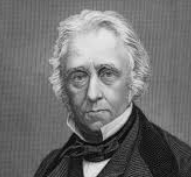
If it is the moral right we are to look at, I say, that on every principle of moral obligation, I hold that the Jew has a right to political power.
▼
Source
source
Speech in the House of Commons (5 April 1830) in favour of Robert Grant's Jewish Disabilities Bill
6 months 3 weeks ago
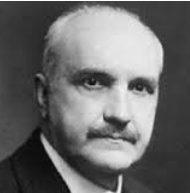
Liberal philosophy, at this point, ceases to be empirical and British in order to become German and transcendental. Moral life, it now believes, is not the pursuit of liberty and happiness of all sorts by all sorts of different creatures; it is the development of a single spirit in all life through a series of necessary phases, each higher than the preceding one. No man, accordingly, can really or ultimately desire anything but what the best people desire. This is the principle of the higher snobbery; and in fact, all earnest liberals are higher snobs.
▼
Source
source
"The Irony of Liberalism"
5 months 2 weeks ago
Most of us, shrinking from the difficulties and dangers which beset the seeker after original answers to these riddles, are contented to ignore them altogether, or to smother the investigating spirit under the featherbed of respected and respectable tradition. But, in every age, one or two restless spirits, blessed with that constructive genius, which can only build on a secure foundation, or cursed with the mere spirit of scepticism, are unable to follow in the well-worn and comfortable track of their forefathers and contemporaries, and unmindful of thorns and stumbling-blocks, strike out into paths of their own.
▼
Source
source
Ch.2, p. 71
6 months 1 week ago
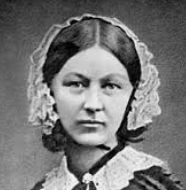
Moral activity? There is scarcely such a thing possible! Everything is sketchy. The world does nothing but sketch.
6 months 3 weeks ago
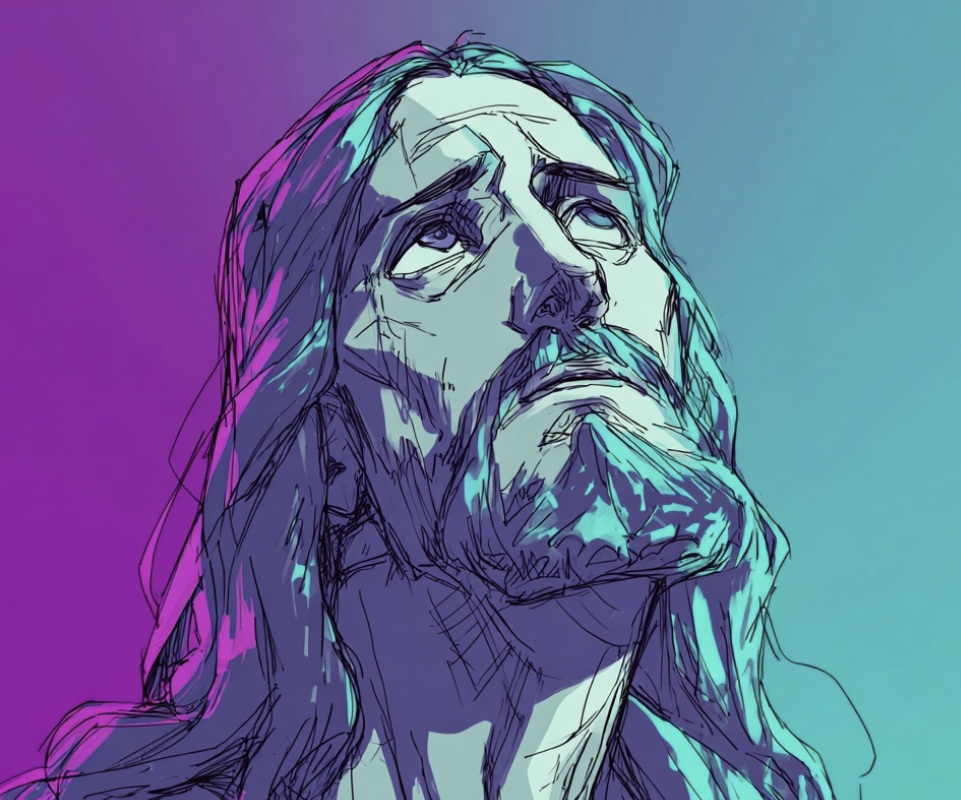
I am the resurrection and the life. The one who exercises faith in me, even though he dies, will come to life; and everyone who is living and exercises faith in me will never die at all.
▼
Source
source
11:25-26, NWT
7 months 4 weeks ago
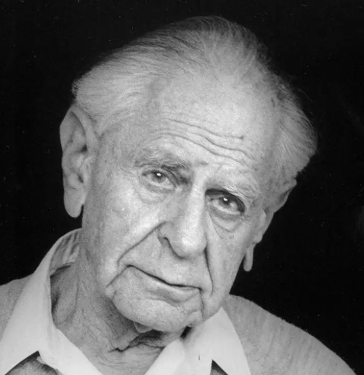
If I were to give a simple formula or recipe for distinguishing between what I consider to be admissible plans for social reform and inadmissible Utopian blueprints, I might say: Work for the elimination of concrete evils rather than for the realization of abstract goods. Do not aim at establishing happiness by political means. Rather aim at the elimination of concrete miseries.
▼
Source
source
p. 385
6 months 3 weeks ago
It is not for you to know the times or the seasons, which the Father hath put in his own power. But ye shall receive power, after that the Holy Ghost is come upon you: and ye shall be witnesses unto me both in Jerusalem, and in all Judaea, and in Samaria, and unto the uttermost part of the earth.
▼
Source
source
1:7-8 (KJV)
8 months 1 day ago
He was often, and much beyond reason, provoked by my failures in cases where success could not have been expected; but in the main his method was right, and it succeeded. I do not believe that any scientific teaching ever was more thorough, or better fitted for training the faculties, than the mode in which logic and political economy were taught to me by my father. Striving, even in an exaggerated degree, to call forth the activity of my faculties, by making me find out everything for myself, he gave his explanations not before, but after, I had felt the full force of the difficulties; and not only gave me an accurate knowledge of these two great subjects, as far as they were then understood, but made me a thinker on both.
▼
Source
source
(pp. 28-29)
6 months 2 weeks ago
Our minds are finite, and yet even in these circumstances of finitude we are surrounded by possibilities that are infinite, and the purpose of human life is to grasp as much as we can out of the infinitude.
▼
Source
source
Ch. 21, June 28, 1941.
5 months 4 weeks ago
Each of our senses makes its own space, but no sense can function in isolation. Only as sight relates the touch, or kinaesthesia, or sound, can the eye see.
8 months 4 weeks ago
Where any answer is possible, all answers are meaningless.
6 months 2 weeks ago
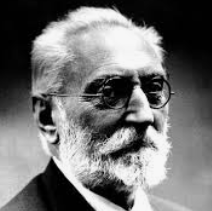
It is the furious longing to give finality to the Universe, to make it conscious and personal, that has brought us to believe in God, to wish that God may exist, to create God, in a word. To create Him, yes! This saying ought not to scandalize even the most devout theist. For to believe in God is, in a certain sense, to create Him, although He first creates us. It is He who is continually creating Himself.
8 months 2 weeks ago
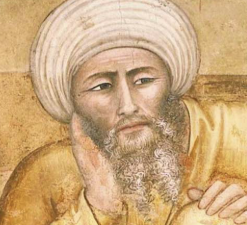
On the whole, a man who denies the existence of the effects arranged according to the causes in the question of arts, or whose wisdom cannot understand it, then he has no knowledge of the art of its Maker.
8 months 1 week ago
And to bring in a new word by the head and shoulders, they leave out the old one.
▼
Source
source
Book III, Ch. 5. Upon some Verses of Virgil

6 months 3 weeks ago
The more intense a spiritual leader's appetite for power, the more he is concerned to limit it to others.
6 months 3 weeks ago
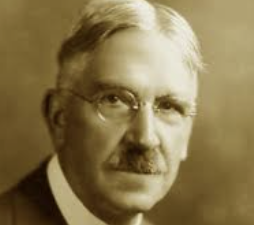
Surrender of individuality by the many to someone who is taken to be a superindividual explains the retrograde movement of society. Dictatorships and totalitarian states, and belief in the inevitability of this or that result coming to pass are, strange as it may sound, ways of denying the reality of time and the creativeness of the individual.
8 months 2 days ago
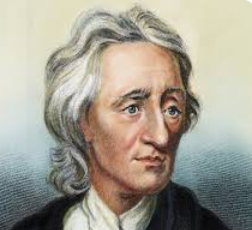
The next thing is by gentle degrees to accustom children to those things they are too much afraid of. But here great caution is to be used, that you do not make too much haste, nor attempt this cure too early, for fear lest you increase the mischief instead of remedying it.
▼
Source
source
Sec. 115

4 months 3 weeks ago
Human nature is evil, and goodness is caused by intentional activity.
▼
Source
source
Quoted in: Fayek S. Hourani (2012) Daily Bread for Your Mind and Soul, p. 336
CivilSimian.com created by AxiomaticPanic, CivilSimian, Kalokagathia