

5 months 2 weeks ago
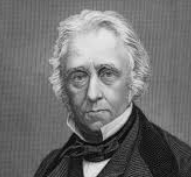
I finished the Iliad to-day... I never admired the old fellow so much, or was so strongly moved by him. What a privilege genius like his enjoys! I could not tear myself away. I read the last five books at a stretch during my walk to-day, and was at last forced to turn into a bypath, lest the parties of walkers should see me blubbering for imaginary beings, the creations of a ballad-maker who has been dead two thousand seven hundred years. What is the power and glory of Caesar and Alexander to that? Think what it would be to be assured that the inhabitants of Monomotapa would weep over one's writings.
▼
Source
source
Anno Domini 4551! Letter to his niece Margaret (August 1851), quoted in George Otto Trevelyan, The Life and Letters of Lord Macaulay, Volume II (1876), pp. 186-187
6 months 3 weeks ago
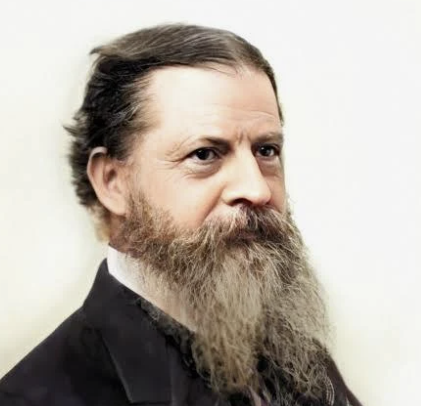
Here we must make one of those inductive applications of the law of continuity which have produced such great results in all of the positive sciences. We must extend the law of insistency into the future. Plainly, the insistency of a future idea with reference to the present is a quantity affected by the minus sign; for it is the present that affects the future, if there be any effect, not the future that affects the present.
4 months 1 week ago
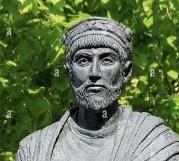
Inasmuch as it is my wish only to compose a hymn of thanksgiving in honour of the god, I have deemed it quite sufficient to discourse to the best of my ability concerning his nature. I do not think I have wasted words to no purpose: the maxim, "Sacrifice to the immortal gods according to thy means," I accept as applying not merely to burnt-offerings, but also to our praises addressed unto the gods. I pray for the third time, in return for this my good intention, the Sun lord of the universe to be propitious to me, and to bestow on me a virtuous life, a more perfect understanding, and a superhuman intellect, and a very easy release from the trammels of life at the time appointed: and after that release, an ascension up to himself, and an abiding place with him, if possible, for all time to come; or if that be too great a recompense for my past life, many and long-continued revolutions around his presence!

7 months 6 days ago
Time is the father of truth, its mother is our mind.
▼
Source
source
Quote as translated in The Encyclopedia of Religion Vol. 11 (1987), by Mircea Eliade, p. 459

6 months 3 weeks ago
Who is my mother? and who are my brethren? And he stretched forth his hand toward his disciples, and said, Behold my mother and my brethren! For whosoever shall do the will of my Father which is in heaven, the same is my brother, and sister, and mother.
▼
Source
source
12:48-50 (KJV)
4 months 2 weeks ago
Man with the great M is only an ideal, the species only something thought of.
▼
Source
source
Dover 2005, p. 182
8 months 1 week ago
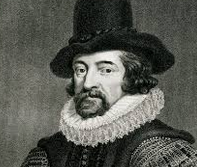
In the same manner as we are cautioned by religion to show our faith by our works we may very properly apply the principle to philosophy, and judge of it by its works; accounting that to be futile which is unproductive, and still more so, if instead of grapes and olives it yield but the thistle and thorns of dispute and contention.
▼
Source
source
Aphorism 73
7 months 2 weeks ago
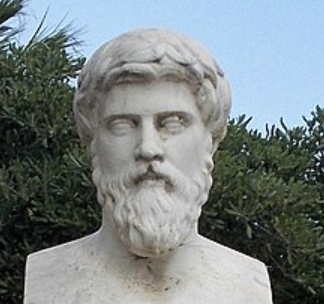
Agesilaus was very fond of his children; and it is reported that once toying with them he got astride upon a reed as upon a horse, and rode about the room; and being seen by one of his friends, he desired him not to speak of it till he had children of his own.
▼
Source
source
Of Agesilaus the Great

4 months ago
For if experience has ever taught a truth, it is that a plurality in the supreme Executive will forever split into discordant factions, distract the nation, annihilate its energies, and force the nation to rally under a single head, generally an usurper. We have, I think, fallen on the happiest of all modes of constituting the Executive, that of easing and aiding our President, by permitting him to choose Secretaries of State, of Finance, of War, and of the Navy, with whom he may advise, either separately or all together, and remedy their divisions by adopting or controlling their opinions at his discretion; this saves the nation from the evils of a divided will, and secures to it a steady march in the systematic course which the President may have adopted for that of his administration.
6 months 1 week ago
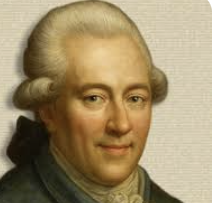
Many things about our bodies would not seem to us so filthy and obscene if we did not have the idea of nobility in our heads.
▼
Source
source
D 6
6 months 1 week ago
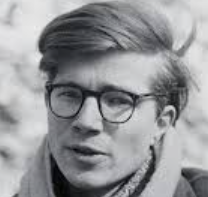
What excited me was the recognition that this was simply another version of the problem that had obsessed me all of my life -- the problem of those moments when life seems entirely delightful, when we experience a sensation of what G.K. Chesterton called "absurd good news." Life normally strikes most of us as hard, dull and unsatisfying; but in these moments, consciousness seems to glow and expand, and all the contradictions seem to be resolved. Which of the two visions is true? My own reflections had led me to conclude that the vision of "absurd good news" is somehow broader and more comprehensive than the feeling that life is dull, boring and meaningless. Boredom is basically a feeling of narrowness, and surely a narrow vision is bound to be less true than a broad one?
▼
Source
source
p. 16

6 months 3 weeks ago
The soul contains few secrets and longings which cannot be sensibly discussed, analyzed, and polled. Solitude, the very condition which sustained the individual against and beyond his society, has become technically impossible. Logical and linguistic analysis demonstrate that the old metaphysical problems are illusory problems; the quest for the "meaning" of things can be reformulated as the quest for the meaning of words, and the established universe of discourse and behavior can provide perfectly adequate criteria for the answer.
▼
Source
source
p. 71
7 months 4 weeks ago
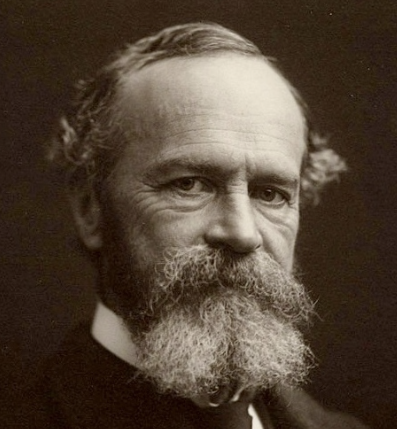
Keep the faculty of effort alive in you by a little gratuitous exercise every day. That is, be systematically ascetic or heroic in little unnecessary points, do every day or two something for no other reason than that you would rather not do it, so that when the hour of dire need draws nigh, it may find you not unnerved and untrained to stand the test. So with the man who has daily inured himself to habits of concentrated attention, energetic volition, and self-denial in unnecessary things. He will stand like a tower when everything rocks around him, and when his softer fellow-mortals are winnowed like chaff in the blast.
▼
Source
source
Ch. 4
5 months 3 weeks ago
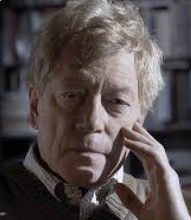
Conservatism is itself a modernism, and in this lies the secret of its success.
▼
Source
source
"Eliot and Conservatism" (p. 194)
7 months ago
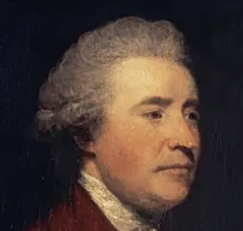
In this choice of inheritance we have given to our frame of polity the image of a relation in blood, binding up the constitution of our country with our dearest domestic ties, adopting our fundamental laws into the bosom of our family affections, keeping inseparable and cherishing with the warmth of all their combined and mutually reflected charities our state, our hearths, our sepulchres, and our altars.
6 months 3 weeks ago
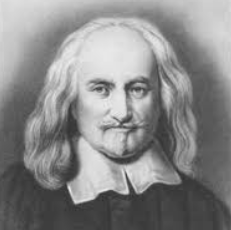
But this priviledge, is allayed by another; and that is, by the priviledge of Absurdity; to which no living creature is subject, but man only.
▼
Source
source
The First Part, Chapter 5, p. 20
7 months 6 days ago
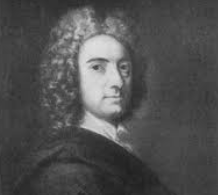
Abstract terms (however useful they may be in argument) should be discarded in meditation, and the mind should be fixed on the particular and the concrete, that is, on the things themselves.
▼
Source
source
Paragraph 4
7 months 4 days ago
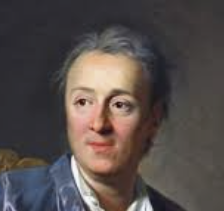
When superstition is allowed to perform the task of old age in dulling the human temperament, we can say goodbye to all excellence in poetry, in painting, and in music.
▼
Source
source
Ch. 3, as quoted in Selected Writings (1966) edited by Lester G. Crocker
8 months ago
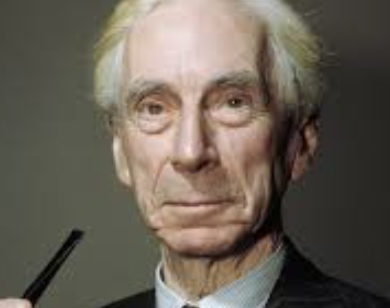
When I was a boy, I had a clock with a pendulum that could be lifted off. I found that the clock went very much faster without the pendulum. If the main purpose of a clock is to go, the clock was the better for losing its pendulum. True, it could no longer tell the time, but that did not matter if one could teach oneself to be indifferent to the passage of time. The linguistic philosophy which cares only about language and not about the world, is like the boy who preferred the clock without the pendulum because, although it no longer told the time, it went more easily than before and at a more exhilarating pace.
▼
Source
source
Foreword to Ernest Gellner Words and Things, 1959
8 months ago
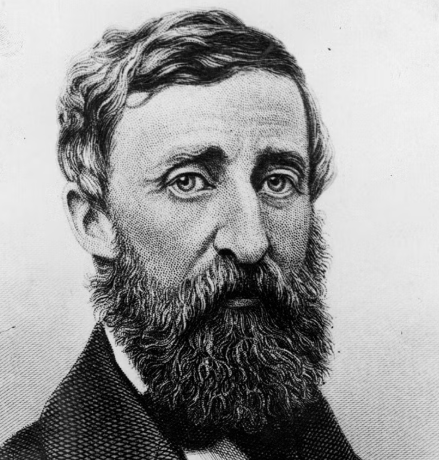
It would be worth the while to look closely into the eye which has been open and seeing at such hours, and in such solitudes, its dull, yellowish, greenish eye. Methinks my own soul must be a bright invisible green.

5 months 2 weeks ago
Such night in England ne'er had been, nor ne'er again shall be.
▼
Source
source
The Armada, l. 34

3 months 3 weeks ago
War is divine in itself, since it is a law of the world. War is divine through its consequences of a supernatural nature which are as much general as particular, consequences little known because little studied, but which are nevertheless incontestable. War is divine in the mysterious glory that surrounds it and in the no less inexplicable attraction that draws us to it. War is divine by the manner in which it breaks out.
▼
Source
source
Seventh Dialogue, p. 218
8 months 3 weeks ago
Generals are usually a conservative force who can be relied on to oppose social change.
4 months 3 weeks ago
There was very little that prevented the vandalism of 1793 from suddenly producing a second revolution as marvelous as the first was horrible. The whole human race was approaching its release; the civilized, barbarian, and savage order would have disappeared forever if the Convention, which trampled down all prejudices, had not bowed down before the only one that had to be destroyed, the institution of marriage.
▼
Source
source
Charles Fourier: The Visionary and His World, J. Beecher (1986), p. 304-5

7 months 2 weeks ago
He who does wrong is more unhappy than he who suffers wrong.


3 months 3 weeks ago
The Christian Scholastics... might have shown that God Himself said that He had "imprinted an active principle in the elements of matter (Gen. i; Is. lxvi).
▼
Source
source
Ch. V Concerning the Moving Force of Matter
7 months 3 weeks ago
The disciple must break the glass, or better the mirror, the reflection, his infinite speculation on the master. And start to speak.
▼
Source
source
Cogito and The History of Madness, p.37 (Routledge classics edition)

8 months 2 weeks ago
Men are disturbed, not by things, but by the principles and notions which they form concerning things.
▼
Source
source
(5). (Enchiridion 5)

6 months 1 week ago
It must be borne in mind that it is through the channel of the child that the development of the mature man must go, and that the present ideas of the educating or training of the latter in the school and the family - even the family of the liberal or radical - are such as to stifle the natural growth of the child. Every institution of our day, the family, the State, our moral codes, sees in every strong, beautiful, uncompromising personality a deadly enemy; therefore every effort is being made to cramp human emotion and originality of thought in the individual into a straight-jacket from its earliest infancy; or to shape every human being according to one pattern; not into a well-rounded individuality, but into a patient work slave, professional automaton, tax-paying citizen, or righteous moralist.
7 months 4 weeks ago
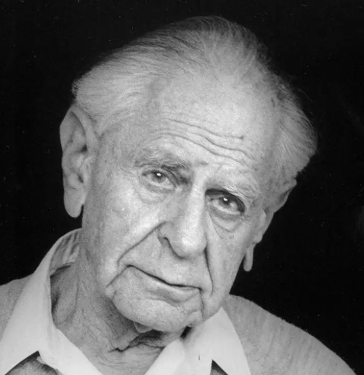
The open society is one in which men have learned to be to some extent critical of taboos, and to base decisions on the authority of their own intelligence.
▼
Source
source
Vol. 1, Endnotes to the Chapters : Notes to the Introduction.

3 months 4 weeks ago
Laugh. Laughter is immeasurable. Be joyful though you have considered all the facts.
▼
Source
source
Manifesto: The Mad Farmer Liberation Front in Farming: A Hand Book

5 months 3 weeks ago
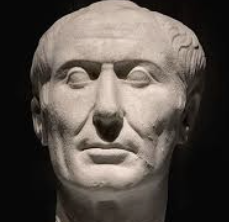
Do not take part in the council, unless you are called.
▼
Source
source
Maxim 310
5 months 2 weeks ago
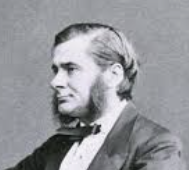
Science has taught... me to be careful how I adopt a view which jumps with my preconceptions, and to require stronger evidence for such belief than for one to which I was previously hostile. My business is to teach my aspirations to conform themselves to fact, not to try and make facts harmonise with my aspirations.
6 months 2 days ago
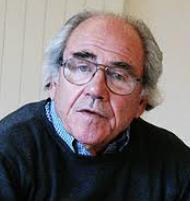
The "hard law of value," the "law set in stone"-when it abandons us, what sadness, what panic! This is why there are still good days left to fascist and authoritarian methods, because they revive something of the violence necessary to life-whether suffered or inflicted. The violence of ritual, the violence of work, the violence of knowledge, the violence of blood, the violence of power and of the political is good! It is clear, luminous, the relations of force, contradictions, exploitation, repression! This is lacking today, and the need for it makes itself felt.
▼
Source
source
"Value's Last Tango," p. 156
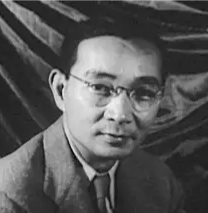
4 months 1 week ago
No one realizes how beautiful it is to travel until he comes home and rests his head on his old, familiar pillow.
▼
Source
source
"A Trip to Anhwei", in With Love And Irony (1940), p. 145

8 months 2 weeks ago
The greatness of the human being consists in this: that it is capable of the universe.
▼
Source
source
q. 1, art. 2, ad 4

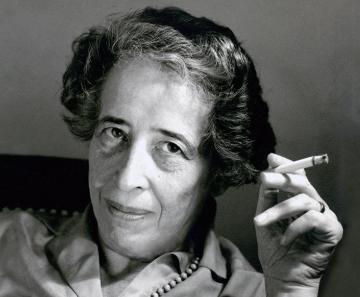
7 months 4 weeks ago
Forgiveness is the key to action and freedom.
▼
Source
source
As quoted in The Concise Columbia Dictionary of Quotations (1989) edited by Robert Andrews, p. 114
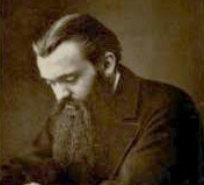
3 months 4 weeks ago
I hold in fact(1) That small portions of space are in fact of a nature analogous to little hills on a surface which is on the average flat; namely, that the ordinary laws of geometry are not valid in them.(2) That this property of being curved or distorted is continually being passed on from one portion of space to another after the manner of a wave.(3) That this variation of the curvature of space is what really happens in that phenomenon which we call the motion of matter, whether ponderable or etherial.(4) That in the physical world nothing else takes place but this variation, subject possibly to the law of continuity.
▼
Source
source
Abstract
4 months 1 week ago
Besides the noble art of getting things done, there is the noble art of leaving things undone. The wisdom of life consists in the elimination of non-essentials.
▼
Source
source
As quoted in Pearls of Wisdom: A Harvest of Quotations From All Ages (1987) by Jerome Agel and Walter D. Glanze, p. 46.

8 months 1 week ago
What of a truth that is bounded by these mountains and is falsehood to the world that lives beyond?
▼
Source
source
Ch. 12
8 months 1 week ago
One may be humble out of pride.
▼
Source
source
Book II, Ch. 17. Of Presumption

7 months 3 weeks ago
The chief function of the disciplinary power is to 'train', rather than to select and to levy; or, no doubt, to train in order to levy and select all the more. It does not link forces together in order to reduce them; it seeks to bind them together in such a way as to multiply and use them.
▼
Source
source
Part Three, The Means of Correct Training
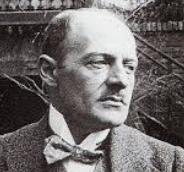
6 months 2 weeks ago
All the seemingly positive valuations and judgments of ressentiment are hidden devaluations and negations.
▼
Source
source
L. Coser, trans. (1973), p. 67
6 months 3 weeks ago
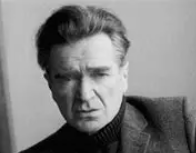
A harmonious being cannot believe in God. Saints, criminals, and paupers have launched him, making him available to all unhappy people.


8 months 1 week ago
For as old age is that period of life most remote from infancy, who does not see that old age in this universal man ought not to be sought in the times nearest his birth, but in those most remote from it?
▼
Source
source
Preface to the Treatise on Vacuum, c.1651
CivilSimian.com created by AxiomaticPanic, CivilSimian, Kalokagathia