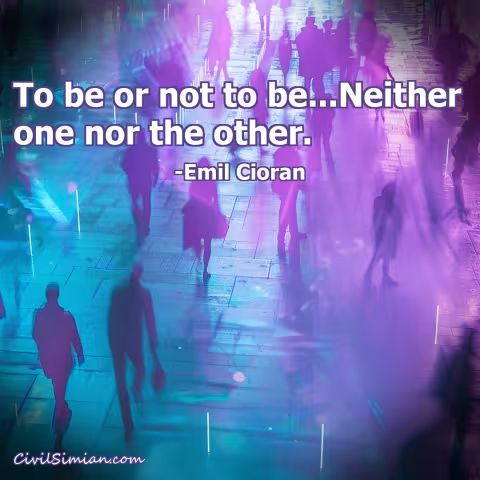
Daily reminder: As long as religion respects 2 rules:
1) Respect reality.
2) Respect universal human rights.
...the rest of the non-religious world are reserving a space for you....


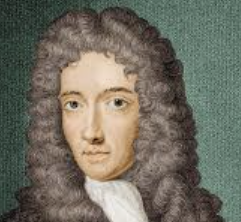
Epicurus... supposes not only all mixt bodies, but all others to be produced by the various and casual occursions of atoms, moving themselves to and fro by an internal principle in the immense or rather infinite vacuum.
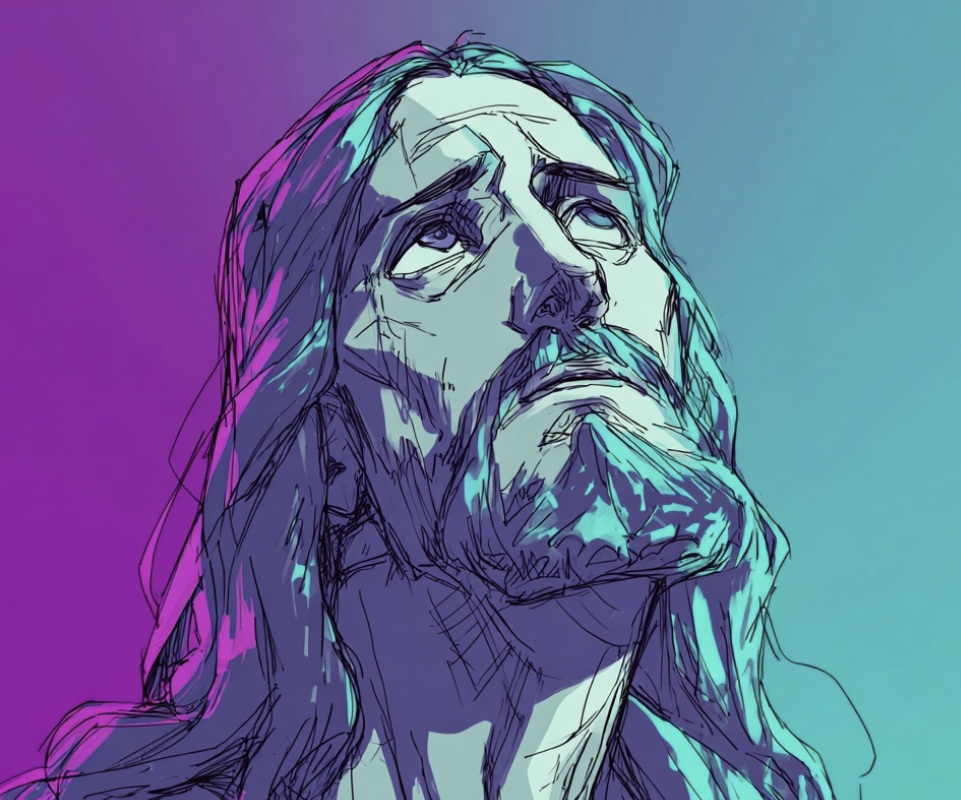
My kingdom is not of this world: if my kingdom were of this world, then would my servants fight, that I should not be delivered to the Jews: but now is my kingdom not from hence.
If the love of money is the root of all evil, the need of money is most certainly the root of all despair.

We know, that of all living beings man is the best formed, and, as the gods belong to this number, they must have a human form. ... I do not mean to say that the gods have body and blood in them; but I say that they seem as if they had bodies with blood in them. . . , Epicurus, for whom hidden things were as tangible as if he had touched them with his finger, teaches us that gods are not generally visible, but that they are intelligible; that they are not bodies having a certain solidity . . . but that we can recognize them by their passing images; that as there are atoms enough in the infinite space to produce such images, these are produced before us . . . and make us realize what are these happy, immortal beings.
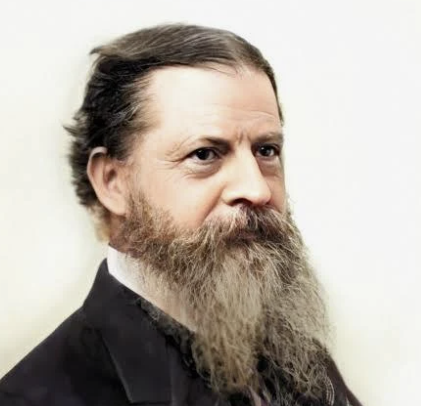
Fifth, in what measure this unification acts, seems to be regulated only by special rules; or, at least, we cannot in our present knowledge say how far it goes. But it may be said that, judging by appearances, the amount of arbitrariness in the phenomenon of human minds is neither altogether trifling nor very prominent.
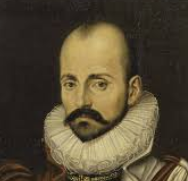
In plain truth, lying is an accursed vice. We are not men, nor have any other tie upon another, but by our word.
I am endeavouring in a general way to explain the laws of double refraction on this hypothesis, but have not yet arrived at any results sufficiently decisive to be communicated.

Detachment from the world as an attachment to the ego... Who can realize the detachment in which you are as far away from yourself as you are from the world?
No period of history has ever been great or ever can be that does not act on some sort of high, idealistic motives, and idealism in our time has been shoved aside, and we are paying the penalty for it.
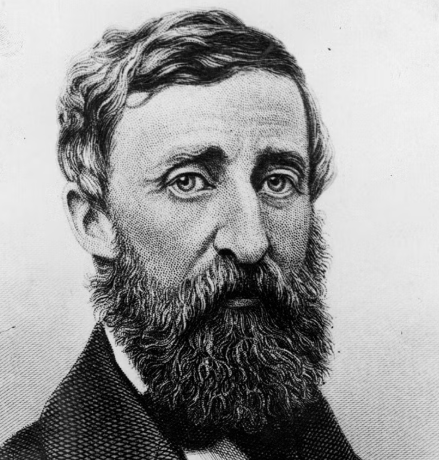
The reader is nowhere raised into and sustained in a bigger, purer or rarer region of thought than in the Bhagavad Gita. The Gita's sanity and sublimity have impressed the minds of even soldiers and merchants.

An unjust law is no law at all.
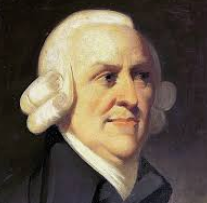
As soon as the land of any country has all become private property, the landlords, like all other men, love to reap where they never sowed, and demand a rent even for its natural produce.
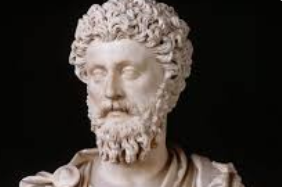
Art thou angry with him whose arm-pits stink? art thou angry with him whose mouth smells foul? What good will this anger do thee?
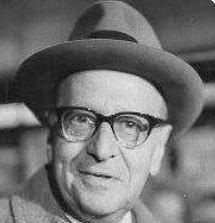
At present, when the prevailing forms of society have become hindrances to the free expression of human powers, it is precisely the abstract branches of science, mathematics and theoretical physics, which ... offer a less distorted form of knowledge than other branches of science which are interwoven with the pattern of daily life, and the practicality of which seemingly testifies to their realistic character.
In America, more than anywhere else, the individual is lost in the achievements of the many. America is beginning to be the world leader in a scientific investigation. American scholarship is both patient and inspiring. The Americans show an unselfish devotion to science, which is the very opposite of the conventional European view of your countrymen. Too many of us look upon Americans as dollar chasers. This is a cruel libel, even if it is reiterated thoughtlessly by the Americans themselves. It is not true that the dollar is an American fetish. The American student is not interested in dollars, not even in success as such, but in his task, the object of the search. It is his painstaking application to the study of the infinitely little and the infinitely large which accounts for his success in astronomy.
Man's main task in life is to give birth to himself, to become what he potentially is. The most important product of his effort is his own personality.
The imagination is not a talent of some men but is the health of every man.
Thinking which displaces, or otherwise defines, the sacred has been called atheistic, and that philosophy which does not place it here or there, like a thing, but at the joining of things and words, will always be exposed to this reproach without ever being touched by it.
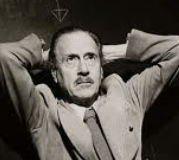
Mass man is a phenomenon of electric speed, not of physical quantity.
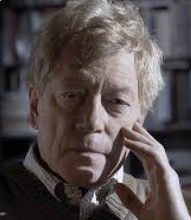
The real reason people are conservatives is that they are attached to the things that they love, and want to preserve them from abuse and decay. They are attached to their family, their friends, their religion, and their immediate environment. They have made a lifelong distinction between the things that nourish and the things that threaten their security and peace of mind.
How can it be that mathematics, being, after all, a product of human thought which is independent of experience, is so admirably appropriate to the objects of reality? Is human reason, then, without experience, merely by taking thought, able to fathom the properties of real things?
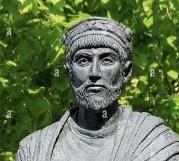
The end and aim of the Cynic philosophy, as indeed of every philosophy, is happiness, but happiness that consists in living according to nature, and not according to the opinions of the multitude.

The right of voting for representatives is the primary right by which other rights are protected. To take away this right is to reduce a man to slavery, for slavery consists in being subject to the will of another, and he that has not a vote in the election of representatives is in this case.
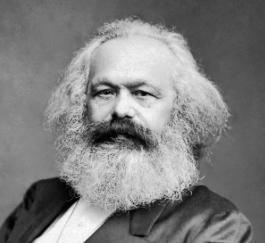
These labourers, who must sell themselves piecemeal, are a commodity, like every other article of commerce, and are consequently exposed to all the vicissitudes of competition, to all the fluctuations of the market.
Alexander, king of Macedon, began to study geometry; unhappy man, because he would thereby learn how puny was that earth of which he had seized but a fraction! Unhappy man, I repeat, because he was bound to understand that he was bearing a false title. For who can be "great" in that which is puny?

The love of power is a part of human nature, but power-philosophies are, in a certain precise sense, insane. The existence of the external world, both that of matter and of other human beings, is a datum, which may be humiliating to a certain kind of pride, but can only be denied by a madman. Men who allow their love of power to give them a distorted view of the world are to be found in every asylum: one man will think he is Governor of the Bank of England, another will think he is the King, and yet another will think he is God. Highly similar delusions, if expressed by educated men in obscure language, lead to professorships in philosophy; and if expressed by emotional men in eloquent language, lead to dictatorships. Certified lunatics are shut up because of the proneness to violence when their pretensions are questioned; the uncertified variety are given control of powerful armies, and can inflict death and disaster upon all sane men within their reach.

The true University of these days is a Collection of Books.
The fault of the utilitarian doctrine is that it mistakes impersonality for impartiality.

I have stated that the constitutions of our several States vary more or less in some particulars. But there are certain principles in which all agree, and which all cherish as vitally essential to the protection of the life, liberty, property, and safety of the citizen:
Hasten to examine thy own ruling faculty and that of the universe and that of thy neighbor: thy own, that thy may make it just; and that of the universe, that thou mayst remember of what thou art a part; and that of thy neighbor, that thy mayst know whether he has acted ignorantly or with knowledge, and that thou mayst also consider that his ruling faculty is akin to thine.

While it is in no way racist for any author to write a book exclusively about white women, it is fundamentally racist for books to be published that focus solely on the American white woman's experience in which that experience is assumed to be the American woman's experience.
I have never said that human society ought to be aristocratic, but a great deal more than that. What I have said, and still believe with ever-increasing conviction, is that human society is always, whether it will or no, aristocratic by its very essence, to the extreme that it is a society in the measure that it is aristocratic, and ceases to be such when it ceases to be aristocratic. Of course I am speaking now of society and not of the State.
Deep within every human being there still lives the anxiety over the possibility of being alone in the world, forgotten by God, overlooked among the millions and millions in this enormous household. One keeps this anxiety at a distance by looking at the many round about who are related to him as kin and friends, but the anxiety is still there, nevertheless, and one hardly dares think of how he would feel if all this were taken away.

Most men have nothing in their heads but their physical needs; put them on a desert island with nothing to occupy their minds and they would go insane. They lack real motive. The curse of civilization is boredom.
We have learned to tolerate the facts of war: that men are killed en masse - some twenty million in the Second World War - that whole cities and their inhabitants are annihilated by the atomic bomb, that men are turned into living torches by incendiary bombs. We learn of these things from the radio or newspapers and we judge them according to whether they signify success for the group of peoples to which we belong, or for our enemies. When we do admit to ourselves that such acts are the results of inhuman conduct, our admission is accompanied by the thought that the very fact of war itself leaves us no option but to accept them. In resigning ourselves to our fate without a struggle, we are guilty of inhumanity.
Most human beings have an almost infinite capacity for taking things for granted.
Democracies owe their existence to national loyalties - the loyalties that are supposedly shared by government and opposition, by all political parties, and by the electorate as a whole. Wherever the experience of nationality is weak or non-existent, democracy has failed to take root. For without national loyalty, opposition is a threat to government, and political disagreements create no common ground.
As for the Mystical Writers scrupling to Communicate their Knowledge, they might less to their own Disparagement, and to the trouble of their Readers, have conceal'd it by writing no Books, then by Writing bad ones. If Themistius were here, he would not stick to say that Chymists write thus darkly, not because they think their Notions too precious to be explain'd, but because they fear that if they were explain'd, men would discern, that they are farr from being precious.

To sum up all these steps, each of which is very lengthy and complex, we will have put the game of truth back in the network of constraints and dominations. Truth, I should say rather, the system of truth and falsity, will have revealed the face it turned away from us for so long and which is that of its violence.
Armies have endured all manner of want, have lived on roots, and have resisted hunger by means of food too revolting to mention. All this they have suffered to gain a kingdom, and-what is more marvellous-to gain a kingdom that will be another's. Will any man hesitate to endure poverty, in order that he may free his mind from madness?
The other conclusion is that art is the complement of science. Science as I have said is concerned wholly with relations, not with individuals. Art, on the other hand, is not only the disclosure of the individuality of the artist but also a manifestation of individuality as creative of the future, in an unprecedented response to conditions as they were in the past. Some artists in their vision of what might be, but is not, have been conscious rebels. But conscious protest and revolt is not the form which the labor of the artist in creation of the future must necessarily take. Discontent with things as they are is normally the expression of the vision of what may be and is not, art in being the manifestation of individuality is this prophetic vision.
The community is a fictitious body, composed of the individual persons who are considered as constituting as it were its members. The interest of the community then is what? The sum of the interests of the several members who compose it.
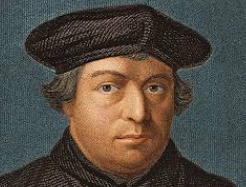
When our Lord and Master Jesus Christ said, "Repent," he willed the entire life of believers to be one of repentance.
CivilSimian.com created by AxiomaticPanic, CivilSimian, Kalokagathia