


6 months 2 weeks ago
The direction of society has been taken over by a type of man who is not interested in the principles of civilisation. Not of this or that civilisation but - from what we can judge to-day - of any civilisation. ...The type of man dominant to-day is a primitive one, a Naturmensch rising up in the midst of a civilised world.
▼
Source
source
Chap.IX: The Primitive and the Technical

6 months 3 weeks ago
The source of our actions resides in an unconscious propensity to regard ourselves as the center, the cause, and the conclusion of time. Our reflexes and our pride transform into a planet the parcel of flesh and consciousness we are. If we had the right sense of our position in the world, if to compare were inseparable from to live, the revelation of our infinitesimal presence would crush us. But to live is to blind ourselves to our own dimensions. . . .
6 months 3 weeks ago
I am displeased with everything. If they made me God, I would immediately resign.
6 months 2 weeks ago
If philosophy is still necessary, it is so only in the way it has been from time immemorial: as critique, as resistance to the expanding heteronomy, even if only as thought's powerless attempt to remain its own master and to convict of untruth, by their own criteria, both a fabricated mythology and a conniving, resigned acquiescence. ... It is incumbent upon philosophy ... to provide a refuge for freedom. Not that there is any hope that it could break the political tendencies that are throttling freedom throughout the world both from within and without and whose violence permeates the very fabric of philosophical argumentation.
▼
Source
source
p. 10
7 months 4 weeks ago
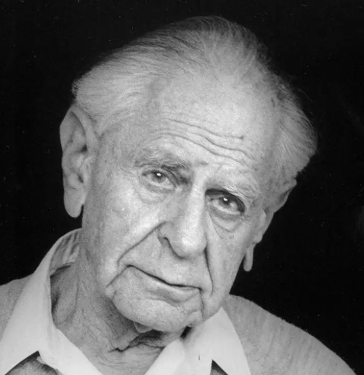
In speaking of sociological laws or natural laws of social life I have in mind such laws as are formulated by modern economic theories, for instance, the theory of international trade, or the theory of the trade cycle. These and other important sociological laws are connected with the functioning of social institutions. These laws play a role in our social life corresponding to the role played in mechanical engineering by, say, the principle of the lever. For institutions, like levers, are needed if we want to achieve anything which goes beyond the power of our muscles. Like machines, institutions multiply our power for good or evil. Like machines, they need intelligent supervision by someone who understands their way of functioning and, most of all, their purpose, since we cannot build them so that they work entirely automatically.
▼
Source
source
Karl Popper, The Open Society and its Enemies, Vol I Plato Chapter 5: Nature and Convention. P. 67
8 months 1 week ago
Mahomet established a religion by putting his enemies to death; Jesus Christ, by commanding his followers to lay down their own lives.
▼
Source
source
Thoughts on Religion and Philosophy (W. Collins, 1838), Ch. XVI, p. 202
5 months 6 days ago
The British state has defaulted on its core functions while attempting to remake society.
▼
Source
source
New Statesman, 9 October 2024
7 months 4 weeks ago
When we have weighed everything, and when our relations in life permit us to choose any given position, we may take that one which guarantees us the greatest dignity, which is based on ideas of whose truth we are completely convinced, which offers the largest field to work for mankind and approach the universal goal for which every position is only a means: perfection.
▼
Source
source
Writings of the Young Marx on Philosophy and Society, L. Easton, trans. (1967), p. 38
9 months ago
To become sober is: to come to oneself in self-knowledge and before God as nothing before him, yet infinitely, unconditionally engaged.

3 months 3 weeks ago
Whatever is in any way beautiful hath its source of beauty in itself, and is complete in itself; praise forms no part of it. So it is none the worse nor the better for being praised. Variant: That which is really beautiful has no need of anything.
▼
Source
source
(trans. George Long) IV, 20
5 months 3 weeks ago
It is often said, mainly by the 'no-contests', that although there is no positive evidence for the existence of God, nor is there evidence against his existence. So it is best to keep an open mind and be agnostic. At first sight that seems an unassailable position, at least in the weak sense of Pascal's wager. But on second thoughts it seems a cop-out, because the same could be said of Father Christmas and tooth fairies. There may be fairies at the bottom of the garden. There is no evidence for it, but you can't prove that there aren't any, so shouldn't we be agnostic with respect to fairies?
▼
Source
source
From speech at the Edinburgh International Science Festival, 1992-04-15.
8 months 1 day ago
A father would do well, as his son grows up, and is capable of it, to talk familiarly with him; nay, ask his advice, and consult with him about those things wherein he has any knowledge or understanding. By this, the father will gain two things, both of great moment. The sooner you treat him as a man, the sooner he will begin to be one; and if you admit him into serious discourses sometimes with you, you will insensibly raise his mind above the usual amusements of youth, and those trifling occupations which it is commonly wasted in. For it is easy to observe, that many young men continue longer in thought and conversation of school-boys than otherwise they would, because their parents keep them at that distance, and in that low rank, by all their carriage to them.
▼
Source
source
Sec. 95
7 months 2 weeks ago
I have enough to eat till my hunger is stayed, to drink till my thirst is sated; to clothe myself withal; and out of doors not Callias there, with all his riches, is more safe than I from shivering; and when I find myself indoors, what warmer shirting do I need than my bare walls? what ampler greatcoat than the tiles above my head?
▼
Source
source
iv. 34
8 months 6 days ago
All that is under heaven, says the sage, runs one law and one fortune.
▼
Source
source
Ch. 12, tr. Cotton, rev. W. Carew Hazlitt, 1877
7 months 4 weeks ago
My education, which was wholly his work, had been conducted without any regard to the possibility of its ending in this result; and I saw no use in giving him the pain of thinking that his plans had failed, when the failure was probably irremediable, and, at all events, beyond the power of his remedies. Of other friends, I had at that time none to whom I had any hope of making my condition intelligible. It was however abundantly intelligible to myself; and the more I dwelt upon it, the more hopeless it appeared.
▼
Source
source
(p. 135)
4 months 3 weeks ago
So this is something... we see happening... in the war in Ukraine. A lot of people raise the question, "Why are Ukrainians resisting the Russian invasion as ferociously as they are?" and there's been a little bit of a debate over whether this is due to the fact that Ukrain is democratic, a liberal democracy, and Russia is not, or whether it's simply a fight over sovereignty... I think that that's a false dichotomy because you really don't fight for liberalism as an abstract principle. You fight for it as it is embedded in... your nation... From my... frequent visits to Ukraine... I believe... that's what's really going on, that Ukrainians want their sovereignty, but the reason they want it so desperately is that they want to have a free Ukraine and not Putin's Ukraine, not a... centralized dictatorship, and that's why they're willing to fight so tenaciously.
▼
Source
source
25:44:00
8 months ago
Politics is concerned with herds rather than with individuals, and the passions which are important in politics are, therefore, those in which the various members of a given herd can feel alike.
4 months 2 weeks ago
What then? Shall I not follow in the footsteps of my predecessors? I shall indeed use the old road, but if I find one that makes a shorter cut and is smoother to travel, I shall open the new road. Men who have made these discoveries before us are not our masters, but our guides. Truth lies open for all; it has not yet been monopolized. And there is plenty of it left even for posterity to discover.
4 months 3 weeks ago
At forty, I had attained the unperturbed mind.
▼
Source
source
"Discipline and Character", no. 41
8 months 6 days ago
He who establishes his argument by noise and command shows that his reason is weak.

8 months 2 days ago
Let us not forget what befits our present state in the pursuit of vain fancies. Mankind has its place in the sequence of things; childhood has its place in the sequence of human life; the man must be treated as a man and the child as a child. Give each his place, and keep him there. Control human passions according to man's nature; that is all we can do for his welfare. The rest depends on external forces, which are beyond our control.

7 months 4 weeks ago
Being in love is a good thing, but it is not the best thing. There are many things below it, but there are also things above it. You cannot make it the basis of a whole life. It is a noble feeling, but it is still a feeling... Knowledge can last, principles can last, habits can last; but feelings come and go... But, of course, ceasing to be "in love" need not mean ceasing to love. Love in this second sense-love as distinct from "being in love"-is not merely a feeling. It is a deep unity, maintained by the will and deliberately strengthened by habit; reinforced by (in Christian marriages) the grace which both partners ask, and receive, from God... "Being in love" first moved them to promise fidelity: this quieter love enables them to keep the promise. It is on this love that the engine of marriage is run: being in love was the explosion that started it.
▼
Source
source
Book III, Chapter 6, "Christian Marriage"
5 months 3 weeks ago
No one should be judge in his own cause.
▼
Source
source
Maxim 545
7 months 4 weeks ago
I have nothing but contempt for you idiotic chosen ones who have the heart to rejoice when there are the damned in Hell and the poor on earth; as for me, I am on the side of men and I will not leave it.
▼
Source
source
Act 6, sc. 6

3 months 4 weeks ago
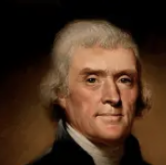
Considering the general tendency to multiply offices and dependencies and to increase expense to the ultimate term of burden which the citizen can bear, it behooves us to avail ourselves of every occasion which presents itself for taking off the surcharge; that it never may be seen here that, after leaving to labor the smallest portion of its earnings on which it can subsist, Government shall itself consume the whole residue of what it was instituted to guard.
▼
Source
source
Thomas Jefferson's First State of the Union Address
8 months 1 week ago
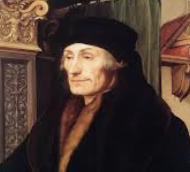
The things that we can see with our physical eyes are mere shadows of reality. If they appear ugly and ill formed, then what must be the ugliness of the soul in sin, deprived of all light? The soul, like the body, can undergo transformation in appearance. In sin it appears as completely ugly to the beholder. In virtue it shines resplendently before God.
3 months 4 weeks ago
From the nature and purpose of civil institutions, all the lands within the limits which any particular society has circumscribed around itself are assumed by that society, and subject to their allotment only. This may be done by themselves, assembled collectively, or by their legislature, to whom they may have delegated sovereign authority; and if they are alloted in neither of these ways, each individual of the society may appropriate to himself such lands as he finds vacant, and occupancy will give him title.
7 months 3 weeks ago
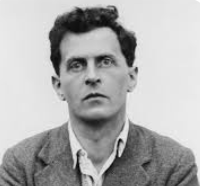
It is one of the chief skills of the philosopher not to occupy himself with questions which do not concern him.
▼
Source
source
Journal entry

6 months 3 weeks ago
Imaginary pains are by far the most real we suffer, since we feel a constant need for them and invent them because there is no way of doing without them.
4 months 2 weeks ago
He knows his own strength; he knows that he was born to carry burdens.
8 months ago
Those who have been inspired to action by the doctrine of the class war will have acquired the habit of hatred, and will instinctively seek new enemies when the old ones have been vanquished. But in actual fact the psychology of the working man in any of the Western democracies is totally unlike that which is assumed in the Communist Manifesto. He does not by any means feel that he has nothing to lose but his chains, nor indeed is this true. The chains which bind Asia and Africa in subjection to Europe are partly riveted by him. He is himself part of a great system of tyranny and exploitation. Universal freedom would remove, not only his own chains, which are comparatively light, but the far heavier chains which he has helped to fasten upon the subject races of the world.
▼
Source
source
Ch. VI: International Relations
6 months 1 week ago
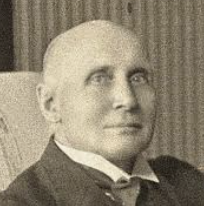
In a certain sense, everything is everywhere at all times. For every location involves an aspect of itself in every other location. Thus every spatio-temporal standpoint mirrors the world.
▼
Source
source
Ch. 5: "The Romantic Reaction", p. 128
4 months 3 weeks ago
Colonization on a grand scale is a political necessity of absolutely the first order. A nation that does not colonize is irrevocably vowed to socialism, to war between rich and poor. The conquest of a nation of inferior race by a superior race, which establishes itself as the ruler, has nothing shocking about it.
▼
Source
source
92-93
6 months 4 weeks ago
Russia was a slave in Europe but would be a master in Asia.
▼
Source
source
As quoted in "Dilemmas of Empire 1850-1918: Power, Territory, Identity" by Dominic Livien in Journal of Contemporary History, Vol. 34, No.2 (April 1999), pp. 180
8 months 3 weeks ago
An intellectual is someone whose mind watches itself.
8 months 1 week ago
The two ways of contemplation are not unlike the two ways of action commonly spoken of by the ancients: the one plain and smooth in the beginning, and in the end impassable; the other rough and troublesome in the entrance, but after a while fair and even. So it is in contemplation: If a man will begin with certainties, he shall end in doubts; but if he will be content to begin with doubts he shall end in certainties.
▼
Source
source
Book I, v, 8
7 months 4 weeks ago
It is wrong to think that belief in freedom always leads to victory; we must always be prepared for it to lead to defeat. If we choose freedom, then we must be prepared to perish along with it. Poland fought for freedom as no other country did. The Czech nation was prepared to fight for its freedom in 1938; it was not lack of courage that sealed its fate. The Hungarian Revolution of 1956 - the work of young people with nothing to lose but their chains - triumphed and then ended in failure. ... Democracy and freedom do not guarantee the millennium. No, we do not choose political freedom because it promises us this or that. We choose it because it makes possible the only dignified form of human coexistence, the only form in which we can be fully responsible for ourselves. Whether we realize its possibilities depends on all kinds of things - and above all on ourselves.
8 months 3 days ago
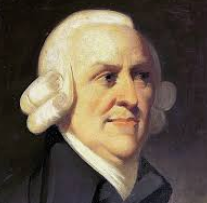
I have no great faith in political arithmetic, and I mean not to warrant the exactness of either of these computations.
▼
Source
source
Chapter V, p. 577.
8 months 4 weeks ago
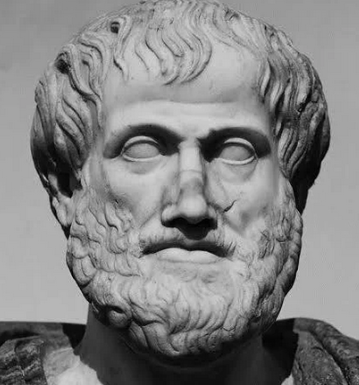
How will one part of the infinite be above, and another below? Or how will it have extremes or a middle? Further still, every sensible body is in place; but the species and differences of place are upward and downward, before and behind, to the right hand and to the left: and these things not only thus subsist with relation to us, and by position, but have a definite subsistence in the universe itself. But it is impossible that these things should be in the infinite: and... that there should be an infinite place. But every body is in place; and therefore it is also impossible that there should be an infinite body. ...Therefore ...there is not an infinite body in energy.

7 months 4 weeks ago
It makes a great difference in the force of a sentence whether a man be behind it or no.
▼
Source
source
p. 261
CivilSimian.com created by AxiomaticPanic, CivilSimian, Kalokagathia