

9 months ago
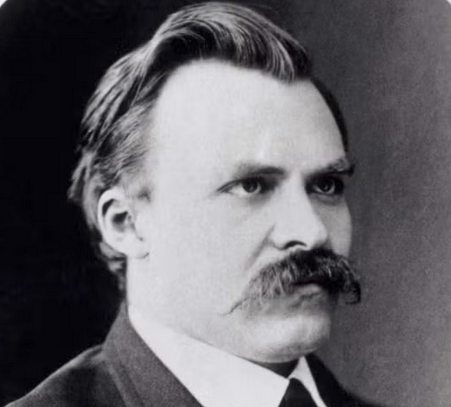
Is Wagner a human being at all? Is he not rather a disease? He contaminates everything he touches - he has made music sick.
6 months 1 week ago
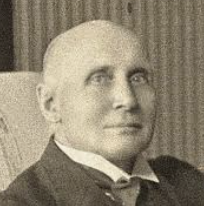
Fertilisation of the soul is the reason for the necessity of art.
▼
Source
source
Ch. 13: "Requisites for Social Progress", p. 283

8 months 6 days ago
Anyone who actually admires money as the most precious thing in life, and rests his security on it to the extent of believing that as long as he possesses it he will be happy, has fashioned too many false gods for himself. Too many people put money in the place of Christ, as if it alone has the key to their happiness or unhappiness.
▼
Source
source
p. 100
6 months 4 weeks ago
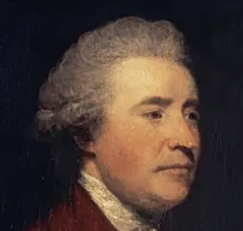
And having looked to Government for bread, on the very first scarcity they will turn and bite the hand that fed them.

6 months 2 weeks ago
Ask, and it will be given to you; seek, and you will find; knock, and it will be opened to you. For everyone who asks receives, and he who seeks finds, and to him who knocks it will be opened.
▼
Source
source
Matthew 7:7-8 (NKJV) (Also Luke 11:9-13)

6 months 4 weeks ago
They think of the philosopher as holding the ideal or subjective in one hand and the real or objective in the other and then have him strike the palms of his hands together so that one abrades the other. The product of this abrasion is the Absolute.
▼
Source
source
P. 12
7 months 3 weeks ago
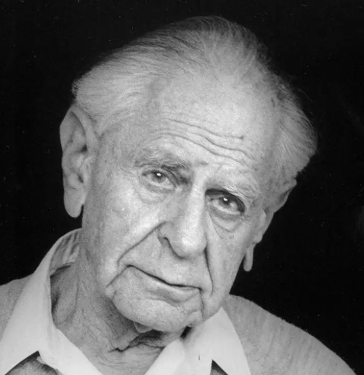
Appealing to his [Einstein's] way of expressing himself in theological terms, I said: If God had wanted to put everything into the universe from the beginning, He would have created a universe without change, without organisms and evolution, and without man and man's experience of change. But he seems to have thought that a live universe with events unexpected even by Himself would be more interesting than a dead one.
▼
Source
source
As quoted in Omnipotence and Other Theological Mistakes by Charles Hartshorne

7 months 2 weeks ago
Purity is for man, next to life, the greatest good that parity is procured by the Law of Mazda to him who cleanses his own self with Good Thoughts, Words, and Deeds.
▼
Source
source
(Extracts, p. 57)

7 months 3 weeks ago
I wish that life should not be cheap, but sacred. I wish the days to be as centuries, loaded, fragrant.
▼
Source
source
Considerations by the Way
7 months 1 week ago
For this, to draw a right line from every point, to every point, follows the definition, which says, that a line is the flux of a point, and a right line an indeclinable and inflexible flow.
▼
Source
source
Book III. Concerning Petitions and Axioms.
7 months 3 weeks ago
Shall I tell you the secret of the true scholar? It is this: Every man I meet is my master at some point, and in that, I learn of him.
▼
Source
source
Greatness

6 months 3 weeks ago
All philosophers should end their days at Pythia's feet. There is only one philosophy, that of unique moments.

4 months 3 weeks ago
The learning of the gentleman enters through his ears, fastens to his heart, spreads through his four limbs, and manifests itself in his actions. ... The learning of the petty person enters through his ears and passes out his mouth. From mouth to ears is only four inches-how could it be enough to improve a whole body much larger than that?
▼
Source
source
Readings in Classical Chinese Philosophy (2001), p. 259
4 months 5 days ago
I do not think that any civilization can be called complete until it has progressed from sophistication to unsophistication, and made a conscious return to simplicity of thinking and living, and I call no man wise until he has made the progress from the wisdom of knowledge to the wisdom of foolishness, and become a laughing philosopher, feeling first life's tragedy and then life's comedy. For we must weep before we can laugh. Out of sadness comes the awakening, and out of the awakening comes the laughter of the philosopher, with kindliness and tolerance to boot.
▼
Source
source
Ch. I : The Awakening, p. 13

3 months 4 weeks ago
Someone within me is struggling to lift a great weight, to cast off the mind and flesh by overcoming habit, laziness, necessity. I do not know from where he comes or where he goes. I clutch at his onward march in my ephemeral breast, I listen to his panting struggle, I shudder when I touch him.

3 months 3 weeks ago
A good prescription is still more profitable than an absolution.
▼
Source
source
As quoted by Friedrich Albert Lange, History of Materialism and Critique of its Present Importance Tr. Ernest Chester Thomas (1882) 2nd edition, Vol. 2, p. 55.
5 months 1 week ago
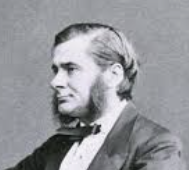
In comparing civilized man with the animal world, one is as the Alpine traveller, who sees the mountains soaring into the sky and can hardly discern where the deep shadowed crags and roseate peaks end, and where the clouds of heaven begin. Surely the awe-struck voyager may be excused if, at first, he refuses to believe the geologist, who tells him that these glorious masses are, after all, the hardened mud of primeval seas, or the cooled slag of subterranean furnaces-of one substance with the dullest clay, but raised by inward forces to that place of proud and seemingly inaccessible glory. But the geologist is right; and due reflection on his teachings, instead of diminishing our reverence and our wonder, adds all the force of intellectual sublimity, to the mere aesthetic intuition of the uninstructed beholder.
▼
Source
source
Ch.2, p. 131-132

8 months 2 weeks ago
The highest perfection of human life consists in the mind of man being detached from care, for the sake of God.
▼
Source
source
III, 130, 3
5 months 3 weeks ago
Mysticism is just tomorrow's science dreamed today.
7 months 3 weeks ago
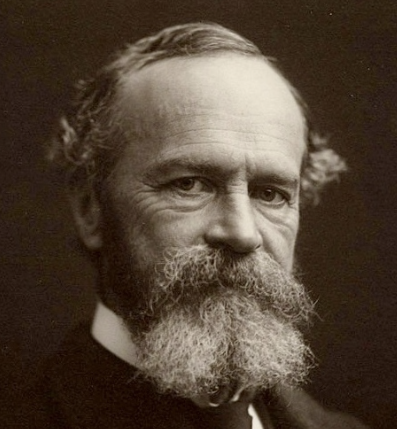
Tell him to live by yes and no - yes to everything good, no to everything bad.
▼
Source
source
As quoted in The Thought and Character of William James (1935) by Ralph Barton Perry, Vol. II, ch. 91
7 months 4 weeks ago
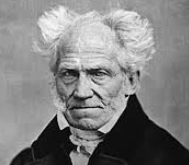
The animals are much more content with mere existence than we are; the plants are wholly so; and man is so according to how dull and insensitive he is. The animal's life consequently contains less suffering but also less pleasure than the human's, the direct reason being that on the one hand it is free from care and anxiety and the torments that attend them, but on the other is without hope and therefore has no share in that anticipation of a happy future which, together with the enchanting products of the imagination which accompany it, is the source of most of our greatest joys and pleasures. The animal lacks both anxiety and hope because its consciousness is restricted to what is clearly evident and thus to the present moment: the animal is the present incarnate.
▼
Source
source
Vol. 2 "On the Suffering of the World" as translated in Essays and Aphorisms (1970), as translated by R. J. Hollingdale
7 months 3 weeks ago
Pretend what we may, the whole man within us is at work when we form our philosophical opinions. Intellect, will, taste, and passion co-operate just as they do in practical affairs; and lucky it is if the passion be not something as petty as a love of personal conquest over the philosopher across the way.
3 months 3 weeks ago
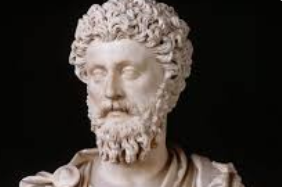
Disturbance comes only from within-from our own perceptions.
▼
Source
source
(Hays translation) IV, 4
7 months 3 weeks ago
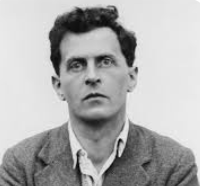
An entire mythology is stored within our language.
▼
Source
source
Ch. 7 : Remarks on Frazer's Golden Bough, p. 133
5 months 2 weeks ago
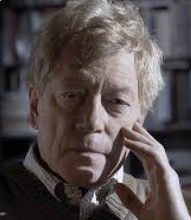
This "knowing what to do"... is a matter of having the right purpose, the purpose appropriate to the situation in hand... The one who "knows what to do" is the one on whom you can rely to make the best shot at success, whenever success is possible.
▼
Source
source
"Knowledge and Feeling" (p. 35)

8 months 5 days ago
Of all human and ancient opinions concerning religion, that seems to me the most likely and most excusable, that acknowledged God as an incomprehensible power, the original and preserver of all things, all goodness, all perfection, receiving and taking in good part the honour and reverence that man paid him, under what method, name, or ceremonies soever
▼
Source
source
Ch. 12

7 months 3 weeks ago
Then he tried to recall the lessons of Mr. Wisdom. "it is I myself, eternal Spirit, who drives this Me, the slave, along that ledge. I ought not to care whether he falls and breaks his neck or not. It is not he that is real, it is I - I - I.
▼
Source
source
Pilgrim's Regress 137

6 months 1 week ago
What is generally regarded as success - acquisition of wealth, the capture of power or social prestige - I consider the most dismal failures. I hold when it is said of a man that he has arrived, it means that he is finished - his development has stopped at that point. I have always striven to remain in a state of flux and continued growth, and not to petrify in a niche of self-satisfaction. If I had my life to live over again, like anyone else, I should wish to alter minor details. But in any of my more important actions and attitudes I would repeat my life as I have lived it. Certainly I should work for Anarchism with the same devotion and confidence in its ultimate triumph.
6 months 3 weeks ago
A certain maxim of Logic which I have called Pragmatism has recommended itself to me for diverse reasons and on sundry considerations. Having taken it as my guide for most of my thought, I find that as the years of my knowledge of it lengthen, my sense of the importance of it presses upon me more and more. If it is only true, it is certainly a wonderfully efficient instrument. It is not to philosophy only that it is applicable. I have found it of signal service in every branch of science that I have studied. My want of skill in practical affairs does not prevent me from perceiving the advantage of being well imbued with pragmatism in the conduct of life.
▼
Source
source
Lecture I : Pragmatism : The Normative Sciences, CP 5.14

7 months 3 days ago
There is no man alone, because every man is a Microcosm, and carries the whole world about him.
▼
Source
source
Section 10
8 months 1 day ago
During such calm sunshine of the mind, these spectres of false divinity never make their appearance.
▼
Source
source
Part XIV - Bad influence of popular religions on morality
3 months 3 weeks ago
Nature which governs the whole will soon change all things which thou seest, and out of there substance will make other things, and again other things from the substance of them, in order that the world may ever be new.
▼
Source
source
VII, 25 (See also Charles Darwin)
7 months 3 weeks ago
When nature removes a great man, people explore the horizon for a successor; but none comes, and none will. His class is extinguished with him. In some other and quite different field the next man will appear.
▼
Source
source
Uses of Great Men
6 months 2 weeks ago
Were art to redeem man, it could do so only by saving him from the seriousness of life and restoring him to an unexpected boyishness. The symbol of art is seen again in the magic flute of the Great God Pan which makes the young goats frisk at the edge of the grove. All modern art begins to appear comprehensible and in a way great when it is interpreted as an attempt to instill youthfulness into an ancient world.
▼
Source
source
"Art a Thing of No Consequence"

7 months 3 weeks ago
When I was a student in the 1950s, I read Husserl, Sartre, Merleau-Ponty. When you feel an overwhelming influence, you try to open a window. Paradoxically enough, Heidegger is not very difficult for a Frenchman to understand. When every word is an enigma, you are in a not-too-bad position to understand Heidegger. Being and Time is difficult, but the more recent works are clearer. Nietzsche was a revelation to me. I felt that there was someone quite different from what I had been taught. I read him with a great passion and broke with my life, left my job in the asylum, left France: I had the feeling I had been trapped. Through Nietzsche, I had become a stranger to all that.
▼
Source
source
Truth, Power, Self : An Interview with Michel Foucault
7 months 4 weeks ago
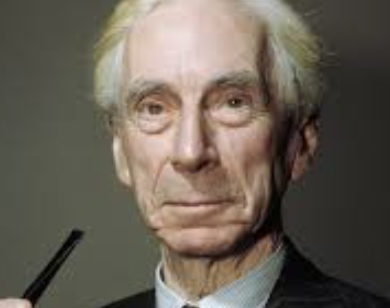
Belief in God and a future life makes it possible to go through life with less of stoic courage than is needed by skeptics. A great many young people lose faith in these dogmas at an age at which despair is easy, and thus have to face a much more intense unhappiness than that which falls to the lot of those who have never had a religious upbringing. Christianity offers reasons for not fearing death or the universe, and in so doing it fails to teach adequately the virtue of courage. The craving for religious faith being largely an outcome of fear, the advocates of faith tend to think that certain kinds of fear are not to be deprecated. In this, to my mind, they are gravely mistaken. To allow oneself to entertain pleasant beliefs as a means of avoiding fear is not to live in the best way. In so far as religion makes its appeal to fear, it is lowering to human dignity.
▼
Source
source
p. 107

4 months 2 weeks ago
He that has a secret should not only hide it, but hide that he has it to hide.
▼
Source
source
Pt. II, Bk. I, ch. 7.
5 months 3 weeks ago
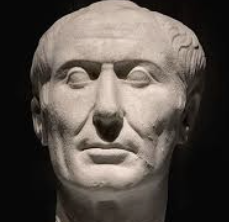
Practice is the best of all instructors.
▼
Source
source
Maxim 439
7 months 4 weeks ago
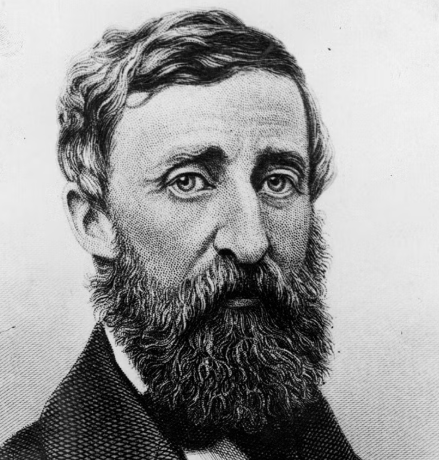
I trust that some may be as near and dear to Buddha, or Christ, or Swedenborg, who are without the pale of their churches. It is necessary not to be Christian to appreciate the beauty and significance of the life of Christ. I know that some will have hard thoughts of me, when they hear their Christ named beside my Buddha, yet I am sure that I am willing they should love their Christ more than my Buddha, for the love is the main thing, and I like him too.

8 months ago
Let us not forget what befits our present state in the pursuit of vain fancies. Mankind has its place in the sequence of things; childhood has its place in the sequence of human life; the man must be treated as a man and the child as a child. Give each his place, and keep him there. Control human passions according to man's nature; that is all we can do for his welfare. The rest depends on external forces, which are beyond our control.

5 months 4 days ago
Their minds befogged by fashionable nonsense about globalisation, western leaders believe liberal democracy is spreading unstoppably. The reality is continuing political diversity. Republics, empires, liberal and illiberal democracies, and a wide variety of authoritarian regimes will be with us for the foreseeable future. Globalisation is nothing more than the industrialisation of the planet, and increasing resource nationalism is an integral part of the process. (So is accelerating climate change, but that's another story.) As industrialisation spreads, countries that control natural resources use these resources to advance their strategic objectives.
▼
Source
source
Folly of the progressive fairytale, The Observer
8 months 6 days ago
Origen, of course, is also a great advocate of the allegorical approach. Yet I think you will have to admit that our modem theologians either despise this method of interpretation or are completely ignorant of it. As a matter of fact they surpass the pagans of antiquity in the subtlety of their distinctions.
▼
Source
source
p. 63
7 months 3 weeks ago
The history of science, like the history of all human ideas, is a history of irresponsible dreams, of obstinacy, and of error. But science is one of the very few human activities - perhaps the only one - in which errors are systematically criticized and fairly often, in time, corrected. This is why we can say that, in science, we often learn from our mistakes, and why we can speak clearly and sensibly about making progress there.
▼
Source
source
Ch. 1 "Science : Conjectures and Refutations"
3 months 3 weeks ago
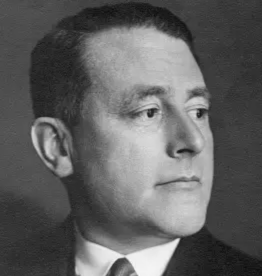
The essence of liberalism is negotiation, a cautious half measure, in the hope that the definitive dispute, the decisive bloody battle, can be transformed into a parliamentary debate and permit the decision to be suspended forever in an everlasting discussion.
5 months 1 week ago
For myself I say deliberately, it is better to have a millstone tied round the neck and be thrown into the sea than to share the enterprises of those to whom the world has turned, and will turn, because they minister to its weaknesses and cover up the awful realities which it shudders to look at.
▼
Source
source
Aphorism #367, in Aphorisms and Reflections (1907) edited by Henrietta A. Huxley, his widow
6 months 2 weeks ago
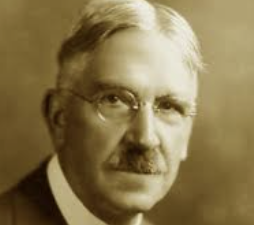
Works of art express space as opportunity for movement and action.
▼
Source
source
p. 217
6 months 3 weeks ago
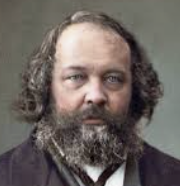
We exhort the compromisers to open their hearts to truth, to free themselves of their wretched and blind circumspection, of their intellectual arrogance, and of the servile fear which dries up their souls and paralyzes their movements. Let us therefore trust the eternal Spirit which destroys and annihilates only because it is the unfathomable and eternal source of all life. The passion for destruction is a creative passion, too!
▼
Source
source
"The Reaction in Germany" (1842) Often paraphrased as, "The urge to destroy is also a creative urge"
CivilSimian.com created by AxiomaticPanic, CivilSimian, Kalokagathia