

5 months 3 weeks ago
The first cause cannot have been an intelligence, let alone an intelligence that answers prayers and enjoys being worshiped. Intelligent, creative, complex, statistically improbable things come late into the universe, as the product of evolution or some other process of gradual escalation from simple beginnings. They come late into the universe and therefore cannot be responsible for designing it.
▼
Source
source
"Why There Almost Certainly Is No God", The Huffington Post, 23/10/2006
5 months 3 weeks ago
It is a sore thing to have laboured along and scaled the arduous hilltops, and when all is done, find humanity indifferent to your achievement. Hence physicists condemn the unphysical; financiers have only a superficial toleration for those who know little of stocks; literary persons despise the unlettered; and people of all pursuits combine to disparage those who have none. But though this is one difficulty of the subject, it is not the greatest. You could not be put in prison for speaking against industry, but you can be sent to Coventry for speaking like a fool. The greatest difficulty with most subjects is to do them well; therefore, please to remember this is an apology. It is certain that much may be judiciously argued in favour of diligence; only there is something to be said against it, and that is what, on the present occasion, I have to say.
▼
Source
source
An Apology for Idlers.

7 months 3 weeks ago
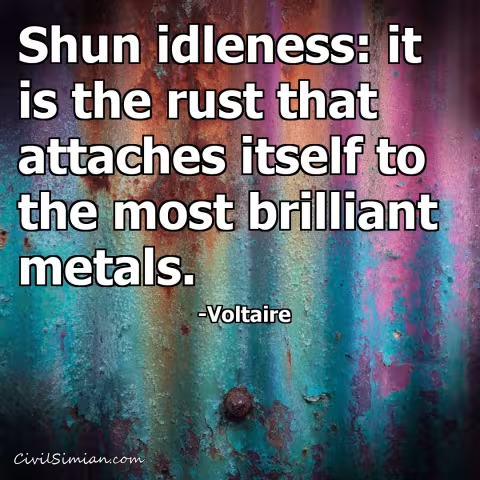
The world is upheld by the veracity of good men: they make the earth wholesome.
▼
Source
source
Uses of Great Men
3 months 3 weeks ago
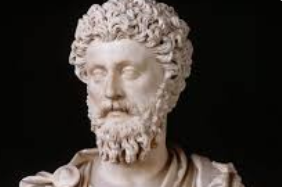
When thou art offended at any man's fault, forthwith turn to thyself and reflect in what manner thou doest error thyself... For by attending to this thou wilt quickly forget thy anger, if this consideration is also added, that the man is compelled; for what else could he do? or, if thou art able, take away from him the compulsion.
▼
Source
source
X, 30
4 months 1 week ago
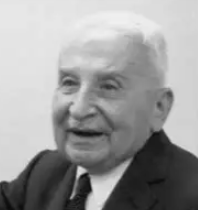
Socialism is the watchword and the catchword of our day. The socialist idea dominates the modem spirit. The masses approve of it. It expresses the thoughts and feelings of all; it has set its seal upon our time. When history comes to tell our story it will write above the chapter "The Epoch of Socialism." As yet, it is true, Socialism has not created a society which can be said to represent its ideal. But for more than a generation the policies of civilized nations have been directed towards nothing less than a gradual realization of Socialism.
▼
Source
source
Introduction : The Success of Socialist Ideas
7 months 2 weeks ago
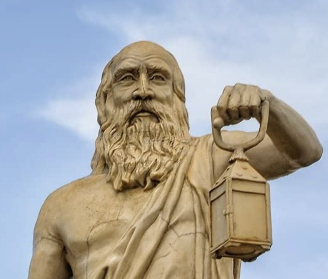
Other dogs bite only their enemies, whereas I bite also my friends in order to save them.
▼
Source
source
Stobaeus, iii. 13. 44
6 months 3 weeks ago
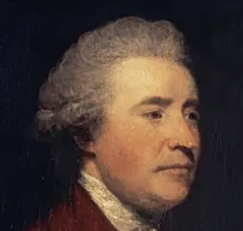
The Africans had that claim on our humanity which could not be resisted, whatever might have been advanced by an hon. gentleman in defence of the property of the planters.
▼
Source
source
Speech in the House of Commons (12 May 1789), quoted in The Parliamentary History of England, From the Earliest Period to the Year 1803, Vol. XXVIII (1816), column 98
4 months 1 week ago
Socrates is reported to have replied, when a certain person complained of having received no benefit from his travels: "It serves you right! You travelled in your own company!"
4 months 1 week ago
Let us now enquire whether anger be in accordance with nature, and whether it be useful and worth entertaining in some measure.
6 months 2 weeks ago
All his life he [the American] jumps into the train after it has started and jumps out before it has stopped; and he never once gets left behind, or breaks a leg.
▼
Source
source
"Materialism and Idealism" p. 175 (Hathi Trust)
6 months 1 week ago
The Pope will make the king believe that three are only one, that the bread he eats is not bread...and a thousand other things of the same kind.
▼
Source
source
No. 24. (Rica writing to Ibben)
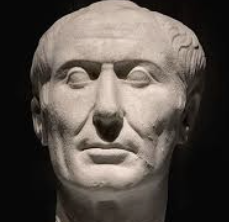
5 months 3 weeks ago
Too much straightforwardness is foolish against a shameless person.
▼
Source
source
Maxim 123

4 months 2 weeks ago
Mahomet himself, after all that can be said about him, was not a sensual man. We shall err widely if we consider this man as a common voluptuary, intent mainly on base enjoyments, - nay on enjoyments of any kind. His household was of the frugalest; his common diet barley-bread and water: sometimes for months there was not a fire once lighted on his hearth. They record with just pride that he would mend his own shoes, patch his own cloak. A poor, hard-toiling, ill-provided man; careless of what vulgar men toil for.
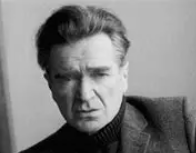
6 months 3 weeks ago
One of the greatest delusions of the average man is to forget that life is death's prisoner.
6 months 3 weeks ago
Illusion begets and sustains the world; we do not destroy one without destroying the other. Which is what I do every day. An apparently ineffectual operation, since I must begin all over again the next day.
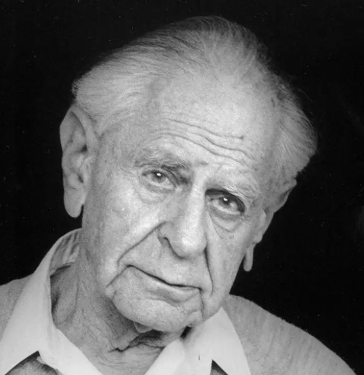
7 months 3 weeks ago
Put in a nut-shell, my thesis amounts to this. The repeated attempts made by Rudolf Carnap to show that the demarcation between science and metaphysics coincides with that between sense and nonsense have failed. The reason is that the positivistic concept of 'meaning' or 'sense' (or of verifiability, or of inductive confirmability, etc.) is inappropriate for achieving this demarcation - simply because metaphysics need not be meaningless even though it is not science. In all its variations demarcation by meaninglessness has tended to be at the same time too narrow and too wide: as against all intentions and all claims, it has tended to exclude scientific theories as meaningless, while failing to exclude even that part of metaphysics which is known as 'rational theology'.
▼
Source
source
Ch 11. "The Demarcation between Science and Metaphysics." (Summary, p. 253)
3 months 3 weeks ago
This is the Supreme Duty of the man who struggles - to set out for the lofty peak which Christ, the first-born sone of salvation, attained. How can we begin? If we are to follow him we must have a profound knowledge of his conflict, we must relive his anguish: his victory over the blossoming snares of the earth, his sacrifice of the great and small joys of men and his ascent from sacrifice to sacrifice, exploit to exploit, to martyrdom's summit, the Cross.
8 months 4 days ago
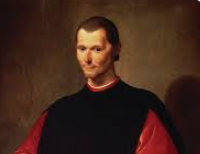
This return of Republics back to their principles also results from the simple virtue of one man, without depending on any law that excites him to any execution: none the less, they are of such influence and example that good men desire to imitate him, and the wicked are ashamed to lead a life contrary to those examples.
▼
Source
source
Book 3, Ch. 1
3 months 3 weeks ago
All those things at which thou wishest to arrive by a circuitous road, thou canst have now, if thou dost not refuse them to thyself.
▼
Source
source
XII, 1

7 months 2 weeks ago
Let hopes and sorrows, fears and angers be, and think each day that dawns the last you'll see; For so the hour that greets you unforeseen, will bring with it enjoyment twice as keen.
▼
Source
source
Book I, epistle iv, line 12 (translated by John Conington)
8 months ago
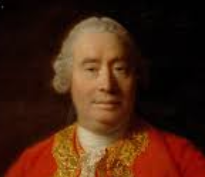
But such is the nature of the human mind, that it always lays hold on every mind that approaches it; and as it is wonderfully fortified by an unanimity of sentiments, so is it shocked and disturbed by any contrariety. Hence the eagerness, which most people discover in a dispute; and hence their impatience of opposition, even in the most speculative and indifferent opinions.
▼
Source
source
Part I, Essay 8: Of Parties in General
5 months ago
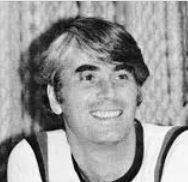
There is no social entity with a good that undergoes some sacrifice for its own good. There are only individual people, different individual people, with their own individual lives. Using one of these people for the benefit of others, uses him and benefits the others. Nothing more.
▼
Source
source
Ch. 3 : Moral Constraints and the State; Why Side Constraints?, p. 32
6 months 1 week ago
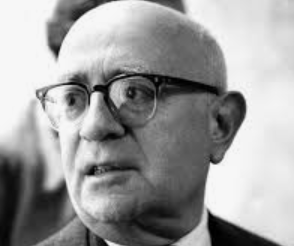
The blessing that the market does not ask about birth is paid for in the exchange society by the fact that the possibilities conferred by birth are molded to fit the production of goods that can be bought on the market.
▼
Source
source
E. Jephcott, trans., p. 9
4 months 2 weeks ago
A well-written Life is almost as rare as a well-spent one.
▼
Source
source
Richter (1827).
3 months 3 weeks ago
Human life. Duration: momentary. Nature: changeable. Perception: dim. Condition of Body: decaying. Soul: spinning around. Fortune: unpredictable. Lasting Fame: uncertain. Sum Up: The body and its parts are a river, the soul a dream and mist, life is warfare and a journey far from home, lasting reputation is oblivion.
▼
Source
source
(Hays translation) II, 17
6 months 3 weeks ago
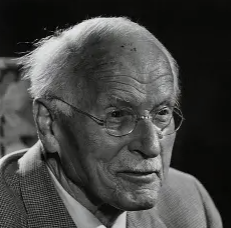
Primitive superstition lies just below the surface of even the most tough-minded individuals, and it is precisely those who most fight against it who are the first to succumb to its suggestive effects.
▼
Source
source
p. 25
6 months 3 weeks ago
The rich in all societies may be thrown into two classes. The first is of those who are powerful as well as rich, and conduct the operations of the vast political machine. The other is of those who employ their riches wholly in the acquisition of pleasure. As to the first sort, their continual care and anxiety, their toilsome days and sleepless nights, are next to proverbial. These circumstances are sufficient almost to level their condition to that of the unhappy majority; but there are other circumstances which place them in a far lower condition. Not only their understandings labour continually, which is the severest labour, but their hearts are torn by the worst, most troublesome, and insatiable of all passions, by avarice, by ambition, by fear and jealousy. No part of the mind has rest. Power gradually extirpates from the mind every humane and gentle virtue. Pity, benevolence, friendship, are things almost unknown in high stations.
7 months 3 weeks ago
I am not much an advocate for travelling, and I observe that men run away to other countries because they are not good in their own, and run back to their own because they pass for nothing in the new places. For the most part, only the light characters travel. Who are you that have no task to keep you at home? I have been quoted as saying captious things about travel; but I mean to do justice. .... He that does not fill a place at home, cannot abroad. He only goes there to hide his insignificance in a larger crowd. You do not think you will find anything there which you have not seen at home? The stuff of all countries is just the same. Do you suppose there is any country where they do not scald milk-pans, and swaddle the infants, and burn the brushwood, and broil the fish? What is true anywhere is true everywhere. And let him go where he will, he can only find so much beauty or worth as he carries.
▼
Source
source
Culture
4 months 3 weeks ago
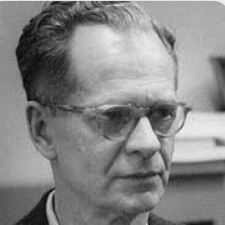
Ethical control may survive in small groups, but the control of the population as a whole must be delegated to specialists-to police, priests, owners, teachers, therapists, and so on, with their specialized reinforcers and their codified contingencies.
▼
Source
source
Beyond Freedom and Dignity (1971), p. 155
3 months 2 weeks ago
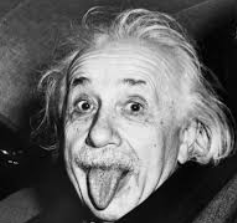
I see a clock, but I cannot envision the clockmaker. The human mind is unable to conceive of the four dimensions, so how can it conceive of a God, before whom a thousand years and a thousand dimensions are as one?
▼
Source
source
From Cosmic Religion: with Other Opinions and Aphorisms (1931), Albert Einstein, pub. Covici-Friede. Quoted in The Expanded Quotable Einstein, Princeton University Press; 2nd edition (May 30, 2000); Page 208,
5 months 3 days ago
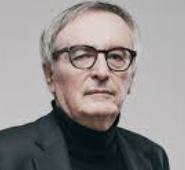
No doubt markets transmit information in the way that Hayek claimed. But what reason is there to believe that - unlike any other social institution - they have a built-in capacity to correct their mistakes? History hardly supports the supposition. Moods of irrational exuberance and panic can, and often do, swamp the price-discovery functions of markets.
6 months 2 weeks ago
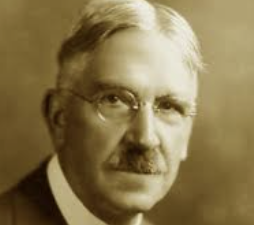
There are two kinds of means. One kind is external to that which is accomplished; the other kind is taken up into the consequences and remains immanent in them. There are ends which are merely welcome cessations and there are ends that are fulfillments of what went before. The toil of the laborer is too often an antecedent to the wage he receives, as consumption of gasoline is merely a means to transportation. The means cease to act when the "end" is reached; one would be glad, as a rule, to get the result without having to employ the means. They are but the scaffolding.

7 months 3 weeks ago
What is now common to all men is a mere abstract universal, an H.C.F. [Highest Common Factor], and Man's conquest of himself means simply the rule of the Conditioners over the conditioned human material, the world of post-humanity which, some knowingly and some unknowingly, nearly all men in all nations are at present labouring to produce.
6 months 2 weeks ago
The utmost possible regarding an individual is a statement as to some order of probability about the future. Heisenberg's principle has been seized upon as a basis for wild statements to the effect that the doctrine of arbitrary free will and totally uncaused activity are now scientifically substantiated. Its actual force and significance is generalization of the idea that the individual is a temporal career whose future cannot logically be deduced from its past.

6 months ago
Idolatry is a more dangerous crime because it is apt by the authority of Kings & under very specious pretenses to insinuate it self into mankind. Kings being apt to enjoyn the honour of their dead ancestors: & it seeming very plausible to honour the souls of Heroes & Saints & to believe that they can heare us & help us & are mediators between God & man & reside & act principally in the temples & statues dedicated to their honour & memory? And yet this being against the principal part of religion is in scripture condemned & detested above all other crimes. The sin consists first in omitting the service of the true God.
▼
Source
source
Of Idolatry
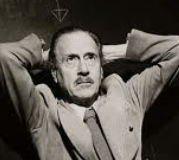
5 months 3 weeks ago
Renaissance Italy became a kind of Hollywood collection of sets of antiquity, and the new visual antiquarianism of the Renaissance provided an avenue to power for men of any class.
▼
Source
source
(p. 136)
5 months 3 weeks ago
He and his tyrannicide! I am in a mad fury about these explosions. If that is the new world! Damn O'Donovan Rossa; damn him behind and before, above, below, and roundabout; damn, deracinate, and destroy him, root and branch, self and company, world without end. Amen. I write that for sport if you like, but I will pray in earnest, O Lord, if you cannot convert, kindly delete him!
▼
Source
source
Letter to Sidney Colvin, 2 August 1881. Quoted in Terrorism and Literature Chapter 12 - "Parliament Is Burning" by Deaglán Ó Donghaile ISBN 9781316987292

3 months 3 weeks ago
After World War II, we hoped the world might be united for the sake of peacemaking. Now the world is being "globalized" for the sake of trade and the so-called free market - for the sake, that is, of plundering the world for cheap labor, cheap energy, and cheap materials. How nations, let alone regions and communities, are to shape and protect themselves within this "global economy" is far from clear.
8 months 3 weeks ago
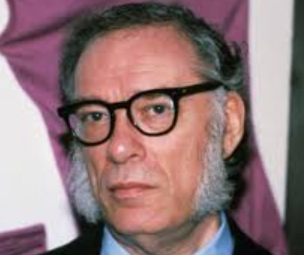
Start with a planet like the earth, with a complement of simple compounds bound to exist upon it, add the energy of a nearby sun, and you are bound to end with nucleic acids. You can't avoid it.
6 months 1 week ago
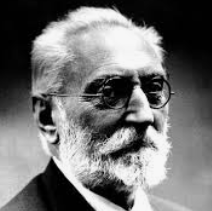
It appears to me to be indisputable that he who I am to-day derives, by a continuous series of states of consciousness, from him who was in my body twenty years ago. Memory is the basis of individual personality, just as tradition is the basis of the collective personality of a people. We live in memory, and our spiritual life is at bottom simply the effort of our memory to persist, to transform itself into hope, the effort of our past to transform itself into our future.
4 months 4 days ago
However far the phenomena transcend the scope of classical physical explanation, the account of all evidence must be expressed in classical terms. The argument is that simply by the word "experiment" we refer to a situation where we can tell others what we have done and what we have learned and that, therefore, the account of the experimental arrangement and of the results of the observations must be expressed in unambiguous language with suitable application of the terminology of classical physics.
▼
Source
source
Niels Bohr, "Discussions with Einstein on Epistemological Problems in Atomic Physics," in Paul Arthur Schilpp, Albert Einstein: Philosopher Scientist (1949) pp. 199-241.
6 months 2 weeks ago
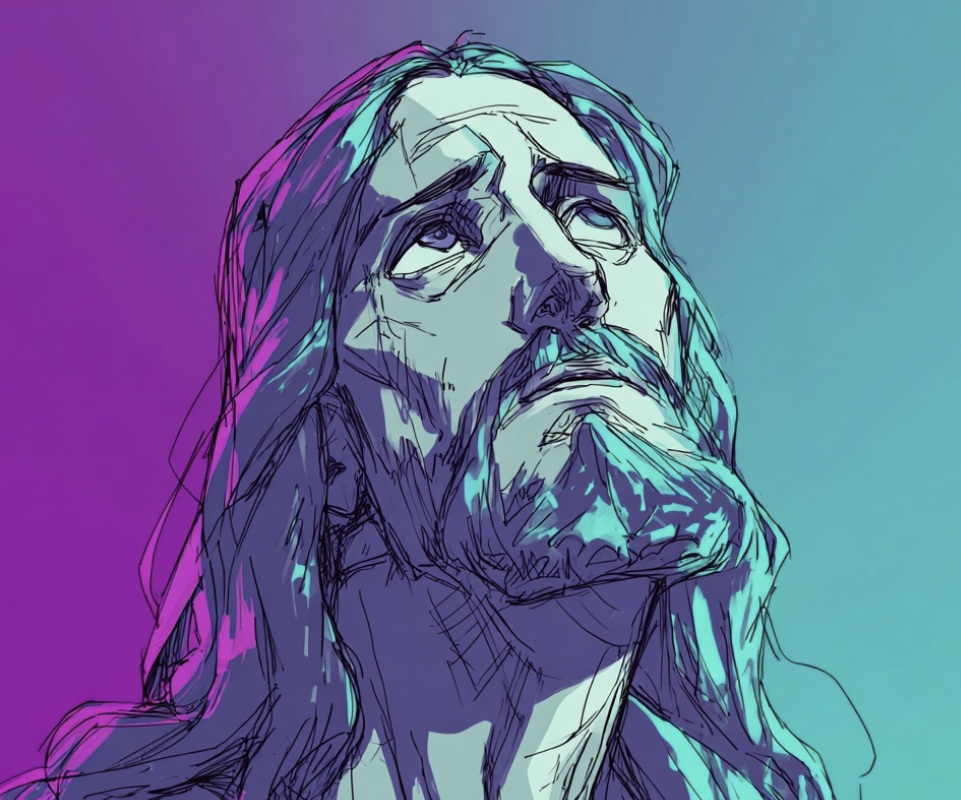
Are ye come out as against a thief with swords and staves for to take me? I sat daily with you teaching in the temple, and ye laid no hold on me. But all this was done, that the scriptures of the prophets might be fulfilled.
▼
Source
source
26:55-56 (KJV)
8 months 2 weeks ago
The aged are cared for until death; adults are employed in jobs that make full use of their abilities; and children are nourished, educated, and fostered;...orphans... the disabled and the diseased are all well taken care of....
6 months 3 weeks ago
The wrinkles of a nation are as visible as those of an individual.
5 months 3 weeks ago
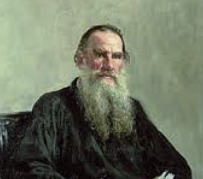
Humanity unceasingly strives forward from a lower, more partial and obscure understanding of life to one more general and more lucid. And in this, as in every movement, there are leaders - those who have understood the meaning of life more clearly than others - and of those advanced men there is always one who has in his words and life, manifested this meaning more clearly, accessibly, and strongly than others. This man's expression ... with those superstitions, traditions, and ceremonies which usually form around the memory of such a man, is what is called a religion. Religions are the exponents of the highest comprehension of life ... within a given age in a given society ... a basis for evaluating human sentiments. If feelings bring people nearer to the religion's ideal ... they are good, if these estrange them from it, and oppose it, they are bad.
3 months 3 weeks ago
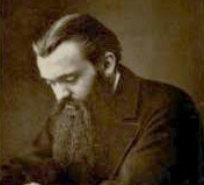
We have no reason to fear lest a habit of conscientious inquiry should paralyse the actions of our daily life. But because it is not enough to say, "It is wrong to believe on unworthy evidence," without saying also what evidence is worthy, we shall now go on to inquire under what circumstances it is lawful to believe on the testimony of others; and then, further, we shall inquire more generally when and why we may believe that which goes beyond our own experience, or even beyond the experience of mankind.
5 months 2 weeks ago
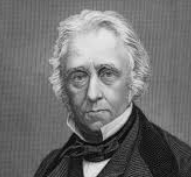
We believe it to be a rule without an exception, that the violence of a revolution corresponds to the degree of misgovemment which has produced that revolution.
▼
Source
source
Mirabeau', The Edinburgh Review (July 1832), quoted in The Miscellaneous Writings of Lord Macaulay, Vol. II (1860), pp. 81-82
4 months 2 weeks ago
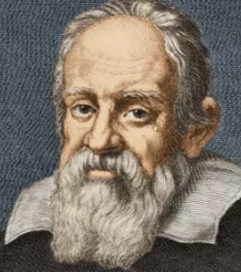
Whence do you have it that the terrestrial globe is so heavy? For my part, either I do not know what heaviness is, or the terrestrial globe is neither heavy nor light, as likewise all other globes of the universe. Heaviness to me (and I believe to Nature) is that innate tendency by which a body resists being moved from its natural place and by which, when forcibly removed therefrom, it spontaneously returns there. Thus a bucketful of water raised on high and set free, returns to the sea; but who will say that the same water remains heavy in the sea, when being set free there, does not move?
CivilSimian.com created by AxiomaticPanic, CivilSimian, Kalokagathia