

6 months 3 weeks ago
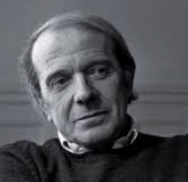
Evaluations, in essence, are... ways of being, modes of existence of those who judge and evaluate.
▼
Source
source
p. 1
8 months 2 weeks ago
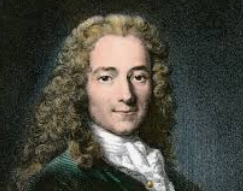
Men use thought only to justify their wrongdoings, and speech only to conceal their thoughts.
▼
Source
source
Dialogue 14, Le Chapon et la Poularde (1766); reported in Bartlett's Familiar Quotations, 10th ed., 1919
4 months 3 weeks ago
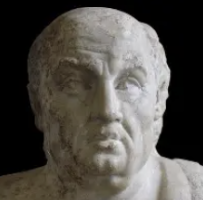
"What," say you, "are you giving me advice? Indeed, have you already advised yourself, already corrected your own faults? Is this the reason why you have leisure to reform other men?" No, I am not so shameless as to undertake to cure my fellow-men when I am ill myself. I am, however, discussing with you troubles which concern us both, and sharing the remedy with you, just as if we were lying ill in the same hospital.
6 months 3 weeks ago
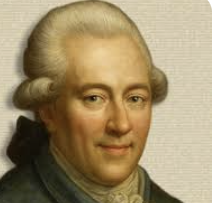
The sure conviction that we could if we wanted to is the reason so many good minds are idle.
▼
Source
source
K 27
6 months 3 weeks ago
What is morality in any given time or place? It is what the majority then and there happen to like, and immorality is what they dislike.
▼
Source
source
Ch. 22, August 30, 1941.
4 months 2 days ago
Our experience hitherto justifies us in trusting that nature is the realization of the simplest that is mathematically conceivable. I am convinced that purely mathematical construction enables us to find those concepts and those lawlike connections between them that provide the key to the understanding of natural phenomena. Useful mathematical concepts may well be suggested by experience, but in no way can they be derived from it. Experience naturally remains the sole criterion of the usefulness of a mathematical construction for physics. But the actual creative principle lies in mathematics. Thus, in a certain sense, I take it to be true that pure thought can grasp the real, as the ancients had dreamed.
8 months 2 weeks ago
If a workman can conveniently spare those three halfpence, he buys a pot of porter. If he cannot, he contents himself with a pint, and, as a penny saved is a penny got, he thus gains a farthing by his temperance.
▼
Source
source
Chapter II, Part II, Article IV, p. 951.
9 months 1 week ago
No matter how various the subject matter I write on, I was a science-fiction writer first and it is as a science-fiction writer that I want to be identified.
6 months 1 week ago
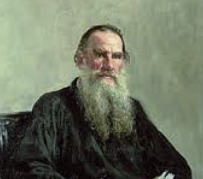
A Frenchman is self-assured because he regards himself personally, both in mind and body, as irresistibly attractive to men and women. An Englishman is self-assured, as being a citizen of the best-organized state in the world, and therefore as an Englishman always knows what he should do and knows that all he does as an Englishman is undoubtedly correct. An Italian is self-assured because he is excitable and easily forgets himself and other people. A Russian is self-assured just because he knows nothing and does not want to know anything, since he does not believe that anything can be known. The German's self-assurance is worst of all, stronger and more repulsive than any other, because he imagines that he knows the truth - science - which he himself has invented but which is for him the absolute truth.
▼
Source
source
Bk. IX, ch. 10
7 months 1 week ago
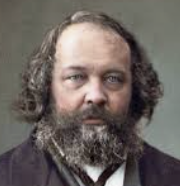
In order to touch the heart and gain the confidence, the assent, the adhesion, and the co-operation of the illiterate legions of the proletariat - and the vast majority of proletarians unfortunately still belong in this category - it is necessary to begin to speak to those workers not of the general sufferings of the international proletariat as a whole but of their particular, daily, altogether private misfortunes. It is necessary to speak to them of their own trade and the conditions of their work in the specific locality where they live; of the harsh conditions and long hours of their daily work, of the small pay, the meanness of their employer, the high cost of living, and how impossible it is for them properly to support and bring up a family.
▼
Source
source
Founding of the Workers' International
8 months 2 days ago
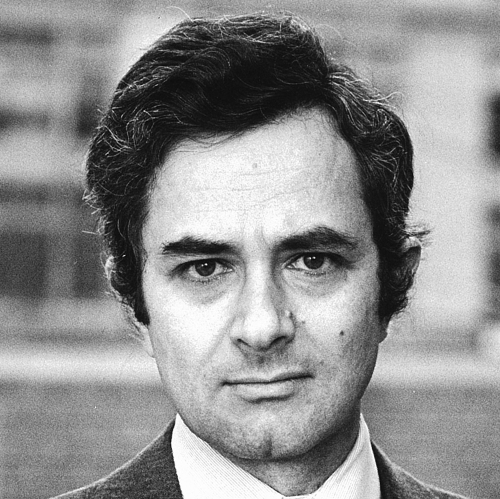
Consciousness is what makes the mind-body problem really intractable.
▼
Source
source
p. 165.
8 months 2 weeks ago
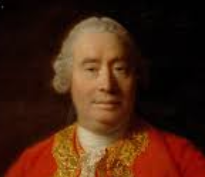
But though all the general rules of art are founded only on experience and on the observation of the common sentiments of human nature, we must not imagine, that, on every occasion, the feelings of men will be conformable to these rules.
9 months 1 week ago
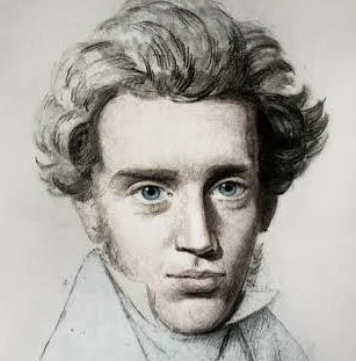
Man is a synthesis of psyche and body, but he is also a synthesis of the temporal and the eternal. In the former, the two factors are psyche and body, and spirit is the third, yet in such a way that one can speak of a synthesis only when the spirit is posited. The latter synthesis has only two factors, the temporal and the eternal. Where is the third factor? And if there is no third factor, there really is no synthesis, for a synthesis that is a contradiction cannot be completed as a synthesis without a third factor, because the fact that the synthesis is a contradiction asserts that it is not. What, then, is the temporal?
5 months 2 weeks ago
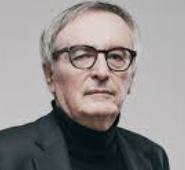
The heterodox current in Judaism led by Jesus seems to have had no notion of an immortal soul, created by God and then infused into the body: immortality meant being raised from the dead in the body one had in life, then living for ever in a world without decay or corruption. In the Christian religion invented by Paul and Augustine, which was strongly influenced by Plato, immortality meant something quite different - a life out of time, enjoyed by the 'soul' or 'spirit' of the departed. How this Platonic immortality could preserve anything like the persons that once lived was not made clear.
▼
Source
source
Cross-correspondences (pp. 32-3)
8 months 2 weeks ago
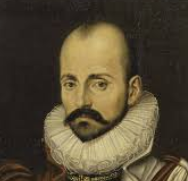
The thing I fear most is fear.
▼
Source
source
Ch. 18. That Men are not to judge of our Happiness till after Death (tr. Donald M. Frame)
7 months 1 week ago
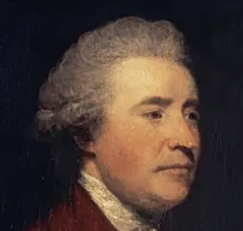
They defend their errors as if they were defending their inheritance.
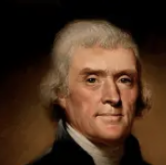
4 months 1 week ago
When speaking of the new testament that you should read all the histories of Christ, as well of those whom a council of ecclesiastics have decided for us to be Pseudo-evangelists, as those they named Evangelists. Because these Pseudo-evangelists pretended to inspiration as much as the others, and you are to judge their pretensions by your own reason, & not by the reason of those ecclesiastics. Most of these are lost. There are some however still extant, collected by Fabricius which I will endeavor to get & send you.
4 months 3 weeks ago
The customs of that most criminal nation have gained such strength that they have now been received in all lands. The conquered have given laws to the conquerors.
▼
Source
source
Apostle Paul: A Polite Bribe by Robert Orlando; p. 108
5 months 2 weeks ago
From a Darwinian point of view, human beliefs are adaptations to our part of the world. No doubt much of what we believe must be roughly accurate, or else we would not have survived. But the beliefs we have evolved might latch on to the world only enough to help us stumble our way through it, and then only for the time being. Human belief-systems could be useful illusions, appearing and disappearing as they prove to be more or less advantageous in the random walk of natural selection. Might not evolution be one of these illusions? Scientific naturalism is the theory that human beliefs are evolutionary adaptations whose survival has nothing to do with their truth. But in that case scientific naturalism is self-defeating, since on its own premises scientific theories cannot be known to be true.
▼
Source
source
Cross-correspondences (p. 69)
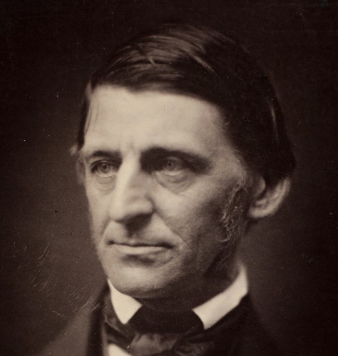
8 months 1 week ago
The state of society is one in which the members have suffered amputation from the trunk, and strut about so many walking monsters,-a good finger, a neck, a stomach, an elbow, but never a man.
▼
Source
source
par. 5
6 months 1 week ago
It is the worst of all quaint and of all cheap ways of life that they bring us at last to the pinch of some humiliation.
▼
Source
source
Episodes in the Story of a Mine.


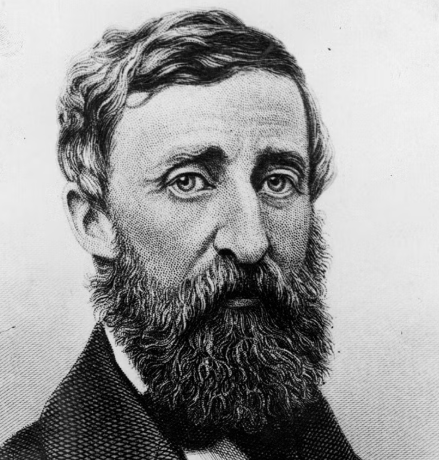
8 months 1 week ago
Poetry is the mysticism of mankind.
8 months 2 weeks ago
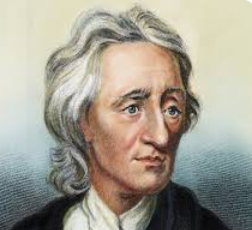
False and doubtful positions, relied upon as unquestionable maxims, keep those who build on them in the dark from truth. Such are usually the prejudices imbibed from education, party, reverence, fashion, interest, et cetera.
▼
Source
source
Book IV, Ch. 7
8 months 2 weeks ago
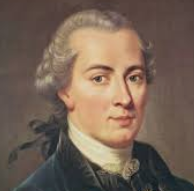
Freedom is the alone unoriginated birthright of man, and belongs to him by force of his humanity; and is independence on the will and co-action of every other in so far as this consists with every other person's freedom.
▼
Source
source
Immanuel Kant, The Metaphysics of Ethics by Immanuel Kant, trans. J.W. Semple, ed. with Iintroduction by Rev. Henry Calderwood (Edinburgh: T. & T. Clark, 1886) (3rd edition). Chapter: GENERAL DIVISION OF JURISPRUDENCE.
7 months 1 week ago
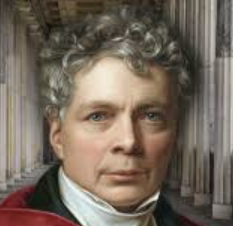
Countless attempts have been made to no avail to construct a continuity from the supreme principle of the intellectual world to the finite world. The oldest and most frequent of these attempts is well known: the principle of emanation, according to which the outflowings from the godhead, in gradual increments and detachment from the ordinary source, losing their divine perfection until, in the end, they pass into the opposite (matter, privation), just as light is finally confined by darkness.
▼
Source
source
P. 24

8 months 2 weeks ago
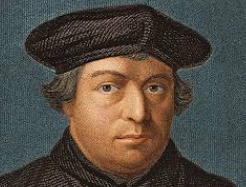
Christ ought to be preached with this goal in mind - that we might be moved to faith in him so that he is not just a distant historical figure but actually Christ for you and me.
▼
Source
source
p. 69
8 months 3 weeks ago
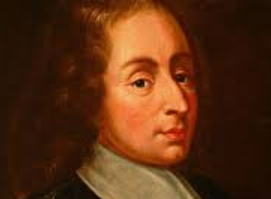
As to the objection that these rules are common in the world, that it is necessary to define every thing and to prove every thing, and that logicians themselves have placed them among their art, I would that the thing were true and that it were so well known... But so little is this the case, that, geometricians alone excepted, who are so few in number that they are a single in a whole nation and long periods of time, we see no others that know it.
4 months 1 week ago
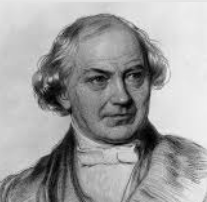
The Process of Induction may be resolved into three steps ; the 'Selection of the Idea', the 'Construction of the Conception', and the 'Determination of the Magnitudes'. These three steps correspond to the determination of the 'Independent Variable', the 'formula', and the 'coefficients', in mathematical investigations; or to the 'Argument', the 'Law', and the 'Numerical Data', in a Table of an Inequality. The conceptions involved in scientific truths have attained the requisite degree of clearness by means of the Discussions respecting ideas which have taken place among discoverers and their followers. Such discussions are very far from being unprofitable
8 months 2 days ago
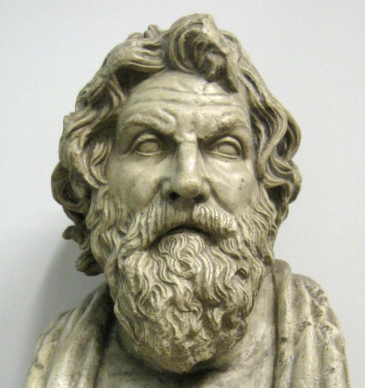
Being asked what learning is the most necessary, he replied, "How to get rid of having anything to unlearn.
▼
Source
source
" § 7
8 months 2 weeks ago
Morals excite passions, and produce or prevent actions. Reason of itself is utterly impotent in this particular. The rules of morality, therefore, are not conclusions of our reason.
▼
Source
source
Part 1, Section 1
4 months 3 weeks ago
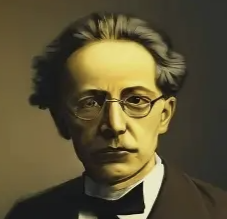
If one awakens in men the idea of freedom then the free men will incessantly go on to free themselves; if on the contrary, one only educates them, then they will at all times accommodate themselves to circumstance in the most highly educated and elegant manner and degenerate into subservient cringing souls.
▼
Source
source
p. 23
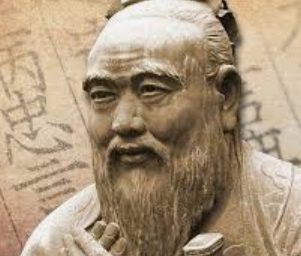
9 months 1 day ago
When the Great Dao (Tao, perfect order) prevails, the world is like a Commonwealth State shared by all, not a dictatorship.
6 months 2 weeks ago
A single observation that is inconsistent with some generalization points to the falsehood of the generalization, and thereby 'points to itself'.
▼
Source
source
Chapter 4, Evidence, p. 34.
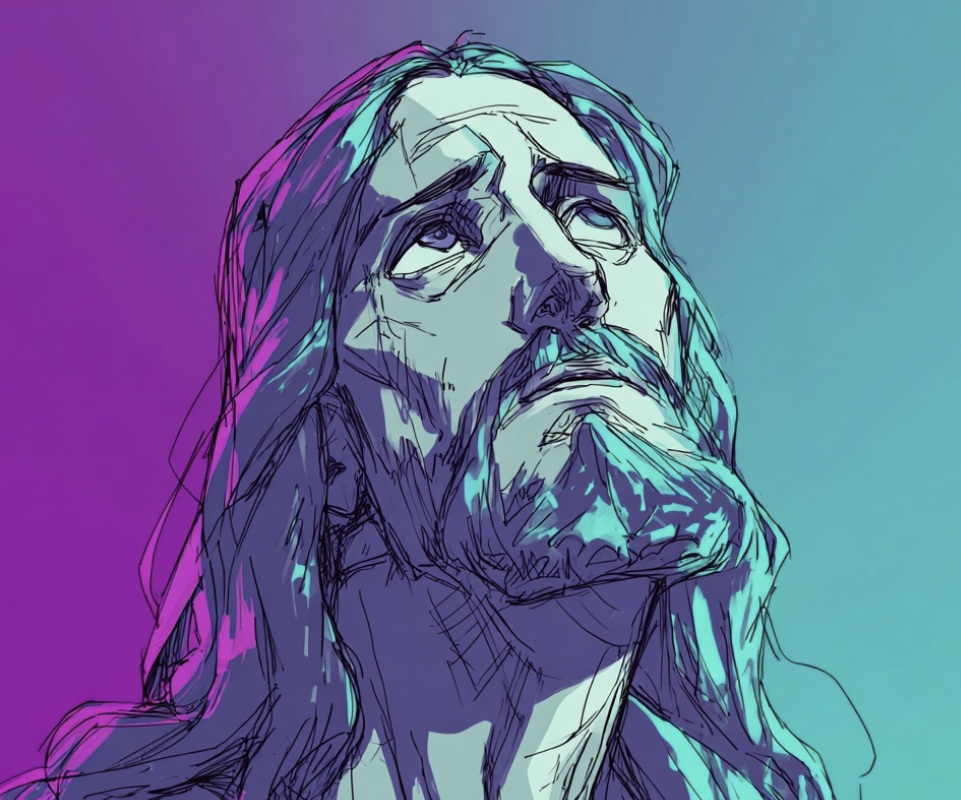
7 months 4 days ago
Have no fear, little flock, for your Father has approved of giving you the Kingdom.
▼
Source
source
12:32

6 months 4 weeks ago
May not the absolute and perfect eternal happiness be an eternal hope, which would die if it were realized? Is it possible to be happy without hope? And there is no place for hope once possession has been realized, for hope, desire, is killed by possession. May it not be, I say, that all souls grow without ceasing, some in a greater measure than others, but all having to pass some time through the same degree of growth, whatever that degree may be, and yet without ever arriving at the infinite, at God, to whom they continually approach? Is not eternal happiness an eternal hope, with its eternal nucleus of sorrow in order that happiness shall not be swallowed up in nothingness?

6 months 2 weeks ago
Possibility is not a luxury; it is as crucial as bread. Undoing Gender.
▼
Source
source
Psychology Press. 2004. p. 29. ISBN 978-0-415-96922-2.
9 months 1 week ago
Writing is hard work. The fact that I love doing it doesn't make it less hard work. People who love tennis will sweat themselves to exhaustion playing it, and the love of the game doesn't stop the sweating. The casual assumption that writers are unemployed bums because they don't go to the office and don't have a boss is something every writer has to live with. I have never known a writer who hasn't suffered as a result of this, hasn't resented it, and hasn't dreamed of murdering the next person who says "Boy, you've sure got it made. You just sit there and toss off a story or something whenever you feel like it."
8 months 1 week ago
The most essential characteristic of scientific technique is that it proceeds from experiment, not from tradition. The experimental habit of mind is a difficult one for most people to maintain; indeed, the science of one generation has already become the tradition of the next...
▼
Source
source
The Scientific Outlook, 1931
8 months 2 weeks ago
Superstition, idolatry, and hypocrisy have ample wages, but truth goes a-begging.
▼
Source
source
53
8 months 1 week ago
Any man more right than his neighbors constitutes a majority of one.
7 months 1 week ago
Compared to the refined culture of sclerotic forms and frames, which mask everything, the lyrical mode is utterly barbarian in its expression. Its value resides precisely in its savage quality: it is only blood, sincerity, and fire.

5 months 3 days ago
Suppose Odin to have been the inventor of Letters, as well as "magic," among that people! It is the greatest invention man has ever made! this of marking down the unseen thought that is in him by written characters. It is a kind of second speech, almost as miraculous as the first.

7 months 3 weeks ago
There are men and gods, and beings like Pythagoras.
▼
Source
source
Of himself, as quoted in A History of Western Philosophy (1945) by Bertrand Russell
8 months 1 week ago
What will happen once the authentic mass man takes over, we do not know yet, although it may be a fair guess that he will have more in common with the meticulous, calculated correctness of Himmler than with the hysterical fanaticism of Hitler, will more resemble the stubborn dullness of Molotov than the sensual vindictive cruelty of Stalin.
▼
Source
source
Part 3, Ch. 10, § 2
4 months 3 weeks ago
I commend you and rejoice in the fact that you are persistent in your studies, and that, putting all else aside, you make it each day your endeavour to become a better man.

CivilSimian.com created by AxiomaticPanic, CivilSimian, Kalokagathia