


4 months 1 week ago
Louisiana, as ceded by France to the United States, is made a part of the United States; its white inhabitants shall be citizens, and stand, as to their rights and obligations, on the same footing with other citizens of the United States, in analogous situations.
▼
Source
source
Draft of proposed Amendment to the Constitution by Jefferson, who thought an amendment would be necessary to authorize the Louisiana Purchase to be incorporated into the United States

6 months 3 weeks ago
Our patriotism comes straight from the Romans. This is why French children are encouraged to seek inspiration for it in Corneille. It is a pagan virtue, if these two words are compatible. The word pagan, when applied to Rome, early possesses the significance charged with horror which the early Christian controversialists gave it. The Romans really were an atheistic and idolatrous people; not idolatrous with regard to images made of stone or bronze, but idolatrous with regard to themselves. It is this idolatry of self which they have bequeathed to us in the form of patriotism.
▼
Source
source
p. 220, also in The Need for Roots : prelude towards a declaration of duties towards mankind
9 months 2 weeks ago
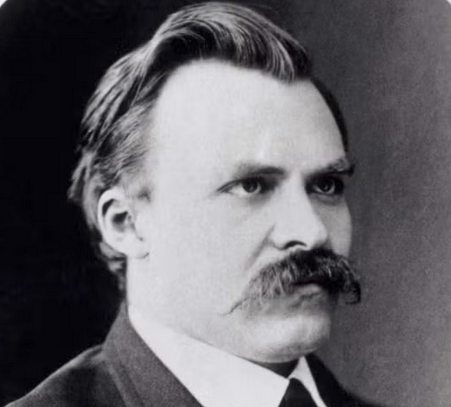
Our destiny exercises its influence over us even when, as yet, we have not learned its nature: it is our future that lays down the law of our today.
7 months 2 days ago
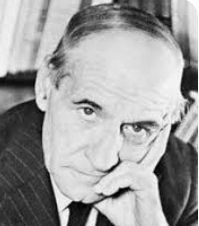
I know well that many of my readers do not think as I do. This also is most natural and confirms the theorem. For although my opinion turn out erroneous, there will always remain the fact that many of those dissentient readers have never given five minutes' thought to this complex matter. How are they going to think as I do? But by believing that they have a right to an opinion on the matter without previous effort to work one out for themselves, they prove patently that they belong to that absurd type of human being which I have called the "rebel mass." It is precisely what I mean by having one's soul obliterated, hermetically closed. Here it would be the special case of intellectual hermetism.
▼
Source
source
Chap. VIII: The Masses Intervene In Everything, And Why Their Intervention Is Solely By Violence
6 months 4 weeks ago
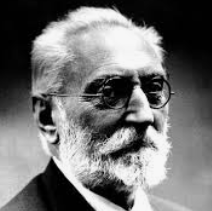
When at the beginning of the so-called modern age, at the Renaissance, the pagan sense of religion came to life again, it took the concrete form in the knightly ideal with its codes of conduct of love and honor. But it was a paganism Christianized, baptized. "Woman - la donna - was the divinity enshrined within those savage breasts. Whosoever will investigate the memorials of primitive times will find this ideal of woman in its full force and purity; the Universe is woman.

8 months 2 weeks ago
So in all human affairs one notices, if one examines them closely, that it is impossible to remove one inconvenience without another emerging.
▼
Source
source
Book 1, Ch. 6 (as translated by LJ Walker and B Crick)

7 months 2 weeks ago
Poetry must have something in it that is barbaric, vast and wild.



5 months 3 days ago
It must have been in his teens, perhaps rather early, that he and his elder brother John, with William Bell (afterwards of Wylie Hill, and a noted drover) and his brother, all met in the kiln at Eelief to play cards. The corn was dried then at home. There was a fire, therefore, aud perhaps it was both heat and light. The boys had played, perhaps, often enough for trifling stakes, and always parted in good humor. One night they came to some disagreement. My father spoke out what was in him about the folly, the sinfulness, of quarreling over a perhaps sinful amusement. The earnest mind persuaded other minds. They threw the cards into the fire, and (I think the younger Bell told my brother James) no one of the four ever touched a card again through life. My father certainly never hinted at such a game since I knew him. I cannot remember that I, at that age, had any such force of belief. Which of us can?
4 months 1 week ago
There is not a sprig of grass that shoots uninteresting to me.
▼
Source
source
Thomas Jefferson Letter (23 Dec 1790) to Martha Jefferson Randolph. Collected in B.L. Rayner (ed.), Sketches of the Life, Writings, and Opinions of Thomas Jefferson (1832), 192.
8 months 1 week ago
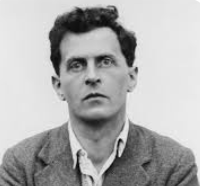
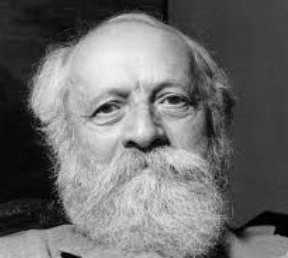
Don't say: "They must have something in common, or they would not be called 'games'" but look and see whether there is anything common to all. For if you look at them, you won't see something that is common to all, but similarities, affinities, and a whole series of them at that.
▼
Source
source
To repeat: don't think, but look! § 66
7 months 2 days ago
In the presence of God himself man stands always like a solitary tree in the wilderness.
▼
Source
source
p. 95

6 months 3 weeks ago
I had never doubted my own abilities, but I was quite prepared to believe that "the world" would decline to recognize them.
▼
Source
source
p. 3
7 months 3 weeks ago
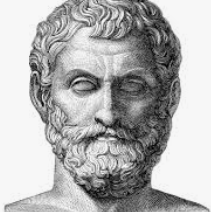
Nothing is more ancient than God, for He was never created; nothing more beautiful than the world, it is the work of that same God; nothing is more active than thought, for it flies over the whole universe; nothing is stronger than necessity, for all must submit to it.
▼
Source
source
As quoted in Love and Live Or Kill and Die: Realities of the Destruction of Human Life (2009) by James H. Wilson, p. 72
9 months 1 week ago
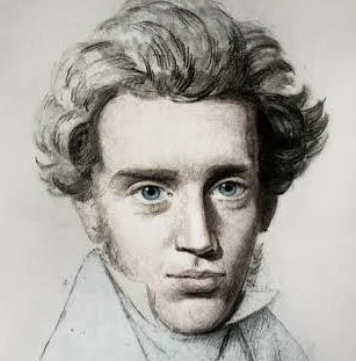
I have needed God every day to defend myself against the abundance of thoughts.

7 months 4 days ago
The philosopher ... subjects experience to his critical judgment, and this contains a value judgment - namely, that freedom from toil is preferable to toil, and an intelligent life is preferable to a stupid life. It so happened that philosophy was born with these values. Scientific thought had to break this union of value judgment and analysis, for it became increasingly clear that the philosophic values did not guide the organisation of society.
▼
Source
source
p. 126

7 months 3 weeks ago
Number is the ruler of forms and ideas, and the cause of gods and daemons.
▼
Source
source
As quoted in Life of Pythagoras (c. 300) by Iamblichus of Chalcis, as translated by Thomas Taylor (1818)
7 months 1 week ago
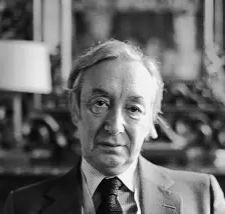
I am using the word "perceive". I am using it here in such a way that to say of an object that it is perceived does not entail saying that it exists in any sense at all. And this is a perfectly correct and familiar usage of the word. If there is thought to be a difficulty here, it is perhaps because there is also a correct and familiar usage of the word "perceive", in which to say of an object that it is perceived does carry the implication that it exists.
▼
Source
source
The Foundations of Empirical Knowledge (1940).
7 months 1 week ago
Russia was a slave in Europe but would be a master in Asia.
▼
Source
source
As quoted in "Dilemmas of Empire 1850-1918: Power, Territory, Identity" by Dominic Livien in Journal of Contemporary History, Vol. 34, No.2 (April 1999), pp. 180
8 months 1 week ago
I have heard with admiring submission the experience of the lady who declared "that the sense of being perfectly well-dressed gives a feeling of inward tranquility which religion is powerless to bestow".
▼
Source
source
Social Aims

6 months 2 weeks ago
It is indeed a matter of great difficulty to discover, and effectually to distinguish, the true motions of particular bodies from the apparent; because the parts of that immovable space, in which those motions are performed, do by no means come under the observation of our senses. Yet the thing is not altogether desperate; for we have some arguments to guide us, partly from the apparent motions, which are the differences of the true motions; partly from the forces, which are the causes and effects of the true motions.
▼
Source
source
Definitions - Scholium
6 months 3 weeks ago
What excited me was the recognition that this was simply another version of the problem that had obsessed me all of my life -- the problem of those moments when life seems entirely delightful, when we experience a sensation of what G.K. Chesterton called "absurd good news." Life normally strikes most of us as hard, dull and unsatisfying; but in these moments, consciousness seems to glow and expand, and all the contradictions seem to be resolved. Which of the two visions is true? My own reflections had led me to conclude that the vision of "absurd good news" is somehow broader and more comprehensive than the feeling that life is dull, boring and meaningless. Boredom is basically a feeling of narrowness, and surely a narrow vision is bound to be less true than a broad one?
▼
Source
source
p. 16

6 months 2 weeks ago
In the performance of an illocutionary act in the literal utterance of a sentence, the speaker intends to produce a certain effect by means of getting the hearer to recognize his intention to produce that effect; and furthermore, if he is using the words literally, he intends this recognition to be achieved in virtue of the fact that the rules for using the expressions he utters associate the expression with the production of that effect.
▼
Source
source
P. 45.


8 months 3 weeks ago
Let great authors have their due, as time, which is the author of authors, be not deprived of his due, which is, further and further to discover truth.
▼
Source
source
Book I, iv, 10

6 months 1 week ago
I do feel visceral revulsion at the burka because for me it is a symbol of the oppression of women.
▼
Source
source
As quoted in Richard Dawkins causes outcry after likening the burka to a bin liner (10 August 2010), The Telegraph.

7 months 1 week ago
I have in general no very exalted opinion of the virtue of paper government.
4 months 1 week ago
The assumption of a Final Cause in the structure of each part of animals and plants is as inevitable as the assumption of an Efficient Cause for every event. The maxim that in organized bodies nothing is 'in vain', is as necessarily true as the maxim that nothing happens 'by chance'.
8 months 2 days ago
He who is running a race ought to endeavor and strive to the utmost of his ability to come off victor; but it is utterly wrong for him to trip up his competitor, or to push him aside. So in life it is not unfair for one to seek for himself what may accrue to his benefit; but it is not right to take it from another.
▼
Source
source
As quoted in De Officiis by Cicero, iii. 10.
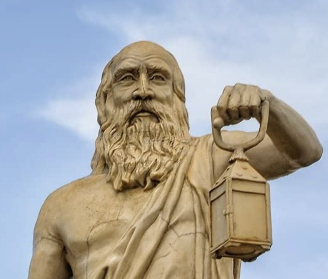
8 months 2 days ago
He was seized and dragged off to King Philip, and being asked who he was, replied, "A spy upon your insatiable greed."
▼
Source
source
Diogenes Laërtius, vi. 43. Cf. Plutarch, Moralia, 70CD.
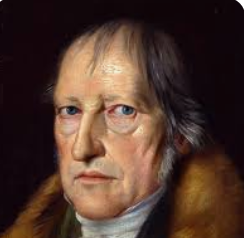
8 months 1 week ago
What the history of Philosophy shows us is a succession of noble minds, a gallery of heroes of thought, who, by the power of reason, have penetrated into the being of things, of nature and of spirit, into the Being of God, and have won for us by their labours the highest treasure, the treasure of reasoned knowledge.
▼
Source
source
Introduction p. 1 Lectures on the history of philosophy, Translated from German by E. S. Haldane in Three Volumes (1892-96) full text
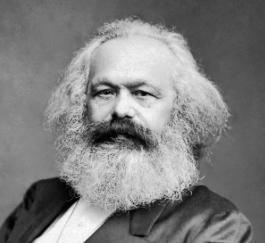
8 months 1 week ago
Hegel once observed that comedy is in act superior to tragedy and humourous reasoning superior to grandiloquent reasoning. Although Lincoln does not possess the grandiloquence of historical action, as an average man of the people he has its humour.
6 months 1 week ago
Gravity is not a version of the truth. It is the truth. Anybody who doubts it is invited to jump out of a tenth-floor window.
▼
Source
source
The Genius of Charles Darwin

8 months 3 weeks ago
If a person gave your body to any stranger he met on his way, you would certainly be angry. And do you feel no shame in handing over your own mind to be confused and mystified by anyone who happens to verbally attack you?
▼
Source
source
(28) [tr. Elizabeth Carter]
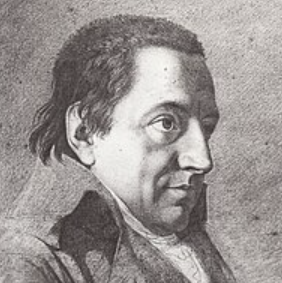
7 months 1 week ago
Reason does not exist for the sake of life, but life for the sake of reason. An existence which does not of itself satisfy reason and solve all her doubts, cannot be the true one.
▼
Source
source
Jane Sinnett, trans 1846 p.94
8 months 3 weeks ago
If we are not stupid or insincere when we say that the good or ill of man lies within his own will, and that all beside is nothing to us, why are we still troubled?
▼
Source
source
Book I, ch. 25, § 1.
5 months 3 weeks ago
The educated man is the man who does not live in immediate intuition, but in his recollection so that little is new to him any longer.
▼
Source
source
Chapter 4, Philosophy As Writing: The Case Of Hegel, p. 74

6 months 3 weeks ago
Women dream till they have no longer the strength to dream; those dreams against which they so struggle, so honestly, vigorously, and conscientiously, and so in vain, yet which are their life, without which they could not have lived; those dreams go at last. All their plans and visions seem vanished, and they know not where; gone, and they cannot recall them. They do not even remember them. And they are left without the food of reality or of hope. Later in life, they neither desire nor dream, neither of activity, nor of love, nor of intellect. The last often survives the longest. They wish, if their experiences would benefit anybody, to give them to someone. But they never find an hour free in which to collect their thoughts, and so discouragement becomes ever deeper and deeper, and they less and less capable of undertaking anything.

9 months 1 week ago
It is change, continuing change, inevitable change, that is the dominant factor in society today. No sensible decision can be made any longer without taking into account not only the world as it is, but the world as it will be ... This, in turn, means that our statesmen, our businessmen, our everyman must take on a science fictional way of thinking.
4 months 3 weeks ago
Until he extends the circle of his compassion to all living things, man will not himself find peace.
▼
Source
source
Variant translation: Until he extends his circle of compassion to include all living things, man will not himself find peace.

6 months 3 weeks ago
I hope I shall never live to see Anarchism become thoroughly respectable, for then I shall have to look for a new ideal.
▼
Source
source
Letter to Helen Keller (1916), published by "The American Foundation for the Blind"
6 months 3 weeks ago
Impulse, subjectivity and profanation, the old adversaries of materialistic alienation, now succumb to it. ... The representatives of the opposition to the authoritarian schema become witnesses to the authority of commercial success. ... In the service of success they renounce that insubordinate character which was theirs.
▼
Source
source
p. 273

5 months 1 week ago
In a free society the state does not administer the affairs of men. It administers justice among men who conduct their own affairs.
▼
Source
source
Ch. XII: "The Political Principles of Liberalism", §6, p. 267
8 months 1 week ago
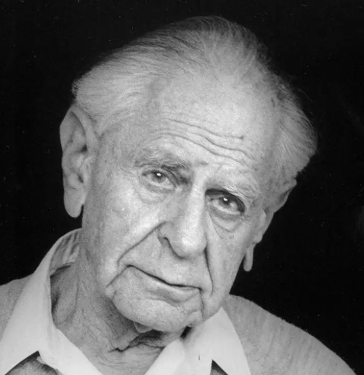
In brief, it is my thesis that human misery is the most urgent problem of a rational public policy and that happiness is not such a problem.
▼
Source
source
p. 485

8 months 1 week ago
You have just dined, and however scrupulously the slaughterhouse is concealed in the graceful distance of miles, there is complicity.
▼
Source
source
Fate
9 months 1 week ago
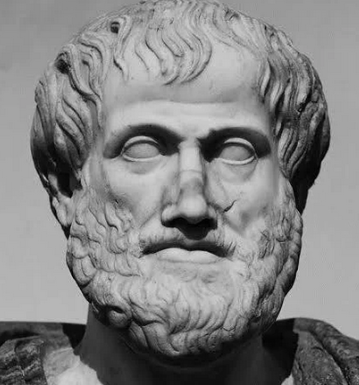
In cases of this sort, let us say adultery, rightness and wrongness do not depend on committing it with the right woman at the right time and in the right manner, but the mere fact of committing such action at all is to do wrong.

8 months 2 weeks ago
What I had to say was so clear and I felt it so deeply that I am amazed by the tediousness, repetitiousness, verbiage, and disorder of this writing. What would have made it lively and vehement coming from another's pen is precisely what has made it dull and slack coming from mine. The subject was myself, and I no longer found on my own interest that zeal and vigor of courage which can exalt a generous soul only for another person's cause.
▼
Source
source
On the Subject and Form of This Writing; translated by Judith R. Bush, Christopher Kelly, Roger D. Masters
4 months 2 days ago
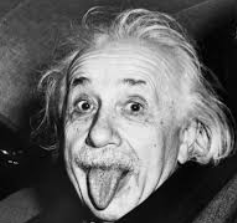
When a man after long years of searching chances on a thought which discloses something of the beauty of this mysterious universe, he should not therefore be personally celebrated. He is already sufficiently paid by his experience of seeking and finding. In science, moreover, the work of the individual is so bound up with that of his scientific predecessors and contemporaries that it appears almost as an impersonal product of his generation.
CivilSimian.com created by AxiomaticPanic, CivilSimian, Kalokagathia