


6 months 2 weeks ago
The complexity of the connection between the world of perception and the world of physics does not preclude that such a connection can be shown to exist at any time.
▼
Source
source
p. 133.
5 months 2 weeks ago
All of us need an identity which unites us with our neighbours, our countrymen, those people who are subject to the same rules and the same laws as us, those people with whom we might one day have to fight side by side to protect our inheritance, those people with whom we will suffer when attacked, those people whose destinies are in some way tied up with our own.
▼
Source
source
Rivers of Blood BBC2 documentary
4 months 2 weeks ago
Every identity, such (third) critics say, even the multitude, must be defined by its remained, those outside of it, call them excluded, the abject, or the subaltern. ... There can certainly be points or nodes outside a network but none are necessarily outside. Its boundaries are indefinite and open. ... None is necessarily excluded but this inclusion is not guaranteed: the expansion of the common is a practical, political manner.
▼
Source
source
226
3 months 3 weeks ago
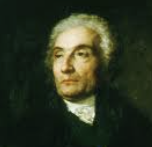
In all that architecture has of the great and eternally beautiful, it is completely a production of the religious spirit. From the ruins of Tentyra to St Peter's in Rome, all the monuments speak; the genius of architecture is really only at ease in temples. It is there that above caprice, fashion, pettiness, licence, and finally all the gnawing cares of talent, it works without discomfort for glory and immortality.
▼
Source
source
p. 289

8 months 2 weeks ago
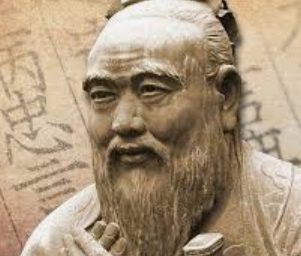
The superior man, even when he is not moving, has a feeling of reverence, and while he speaks not, he has the feeling of truthfulness.
6 months 3 weeks ago
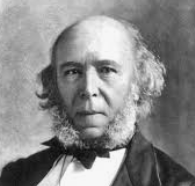
Time: That which man is always trying to kill, but which ends in killing him.
▼
Source
source
Definitions, as quoted in The Dictionary of Essential Quotations (1983) by Kevin Goldstein-Jackson, p. 154

5 months 1 day ago
From a Darwinian point of view, human beliefs are adaptations to our part of the world. No doubt much of what we believe must be roughly accurate, or else we would not have survived. But the beliefs we have evolved might latch on to the world only enough to help us stumble our way through it, and then only for the time being. Human belief-systems could be useful illusions, appearing and disappearing as they prove to be more or less advantageous in the random walk of natural selection. Might not evolution be one of these illusions? Scientific naturalism is the theory that human beliefs are evolutionary adaptations whose survival has nothing to do with their truth. But in that case scientific naturalism is self-defeating, since on its own premises scientific theories cannot be known to be true.
▼
Source
source
Cross-correspondences (p. 69)
8 months 3 weeks ago
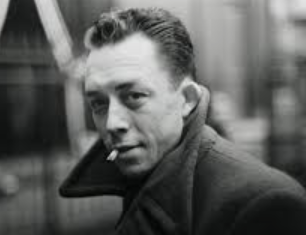
If there is a sin against life, it consists perhaps not so much in despairing of life as in hoping for another life and in eluding the implacable grandeur of this life.
7 months 3 weeks ago
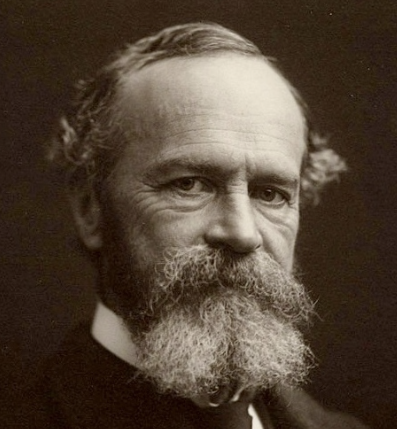
There must be something solemn, serious, and tender about any attitude which we denominate religious. If glad, it must not grin or snicker; if sad, it must not scream or curse. It is precisely as being solemn experiences that I wish to interest you in religious experiences. ... The divine shall mean for us only such a primal reality as the individual feels impelled to respond to solemnly and gravely, and neither by a curse nor a jest.
▼
Source
source
Lecture II, "Circumscription of the Topic"
6 months 1 week ago
The Kropotkins, the Perovskayas, the Breshkovskayas, and hosts of others repudiated wealth and station and refused to serve King Mammon. They went among the people, not to lift them up but themselves to be lifted up, to be instructed, and in return to give themselves wholly to the people. That accounts for the heroism, the art, the literature of Russia, the unity between the people, the mujik and the intellectual. That to some extent explains the literature of all European countries, the fact that the Strindbergs, the Hauptmanns, the Wedekinds, the Brieux, the Mirbeaus, the Steinlins and Rodins have never dissociated themselves from the people.
6 months 3 weeks ago
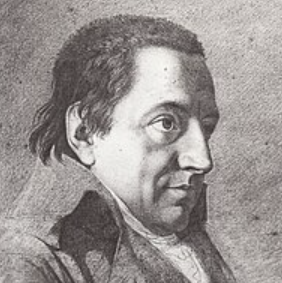
Time is taking giant strides with us more than with any other age since the history of the world began. At some point within the three years that have gone by since my interpretation of the present age that epoch has come to an end. At some point self-seeking has destroyed itself, because by its own complete development it has lost its self and the independence of that self; and since it would not voluntarily set itself any other aim but self, an external power has forced upon it another and a foreign purpose.
▼
Source
source
Introduction p. 1
7 months 3 weeks ago
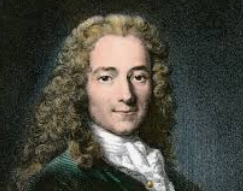
A witty saying proves nothing.
▼
Source
source
Le dîner du comte de Boulainvilliers (1767): Deuxième Entretien
7 months 4 weeks ago
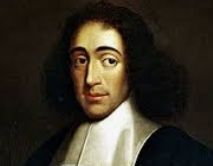
The ordinary surroundings of life which are esteemed by men (as their actions testify) to be the highest good, may be classed under the three heads - Riches, Fame, and the Pleasures of Sense: with these three the mind is so absorbed that it has little power to reflect on any different good.
▼
Source
source
I, 3 Variant translation: The things which ... are esteemed as the greatest good of all ... can be reduced to these three headings, to wit : Riches, Fame, and Pleasure. With these three the mind is so engrossed that it cannot scarcely think of any other
6 months 3 weeks ago
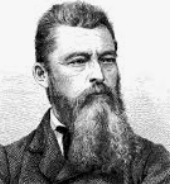
The recognition of the light of reality within the darkness of abstraction is a contradiction - both the affirmation and the negation of the real at one and the same time. The new philosophy, which thinks the concrete not in an abstract but a concrete way, which acknowledges the real in its reality - that is, in a way corresponding to the being of the real as true, which elevates it into the principle and object of philosophy - is consequently the truth of the Hegelian philosophy, indeed of modern philosophy as a whole.
▼
Source
source
Part III, Section 31

7 months 3 weeks ago
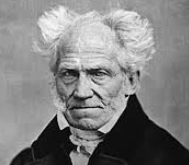
All the cruelty and torment of which the world is full is in fact merely the necessary result of the totality of the forms under which the will to live is objectified.
▼
Source
source
Vol. 2, Ch. 14, § 164

7 months 3 weeks ago
Politics is concerned with herds rather than with individuals, and the passions which are important in politics are, therefore, those in which the various members of a given herd can feel alike.
8 months 3 weeks ago
Query: How to contrive not to waste one's time? Answer: By being fully aware of it all the while. Ways in which this can be done: By spending one's days on an uneasy chair in a dentist's waiting room; by remaining on one's balcony all a Sunday afternoon; by travelling by the longest and least-convenient train routes, and of course standing all the way; by queueing at the box-office of theatres and then not booking a seat.
4 months 1 week ago
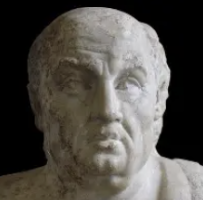
Friendship is always helpful, but love sometimes even does harm
5 months 3 weeks ago
The most human thing about us is our technology.
▼
Source
source
Man and the future of organizations, Volume 5, School of Business Administration, Georgia State University, 1974, p. 19
4 months 1 week ago
Men who prefer any load of infamy, however great, to any pressure of taxation, however light.
▼
Source
source
The Humble Petition of the Rev. Sydney Smith to the House of Congress at Washington (May 18, 1843), in Letters on American Debts (London: Longman, Brown, Green, & Longmans, 1843), p. 9

3 months 3 weeks ago
Nothing is troublesome that we do willingly.
7 months 3 weeks ago
Both in thought and in feeling, even though time be real, to realise the unimportance of time is the gate of wisdom.
▼
Source
source
p. 167

4 months 1 week ago
Thus the radii of all education run together into one center which is called personality.
▼
Source
source
p. 25
4 months 2 weeks ago
Does the harmony the human intelligence thinks it discovers in nature exist outside of this intelligence? No, beyond doubt, a reality completely independent of the mind which conceives it, sees or feels it, is an impossibility. A world as exterior as that, even if it existed, would for us be forever inaccessible.
5 months 3 weeks ago
It seems to me obvious that infants and many animals that do not in any ordinary sense have a language or perform speech acts nonetheless have Intentional states. Only someone in the grip of a philosophical theory would deny that small babies can literally be said to want milk and that dogs want to be let out or believe that their master is at the door.
▼
Source
source
P. 5.
6 months 4 days ago
I am convinced we do not only love ourselves in others but hate ourselves in others too.
▼
Source
source
F 54
8 months 2 days ago
There is no passion so contagious as that of fear.
3 months 3 weeks ago
You may break your heart, but men will still go on as before.
▼
Source
source
VIII, 4
7 months 3 weeks ago
Yes, Lord, you are innocence itself: how could you conceive of Nothingness, you who are plenitude? Your gaze is light and transforms all into light: how could you know the half-light in my heart?
▼
Source
source
Act 3, sc. 6
3 months 2 weeks ago
The only justification for our concepts and system of concepts is that they serve to represent the complex of our experiences; beyond this they have no legitimacy. I am convinced that the philosophers have had a harmful effect upon the progress of scientific thinking in removing certain fundamental concepts from the domain of empiricism, where they are under our control, to the intangible heights of the a priori. For even if it should appear that the universe of ideas cannot be deduced from experience by logical means, but is, in a sense, a creation of the human mind, without which no science is possible, nevertheless the universe of ideas is just as little independent of the nature of our experience as clothes are of the form of the human body. This is particularly true of our concepts of time and space, which physicists have been obliged by the facts to bring down from the Olympus of the a priori in order to adjust them and put them in a serviceable condition.
7 months 3 weeks ago
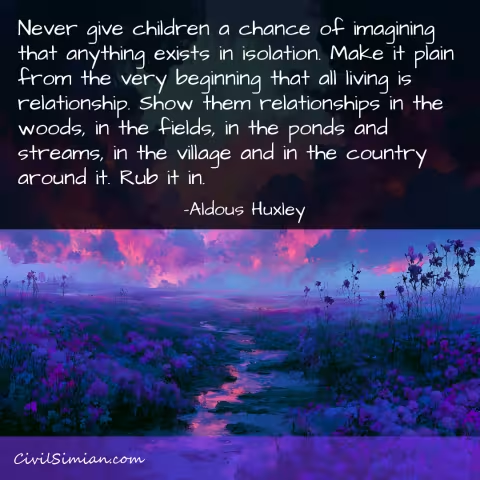
Never give children a chance of imagining that anything exists in isolation. Make it plain from the very beginning that all living is relationship. Show them relationships in the woods, in the fields, in the ponds and streams, in the village and in the country around it. Rub it in.
6 months 3 weeks ago
Every interpretation is hypothetical, for it is a mere attempt to read an unfamiliar text. An obscure dream, taken by itself, can rarely be interpreted with any certainty, so that I attach little importance to the interpretation of single dreams. With a series of dreams we can have more confidence in our interpretations, for the later dreams correct the mistakes we have made m handling those that went before. We are also better able, in a dream series, to recognize the important contents and basic themes.
▼
Source
source
p. 14
8 months 3 days ago
Time, which is the author of authors.
▼
Source
source
Book I, iv, 12
4 months 1 week ago
The state is God, deifies arms and prisons. The worship of the state is the worship of force. There is no more dangerous menace to civilization than a government of incompetent, corrupt, or vile men. The worst evils which mankind ever had to endure were inflicted by bad governments. The state can be and has often been in the course of history the main source of mischief and disaster.
▼
Source
source
Chapter III: Etatism
8 months 3 days ago
Above all, every relation must be considered as suspicious, which depends in any degree upon religion, as the prodigies of Livy: And no less so, everything that is to be found in the writers of natural magic or alchemy, or such authors, who seem, all of them, to have an unconquerable appetite for falsehood and fable.
▼
Source
source
Aphorism 29
7 months 3 weeks ago
Social and economic inequalities, for example inequalities of wealth and authority, are just only if they result in compensating benefits for everyone, and in particular for the least advantaged members of society.
▼
Source
source
p. 14.
6 months 3 weeks ago
Blood will stream over Europe until the nations become aware of the frightful madness which drives them in circles. And then, struck by celestial music and made gentle, they approach their former altars all together, hear about the works of peace, and hold a great celebration of peace with fervent tears before the smoking altars.
▼
Source
source
As quoted in the Fourth Leaflet of the White Rose
6 months 1 week ago
It may seem to be a long way from Blake's innocent talk of love and copulation to De Sade's need to inflict pain. And yet both are the outcome of a sexual mysticism that strives to transcend the everyday world. Simone de Beauvoir said penetratingly of De Sade's work that 'he is trying to communicate an experience whose distinguishing characteristic is, nevertheless its will to remain incommunicable'. De Sade's perversion may have sprung from his dislike of his mother or of other women, but its basis is a kind of distorted religious emotion.
▼
Source
source
p. 90

4 months 5 days ago
The highest activities are always essentially lonely and private, and these men had a robust sense of their independence and the ultimate self-sufficiency of the mind. In this they were just like Socrates. The only change they operated was to bring philosophy out of the closet into the open, instead of seeking protection behind a little wall like men in a storm. Of course, in so doing they made philosophy, on the one hand, more vulnerable to the public if the hopes of controlling the public are not fulfilled, and, on the other, put at risk that inner intransigence which is the necessary condition of the quest for truth. Not only the rewards but the new responsibilities might prove irresistible temptations to compromise.
▼
Source
source
"Commerce and Culture," p. 290.
5 months 2 weeks ago
The cruelest lies are often told in silence. A man may have sat in a room for hours and not opened his teeth, and yet come out of that room a disloyal friend or a vile calumniator. And how many loves have perished because, from pride, or spite, or diffidence, or that unmanly shame which withholds a man from daring to betray emotion, a lover, at the critical point of the relation, has but hung his head and held his tongue?
▼
Source
source
Truth of Intercourse.
7 months 2 weeks ago
When I am furious about something, I sometimes beat the ground or a tree with my walking stick. But I certainly do not believe that the ground is to blame or that my beating can help anything... And all rites are of this kind.
▼
Source
source
Ch. 7 : Remarks on Frazer's Golden Bough, p. 131
5 months 2 weeks ago
In every part and corner of our life, to lose oneself is to be a gainer; to forget oneself is to be happy.
▼
Source
source
Old Mortality (1884).
8 months 2 weeks ago
In all things success depends on previous preparation, and without such previous preparation there is sure to be failure. If what is to be spoken be previously determined, there will be no stumbling. If affairs be previously determined, there will be no difficulty with them. If one's actions have been previously determined, there will be no sorrow in connection with them. If principles of conduct have been previously determined, the practice of them will be inexhaustible.
6 months 1 week ago
In his Experiment in Autobiography (1934), H.G. Wells pointed out that ever since the beginning of life, most creatures have been 'up against it'. Their lives are a drama of struggle against the forces of nature. Yet nowadays you can say to a man: Yes, you earn a living, you support a family, you love and hate, but -- what do you do? His real interest may be in something else -- art, science, literature, philosophy. The bird is a creature of the air, the fish is a creature of the water, and man is a creature of the mind.
▼
Source
source
pp. 346-347
CivilSimian.com created by AxiomaticPanic, CivilSimian, Kalokagathia